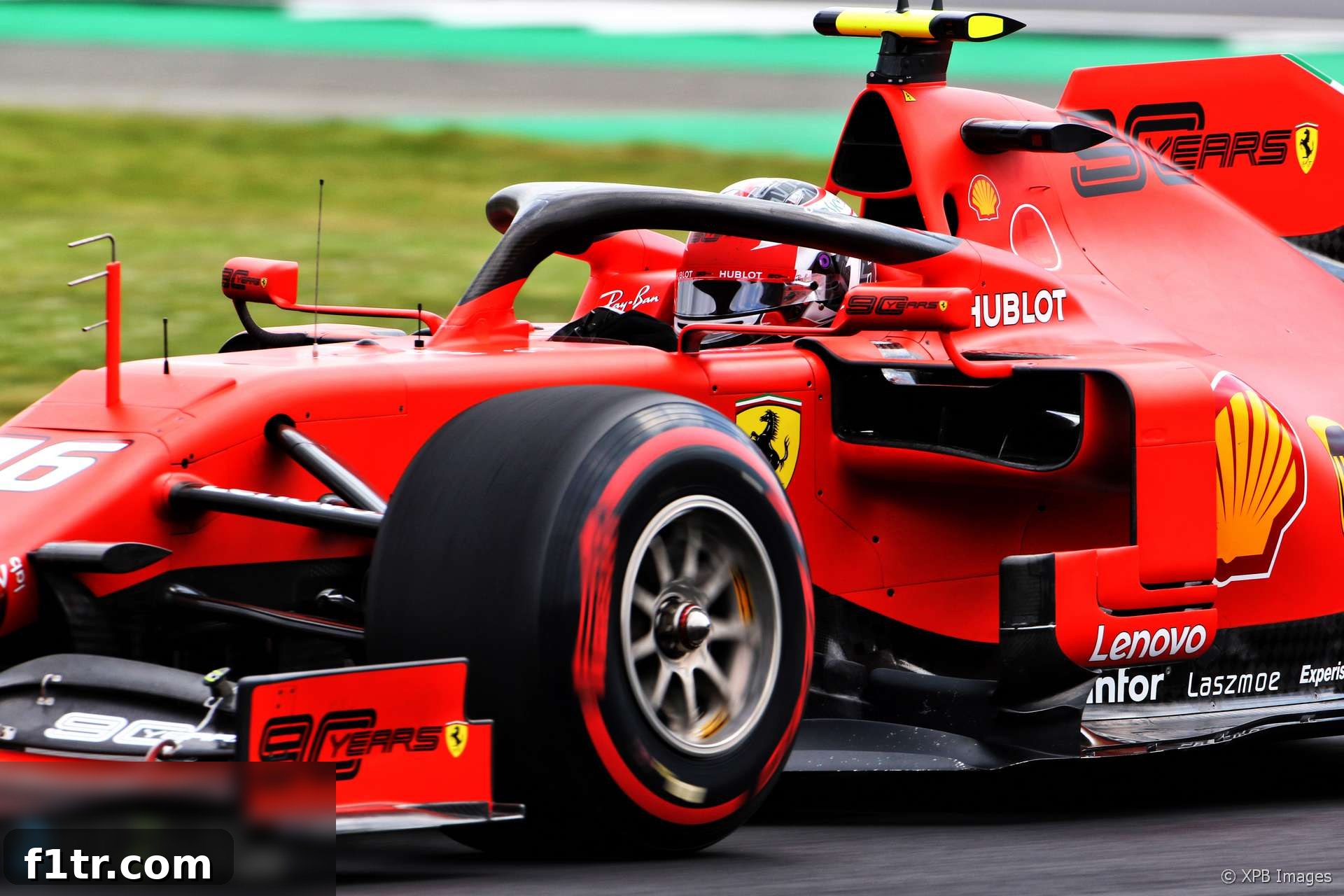
The iconic Silverstone Circuit, a true test of a Formula 1 car’s capabilities, presented Ferrari with a significant challenge: a noticeable limitation in their single-lap pace. According to team principal Mattia Binotto, the root cause was “very high wear” on the front tyres, particularly the critical front-left, which profoundly impacted their performance during crucial qualifying simulations.
Ferrari Confronts Major Front Tyre Wear Issues, Impacting Single-Lap Pace at Demanding Silverstone
The British Grand Prix at Silverstone is renowned for its high-speed corners and undulating layout, pushing Formula 1 machinery and tyres to their absolute limits. In a year where teams were constantly grappling with evolving car designs and Pirelli’s challenging tyre compounds, Silverstone’s newly resurfaced track added another layer of complexity. This combination created an environment where the front-left tyre, subjected to immense lateral forces through legendary corners like Copse, Maggotts, Becketts, and Chapel, endured unprecedented strain. This specific challenge made it considerably harder for Ferrari to accurately assess the progress they believed they had made with their car in the preceding races, casting a shadow over their true competitive standing.
The Unique Demands of Silverstone Circuit and Its Impact on F1 Tyres
Silverstone’s character as a high-speed, flowing circuit means tyres are under constant load, with minimal opportunities for them to cool down. The resurfacing of the track prior to this event altered the grip levels and heat transfer characteristics, presenting a fresh set of unknowns for all teams. High-speed direction changes, typical of Silverstone’s middle sector, generate enormous lateral forces that scrub the rubber from the tyres, leading to accelerated wear. For the front-left tyre, in particular, which bears the brunt of the load through many of the circuit’s fast right-handers, this effect is amplified. Teams must strike a delicate balance between aerodynamic downforce, suspension stiffness, and tyre pressure settings to manage this wear, a task that proved especially taxing for Ferrari on this occasion. The precise nuances of the track’s new asphalt and its interaction with Pirelli’s latest compounds became a critical puzzle piece in optimizing car performance.
Mattia Binotto’s Analysis: Understanding Ferrari’s Qualifying Struggle
Speaking candidly about the team’s performance, Mattia Binotto admitted, “We knew that Silverstone would have been more difficult [for] us compared maybe to the last race, no doubt.” This acknowledgment suggests Ferrari had anticipated a tougher weekend, perhaps due to their car’s inherent characteristics or a mismatch with the circuit’s demands. Despite this, there was an underlying eagerness within the Scuderia to evaluate the advancements made. “But we are as well curious to see the progress of the car, the progress we made in the last weeks,” Binotto added, highlighting their continuous development efforts. However, the unexpected severity of the tyre wear complicated this assessment. “To judge today seems very difficult and still too early,” he noted, indicating the immediate priority was understanding and mitigating the tyre issue rather than drawing broad conclusions about overall car progress. The significant front-left degradation directly hindered their ability to extract peak performance over a single lap, crucial for a strong qualifying position.
The Crucial Role of Front-Left Tyre Degradation in Sector Performance
Binotto’s breakdown of Ferrari’s sector times painted a clear picture of the problem. “We had very high wear on the front tyres, the front-left, which is really affecting the single [qualifying] lap,” he explained. The detrimental impact was most pronounced towards the end of a flying lap. “If you look we were quite strong in the first and second sectors but weak in the last one with some understeer.” This observation is telling. A strong first and second sector indicates that the car initially has good pace and grip. However, as the lap progresses and the front-left tyre degrades, its ability to maintain lateral grip diminishes. This loss of grip manifests as understeer, where the front of the car struggles to turn into corners. In a circuit like Silverstone, the final sector features several critical corners that demand precise turn-in and high front-end grip. The onset of understeer in this vital section inevitably compromises cornering speed and lap time, explaining Ferrari’s drop-off in performance despite promising early sector times.
Pirelli’s Perspective: Widespread Tyre Wear Across the Grid
The tyre wear issue was not exclusive to Ferrari, suggesting a broader challenge presented by the Silverstone circuit and Pirelli’s compounds. Pirelli motorsport director Mario Isola confirmed that several teams were experiencing similar difficulties. “It’s not blistering, it’s wear,” Isola clarified, distinguishing the observed phenomenon from blistering, which occurs when excessive heat causes the rubber to separate from the tyre’s internal structure. Instead, what teams were seeing was mechanical degradation due to the abrasive nature of the new surface and the high energy loads. “When you saw some black lines where the tyres were finished, they were running on the construction, that’s why you see a different colour,” he explained. This meant the tread compound was being stripped away, exposing deeper layers of the tyre. Such severe wear not only compromises performance but also raises concerns about durability and safety if not properly managed, highlighting the fine line F1 teams and Pirelli walk between outright speed and structural integrity.
Technical Nuances of F1 Tyre Management and Wear Mechanisms
Understanding the difference between tyre wear and blistering is crucial in Formula 1. Blistering is typically caused by overheating within the tyre structure, leading to pockets of hot air that cause the rubber to lift and shed in chunks. Wear, as seen at Silverstone, is a more direct result of friction and abrasion. High-speed corners, combined with the track surface’s characteristics, cause the rubber to “scrub” away. This process is exacerbated by aggressive driving styles, specific car setups that induce more slip, and the sheer downforce levels generated by modern F1 cars, which push the tyres harder into the asphalt. For the front-left tyre at Silverstone, the sustained high loads through sweeping right-handers put immense stress on the contact patch, leading to rapid material removal. Managing this wear requires intricate setup adjustments, including camber, toe, ride height, and suspension stiffness, all of which influence how the tyre interacts with the track. Furthermore, driver technique plays a vital role in minimizing slip and preserving tyre life, turning tyre management into a critical skill.
Strategic Implications and Ferrari’s Immediate Path Forward
The revelation of extreme front tyre wear during practice and qualifying sessions carries significant strategic implications for the race. A team experiencing high degradation in qualifying is likely to face even greater challenges over longer race stints. This could necessitate more pit stops, shorter stints on a given compound, or a more conservative driving approach, all of which can compromise race pace and strategy. For Ferrari, the immediate focus was clear. “The team ‘will be focused on this, this evening and overnight’,” Binotto added, emphasizing the intense engineering effort required. Potential solutions include fine-tuning the car’s setup to reduce load on the front tyres – perhaps through aero balance adjustments to shift pressure rearwards, or suspension changes to better manage tyre temperatures and wear rates. Understanding the precise cause, whether it’s related to specific car characteristics like understeer or a broader interaction with the track, is paramount to finding a fix. The engineering team would delve into data from multiple sensors, comparing telemetry from different laps and tyre conditions to inform their strategic decisions for Sunday’s Grand Prix.
The Broader Landscape of the 2019 F1 Season and Ferrari’s Performance
The 2019 Formula 1 season presented a complex tapestry of competition, with Mercedes largely dominating, but Ferrari often showing flashes of potent speed, particularly on power-sensitive circuits. However, their campaign was frequently undermined by challenges in race strategy, operational execution, and a perceived inconsistency in car performance across different track types. The Silverstone tyre issue was symptomatic of a season where maximizing the potential of their package, especially in terms of tyre management, proved to be a recurring hurdle. Every Grand Prix offered unique lessons and engineering puzzles, and the battle against front tyre wear at Silverstone underscored the relentless technical demands placed upon teams vying for championship glory. Successfully addressing such fundamental issues was key to unlocking the true potential of their SF90 chassis and mounting a more consistent challenge against their rivals throughout the fiercely contested season.
For more insights and news from the high-octane world of Formula 1, delve into our extensive coverage of the 2019 F1 season.
- “Crying in the Melbourne car park at 2019 grand prix was my career low” – Ocon
- McLaren Racing reports reduced £71 million loss in 2019
- Kvyat: Hockenheim podium last year was “my biggest achievement” so far
- How the FIA’s new encrypted fuel flow meter targets Ferrari’s suspected ‘aliasing’ trick
- “He smashed my office door”: 23 must-see moments from ‘Drive to Survive’ season two
Browse all 2019 F1 season articles