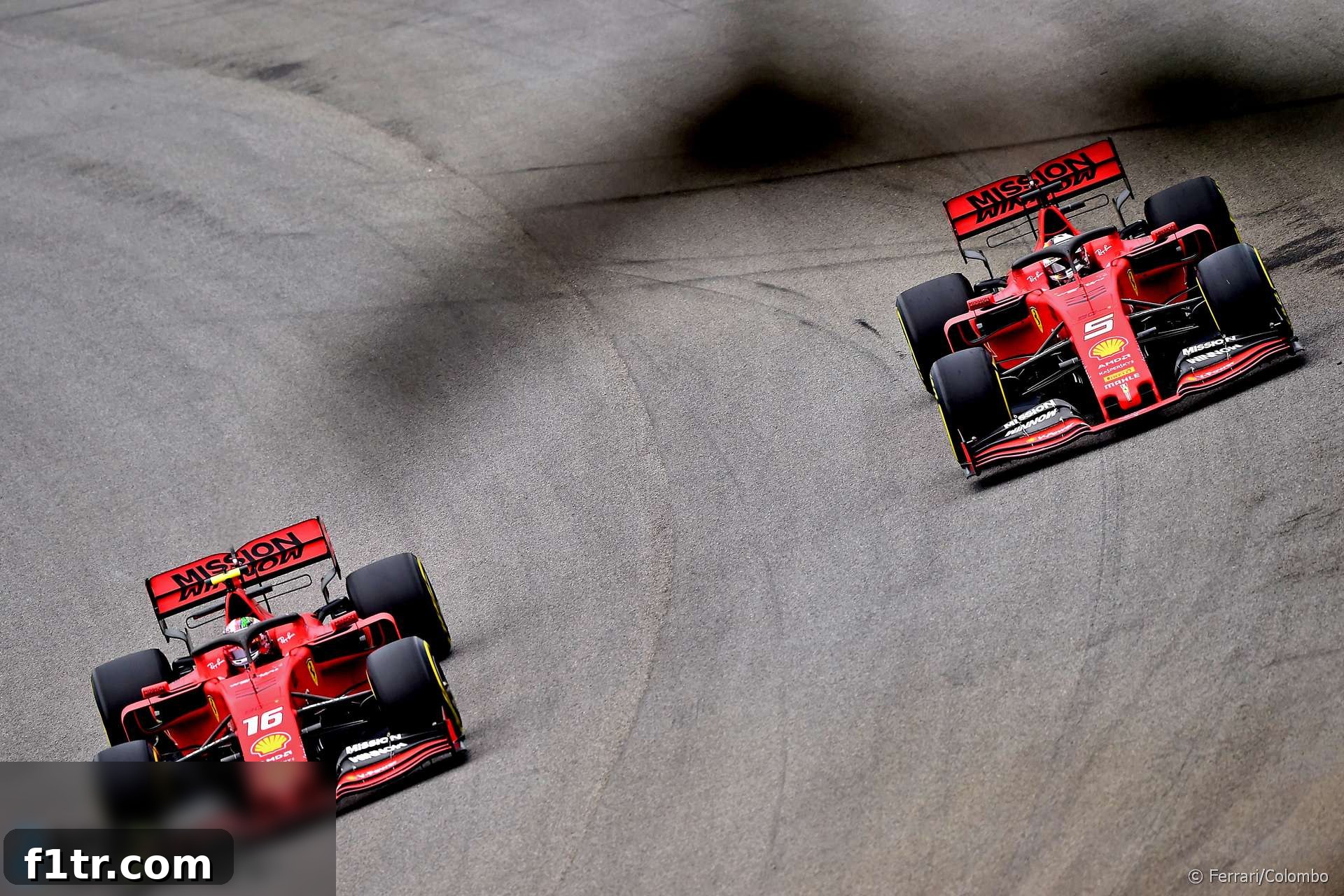
The exhilarating, high-octane world of Formula 1 racing thrives on fierce competition, not just against rival teams but often between teammates themselves. This inherent rivalry, however, can sometimes boil over, leading to catastrophic consequences. Such was the case at the Brazilian Grand Prix, where a dramatic collision between Scuderia Ferrari teammates Sebastian Vettel and Charles Leclerc not only ended both their races prematurely but also ignited a firestorm of debate and concern within the legendary Italian outfit. The incident, a glaring testament to the intense pressure and passion in F1, has necessitated a critical summit at Ferrari’s headquarters, where team principal Mattia Binotto will demand a full explanation from his two star drivers.
The pivotal moment unfolded on the 66th lap of what had been a thrilling race. Leclerc, demonstrating his burgeoning talent and aggressive driving style, had successfully overtaken Vettel for a coveted fourth-place position. As Vettel, a four-time world champion known for his relentless pursuit of victory, attempted to reclaim his standing, the two scarlet cars made contact while approaching the treacherous Turn Four. The collision was swift and devastating, sending debris flying and forcing both Ferraris into immediate retirement. This shocking turn of events, witnessed by millions globally, instantly overshadowed the rest of the race and became the primary talking point across the motorsport world, prompting immediate questions about team management and driver discipline.
Advert | Become a Supporter & go ad-free
Immediately after the double DNF (Did Not Finish), a visibly frustrated Mattia Binotto spoke briefly with both drivers. His initial interaction was not for an immediate allocation of blame, but rather to instill a crucial perspective before they faced the media. Binotto emphasized that the “only thing I would have been happy to hear is that they were sorry for the team.” This statement underscores the immense burden of expectation and responsibility that rests upon the shoulders of Ferrari’s drivers. For a team with such a storied history and passionate fanbase, a self-inflicted wound of this magnitude is not merely a racing incident; it’s a profound blow to the very core of their identity and championship aspirations. The team principal’s measured response, despite the obvious disappointment, highlighted a strategic approach to managing the fallout, prioritizing team unity and accountability over public condemnation, thereby setting the tone for future discussions.
The true reckoning, however, is yet to come. Binotto has scheduled a more extensive meeting with both drivers at the iconic Maranello base, the spiritual home of Scuderia Ferrari. This crucial meeting will take place only after a thorough and meticulous review of all available data from the collision. This comprehensive analysis includes telemetry, onboard camera footage from multiple angles, detailed engineering reports, and driver feedback, providing an exhaustive understanding of every millisecond leading up to and during the contact. “I’ve not reviewed it yet,” Binotto stated, acknowledging the critical need for a cool-headed, objective assessment. “I don’t want to do it today. I think that when doing things in heat we may have the wrong conclusions.” This prudent approach is essential for dissecting the incident impartially and preventing emotionally charged decisions that could further destabilize the team’s delicate internal balance.
Binotto’s philosophy centers on fostering a culture of learning and continuous improvement, rather than simply implementing punitive measures. He further explained his process: “I heard both drivers but they will come as well, together with them, to discuss again what happened today. And there will be time for the team to analyse all the video and the data.” He articulated his vision for the desired outcome of the meeting, focusing on shared responsibility: “Whatever will be the judgement, the more important thing is that today we are disappointed and sorry for the team. We are, but first the two drivers should be, sorry for the team because it has been a very small crash was big consequences. A silly thing that should not happen.” This unwavering emphasis on collective responsibility and the importance of acknowledging errors is a cornerstone of his leadership, aiming to foster an environment where drivers can internalize lessons from their mistakes rather than merely being subjected to disciplinary action.
This incident is not the first time Sebastian Vettel and Charles Leclerc have found themselves under intense scrutiny from the team principal for on-track interactions. Earlier in the 2019 season, the pair were called to meetings at Maranello following a controversial sequence of events at the Russian Grand Prix. In that race, Vettel controversially ignored repeated team orders to let Leclerc pass him, a decision that sparked widespread debate across the F1 paddock about team hierarchies, driver autonomy, and the very concept of intra-team fairness. Subsequently, Vettel admitted he had been wrong to defy the team’s directives, a public acknowledgment that momentarily diffused tensions. However, the recurring nature of these inter-team conflicts highlights an ongoing and significant challenge for Ferrari in effectively managing the fierce ambitions of two highly competitive and talented drivers. Such historical context makes the Brazilian GP collision even more critical, suggesting a potential pattern of strained relations and a lack of clear boundaries that Mattia Binotto must address comprehensively and decisively.
Interestingly, despite the severity of the crash and the immediate detrimental impact on Ferrari’s race results, the race stewards in Brazil ultimately cleared both Vettel and Leclerc of any specific wrongdoing, deeming it a “racing incident.” This ruling, while common in the fast-paced and inherently risky world of F1 where split-second decisions often lead to unavoidable contact, does not absolve the drivers from internal team accountability. Mattia Binotto himself carefully avoided singling out either driver for blame in his immediate post-race comments, choosing instead to focus on the broader implications for the team. His primary concern remains firmly on the learning process and the development of a more cohesive unit: “It’s a matter of recognising, eventually, what has been the actions and the mistakes,” he explained. “And I think that whatever you are, a driver, an engineer, whatever you are doing, recognising mistakes is important because that can only make you better.”
The Ferrari team principal further elaborated on the profound significance of self-reflection and personal accountability within a high-performance team: “So I think what would be important with both drivers is to understand what happened. Making sure that at least not in the heat, but when they will come all together in Maranello to understand what happened, what has been the mistake. It’s not me to blame them, it’s them to recognise it.” This psychologically informed approach is crucial for building a resilient and unified team culture. For an iconic team like Ferrari, internal cohesion and mutual respect are paramount, and fostering an environment where drivers proactively take ownership of their actions is far more productive and sustainable than a top-down blame game that could foster resentment. The incident, therefore, serves as a stark and expensive reminder of the delicate balance required in managing a world-class racing team, where individual ambition, no matter how intense, must occasionally yield to collective success and the overarching goals of the Scuderia.
The fallout from this incident extends far beyond the immediate disappointment of a double DNF. It raises significant and pressing questions about the long-term dynamics between Vettel and Leclerc, and indeed, Ferrari’s strategic direction and championship prospects for the immediate future. While the 2019 constructors’ championship was already out of reach for Ferrari, such a high-profile, self-inflicted event can severely impact team morale, driver confidence, and strategic planning for the upcoming seasons. How will this collision influence future team orders and on-track conduct guidelines? Will it necessitate stricter protocols for how teammates are permitted to race each other? These are vital considerations for Binotto as he navigates Ferrari through this challenging and pivotal period. The team needs to emerge stronger and more united from this adversity, transforming a moment of significant setback into a catalyst for renewed focus, enhanced discipline, and a clear path forward. The eyes of the entire Formula 1 world will undoubtedly be on Maranello, eagerly awaiting the outcomes of these critical discussions and the subsequent trajectory of the storied Scuderia as it seeks to reclaim its rightful place at the pinnacle of motorsport.
Advert | Become a RaceFans supporter andgo ad-free
2019 F1 Season Insights and Key Moments
The 2019 Formula 1 season was a roller-coaster of emotions, incredible overtakes, and unexpected twists that kept fans on the edge of their seats until the very end. While the focus often turns to championship contenders and title battles, the season also offered numerous individual narratives and critical developments that collectively shaped the competitive landscape of the sport. From career-defining moments for emerging talents to strategic shifts behind the scenes for established teams, every race weekend contributed to a larger tapestry of competitive motorsport. The events at the Brazilian Grand Prix involving Sebastian Vettel and Charles Leclerc were undoubtedly one of the most dramatic and talked-about incidents of the year, sparking widespread discussion across the F1 community. However, this was far from the only headline generated throughout a truly memorable season. As we look back at a year filled with drama, spectacle, and intense racing, it’s worth revisiting some of the other significant stories and pivotal moments that captured the attention of Formula 1 enthusiasts worldwide, highlighting the depth and excitement of the 2019 championship.
- Crying in the Melbourne car park at 2019 grand prix was my career low – Ocon
- McLaren Racing reports reduced £71 million loss in 2019
- Kvyat: Hockenheim podium last year was “my biggest achievement” so far
- How the FIA’s new encrypted fuel flow meter targets Ferrari’s suspected ‘aliasing’ trick
- “He smashed my office door”: 23 must-see moments from ‘Drive to Survive’ season two
Browse all 2019 F1 season articles