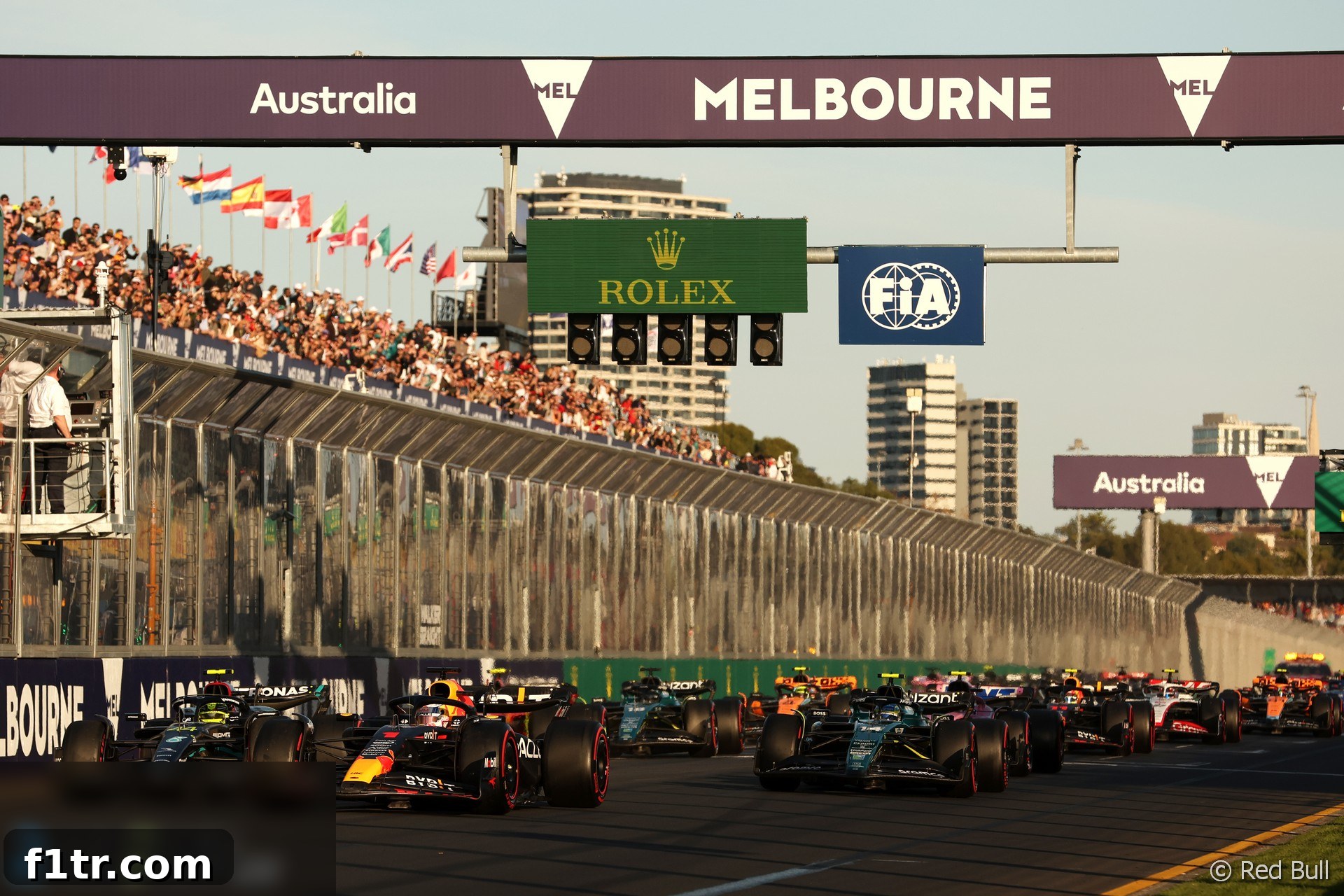
Formula 1, the pinnacle of motorsport, is a sport constantly evolving, not just in technology but also in its sporting regulations. One area that has seen significant debate and modification over recent years is the procedure for restarting a Grand Prix after a red flag interruption. What was once a relatively straightforward process has transformed into a dynamic and often controversial aspect of modern F1 racing. The introduction of standing restarts after a red flag, a concept flirted with in 2014, finally became a permanent fixture in F1’s sporting regulations midway through the 2018 season, fundamentally altering the spectacle and strategy of race resumptions.
The journey to implement standing restarts was not immediate. Despite being formally introduced into the rulebook, it took until the 2020 Italian Grand Prix at Monza for the system to be utilized for the first time. Following Charles Leclerc’s heavy impact at Parabolica, the field regrouped on the grid, poised for a dramatic standing start to resume the race. This debut set a precedent for a more unpredictable and thrilling approach to race interruptions, moving away from the more conservative rolling restarts that had been common for many years, signaling a shift towards enhancing the on-track drama for fans.
Since its inaugural use, the standing grid restart procedure has been deployed a total of eight times in races suspended by red flags, excluding those occurring within the opening two laps. Notably, two of these instances occurred within the final five laps of the scheduled race distance, highlighting the FIA’s commitment to maintaining excitement until the very end, irrespective of the race stage. This willingness to implement standing starts in critical, late-race scenarios has been a significant point of discussion among fans, drivers, and teams alike, especially given the increased risk of incident and potential for championship implications.
Advert | Become a Supporter & go ad-free
The 2023 Australian Grand Prix, held just a few weeks ago, perfectly encapsulated the drama and contention surrounding these restarts. It was only the second race since the 2020 Tuscan Grand Prix to feature three grid starts within a single event, punctuated by two red flags. The first red flag was prompted by Alexander Albon’s lap seven crash, which scattered debris across the circuit and damaged a barrier, necessitating a full stoppage and a subsequent standing restart. The second, and arguably more chaotic, red flag came with fewer than five laps remaining after Kevin Magnussen’s single-car accident. This late incident led to another standing restart in the closing stages, which stirred considerable controversy and prompted widespread discussion about the suitability of such procedures.
Currently, Formula 1’s sporting regulations, specifically Article 58.11, stipulate that red-flagged races will resume with a standing start from the grid “if track conditions are considered suitable to resume… from a standing start.” Conversely, Article 58.12 specifies that rolling starts behind the Safety Car will only be utilized when “track conditions are considered unsuitable.” This regulatory framework places a significant emphasis on standing starts as the default procedure, pushing for maximum excitement whenever feasible. The ambiguity, however, often lies in the interpretation of “suitable” and “unsuitable” conditions, leaving a degree of discretion to the race director, which can sometimes lead to inconsistent applications and further debate.
This default preference for standing starts means that even with a mere two racing laps remaining until the chequered flag, a race suspended in its later stages by a red flag will resume from the grid. This scenario famously unfolded during the 2021 Azerbaijan Grand Prix, where a late red flag led to a thrilling, albeit tense, two-lap dash to the finish from a standing start. The most recent round in Australia provided another vivid example, with the chaotic final restart igniting widespread debate about the appropriateness of such procedures in the dying moments of a race, when the championship points are on the line and driver safety is paramount.
The Enduring Debate: Standing vs. Rolling Restarts in Formula 1
The central question at the heart of this discussion is whether standing starts from the grid should remain the standard procedure for restarting a Grand Prix interrupted by a red flag. Or, should the rules be amended to restrict their use to specific periods within a race, perhaps to mitigate the risks associated with late-race chaos and ensure a more predictable outcome? To understand the current climate surrounding F1 restart rules, it’s crucial to look back at the historical evolution of these procedures.
Advert | Become a RaceFans supporter andgo ad-free
In the late nineties and early 2000s, red flags were a rarer occurrence outside of major opening lap crashes. When they did happen, races were often restarted from the grid as if the Grand Prix was beginning anew, minus any drivers who were unable to continue. This approach, while dramatic, was eventually revised. A significant rule change decreed that only the initial race start would be a standing start on the grid, with any subsequent restarts — even if the red flag was flown on the opening lap — being rolling restarts behind the Safety Car. This period aimed to reduce the inherent risks of multiple standing starts within a single event, prioritizing safety and consistency over raw excitement. However, the pendulum has since swung back, with the FIA now favoring the standing start as the default, a decision driven largely by the desire for enhanced spectacle and unpredictable racing.
Standing restarts are, by their very nature, inherently more competitive and exciting for both drivers and spectators. Drivers line up side-by-side on the grid, with the potential to gain or lose multiple positions on the frantic run to Turn One, depending on the quality of their launch when the lights go out. This element of unpredictability and raw driver skill is a major draw for fans, injecting an immediate surge of adrenaline into the race. Every driver gets a fresh chance to make up ground or defend their position, creating incredible on-track battles right from the green light. The strategic implications are also profound, with teams needing to prepare for a sudden burst of intense competition rather than a more controlled rolling start behind the Safety Car, which typically offers fewer immediate overtaking opportunities.

Despite their competitive appeal, standing restarts also carry significantly higher risks. The field is far more condensed compared to a rolling start, which naturally strings cars out in single file behind the Safety Car. This close proximity, coupled with the drivers’ eagerness to gain positions, dramatically increases the risk of contact and collisions, particularly in the tightly packed first corner. The chaotic final restart in Melbourne, which saw multiple cars involved in incidents and several drivers eliminated, served as a stark reminder of these dangers. The spectacle, while undeniable, came at a cost of significant damage, multiple DNFs, and ultimately, a red-flagged incident that further delayed the race’s conclusion.
Following the tumultuous 2023 Australian Grand Prix, even the race winner, Max Verstappen, voiced his concerns about the procedure. Despite expertly navigating the restart and securing victory, Verstappen suggested that a standing restart with only two laps remaining was not the optimal way to resume racing. “I think if you would have had a Safety Car and then just had a normal rolling start, we wouldn’t have had all these shunts and then you have a normal finish,” Verstappen commented after the race, adding, “So they created the problems themselves at the end of the day.” His sentiments resonate with many who believe that late-race standing starts introduce an unnecessary element of chance and potential for avoidable incidents, potentially compromising the integrity of the race results and championship standings.
Proposed Alternatives and Their Implications for F1 Race Procedures
While the current regulations default to a standing start, several alternatives have been proposed to refine the system, aiming to strike a better balance between excitement and safety. One compelling suggestion advocates for outlining specific thresholds in the rules for when standing starts should be used. Formula 1 already employs a structured system for awarding championship points based on the percentage of race distance completed when a race is red-flagged and not resumed. These milestones – at two completed race laps, 25% race distance, 50% race distance, and 75% race distance – could serve as a blueprint for dictating restart procedures.
Under this proposed system, for instance, a race red-flagged before the 50% mark could resume with a standing start, embracing the drama and competitive advantage it offers in the earlier stages. However, if a red flag occurs after, say, the 75% race distance mark, a rolling start behind the Safety Car would become mandatory. This structured approach would introduce predictability for teams and drivers, allowing for more tailored strategies depending on the stage of the race. It would also clarify situations where “unsuitable” track conditions might otherwise be left to the sole discretion of the race director, thereby reducing potential controversies surrounding such subjective decisions and promoting greater consistency.
The primary benefit of such a tiered system would be a significant reduction in the risk of further chaotic and accident-prone restarts in the final laps, as vividly witnessed in Australia. It would allow for the thrilling spectacle of standing starts in the earlier phases of a Grand Prix, where there is more time for the field to settle and less immediate impact on the final result, while mitigating extreme risks when the stakes are highest and the race is nearing its conclusion. Mandating which restart procedures can be used at which specific points in the race would also eliminate any ambiguity over what precisely constitutes an “unsuitable” track condition, making the decision process more objective and less reliant on the race director’s ultimate discretion.
However, arguments against such a refined system also exist and warrant consideration. Critics might contend that this approach introduces an element of inconsistency, with different restart procedures being applied based on whether a race is restarted with, for example, 60 laps remaining versus six. Furthermore, a single race with multiple red flags could potentially see two different restart systems employed, which some might view as confusing or detracting from a universal sporting standard. There’s also the traditionalist argument that Formula 1, as the self-proclaimed ‘pinnacle of motorsport,’ should trust its elite drivers to manage a standing start competently without triggering collisions, regardless of how much of the race remains. This perspective emphasizes driver skill and adaptability as core tenets of the sport, suggesting that altering rules to prevent incidents might dilute the inherent challenge and excitement that defines F1.
The debate surrounding F1’s standing restart rules is multi-faceted, balancing the desire for exhilarating entertainment with concerns for safety, fairness, and the integrity of the sport. As F1 continues to captivate audiences worldwide, these procedural considerations will remain a focal point of discussion, shaping the future dynamics of Grand Prix racing. How would you like to see F1’s rules over standing restarts evolve – if at all? The conversation continues, driven by both the thrill of competition and the ongoing pursuit of optimal safety and sporting fairness.
Reader Insights: Public Opinion on F1 Standing Restarts
A recent poll conducted among fans revealed a diverse range of opinions regarding the optimal timing for standing restarts after red flags. The results highlight the ongoing divergence in perspectives within the F1 community, reflecting the complexity of this contentious issue:
When should standing starts be used to restart grands prix after red flags?
- A standing restart should be used no matter when the race is restarted (30%)
- A standing restart should only be used for races stopped under 75% race distance (18%)
- A standing restart should only be used for races stopped under 50% race distance (13%)
- A standing restart should only be used for races stopped under 25% race distance (5%)
- A standing restart should only be used for races stopped within the first two laps (20%)
- A standing restart should never be used to restart a grand prix (14%)
Total Voters: 142
These results demonstrate that while a significant portion of fans appreciate the drama of standing restarts at any point (30%), there’s also a strong inclination towards limiting their use, particularly in the latter stages of a Grand Prix. A combined 56% of voters believe standing restarts should be restricted to various earlier points in the race or never used at all, indicating a clear desire for a more nuanced approach to the current regulations and a potential shift in how F1 balances excitement with risk management.
Related F1 Debates and Polls
Dive deeper into other pressing topics shaping the world of Formula 1 with these related discussions:
- What must Formula 1 fix with its new rules – and what should it leave unchanged?
- ADUO: Do F1 teams who fall behind deserve to get help to catch up?
- F1 is considering doubling its sprint races. Do you want more or fewer?
- Will this be a fight or a rout? 20 questions for the 2026 Formula 1 season
- Which Formula 1 team has the best-looking car – and the worst – for the 2026 season?
Browse all debates and polls