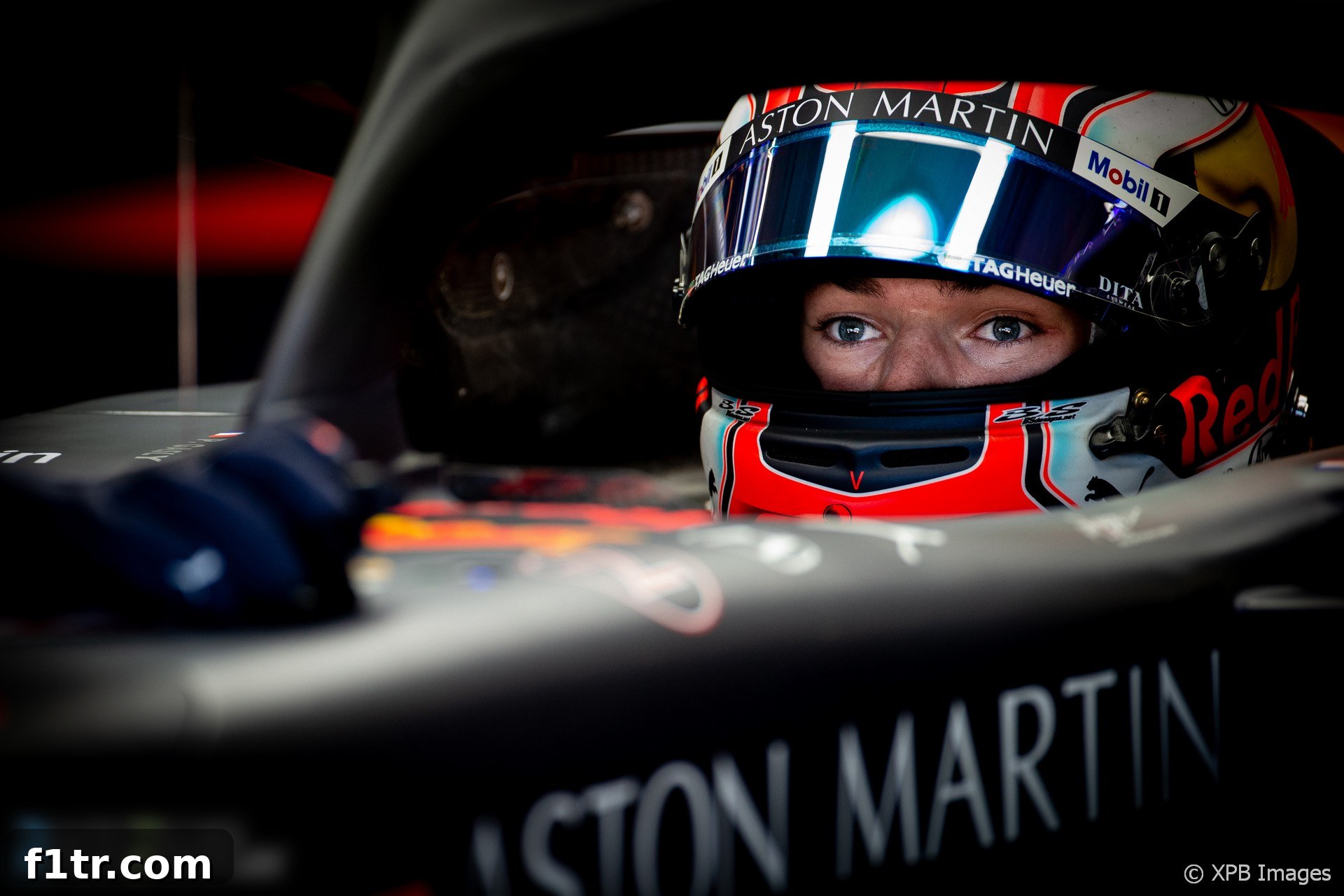
Pierre Gasly emerged as the unlikely pacesetter in the opening free practice session for the British Grand Prix at the iconic Silverstone Circuit. The session, marked by an extensively resurfaced track and an unpredictable mid-session rain shower, proved to be a challenging test for all drivers and teams, setting a complex tone for the remainder of the race weekend.
Gasly Masters Tricky Silverstone Conditions to Top FP1
The first free practice session (FP1) at Silverstone kicked off under a partially cloudy sky, but it was the recently laid asphalt that commanded most of the initial attention. Drivers quickly discovered that the new surface, despite its promise of improved grip, presented a unique set of challenges, including unexpected bumps and varying levels of adhesion across different sections of the track. This fresh tarmac, combined with a brief but impactful rain shower, transformed the session into a true test of adaptability and car control, with several drivers finding themselves off-track.
Amidst these intricate conditions, Pierre Gasly of Red Bull-Honda delivered a stellar performance, securing the fastest lap time. His impressive showing signals a potential upturn in form for the Frenchman, who has faced considerable pressure throughout the season. Gasly’s ability to extract maximum performance from his car on the challenging new surface underscores his talent and Red Bull’s continued development efforts. His penultimate lap of the session was quick enough to depose Valtteri Bottas from the top spot, highlighting the fierce competition even in early practice.
Early Drama: Grosjean’s Costly Pit Lane Incident
One of the session’s most bizarre and disruptive moments involved Romain Grosjean from the Haas-Ferrari team. Early in FP1, as drivers were still getting a feel for the new track, Grosjean encountered trouble at the pit lane exit. In a highly unusual incident, he spun his car in the tight right-hander that leads onto the main circuit. The spin resulted in his Haas striking the barrier on the inside of the corner, causing significant damage to his front wing. This unexpected mishap not only compromised his session but also highlighted the fine margins and immediate consequences of errors on a freshly laid and unfamiliar circuit.
Following the collision, Grosjean was forced to complete a full lap of the circuit with his damaged car. As he made his way back to the pits, further debris shed from his car, scattering across the track. This necessitated the deployment of a Virtual Safety Car (VSC) period, allowing marshals to safely clear the track and ensure the safety of other drivers. The VSC briefly halted proceedings, disrupting the flow for teams attempting long runs or setup changes. Demonstrating a challenging day, Grosjean later experienced another spin at Luffield, although thankfully, this time without sustaining any damage to his car. These incidents underscored the difficulty drivers faced in mastering the new Silverstone configuration and its unique characteristics.
New Tarmac and Rain Add Layers of Complexity
The new track surface at Silverstone was a major talking point even before the session began. Engineered to improve grip and potentially reduce wear, it presented an unknown variable for all teams. While it initially offered high grip, drivers quickly noted inconsistencies. Lewis Hamilton, a local favorite, remarked at the end of the session that despite the resurfacing, the track still felt surprisingly bumpy in places. This feedback indicates that teams had to contend with more than just a smooth, fast surface; they also had to account for unexpected undulations that could unsettle the car.
Adding another layer of complexity, a light rain shower began falling with approximately half an hour remaining in the session. This sudden change in weather transformed the already tricky new asphalt into an even slipperier proposition. The rain immediately sent a cascade of drivers scurrying back to the pits, as the track became unsuitable for dry tyres and too damp for immediate wet-weather running. After a brief lull, the track dried out sufficiently in the closing minutes for a late flurry of laps, allowing drivers to improve their times and push the limits once more. This fluctuating weather served as an excellent simulation for potential race day conditions, forcing teams to react swiftly and adapt their strategies.
Red Bull’s Strong Showing and Mercedes’ Consistent Pace
Gasly’s chart-topping performance was a significant boost for Red Bull Racing, offering a glimpse of their potential at Silverstone. His fastest lap was a remarkable three-tenths of a second quicker than the best time from the same session a year prior, illustrating the increased pace of the current generation of Formula 1 cars and perhaps the grip offered by the new tarmac in ideal conditions. Max Verstappen, Gasly’s teammate, further solidified Red Bull’s strong start by securing third place. This robust performance from both drivers suggests that Red Bull could be a serious contender this weekend, especially if the mixed conditions persist, where their chassis often excels.
Mercedes also displayed their characteristic consistency. Valtteri Bottas, who initially held the top spot, ultimately finished second, demonstrating the Silver Arrows’ baseline speed. Lewis Hamilton, despite his comments on the track’s bumpiness, secured fourth place. While not at the very top, both Mercedes drivers were firmly within the leading group, and it’s widely expected that they will unlock more pace as the weekend progresses. Their focus in FP1 likely involved extensive data gathering on the new surface and various setup configurations, rather than outright pace.
Ferrari’s Challenges and the Midfield Scramble
The Ferrari duo of Charles Leclerc and Sebastian Vettel finished fifth and sixth, respectively. Leclerc, in particular, expressed frustration over traffic during several of his flying laps, suggesting that his potential pace might have been higher. Ferrari often takes a different approach to practice sessions, focusing on long-run performance and fine-tuning their car, the SF90, for race conditions. Their initial positions, while not leading, still place them firmly in contention, and they will undoubtedly be looking to improve significantly in the subsequent sessions.
The midfield battle, as ever, proved to be fiercely competitive. The two Renaults, with Nico Hulkenberg and Daniel Ricciardo, followed the Ferraris, indicating their consistent performance. Behind them, Alexander Albon in his Toro Rosso-Honda and Carlos Sainz Jnr for McLaren-Renault put in respectable performances. Home race debutants Lando Norris and George Russell also experienced the challenges of their home circuit, both going off-track at different points, but gaining valuable experience in the process. The varying conditions throughout FP1 meant that consistency and adaptability were paramount, and teams will be scrutinizing the data closely to understand how their cars react to the new tarmac under different weather scenarios.
Raikkonen’s Session Cut Short by Power Unit Issue
The session was briefly disrupted for a few minutes at the halfway mark when Kimi Raikkonen’s Alfa Romeo-Ferrari came to a halt at Luffield. The cause was suspected to be a power unit problem, which unfortunately cut short the Finn’s running. Such mechanical issues in early practice can be concerning for teams, requiring immediate investigation and potentially leading to component changes and grid penalties later in the weekend. The stoppage added to the stop-start nature of FP1, further emphasizing the challenging environment for all participants.
British Grand Prix 2019: Free Practice 1 Results
| Pos. | No. | Driver | Car | Best lap | Gap | Laps |
|---|---|---|---|---|---|---|
| 1 | 10 | Pierre Gasly | Red Bull-Honda | 1’27.173 | 25 | |
| 2 | 77 | Valtteri Bottas | Mercedes | 1’27.629 | 0.456 | 29 |
| 3 | 33 | Max Verstappen | Red Bull-Honda | 1’28.009 | 0.836 | 21 |
| 4 | 44 | Lewis Hamilton | Mercedes | 1’28.122 | 0.949 | 26 |
| 5 | 16 | Charles Leclerc | Ferrari | 1’28.253 | 1.080 | 21 |
| 6 | 5 | Sebastian Vettel | Ferrari | 1’28.304 | 1.131 | 21 |
| 7 | 27 | Nico Hulkenberg | Renault | 1’28.803 | 1.630 | 21 |
| 8 | 3 | Daniel Ricciardo | Renault | 1’29.031 | 1.858 | 24 |
| 9 | 23 | Alexander Albon | Toro Rosso-Honda | 1’29.093 | 1.920 | 26 |
| 10 | 55 | Carlos Sainz Jnr | McLaren-Renault | 1’29.162 | 1.989 | 31 |
| 11 | 4 | Lando Norris | McLaren-Renault | 1’29.170 | 1.997 | 23 |
| 12 | 11 | Sergio Perez | Racing Point-Mercedes | 1’29.453 | 2.280 | 27 |
| 13 | 26 | Daniil Kvyat | Toro Rosso-Honda | 1’29.500 | 2.327 | 26 |
| 14 | 18 | Lance Stroll | Racing Point-Mercedes | 1’29.657 | 2.484 | 25 |
| 15 | 99 | Antonio Giovinazzi | Alfa Romeo-Ferrari | 1’30.099 | 2.926 | 24 |
| 16 | 20 | Kevin Magnussen | Haas-Ferrari | 1’30.605 | 3.432 | 24 |
| 17 | 63 | George Russell | Williams-Mercedes | 1’30.741 | 3.568 | 25 |
| 18 | 7 | Kimi Raikkonen | Alfa Romeo-Ferrari | 1’30.747 | 3.574 | 12 |
| 19 | 8 | Romain Grosjean | Haas-Ferrari | 1’30.811 | 3.638 | 22 |
| 20 | 88 | Robert Kubica | Williams-Mercedes | 1’32.121 | 4.948 | 27 |
First Practice Visual Gaps: A Closer Look at the Timesheets
Pierre Gasly – 1’27.173
+0.456 Valtteri Bottas – 1’27.629
+0.836 Max Verstappen – 1’28.009
+0.949 Lewis Hamilton – 1’28.122
+1.080 Charles Leclerc – 1’28.253
+1.131 Sebastian Vettel – 1’28.304
+1.630 Nico Hulkenberg – 1’28.803
+1.858 Daniel Ricciardo – 1’29.031
+1.920 Alexander Albon – 1’29.093
+1.989 Carlos Sainz Jnr – 1’29.162
+1.997 Lando Norris – 1’29.170
+2.280 Sergio Perez – 1’29.453
+2.327 Daniil Kvyat – 1’29.500
+2.484 Lance Stroll – 1’29.657
+2.926 Antonio Giovinazzi – 1’30.099
+3.432 Kevin Magnussen – 1’30.605
+3.568 George Russell – 1’30.741
+3.574 Kimi Raikkonen – 1’30.747
+3.638 Romain Grosjean – 1’30.811
+4.948 Robert Kubica – 1’32.121
Note: Drivers more than ten seconds off the pace are omitted for clarity in the visual gap representation.
Looking Ahead to Qualifying and the British Grand Prix Race
The first free practice session at Silverstone has certainly set the stage for a captivating British Grand Prix weekend. Pierre Gasly’s surprising pace, coupled with the unpredictable nature of the new track surface and the ever-present threat of rain, suggests that both qualifying and the race itself could be incredibly exciting. Teams will now delve deep into the data collected, analyzing how their car setups reacted to the various conditions, particularly the new tarmac and the intermediate wet phase.
The coming sessions, Free Practice 2 and 3, will be crucial for refining strategies, understanding tyre degradation, and preparing for potentially varying weather. The key will be adaptability. Teams that can quickly adjust their setups to suit the evolving track conditions, whether dry, damp, or fully wet, will gain a significant advantage. The midfield battle is expected to be as intense as ever, with several teams showing promising pace. All eyes will be on the top teams – Red Bull, Mercedes, and Ferrari – as they fine-tune their machines and unleash their full potential. The British Grand Prix promises to be a thrilling spectacle, offering plenty of action and strategic intrigue.
More on the 2019 British Grand Prix
- 2019 British Grand Prix Star Performers
- Top ten pictures from the 2019 British Grand Prix
- Hamilton and Formula 1 at their best in Silverstone spectacular
- Hamilton passes Mansell and Clark as top Briton at home
- Paddock Diary: British Grand Prix day four
Browse all 2019 British Grand Prix articles