The 2020 Formula 1 season, an unprecedented chapter in motorsport history, saw teams and drivers grappling with a rapidly evolving calendar. As the global pandemic forced the cancellation of numerous traditional Grand Prix events, Formula 1 embarked on a quest for alternative venues, leading to the exciting prospect of racing on several iconic, albeit less frequently visited, European circuits. Among the drivers eager to embrace these new challenges and opportunities was Esteban Ocon, who proactively began honing his skills on the Autodromo do Algarve, commonly known as Portimao, using his advanced home simulator in anticipation of its potential inclusion on the revised 2020 F1 calendar.
The Portimao circuit, nestled in the picturesque Algarve region of Portugal, quickly emerged as a prominent candidate amidst the widespread disruption to the original grand prix schedule. Its challenging layout, characterized by significant elevation changes and a mix of high-speed and technical corners, presented an intriguing prospect for Formula 1. Ocon’s foresight in preparing for this circuit highlights the meticulous nature of modern F1 driver training, where simulation technology plays a pivotal role in familiarization and performance optimization long before a wheel even turns on the actual tarmac. This dedication underscores the competitive spirit and adaptability required at the pinnacle of motorsport, especially during such an unpredictable season.
Beyond Portimao, Ocon expressed considerable enthusiasm for other potential additions to the championship, specifically mentioning two other circuits that resonated with his racing background and preferences. “It’s fantastic, I’m very happy to hear that because those tracks are tracks I love,” Ocon remarked, highlighting his appreciation for what he termed “old-school circuits” such as Mugello. He also pointed to Imola, a circuit where he had recently competed in Formula 3, giving him valuable prior experience that could prove advantageous. This familiarity with the intricacies of tracks like Imola allows drivers to focus more on fine-tuning car setups and extracting maximum performance from the outset, rather than spending precious practice time learning the circuit layout itself.
Despite his experience with Imola and his digital reconnaissance of Portimao, Ocon acknowledged the continuous learning curve involved. “I still have to learn Portimao,” he admitted, despite having “done a lot of laps on my home sim which was good.” This statement reflects the inherent difference between virtual and real-world driving, where subtle nuances of grip, track surface, and environmental factors can only be truly experienced on the actual circuit. Nevertheless, the simulated practice provides a crucial foundation, allowing drivers to internalize braking points, racing lines, and gear selections. Ocon’s overarching sentiment was one of eagerness: “But I’m happy to do a lot of races and if that’s the way we can do more in the future then it’s fantastic,” signaling a readiness to embrace any opportunity to compete, regardless of the venue.
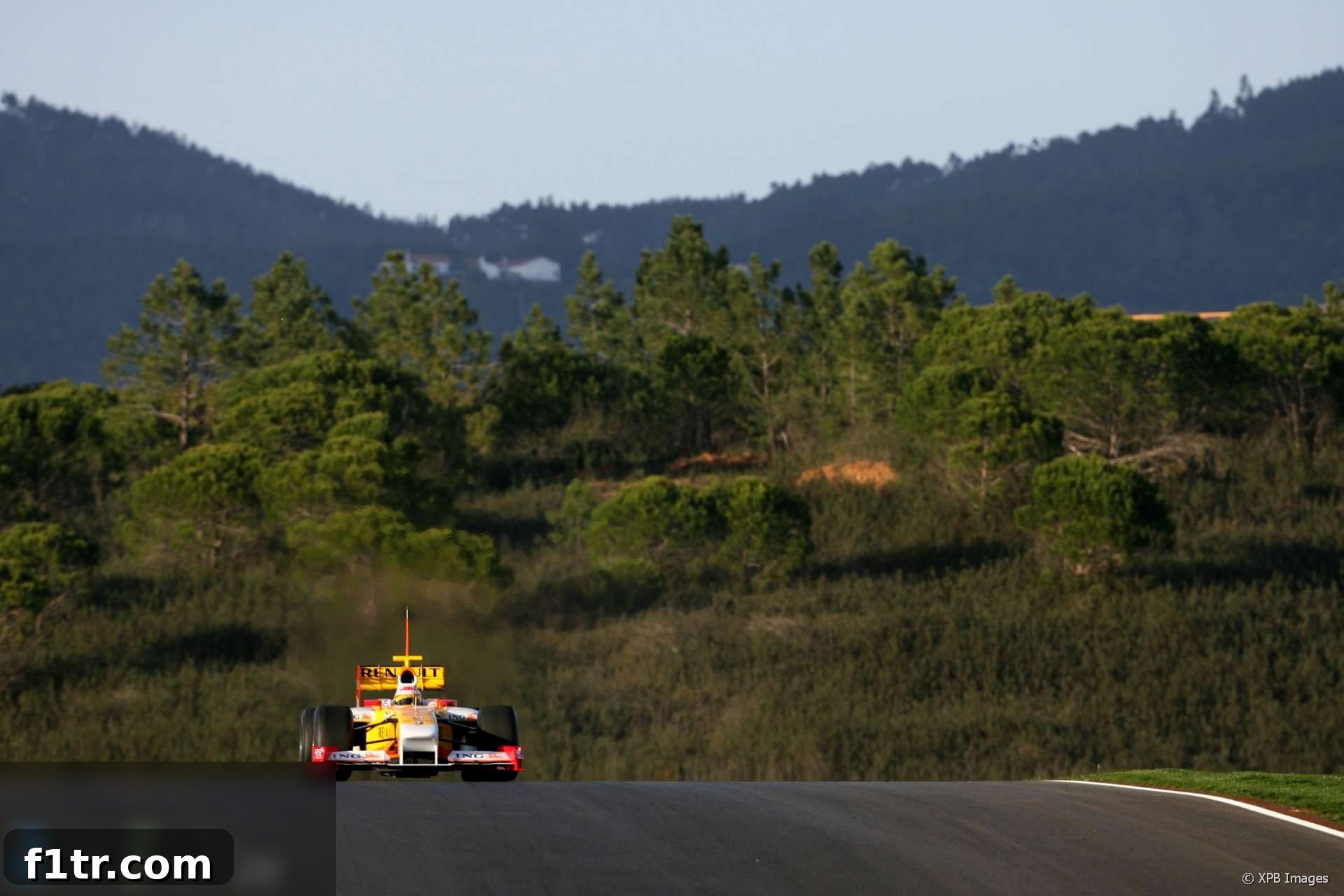
The potential return of circuits like Portimao and Mugello to the F1 calendar was met with widespread excitement, not just from fans but also from seasoned drivers who appreciate the unique challenges these venues offer. It’s worth noting that some F1 teams had previously conducted testing at Portimao in 2009, providing a degree of historical context for its suitability for contemporary Formula 1 machinery. This historical connection adds another layer of intrigue, hinting at how the cars have evolved and how drivers would adapt to these tracks with vastly different regulations and aerodynamic packages. The thought of modern F1 cars tackling such demanding layouts sparked significant anticipation within the paddock.
Ocon’s team mate, the charismatic Daniel Ricciardo, shared a similar enthusiasm for the prospect of racing on these additional European circuits. His reflections on Mugello, in particular, paint a vivid picture of its appeal. “The first circuit I heard was Mugello,” Ricciardo recounted. “That was a circuit I raced back in 2007 for the first time and it was my favourite circuit that season. I loved just the flowing, high-speed corners.” This personal history with the track underscores the deep connection drivers form with certain venues, often dating back to their junior racing careers. For Ricciardo, Mugello represented the epitome of driving pleasure, a sentiment shared by many who have experienced its relentless, high-commitment layout.
The thought of bringing modern Formula 1 cars to Mugello, a circuit known for its sweeping, fast sections and minimal runoff areas, truly ignited Ricciardo’s imagination. He recalled a past F1 test there, “I think it was back in 2012 in F1,” but emphasized how different the experience would be with contemporary machinery. “But the cars now, these 2020 cars around there would be insane,” he stated with palpable excitement. The 2020 F1 cars, with their immense downforce and powerful hybrid engines, demand an extraordinary level of precision and courage, especially on circuits that reward bravery and commitment through blind crests and unforgiving gravel traps. Racing these technological marvels on a track like Mugello would undoubtedly push both car and driver to their absolute limits, promising a spectacle for fans worldwide.
Ricciardo also holds cherished memories of the Autodromo do Algarve. It was at Portimao in 2009 where he secured a significant milestone in his career: wrapping up the British Formula 3 championship. “I have good memories in Portimao, it was where I wrapped up the F3 championship,” he affirmed. This success deepens his connection to the circuit, creating a strong positive association. He lauded Portimao’s characteristics, describing it as a circuit he “really enjoyed, some good elevation and again, quite good flowing fast corners.” The undulating nature of the track, combined with its high-speed sections, demands a unique driving style that balances aggression with finesse, making it a true test of a driver’s skill and adaptability.
The collective sentiment from both Ocon and Ricciardo clearly indicated a strong desire for these “new” old circuits to be included. Ricciardo’s concluding remarks encapsulated this perfectly: “So I’m not disappointed if any of these go ahead at all. I would be very excited.” He jokingly added, “And I think I’ll invest in a home simulator or something to refresh but I’m fairly familiar with at least those two circuits.” This lighthearted comment belies the serious preparation undertaken by F1 drivers. While Ricciardo might have been more familiar with Portimao and Mugello from his earlier career, the ever-evolving nature of Formula 1 cars and regulations necessitates constant recalibration and practice, even on familiar grounds. The adaptability of drivers and teams to an ever-changing calendar was a defining feature of the challenging 2020 F1 season, showcasing the resilience and passion inherent in the sport.
The Unprecedented 2020 F1 Season: Embracing New Horizons
The year 2020 presented Formula 1 with its most significant logistical and scheduling challenge in decades. The global health crisis necessitated a radical overhaul of the traditional Grand Prix calendar, leading to a scramble to piece together a viable championship schedule. This unforeseen situation, while disruptive, also opened doors to circuits that might otherwise never have hosted a modern F1 race. The selection criteria for these replacement venues extended beyond track licensing, encompassing stringent health and safety protocols, logistical feasibility for teams traveling across Europe, and the ability to deliver a compelling racing experience without the usual fan attendance. The willingness of tracks like Portimao, Mugello, and Imola to step up demonstrated their enduring appeal and readiness to meet Formula 1’s exacting standards.
The prospect of racing on “old-school” tracks brought a wave of nostalgia and excitement. These circuits often feature layouts that predate the modern era of expansive runoff areas and homogenized designs, instead boasting natural terrain, significant elevation changes, and unforgiving barriers that punish mistakes. For drivers, this meant a heightened sense of challenge and reward. The lack of extensive data for modern F1 cars on some of these tracks also added an element of unpredictability, potentially shaking up the established pecking order and leading to more thrilling races. The 2020 season, therefore, became a unique blend of familiar venues and thrilling new additions, keeping both teams and fans on their toes throughout a compressed and intense championship.
The Role of Simulation in Modern F1 Preparation
The preparations undertaken by drivers like Ocon underscore the critical role of simulation in contemporary Formula 1. Home simulators, often featuring highly accurate track models and sophisticated force feedback systems, allow drivers to immerse themselves in virtual environments that closely mimic real-world driving. This technology is invaluable for initial track learning, practicing various racing lines, and understanding the nuances of corner entries and exits. While a simulator can never fully replicate the G-forces, vibrations, and sheer raw sensation of an F1 car at speed, it provides an indispensable tool for mental preparation and muscle memory development. For an unpredictable season like 2020, where new circuits could be added with short notice, simulators became even more vital, offering drivers the best possible head start on unfamiliar layouts.
Beyond individual driver preparation, simulators are central to team operations, used for car development, strategy planning, and driver coaching. Engineers can experiment with different car setups, tire management strategies, and race scenarios in a controlled virtual environment, gathering valuable data that informs real-world decisions. The synergy between simulator work and actual track performance is a testament to the technological advancements in motorsport. For circuits making a surprise return to the F1 calendar, this meant teams could leverage existing data, albeit potentially old, and combine it with fresh simulator runs to rapidly develop optimal approaches, ensuring they were competitive from the moment cars hit the track for Free Practice.
Impact on the 2020 F1 Championship Battle
The dynamic nature of the 2020 F1 calendar, with new circuits potentially being introduced, could have had significant implications for the championship battle. Drivers with natural flair for adapting quickly to unknown or less-practiced layouts might have found an advantage. The “old-school” characteristics of tracks like Mugello and Imola, demanding precision, bravery, and a high level of car control, could favor those drivers whose styles align with such challenges. Furthermore, the limited historical data for modern F1 cars on these circuits meant that teams had to be exceptionally agile in their engineering and strategy, often relying more on driver feedback and live data acquisition during the practice sessions. This added an extra layer of complexity and excitement, making every practice lap and qualifying run crucial in a season where points were hard-fought and opportunities to shine were highly valued.
Ultimately, the 2020 F1 season will be remembered for its resilience, innovation, and the thrilling return of some truly spectacular racing venues. The proactive preparation of drivers like Esteban Ocon and Daniel Ricciardo, combined with the adaptability of Formula 1 as a whole, ensured that despite the unprecedented global challenges, the sport delivered a memorable and compelling championship. The excitement generated by the prospect of racing on circuits like Portimao, Mugello, and Imola served as a powerful reminder of the enduring allure of classic motorsport venues and the unyielding passion that drives the world of Formula 1.
2020 F1 season
- Grosjean to make F1 test return tomorrow for first time since Bahrain horror crash
- Pictures: Wrecked chassis from Grosjean’s Bahrain fireball crash to go on display
- Bottas vs Rosberg: Hamilton’s Mercedes team mates compared after 78 races each
- F1 revenues fell by $877 million in Covid-struck 2020 season
- Hamilton and Mercedes finally announce new deal for 2021 season
Browse all 2020 F1 season articles