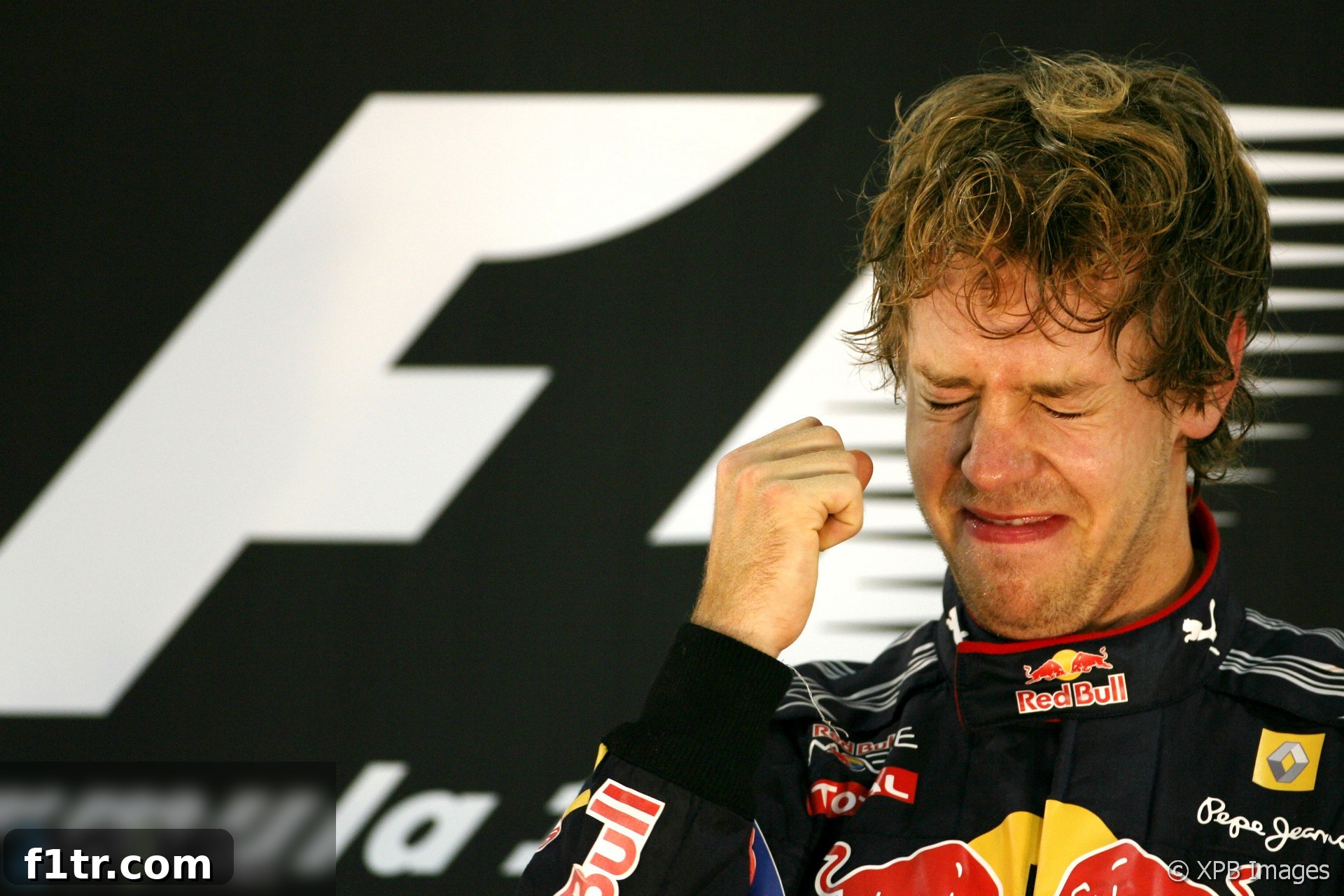
Sebastian Vettel Claims Maiden F1 World Title in Thrilling 2010 Abu Dhabi Grand Prix Finale
The 2010 Formula 1 season culminated in one of the most nail-biting and strategically complex championship deciders in the sport’s history, with Sebastian Vettel emerging victorious at the Abu Dhabi Grand Prix to be crowned the youngest-ever Formula 1 world champion. The dramatic finale saw the Red Bull Racing driver capitalise on strategic missteps by his closest rivals, Fernando Alonso and Mark Webber, who found themselves entangled in mid-pack traffic, ultimately finishing seventh and eighth respectively. This unforeseen turn of events paved the way for Vettel, who entered the race as the outsider among the four title contenders, to clinch his maiden world championship.
Joining Vettel on the podium were the two McLaren drivers, Lewis Hamilton and Jenson Button, whose own slim championship aspirations had faded earlier in the race. The Yas Marina Circuit witnessed a masterclass performance from Vettel, who maintained composure and pace throughout a highly eventful grand prix.
Early Drama and a Crucial Safety Car Period
From the outset, the race was charged with tension. Vettel, starting from pole position, executed a flawless launch, immediately asserting his authority. Behind him, Lewis Hamilton made an ambitious attempt to challenge at the first corner but failed to find a way through. Jenson Button also made an intelligent start, deftly moving into third place ahead of Fernando Alonso, indicating the competitive spirit that defined the entire season.
However, the race was barely underway when a shocking incident brought out the safety car. A collision between seven-time world champion Michael Schumacher and Vitantonio Liuzzi resulted in Liuzzi’s Force India precariously perched on top of Schumacher’s Mercedes. Schumacher had spun at the exit of turn six while attempting to pass his team mate, Nico Rosberg, though no contact was made between the Mercedes cars. Liuzzi, with nowhere to go, became an unfortunate casualty of the incident.
The ensuing safety car period, which lasted for several laps while the wreckage was cleared, proved to be immensely influential in shaping the championship outcome. During this crucial phase, several drivers opted for an early pit stop, swapping their super-soft starting tyres for the more durable medium compound. Among them were Nico Rosberg, Vitaly Petrov, Jaime Alguersuari, Christian Klien, Bruno Senna, and Lucas di Grassi. This seemingly innocuous decision to switch tyres early would dramatically alter the strategic landscape for the championship contenders, particularly for those needing to make only one stop.
Ferrari’s Strategic Misstep and Alonso’s Frustration
After the safety car retreated and racing resumed, Vettel and Hamilton began to pull away from Button, while Fernando Alonso found himself locked in a battle with Mark Webber and Felipe Massa behind him. Webber, notably, was struggling to find grip on his super-soft tyres and was the first of the front-runners to make an unscheduled stop on lap 12, switching to mediums. This early stop dropped him deep into the field, behind several cars that would not need to pit again, presenting a significant hurdle to his championship aspirations.
In response to Webber’s early stop, Ferrari reacted by bringing Felipe Massa in shortly after. However, despite Webber taking two laps to clear the slower Jaime Alguersuari, he still managed to maintain his track position ahead of Massa, illustrating the depth of traffic that the early stoppers faced. This move by Ferrari was intended to cover Webber, but it arguably cost Massa valuable time and position without effectively neutering Webber’s threat.
The critical decision for Ferrari came next. Seeing Webber’s situation, they elected to pit Fernando Alonso on the following lap. Alonso emerged from his stop ahead of Webber, but critically, he found himself behind Vitaly Petrov, one of the drivers who had pitted under the safety car. Petrov, driving a Renault, proved to be an unexpectedly formidable obstacle, holding off the Ferrari driver with stubborn defiance. This battle, which would rage for the majority of the race, ultimately sealed Alonso’s championship fate.
Vettel Capitalizes as Rivals Struggle with Traffic
While Alonso grappled with Petrov, the leading trio of Vettel, Hamilton, and Button strategically extended their stints, aiming to build a sufficient gap over drivers like Kamui Kobayashi and Robert Kubica, who had also benefited from the early safety car pit stops. McLaren eventually decided to bring Hamilton in for his stop, but he too encountered misfortune, emerging behind the Renault of Kubica and the Sauber of Kobayashi. Hamilton’s progress was further hampered as Kubica executed a bold move around the outside of Kobayashi at that very moment, momentarily creating a two-car roadblock for the McLaren. Although Hamilton quickly dispatched Kobayashi, he then found himself frustratingly stuck behind the unyielding Kubica.
This sequence of events played directly into Sebastian Vettel’s hands. With Hamilton caught in traffic, Vettel was able to execute his own pit stop and rejoin the track still ahead of Kubica, crucially maintaining a clear track ahead and rapidly building a ten-second advantage over Hamilton. Button, employing a distinct one-stop strategy, stayed out even longer, finally pitting on lap 39. He emerged from the pits behind Hamilton, who was still unable to find a way past Kubica, highlighting the immense strategic value of those early safety car stops.
Alonso’s Championship Dreams Slip Away
The image of Fernando Alonso trapped behind Vitaly Petrov became the defining narrative of the 2010 Abu Dhabi Grand Prix. Alonso made multiple desperate attempts to pass the Renault, even running wide at Turn 11 on one occasion. While Webber was not close enough to capitalize on this momentary lapse, the time Alonso bled behind Petrov was proving catastrophic for his championship hopes. The gap to the front grew, and even more significantly, other drivers were able to pit and emerge ahead of him.
Robert Kubica, for instance, had managed to build a substantial enough lead that he could make his mandatory pit stop on lap 46 and rejoin the track ahead of the struggling Ferrari. Alonso was now languishing in seventh place, needing to find a way past not just Petrov, but also Nico Rosberg and Kubica, all of whom were now ahead of him. Despite his relentless efforts, including another off-track excursion at Turn 17 in a bid to overtake, the reality was stark: the championship was slipping away. Each lap spent behind Petrov eroded his chances, turning what had seemed like a strong title prospect into a distant dream.
Vettel Crowned World Champion
Unaware of the precise championship permutations unfolding behind him, Sebastian Vettel drove an immaculate race from the front. He maintained a strong, consistent pace, untroubled by the battles and strategic gambles of his rivals. His team, knowing the intense pressure of the moment and wanting him to remain focused on his driving, chose not to inform him of the evolving points situation until after he had crossed the finish line. This decision underscores the incredible tension and tight margins of the 2010 season finale.
After 55 demanding laps of the Yas Marina Circuit, Vettel surged across the finish line to claim his fifth Grand Prix victory of the 2010 season. A few heart-stopping seconds later, the crucial message came over the team radio: “You are the 2010 Formula 1 World Champion!” The eruption of joy from Vettel, his Red Bull team, and fans around the world was palpable, marking a historic moment for the young German driver.
Following Vettel home were the two McLarens of Lewis Hamilton and Jenson Button. Hamilton, despite his best efforts, had been unable to significantly reduce Vettel’s lead after Kubica finally made his pit stop. The final standings saw Kubica finish an impressive fifth, behind Nico Rosberg, and one place ahead of his Renault team mate, Vitaly Petrov. Fernando Alonso, in seventh, saw a potential third world championship title elude him by a mere four points. His visible frustration, shaking his fist at Petrov on his way back to the pits, was a poignant image of what could have been.
Long-term championship leader Mark Webber finished a disappointing eighth, dropping to third in the overall world championship standings. Felipe Massa, who had also been caught up in the early strategic plays, never managed to find a way past Jaime Alguersuari and ultimately ended the race in tenth place, behind the Toro Rosso driver.
Outside the points, a host of other drivers completed the challenging Abu Dhabi Grand Prix, including Heidfeld, Barrichello, Sutil, Kobayashi, Buemi, and Hulkenberg. Heikki Kovalainen was the top finisher among the new teams, ahead of Lucas di Grassi, Bruno Senna, and Christian Klien. Jarno Trulli was classified last, having retired just four laps from the finish when his rear wing dramatically detached from his car.
A Double Championship for Red Bull
For the second consecutive weekend, Red Bull Racing celebrated a championship victory. Just one week prior, they had secured the coveted constructors’ championship. Now, they added the drivers’ title, solidifying their dominance in what had been an incredibly competitive season. What made this achievement even more remarkable was that it wasn’t the driver who entered the final weekend with the most points who claimed the crown. Instead, it was Sebastian Vettel, the talented young German, who defied the odds and snatched the 2010 Formula 1 World Championship, forever etching his name into the annals of motorsport history as a four-time world champion in the making.
2010 Abu Dhabi Grand Prix
Browse all 2010 Abu Dhabi Grand Prix articles