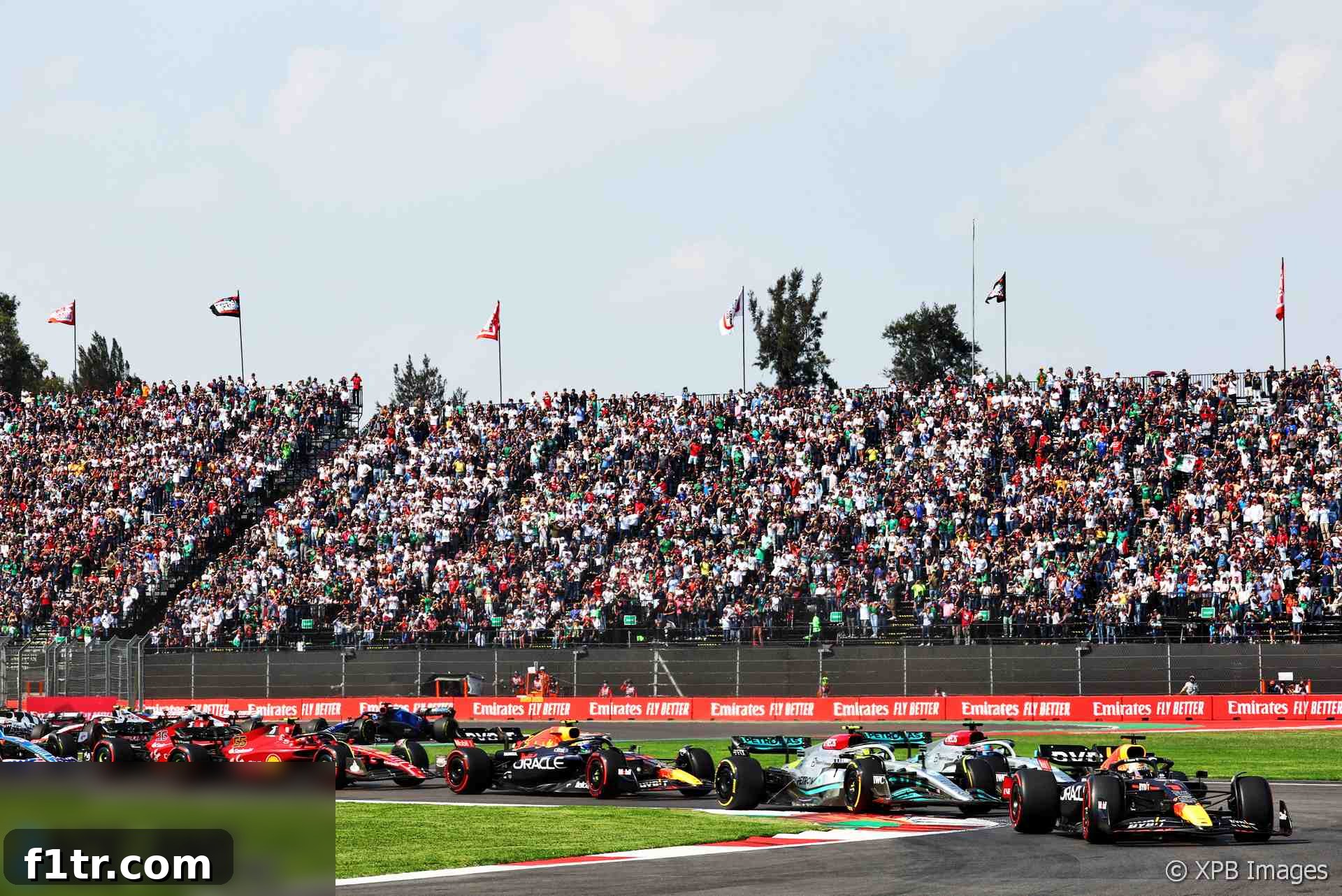
Navigating the Altitude: A Deep Dive into the Mexico City Formula 1 Grand Prix
The Formula 1 circus arrives in Mexico City, a spectacle renowned for its vibrant atmosphere and the distinctive challenges posed by its lofty elevation. While recent headlines have highlighted the impact of Hurricane Otis on Mexico’s Pacific coast, the country’s capital, host of this weekend’s much-anticipated Formula 1 race, is expected to remain unaffected, allowing the grand prix to proceed as planned amidst its usual dramatic flair.
The Autódromo Hermanos Rodríguez, nestled at a staggering 2,285 meters (7,497 feet) above sea level, presents an environment unlike any other on the Formula 1 calendar. This extreme altitude results in significantly thinner air, a fundamental factor that dictates almost every aspect of car performance and race strategy. Teams and drivers face a unique blend of technical and physical demands, turning the Mexican Grand Prix into a true test of engineering ingenuity and driver endurance.
The Unrivaled Challenge of High-Altitude Racing
The most defining characteristic of the Mexico City Grand Prix is undoubtedly its high altitude. The reduced atmospheric pressure means there is considerably less oxygen, and consequently, less air density. This has profound implications across multiple facets of a modern Formula 1 car:
Aerodynamic Performance: Less Downforce, More Drag
In thinner air, wings and aerodynamic surfaces generate significantly less downforce. To compensate, teams are forced to run their cars with maximum downforce settings – often using rear wings designed for circuits like Monaco or Hungary, which typically require high downforce for cornering grip. However, even with these aggressive setups, the absolute downforce generated is comparable to what teams might achieve with low-downforce wings at sea level. This paradox means cars are simultaneously “slippery” on the straights (due to less air resistance) yet lack ultimate grip through corners, making for a challenging balance act for engineers and drivers alike.
Engine Cooling and Performance: A Delicate Balance
The internal combustion engine, dependent on oxygen for combustion, experiences a noticeable power reduction at this altitude. Modern F1 power units, with their advanced turbocharging systems, are somewhat mitigated from this effect compared to naturally aspirated engines of the past. However, the turbos have to work much harder to compress the thinner air to optimal levels, generating immense heat. Simultaneously, the thinner air is less efficient at cooling the engine, brakes, and other critical components. Teams must open up cooling ducts more than usual, which in turn compromises aerodynamic efficiency, adding another layer of complexity to car setup and strategic decisions.
Braking Demands: Overheating Risks
With less dense air flowing over the brake discs and calipers, cooling efficiency is dramatically reduced. Drivers already push their brakes to the limit, but in Mexico, the risk of overheating and brake fade becomes a prominent concern. Managing brake temperatures becomes crucial, influencing braking points, driving style, and potential for errors, especially in the demanding stadium section or the long braking zone into Turn 1.
Driver Physiology: A Test of Endurance
The thinner air doesn’t just affect the cars; it impacts the drivers too. Less oxygen in the atmosphere can lead to increased fatigue and even mild altitude sickness symptoms for some. Drivers must maintain peak physical condition to withstand the demands of the race, making hydration and fitness even more critical in Mexico City.
Race Weekend Forecast and Track Conditions
The weather for the Mexican Grand Prix often adds another layer of intrigue, with conditions typical for the region that can fluctuate throughout the weekend. After last year’s scorching event, the 2023 edition is poised to be one of the warmest since F1’s return in 2015.
Friday Practice: Cloud Cover and Potential Showers
When the cars first hit the Autódromo Hermanos Rodríguez for Free Practice on Friday, conditions are expected to be cloudy. This initial cloud cover might keep track temperatures slightly lower, providing teams with a more forgiving environment for initial setup work. However, as the day progresses towards the afternoon’s second practice session, the sun is forecast to begin breaking through. Maximum air temperatures are anticipated to reach around 25°C. Crucially, there’s an outside chance of rain, with a 40% probability of a shower currently predicted. This potential for mixed conditions could disrupt data gathering, forcing teams to adapt quickly and potentially impacting long-run simulations for Sunday’s race strategy.
Saturday Qualifying: Rising Temperatures and Clearer Skies
The weather is set to become more stable and warmer for Saturday’s crucial qualifying sessions. The threat of rain is expected to recede significantly, allowing for clearer and drier running. Third practice in the middle of Saturday might see air temperatures around 23°C, offering one final opportunity for teams to fine-tune their setups. By the time qualifying commences at 3:00 PM local time, temperatures are projected to climb to approximately 26°C. These conditions will be vital for tyre warm-up and performance over a single lap, as teams chase every millisecond for grid position.
Sunday Grand Prix: Hot and Challenging Race Day
Race day on Sunday is expected to be the warmest of the weekend. The Grand Prix, scheduled to start at 2:00 PM, will likely experience air temperatures hovering around 26°C. Such conditions, following last year’s intense heat, solidify this year’s event as potentially the second hottest Mexican Grand Prix since Formula 1 made its comeback to the country in 2015. High ambient and track temperatures place immense stress on tyres, engines, and drivers, making strategic calls and car reliability paramount for success.
Tyre Strategy and Race Dynamics: A High-Stakes Game
One of the most complex aspects of the Mexican Grand Prix is managing the tyres, a challenge amplified by the significant track temperature variations often observed. It’s not uncommon to see a fluctuation of up to 10°C in track surface temperatures during this event, which can dramatically alter tyre performance and longevity throughout the race.
Pirelli typically brings its harder compound range to Mexico due to the high-speed sections and the abrasive nature of the circuit. However, the thinner air reduces the downforce pressing the tyres into the asphalt, leading to less thermal degradation but potentially more mechanical grip issues. The combination of high speeds, heavy braking, and distinct temperature swings means teams must be exceptionally astute in their tyre selection and management.
Last year’s race provided a compelling example of how critical tyre strategy can be. Mercedes opted for a more conservative tyre strategy compared to their rivals, Red Bull, a decision that ultimately proved costly. While Mercedes aimed for greater durability, Red Bull’s more aggressive approach, particularly with Max Verstappen, paid dividends. Verstappen masterfully managed his tyres, demonstrating superior pace and securing a dominant victory, leaving Mercedes to lament their strategic choice. This highlights the delicate balance between outright speed and tyre preservation, a challenge magnified by Mexico’s unique conditions.
Understanding degradation rates across different compounds, anticipating potential safety car periods, and reacting to changing track temperatures are all vital components of a successful Mexican Grand Prix strategy. The long run down to Turn 1 from pole position also offers significant slipstreaming opportunities, often leading to dramatic overtakes at the start and placing an immediate premium on tyre warm-up and car positioning.
The Autódromo Hermanos Rodríguez: A Circuit Overview
Beyond the atmospheric challenges, the circuit itself offers a thrilling layout. Named after Mexican racing legends Ricardo and Pedro Rodríguez, the 4.304 km (2.674 mi) track is a blend of high-speed straights, technical corners, and the iconic Foro Sol stadium section.
- Main Straight: One of the longest on the F1 calendar, providing ample slipstreaming opportunities and a fierce braking zone into Turn 1.
- Esses: A flowing, medium-speed section (Turns 2-6) that demands precision and good car balance.
- Stadium Section (Foro Sol): A unique, slow-speed, technical arena that winds through a packed grandstand. While not the fastest part of the track, it’s a spectacle for fans and a test of patience for drivers, leading onto another long straight.
Overtaking opportunities are present, particularly into Turns 1 and 4, and at the end of the long back straight. However, the lack of ultimate grip from the thin air can make aggressive moves risky, leading to a balance between daring attempts and calculated precision.
Conclusion: A Race Like No Other
The Mexico City Grand Prix stands as a testament to the diversity and challenge of Formula 1. It’s a race where raw power meets the ethereal thinness of high altitude, where engineering ingenuity battles against environmental extremes, and where strategic decisions can make or break a team’s fortunes. From the moment the lights go out to the final lap, the Autódromo Hermanos Rodríguez promises unpredictability, excitement, and a unique spectacle.
Fans around the globe eagerly anticipate the strategic chess match, the daring overtakes, and the sheer test of endurance that this truly unique Formula 1 event delivers year after year. To stay fully informed on the evolving track conditions and critical session updates throughout the weekend, keep a close watch on official race coverage channels and F1 news sources.
2023 Mexican Grand Prix: Further Reading and Analysis
Delve deeper into the details and aftermath of the 2023 Mexican Grand Prix with these insightful articles:
- ‘I’m so s*** in qualifying’: Norris berates himself despite pole-winning lap
- Ferrari reaping the benefits of having F1’s most closely-matched team mates
- Norris had “no chance” to beat Verstappen in Mexico even without Q1 exit
- Transcript: How Ricciardo’s race went awry soon after he was told to “bring it home”
- Mercedes see “very encouraging signs” from Austin floor update
Browse all 2023 Mexican Grand Prix articles