Formula 1 has been grappling with a persistent challenge in qualifying sessions: managing the delicate balance between driver safety, strategic freedom, and the sheer spectacle of speed. Recent rounds have brought this issue to the forefront, with the FIA introducing, then temporarily suspending, and now reinstating a controversial maximum lap time rule aimed at mitigating the dangerous traffic congestion that can plague qualifying sessions.
The controversy first flared prominently at the Italian Grand Prix in Monza, where a revised rule was implemented to address high-speed closing incidents. However, the decision not to enforce this same regulation at the Singapore Grand Prix the following weekend sparked fresh debate among drivers and officials, only for the rule to be altered once more for the subsequent Japanese Grand Prix. This dynamic legislative approach highlights the complexities of governing a sport where every circuit presents unique safety and operational considerations.
The Genesis of a Problem: Understanding Qualifying Traffic
The need for such stringent rules stems from a series of concerning incidents observed in recent races and over past seasons. During qualifying, drivers completing their flying laps – those critical laps where they push their cars to the absolute limit for the fastest time – frequently encounter other competitors traveling at significantly reduced speeds. This disparity in pace has led to numerous near-misses, sparking urgent warnings that a major accident is inevitable unless Formula 1 effectively discourages drivers from congregating at the end of the lap while preparing for their timed runs.
The practice of slowing down is not arbitrary; it’s a strategic necessity. As drivers prepare to commence their flying laps, they intentionally reduce their speed for several crucial reasons. Foremost among these is tire temperature management. Modern F1 tires require meticulous thermal conditioning to perform optimally, and a slow out-lap or cool-down lap helps bring them into the correct operating window. Additionally, drivers often manage their battery energy, charging it during these slower periods to deploy maximum power on their timed laps. Depending on the track layout, they may also seek to gain a ‘tow’ or slipstream from a rival car ahead, offering a valuable aerodynamic advantage. Conversely, they might try to avoid starting their lap too close to another car, fearing negative aerodynamic effects from its turbulent wake. This latter concern was particularly pertinent at the tight and twisty Singapore circuit, where clean air is paramount.
These tactical maneuvers create a potentially perilous scenario: cars traveling at barely a quarter of their maximum speed sharing the same tarmac with others hurtling past at full throttle. To minimize the risk of such dangerous encounters, the FIA, F1’s governing body, decided to tweak its regulations.
Monza’s Solution: The Maximum Lap Time and Its Initial Success
Historically, Formula 1 regulations have prevented drivers from driving excessively slowly on their return to the pits following a flying lap, by imposing a maximum time limit between two designated points on the track during these ‘in-laps’. For the Italian Grand Prix at Monza, known for its long straights and high average speeds, the FIA significantly extended this requirement. The revised rule mandated a maximum time limit that applied to *all* laps during qualifying sessions – not just the in-laps – effectively forcing drivers to maintain a more consistent pace throughout their out-laps and cool-down laps.
This proactive change was widely praised by both drivers and team representatives. Many felt it significantly helped minimize the usual traffic problems that often marred qualifying at high-speed tracks like Monza. The consensus was that the rule successfully reduced the extreme closing speed differences between cars, thereby enhancing safety and fairness in the session.
The Singapore Anomaly: A Retreat and Its Aftermath
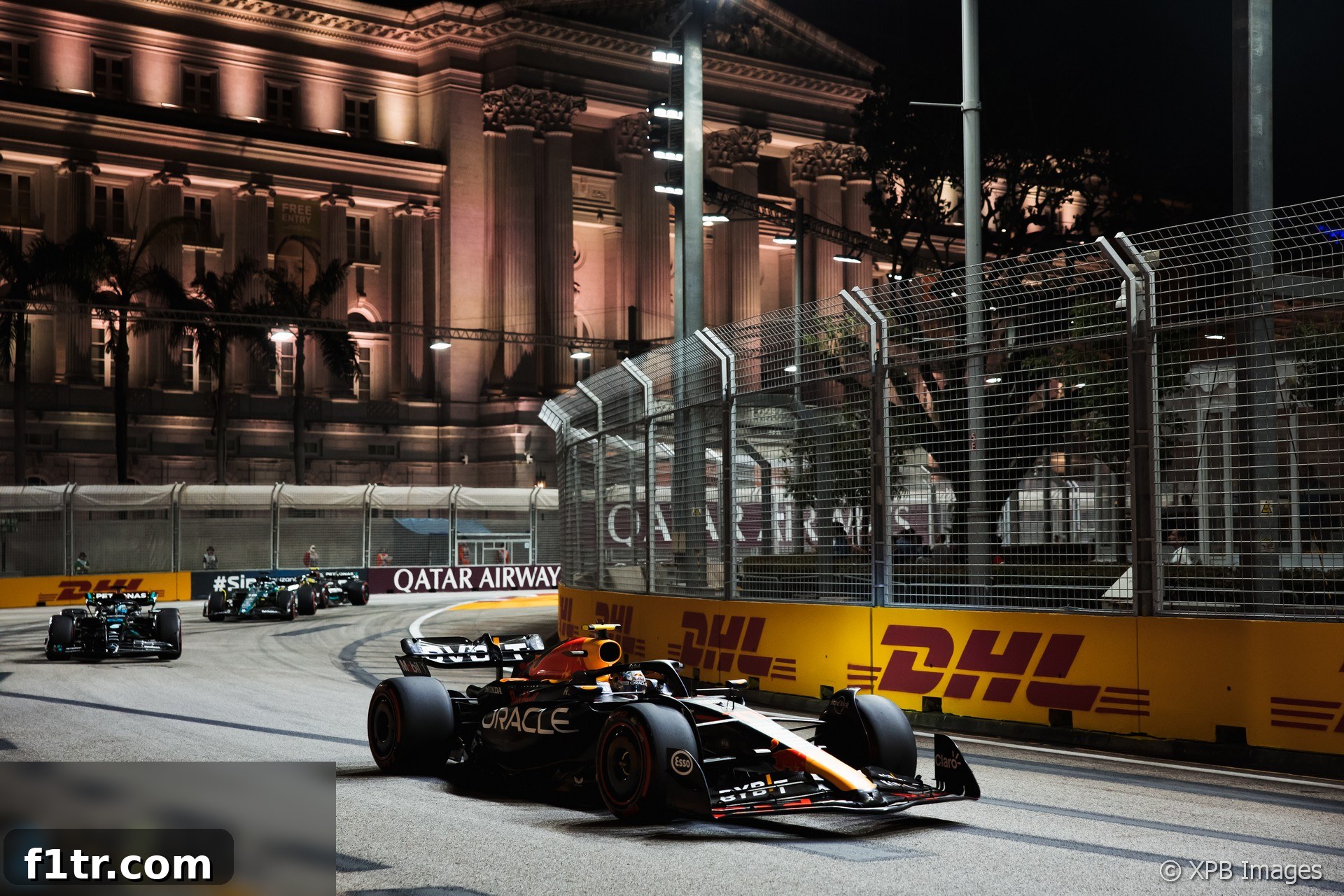
However, the narrative took an unexpected turn at the Singapore Grand Prix. FIA Race Director Niels Wittich made the decision not to enforce the same maximum lap time rule that had been so effective in Monza. Predictably, the first segment of qualifying for the Singapore Grand Prix dissolved into a messy conclusion, with several drivers on their final flying laps encountering large groups of rivals moving at a considerably slower pace. The chaos and potential for collisions were evident, prompting immediate questions about the FIA’s reversal.
Before qualifying, some drivers had already anticipated this potentially dangerous scenario, citing recent changes to the final sector of the Marina Bay Street Circuit, which naturally funneled cars into a more confined space. Alfa Romeo driver Zhou Guanyu confirmed these predictions, stating, “It was the same as I expected.” Zhou, taking a pragmatic approach, started his final run early, hoping to preemptively avoid the traffic snarls that inevitably developed towards the session’s end.
Despite the visible congestion, many drivers were not convinced that the decision to withdraw the Monza rule was the root cause of Singapore’s problems. Lando Norris, the McLaren driver, articulated a nuanced perspective, suggesting that the rule, while valuable, has specific applications. He argued it was crucial at circuits like Monza, where the difference in closing speeds between cars can be extremely high on long straights, but less so in Singapore’s unique urban environment.
“The reasoning for having it was not to limit traffic, but to limit approaching speed differences, especially in Monza,” Norris explained. “In Monza, they said the reasoning for it was not to try and sort out traffic and overtaking, but to sort out people going 10kph when you’re going 300 into the last corner.” Norris believed that the same solution wasn’t necessary in Singapore. “You don’t have a massive long straight before the last corner, you have the chicane and the rest of it so therefore that issue is kind of gone a little bit.”
Norris further advocated for greater driver autonomy in managing risks. He contended that drivers should be empowered to make their own judgments about whether to gamble on setting their flying laps at the very end of a session, when the likelihood of encountering traffic naturally increases. “If you don’t want this, you can go out five minutes earlier and get on with your lap and do it yourself. But everyone chooses to be in this position, they kind of know it’s going to happen and they just always think they’re going to come out on top and sometimes they don’t.”
Despite his own near-miss with Esteban Ocon during the chaotic qualifying session at Monza – an incident that underscored the dangers the rule aimed to prevent – Norris staunchly defended the FIA’s choice not to enforce the maximum lap time rule more broadly in Singapore. “I think it was a good decision that they made, I think it was better for everyone especially with how hot it is, how to do the cool-down laps and things like that. You can also have a mess if the rule was implemented, it does cause other issues like with me and Ocon in Monza, so I’m happy with what they did.” His comments highlight the trade-offs: while reducing closing speeds, the rule can also constrict cool-down strategies, particularly in challenging conditions like Singapore’s heat and humidity.
Ocon echoed Norris’s sentiment, expressing satisfaction with the FIA’s decision in Singapore. “It’s Formula 1,” he declared. “It would be stupid to get restricted all the time, it’s no problem with safety we are all going quite slow when that happens.” Ocon emphasized that the strategic element of out-laps and the “chaos” they sometimes entail are integral to the DNA of qualifying. “I support the FIA in the direction they took [last] weekend in not having the [maximum] lap time, I think it’s much better like that. Out-laps are also a part of qualifying that I enjoy to put yourself in the right position to work with the engineers anticipating what can be going ahead, and it’s just in the DNA of qualifying and I enjoy the chaos because that’s also how you get opportunities.” His perspective underscores the sporting element, where managing traffic and strategizing position can lead to unexpected advantages.
Back to the Books: The Rule’s Reintroduction for Suzuka
Following the Singapore Grand Prix, the FIA quickly confirmed that the maximum lap time rule, previously employed at Monza, would be reinstated for the Japanese Grand Prix at Suzuka. This swift legislative pivot suggests that the governing body concluded that Suzuka’s unique characteristics warrant a similar approach to Monza. The iconic Japanese circuit features a challenging layout, including a slow and narrow chicane at the end of the lap that is approached at incredibly high speeds. This specific design element creates a high-risk zone for significant speed differentials, making the Monza-style maximum lap time rule a more suitable safety measure for this particular track configuration.
The FIA’s adaptive regulatory stance demonstrates an ongoing effort to tailor safety protocols to the distinct demands of each circuit, rather than applying a blanket rule across all venues irrespective of their individual characteristics. This track-specific application represents a pragmatic evolution in how F1 addresses safety concerns in qualifying.
The Broader Debate: Safety, Strategy, and the Spectacle
The fluctuating application of the maximum lap time rule brings into sharp focus a broader, perennial debate within Formula 1: where to draw the line between ensuring driver safety and preserving the inherent strategic freedom and raw spectacle of the sport. While safety is paramount, overly restrictive rules can inadvertently stifle creativity and strategic depth, elements that are often celebrated as core components of F1’s appeal.
On one hand, proponents of stricter regulations argue that the high-speed nature of Formula 1 leaves no room for compromise when it comes to potential collisions. Near-misses, they contend, are simply warnings of an accident waiting to happen, and preventing them justifies any perceived loss of strategic flexibility. The potential for catastrophic consequences from a high-speed impact between a fast-moving car and a slow-moving one is a risk the sport continually seeks to minimize.
On the other hand, drivers like Norris and Ocon champion a degree of autonomy, suggesting that part of the challenge and excitement of qualifying lies in navigating these complex scenarios. They argue that experienced F1 drivers are skilled enough to manage the risks associated with varying speeds and that making strategic choices about when to attack or conserve is a fundamental aspect of their craft. Furthermore, they highlight that some restrictive rules can create new, unforeseen problems, as evidenced by Norris’s interaction with Ocon in Monza under the maximum lap time rule.
Ultimately, the FIA’s goal is to find an equilibrium that protects drivers without stripping away the essence of competitive racing. This involves continuous evaluation, feedback from teams and drivers, and a willingness to adapt regulations based on real-world experiences at different circuits. The discussion around qualifying traffic and maximum lap times is far from over, and future iterations of the rule may continue to evolve as the sport strives for optimal solutions.
Bringing the F1 news from the source
RaceFans strives to bring its readers news directly from the key players in Formula 1. We are able to do this thanks in part to the generous backing of our RaceFans Supporters.
By contributing £1 per month or £12 per year (or the equivalent in other currencies) you can help cover the costs involved in producing original journalism: Travelling, writing, creating, hosting, contacting and developing.
We have been proudly supported by our readers for over 10 years. If you enjoy our independent coverage, please consider becoming a RaceFans Supporter today. As a bonus, all our Supporters can also browse the site ad-free. Sign up or find out more via the links below:
- Become a RaceFans Supporter
- RaceFans Supporter FAQ
2023 Singapore Grand Prix
- Sainz’s Singapore win made Leclerc focus on improving his race pace – Clear
- Singapore and Austin retirements cost me top 10 championship place – Ocon
- How Ocon’s “extreme” height for an F1 driver is helping other tall racers
- Steward’s admission Verstappen should have had penalty frustrates his rivals
- Drivers back Singapore qualifying tweak as rule changes again for Japanese GP
Browse all 2023 Singapore Grand Prix articles