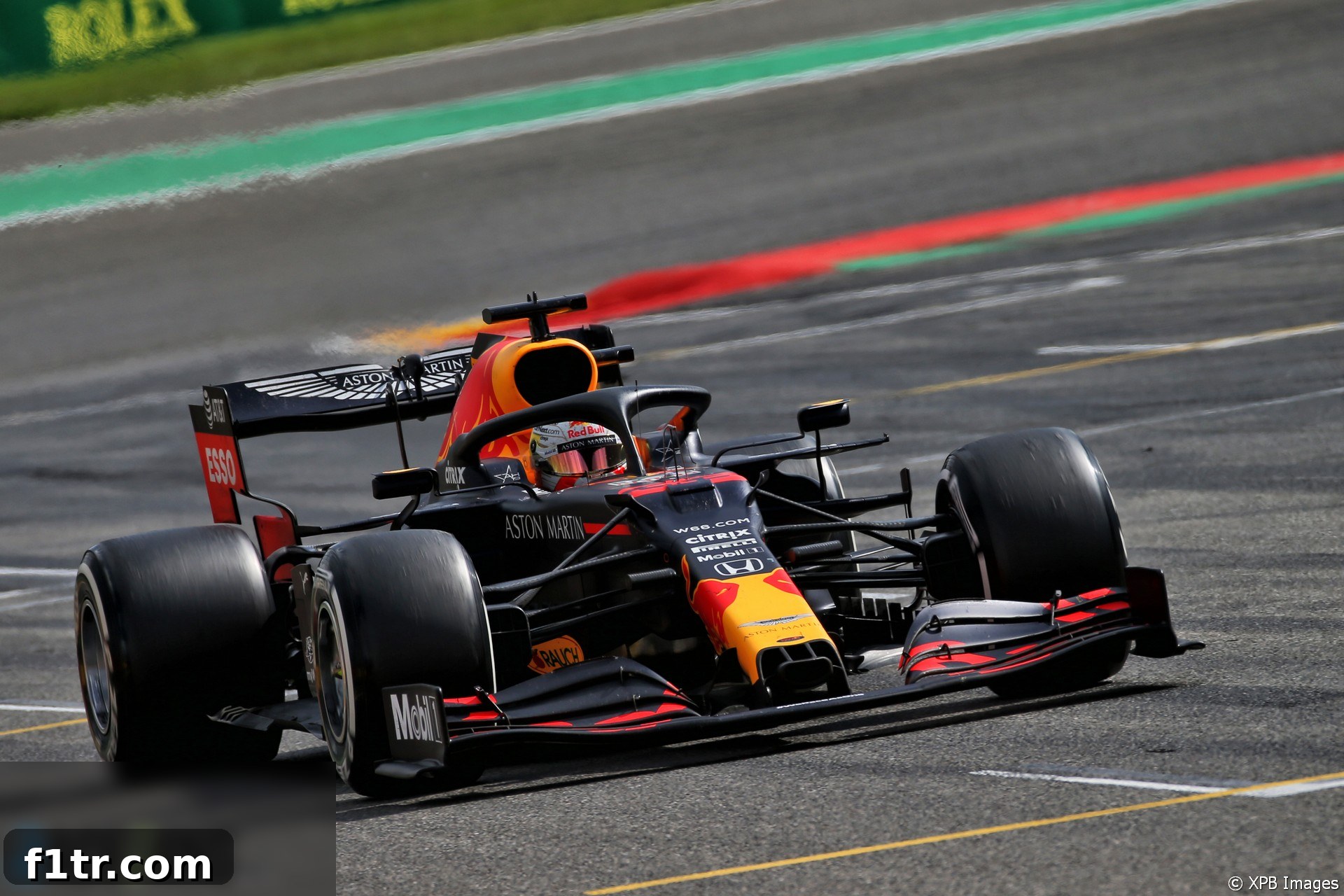
Max Verstappen’s Strategic Retreat: Battling Tyres and Mercedes at the 2020 Belgian Grand Prix
The legendary Circuit de Spa-Francorchamps, with its sweeping corners, dramatic elevation changes, and high-speed sectors, has always been a formidable test for Formula 1 drivers and their machinery. The 2020 Belgian Grand Prix was no exception, presenting a unique set of challenges that pushed teams to their strategic limits. For Max Verstappen, Red Bull Racing’s star driver, the race unfolded as a cautious, strategic retreat in its closing stages, driven by acute concerns over extreme tyre degradation and the ever-present threat of a race-ending puncture. Despite these hurdles, Verstappen secured a commendable third-place finish, a testament to his skill and the team’s pragmatic decision-making, albeit behind the dominant Mercedes duo of Lewis Hamilton and Valtteri Bottas.
The Race Unfolds: Verstappen’s Early Pace and Mercedes’ Dominance
Starting from third on the grid, Verstappen found himself in a familiar position at the start of the 2020 Belgian Grand Prix – sandwiched between the two Mercedes cars. As the lights went out, he maintained his position, expertly navigating the first corners and settling into a rhythm behind Hamilton and Bottas. His initial stint on the medium compound tyres saw him attempting to shadow the Silver Arrows, pushing the limits of his Red Bull RB16. Spa’s long straights and high-energy corners, particularly the iconic Eau Rouge and Blanchimont, are notoriously demanding on tyres, requiring a delicate balance between outright pace and careful management.
Throughout the early phase of the race, Verstappen displayed his characteristic blend of aggression and precision, striving to keep the gap to the leaders manageable. The primary goal was to remain within striking distance, hoping for an opportunity that might arise through a safety car, a strategic gamble, or an error from the Mercedes drivers. However, it soon became apparent that the Mercedes W11 had an inherent pace advantage, especially in maintaining strong lap times over a full stint. After the first round of pit stops, where most front-runners switched to the hard compound tyres for what was planned as a lengthy second stint, the true nature of Verstappen’s challenge began to surface. He embarked on a demanding 33-lap run on the hard rubber, a stint that would ultimately define his race.
Extreme Degradation: A Battle Against the Tyres
As the Grand Prix wore on, the initial hopes of challenging the Mercedes began to dissipate, replaced by a growing anxiety over tyre life. Verstappen’s hard compound tyres, tasked with enduring nearly two-thirds of the race distance on the punishing Spa circuit, were showing severe signs of degradation. “We just had no tyres left,” Verstappen revealed candidly after the race, highlighting the critical state of his Pirelli rubber. The wear was so profound that it transcended mere performance loss, venturing into the dangerous territory of structural compromise. “I think I was very close to a puncture,” he admitted, a chilling prospect given the high speeds attained at Spa-Francorchamps. A high-speed puncture could have led to a catastrophic accident, underscoring the gravity of the situation.
The team’s strategists, in constant communication with their driver, quickly recognized the impending crisis. The decision was made for Verstappen to significantly reduce his pace over the final eight laps of the race. This involved backing off earlier on the straights, lifting and coasting more aggressively, and consciously modulating his driving style to alleviate the stress on the rapidly deteriorating front tyres. Verstappen explained his predicament: “We ran out of tyres at the end. So for the last eight laps I was backing it out, saving the front tyres.” This strategic necessity transformed what should have been an exhilarating conclusion to a Grand Prix into a painstaking exercise in conservation. The loss of grip was evident across both tyre compounds used: “On the mediums, I didn’t really have a lot of grip and then on the hard tyres I was initially trying to put pressure on Bottas but then they told him to speed up and I couldn’t keep up.” This significant drop in competitive edge was visible on the timings, with Verstappen eventually trailing Bottas by over six seconds in the closing stages, a testament to the drastic measures taken to preserve the tyres.
The “Boring” Truth: Frustration of a Capped Performance
For a driver of Max Verstappen’s competitive spirit and aggressive flair, a race where he is forced to hold back is an inherently frustrating experience. His post-race comments encapsulated this sentiment perfectly. “It was pretty boring, to be honest,” Verstappen admitted. “Not really interesting. Not much to do. I couldn’t really keep up with them when they were pushing.” These words paint a vivid picture of a top-tier athlete whose potential was capped, not by a lack of skill or will, but by the physical limitations of his equipment and the prevailing track conditions. The absence of genuine on-track duels with the Mercedes, compounded by the constant battle to prevent tyre failure, stripped the race of the excitement and challenge that Verstappen typically thrives on.
This situation also brought into sharp focus a recurring narrative of the 2020 Formula 1 season: the undeniable dominance of Mercedes-AMG Petronas F1 Team. While Verstappen consistently emerged as the sole challenger to the Silver Arrows, the sheer pace advantage and superior tyre management capabilities of Mercedes were evident across various circuits, and Spa was no different. Despite his valiant efforts, attempting to match Mercedes’ blistering pace often meant pushing the Red Bull RB16 beyond its optimal operating window, inevitably leading to accelerated tyre wear, a scenario that played out dramatically at the Belgian Grand Prix.
Strategic Crossroads: Ricciardo’s Threat and Red Bull’s Prudence
A pivotal strategic decision emerged during the latter part of the race: whether to execute a late second pit stop for fresh tyres. While new rubber might have allowed Verstappen to unleash his full pace in the final laps, the Red Bull team ultimately opted against it. The primary deterrent was the formidable threat posed by Daniel Ricciardo and the McLaren Renault team (now Alpine F1 Team). Ricciardo, known for his relentless late-race charges and exceptional overtaking abilities, had been demonstrating remarkable performance at Spa, showcasing impressive top speed and consistent lap times.
“I was not sure with [Renault’s] top speed whether it would’ve been easy to pass them, so we decided to just stay out,” Verstappen elaborated. This candid assessment reveals the intricate strategic calculus at play in Formula 1. A pit stop, even a flawlessly executed one, would have dropped Verstappen into the immediate vicinity of Ricciardo. Given Renault’s strong showing, particularly its straight-line speed advantage, regaining third place against a resurgent Ricciardo would have presented a significant and potentially unmanageable risk. Ricciardo indeed went on to secure a strong fourth place, further validating Red Bull’s cautious approach. Verstappen himself acknowledged Renault’s impressive weekend, remarking, “It was probably a good weekend for Renault.” This calculated decision, prioritizing a guaranteed podium over a risky gamble, ultimately secured valuable championship points, proving to be the pragmatic choice under immense pressure.
Acceptance and the Broadening Championship Gap
Despite the inherent frustrations, Max Verstappen maintained a remarkably pragmatic perspective on his third-place finish. “But we finished third. I don’t think any more than that would’ve been possible today. Okay, maybe it wasn’t the most satisfying third, but it’s still better than nothing,” he concluded. This mature outlook reflects the reality of a protracted championship season, where maximizing points on challenging weekends is often as crucial as outright victories. Securing a podium when the car is not quite matching the competitors’ pace is a profound testament to a driver’s raw talent, strategic intelligence, and the team’s executive prowess.
However, the 2020 Belgian Grand Prix also widened the chasm in the Drivers’ Championship standings. While Verstappen maintained a solid second place, he found himself a substantial 47 points adrift from Lewis Hamilton. This ever-increasing deficit underscored the monumental challenge confronting Red Bull in their bid to dethrone Mercedes from their seemingly insurmountable position. Each race where Mercedes secured a 1-2 finish or a significant points advantage made the championship battle an increasingly arduous uphill climb. The 2020 season ultimately became a showcase for Mercedes’ unparalleled engineering superiority, with Verstappen consistently extracting the absolute maximum from his package, often single-handedly challenging two highly capable Mercedes cars.
The Enduring Challenge of Tyre Management in Modern Formula 1
Verstappen’s experience at Spa serves as a powerful and enduring illustration of the critical and often underestimated role of tyre management in modern Formula 1. Tyres are arguably the most complex and profoundly influential component of an F1 car, directly dictating performance, strategic flexibility, and ultimately, race outcomes. A myriad of factors, including ambient and track temperatures, circuit layout characteristics, individual driving styles, and intricate car setup parameters, all converge to determine how tyres perform and degrade over a race distance. Spa, with its relentlessly high-speed corners and extended duration turns that generate immense lateral and longitudinal forces, is notoriously tough on tyres, frequently leading to issues like blistering, thermal degradation, and excessive wear.
The Pirelli compounds utilized in the 2020 season, while generally robust, still demanded meticulous handling, especially over extended stints. Verstappen’s close encounter with near-puncture levels of wear vividly highlights the razor-thin margins within which F1 drivers and teams operate. The ability to instinctively sense the limits of the tyres, communicate effectively and precisely with the pit wall, and collaboratively adjust strategy in real-time is an indelible hallmark of elite Formula 1 performance. In this specific instance, Verstappen’s wealth of experience and the Red Bull team’s swift and accurate assessment of the unfolding crisis likely averted a far more severe outcome, adeptly transforming a potential DNF into a highly valuable and hard-fought podium finish.
Conclusion: A Podium Earned Through Prudence and Resilience
The 2020 Belgian Grand Prix for Max Verstappen was not a spectacle defined by blistering lap records or audacious overtaking maneuvers. Instead, it was a profound narrative of strategic prudence, exceptional resilience, and an unwavering battle against the invisible yet omnipresent adversary of tyre degradation. His third-place finish was a testament to his maturity as a driver, showcasing his astute understanding of when to push the limits and, crucially, when to consolidate and preserve, even if it meant sacrificing the exhilarating thrill of a late-race charge. While the championship gap to Lewis Hamilton widened, Verstappen’s performance at Spa-Francorchamps unequivocally reaffirmed his status as the strongest and most consistent challenger to Mercedes, consistently delivering podium finishes even when the odds were decisively stacked against him. It was a race that eloquently highlighted the intricate and delicate balance between unbridled aggression, meticulously calculated strategy, and the unforgiving physics that govern the pinnacle of motorsport, Formula 1.
2020 Belgian Grand Prix Related Articles
- 2020 Belgian Grand Prix Star Performers
- Ricciardo believes Renault’s Spa set-up breakthrough will work on other tracks
- ‘He should have let me pass’: How Raikkonen saw Giovinazzi’s crash
- Sub-54 second laps will produce a “big mess” in qualifying on Bahrain Outer circuit
- McLaren expect Ferrari will “strike back” after Monza
For more in-depth coverage and analysis, browse all 2020 Belgian Grand Prix articles.