Formula 1: A Crucible of Innovation Driving Automotive Advancement and Beyond
In the high-octane world of motorsport, innovation isn’t just a goal; it’s a relentless necessity. According to Paddy Lowe, a veteran engineer with an illustrious career at Williams and McLaren, the pace of development within Formula 1 now significantly outstrips that found in other major industries. This unparalleled drive for technological superiority, Lowe asserts, has directly fueled pioneering advancements, particularly in the realm of electric motoring, with ripple effects across the broader automotive sector and even other high-tech fields.
Lowe’s insights underscore a fundamental truth about Formula 1: it is far more than just a racing spectacle. It serves as a real-world, high-speed laboratory where cutting-edge concepts are rigorously tested, refined, and perfected under extreme pressure. This constant pursuit of marginal gains inevitably leads to breakthroughs that extend far beyond the racetrack, permeating into technologies that enhance our everyday lives.
The Hybrid Revolution: F1’s Enduring Legacy in Electric Vehicles
One of the most compelling examples of Formula 1’s profound impact on road car development lies in its pioneering work with hybrid power. Introduced to F1 over a decade ago with the Kinetic Energy Recovery System (KERS), this technology initially seemed daunting, but its rapid evolution within the sport paved the way for modern electric vehicles. Lowe vividly recalls the early days of KERS development for the 2009 season, stating that when work began in 2007, an electrical solution seemed unfeasible.
“If you look at lithium-ion batteries, when we did KERS for 2009, when we started that in 2007 there was no way it was going to be an electrical solution. It wasn’t even in the game. It was going to be flywheel,” Lowe explained. The primary limitation at the time was power density, not the overall energy capacity of batteries. F1 engineers, driven by the intense demands of competition, pushed the boundaries of what was thought possible, delivering power density a staggering 100 times higher than initially expected.
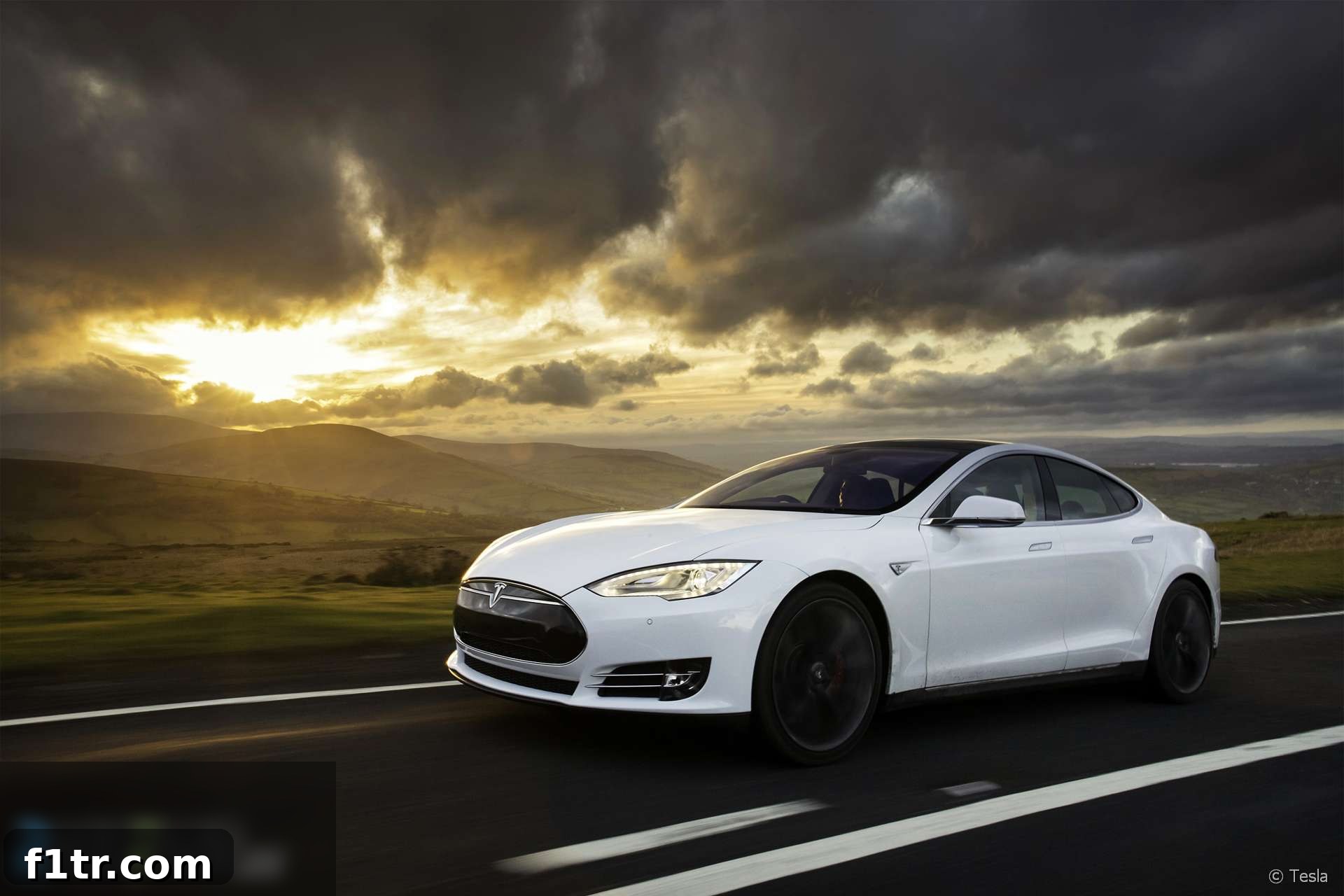
This monumental leap in battery technology, specifically in enhancing power output from a compact unit, directly correlates with the rise of high-performance electric vehicles we see on the roads today. “And that’s, in my view, the reason why nowadays we have Teslas,” Lowe asserted. “These cars that are out on the road need power density from the battery and that came from Formula 1.” The ability to discharge large amounts of power almost instantaneously, crucial for a racing car’s acceleration and energy recovery, became a foundational element for the modern EV powertrain, proving that the cutting edge of motorsport often prefigures the mainstream automotive future.
F1’s contribution didn’t stop at KERS. The subsequent evolution into the more complex Energy Recovery System (ERS) with its multiple motor-generator units (MGU-H and MGU-K) further advanced thermal efficiency, energy harvesting, and power deployment strategies. These sophisticated systems demanded not only advancements in battery chemistry but also in power electronics, control software, and cooling systems – all critical components for high-performance electric and hybrid road vehicles.
The Professionalization of F1 Engineering and Rising Budgets
Lowe also highlighted another significant factor contributing to F1’s accelerated development rate: the dramatic increase in team budgets and the resultant professionalization of engineering departments. While teams might perennially voice concerns about financial constraints, Lowe points out that the overall level of funding and professionalism across the grid has never been higher.
“The teams are more professional than they ever were, they’re better funded,” he noted. While acknowledging the ongoing challenges with financial distribution across the grid, he emphasized that “in general within that every team, even the most poorly-funded team, is very well-funded compared to how they were in the past.” This substantial investment translates directly into an unparalleled capacity for innovation.
This influx of capital has allowed teams to employ larger, more specialized engineering teams, invest in state-of-the-art simulation tools, advanced manufacturing techniques like additive printing, and sophisticated testing facilities. The result is a level of engineering precision and efficiency previously unimaginable. “That is translated into the most fantastic engineering professionally applied like it never was before. So the sport keeps growing commercially and it keeps growing technically,” Lowe concluded. This professionalization ensures that every resource, every minute, and every idea is optimized for performance, pushing the boundaries of what is mechanically and aerodynamically possible.
From “Wild West” to Meticulous Precision: The Evolution of F1 Development
Reflecting on his early career, which included developing groundbreaking cars like Williams’ active suspension FW14B, Lowe drew a stark contrast between past and present F1 development methodologies. He described his early days as the “Wild West,” a time characterized by immense freedom but often crude execution.
“We were limited by our ability and our imagination as to what we could do on the cars technically,” he recounted. “I describe those days, my early days, as the ‘Wild West’ because you could come in in the morning having thought about something in the shower – ‘let’s have traction control or power steering or an active differential’ – and there was no limitation in the rule. You just went and did it.” This era allowed for radical, experimental designs that pushed the sport’s technical boundaries in exhilarating ways.
However, this freedom came with its own set of frustrations. “The only thing was we didn’t actually have such a great capability to deliver it very well. So whilst it’s an exciting time back then we didn’t do things very well. I was very frustrated with what a bad job we did things back then.” The engineering tools and processes of the time were simply not as sophisticated, leading to brilliant ideas sometimes being poorly implemented or not fully optimized.
Today, the situation has completely flipped. While regulations are far more stringent, the engineering capability is vastly superior. “Now it’s completely flipped so if you see any gap in the regulation we can jump on it and within days deliver something of technical excellence, extraordinary excellence, once you see the opportunity.” This modern F1 paradigm emphasizes meticulous analysis, rapid prototyping, and flawless execution. Teams operate with such precision that even the smallest regulatory loophole can be exploited with an astonishing speed and efficacy, translating into tangible performance gains on track.
The regulatory constraints, far from stifling innovation, seem to have channeled it into hyper-efficient and highly focused problem-solving. This environment fosters a culture where engineers are constantly searching for minute advantages, pushing material science, aerodynamics, and software development to their absolute limits within the given parameters.
Formula 1: A Global Benchmark for Rapid, High-Stakes Innovation
Perhaps Lowe’s most striking observation is that Formula 1 now serves as an exemplary model for cutting-edge technological development, even for industries traditionally considered more advanced. “But looking at the world at large back then we were well behind other comparable industries: aerospace industry, aircraft massively more advanced than racing cars.” This historical perspective underscores the monumental shift F1 has undergone.
Today, the tables have turned. “Now in many respects it’s the other way around. Those industries come and look at us because we are just if not more sophisticated and are able to deliver it faster,” Lowe explained. Several unique characteristics of Formula 1 contribute to this accelerated development cycle and its newfound leadership position:
- Regulatory Agility: Unlike industries heavily constrained by external safety regulations, F1 generally operates under a self-certifying safety framework. While safety is paramount, the internal nature of its regulatory body allows for faster iteration and implementation of new technologies without the extensive bureaucratic hurdles seen elsewhere.
- Intense Competitive Drive: The motivation to win is absolute. With races held every two weeks, there is constant pressure to innovate and improve. This frequent, high-stakes competition creates an urgency that few other industries can match. Every development cycle is compressed, and results are immediately visible and measurable.
- Performance-Driven Funding: Teams are funded and motivated by the imperative to win, creating a direct link between investment and competitive output. This incentivizes continuous, aggressive development.
“We’re motivated and funded to win so there’s a strong competitive drive on TV every two weeks so we really get things done,” Lowe affirmed. “As you know people write books about that nowadays: if you want to get something done, give it to Formula 1.” This reputation for delivering under pressure has made F1 a fascinating case study in agile engineering and rapid innovation, attracting attention from sectors far removed from motorsport.
Conclusion: Formula 1’s Enduring Role as an Innovation Incubator
Paddy Lowe’s insights paint a vivid picture of Formula 1 as a dynamic, ever-evolving ecosystem of technological advancement. From pioneering hybrid powertrains that laid the groundwork for modern electric vehicles to transforming its own engineering processes from “Wild West” ingenuity to hyper-efficient precision, F1 consistently pushes boundaries.
Its unique blend of immense financial investment, relentless competitive pressure, and a culture of rapid execution has not only propelled motorsport to unprecedented levels of sophistication but has also established it as a significant catalyst for innovation in the broader automotive and technology landscapes. Formula 1 is more than just a sport; it is a global innovation incubator, demonstrating how extreme demands can foster extraordinary solutions that benefit us all.