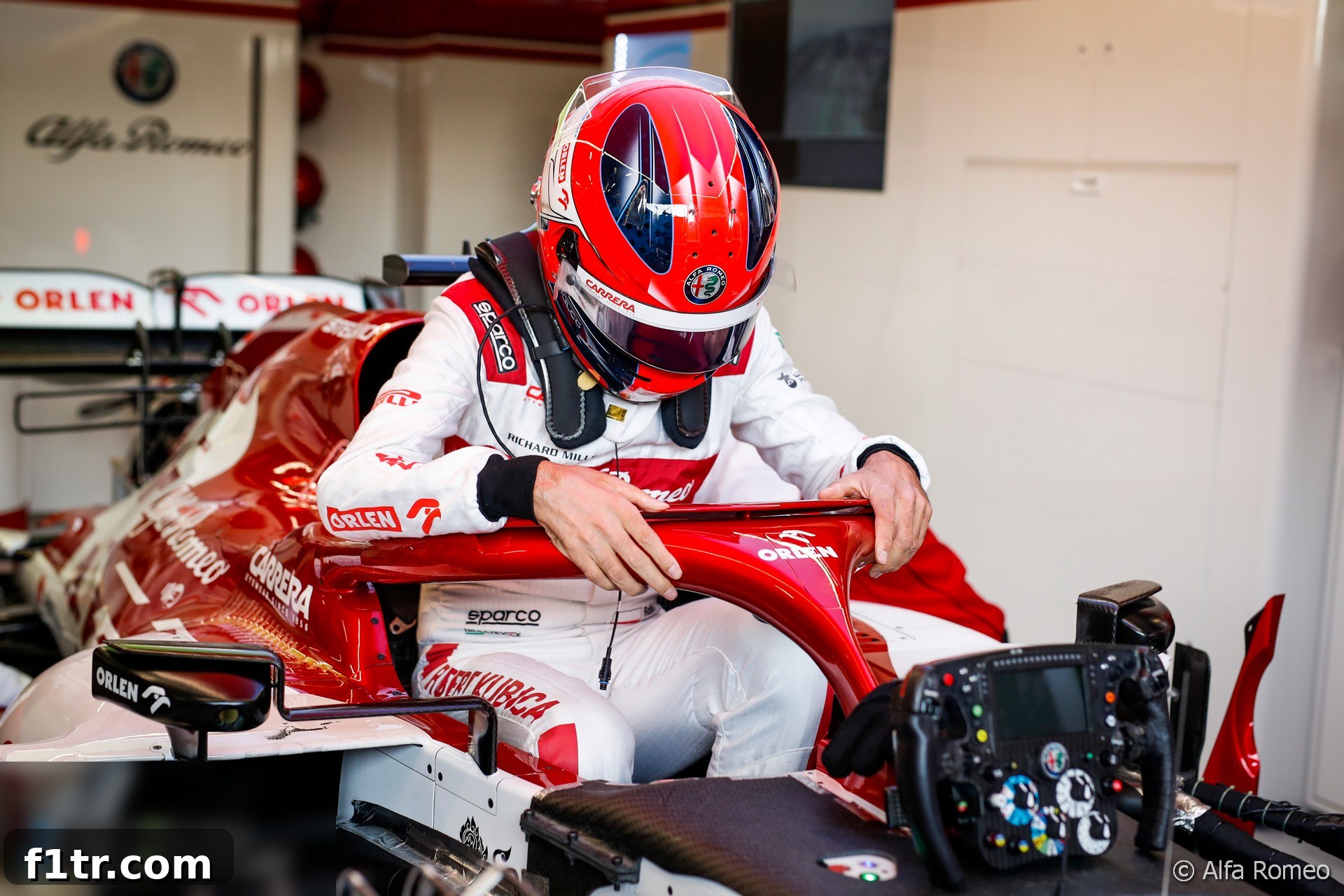
In a recent discussion, former Formula 1 driver Robert Kubica shared his compelling perspective on how to significantly improve the sport: by reversing the trend of increasing car weight. Kubica firmly believes that a lighter Formula 1 car would unlock a cascade of benefits, enhancing both the on-track spectacle for fans and the crucial feedback for drivers.
Robert Kubica’s Vision: The Case for Lighter F1 Cars
Robert Kubica articulated his views during an insightful conversation with Pirelli motorsport director Mario Isola, emphasizing the multifaceted advantages of reducing the substantial mass of modern F1 machinery.
“I would definitely reduce the weight of the car. I think that there would be more than one advantage, and in different regions as well,” Kubica began, highlighting the broad impact such a change would have.
“First of all, the cars will be nicer to drive, more reactive, and they will give you a chance to recover. So there will be less inertia when the car slides. It means that the car would be easier to catch, and it will unlock more aggressive driving.” This point is critical for understanding driver satisfaction and race excitement. Lighter cars inherently possess less inertia, allowing drivers to react more swiftly to slides and push the limits with greater confidence. The ability to ‘catch’ a car when it’s on the edge encourages bolder maneuvers, leading to more spectacular and daring overtaking attempts, which are the essence of thrilling motorsport.
Kubica further elaborated on the knock-on effect for one of F1’s most critical components: “Also, it will help the tyres because the force goes through to the tyre from downforce. The cars are much bigger now, and they are much heavier. So I think the tyres are stressed much more than they were 10 years ago.” Modern F1 cars, with their immense downforce and significant weight, place enormous stress on Pirelli’s tyres. A reduction in car weight would directly lessen this burden, potentially leading to more durable tyres that allow drivers to push harder for longer periods without excessive degradation. This could also open doors for Pirelli to develop softer compounds, further increasing grip and performance while still ensuring race-long consistency.
Ultimately, Kubica ties these technical improvements back to the core appeal of Formula 1. “This will make the tyres’ life easier, which will also unlock the possibility to attack them more, to drive more aggressively. I think it will be the most efficient way of improving the show and also the feeling of the drivers, which is a very common line, because if the drivers are able to attack more, it will be a better show.” The synergy between lighter cars, improved tyre longevity, and empowered drivers is undeniable. When drivers feel more in control, when they can trust their machinery to respond predictably and allow for recovery from minor errors, they are naturally inclined to drive more aggressively, creating a more engaging and unpredictable spectacle for fans worldwide. This philosophy underscores the belief that better driver feedback and increased car agility directly translate into better racing.
The sentiment from Kubica resonates with many within the F1 paddock and among fans, who often lament the ever-increasing size and weight of contemporary Formula 1 cars. Over the decades, F1 cars have steadily gained weight due to evolving safety standards, the introduction of hybrid power units, and larger wheel sizes, among other factors. While safety is paramount, finding a balance that preserves the raw, visceral feeling of an F1 car remains a significant challenge and a frequent topic of debate. Kubica’s perspective offers a clear path towards re-injecting that dynamic agility that many believe has been somewhat diluted.
- Rookies ‘should be terrified’ by first experience of F1: Reflecting on the daunting challenge newcomers face when stepping into a Formula 1 car for the first time, emphasizing the sheer power and complexity that can be overwhelming even for seasoned talents.
Social Media Highlights from the F1 World
Catch up on some of the most notable and entertaining posts from the realm of Formula 1 across Twitter, Instagram, and other platforms:
“No! No Red Bull… ” @Charles_Leclerc’s horrified reaction when he accidentally selects a @RedBullRacing in @Formula1game.
“I’ll call Christian and tell him” quips @Alex_Albon.#F1 pic.twitter.com/XwygWzutE3
— RaceFans (@racefansdotnet) April 10, 2020
In a moment of lighthearted digital racing, Ferrari driver Charles Leclerc provided an amusing viral clip showcasing his ‘horror’ when he inadvertently selected a Red Bull Racing car in a Formula 1 video game. The humorous mishap quickly spread across social media, with Red Bull driver Alex Albon playfully joining in, joking about calling Christian Horner, the Red Bull team principal. This incident highlights the competitive spirit and camaraderie, even in virtual realms, demonstrating the intense loyalty drivers have to their respective teams and the fun side of the F1 community.
My way to #StayHome 🏎️ pic.twitter.com/jmG5oy7CDe
— Max Verstappen (@Max33Verstappen) April 10, 2020
Red Bull Racing’s Max Verstappen also shared a glimpse into his personal life during a period of global restrictions, posting an image or video with the hashtag #StayHome, featuring a racing car emoji. This post connected with fans by showing how even elite athletes engage in their passion, albeit perhaps virtually or through hobbies, while adhering to public health guidelines, offering a relatable insight into their lives away from the track.
- For more insights into the F1 world on social media, explore our comprehensive F1 Twitter Directory, a curated list of official F1 accounts to follow.
Further Motorsport Insights and Interesting Links
Delve deeper into the world of motor racing with these additional links and intriguing stories:
My F1 Cars – Karun Chandhok (RaceFans via YouTube)
Join former F1 driver and acclaimed motorsport analyst Karun Chandhok as he explores his personal collection or recounts his experiences with some of the most iconic Formula 1 cars. This video offers a unique, expert perspective on the machinery that has shaped Grand Prix racing, providing insights into their engineering, handling characteristics, and historical significance. Chandhok’s knowledgeable commentary makes this a must-watch for any F1 enthusiast seeking a deeper appreciation of the sport’s technological evolution.
‘Waarom geen Formule 1 op woensdagavond, net als Champions League?’ (NOS – Dutch)
In this thought-provoking article from NOS, Dutch motorsport figure Jan Lammers poses the intriguing question of why Formula 1 races couldn’t be held on weekday evenings, similar to the UEFA Champions League. This concept challenges traditional F1 scheduling and could open up new possibilities for audience engagement and logistical planning. The piece also touches on discussions within the sport regarding the potential use of ‘three different versions of the Silverstone circuit’ for future races, exploring innovative approaches to track layouts to enhance competition and driver challenge. Such discussions indicate a proactive approach by F1 management to adapt and innovate, as further explored in our related article on why a reverse race around Silverstone isn’t realistic, delving into the practicalities and challenges of such unconventional circuit configurations.
Rimpianto? Non aver portato Senna alla Ferrari (Sky – Italian)
In a revealing interview with Sky Italy, former Ferrari president Luca di Montezemolo shares profound reflections on his tenure, including one of his biggest regrets: not being able to bring legendary driver Ayrton Senna to Ferrari. This candid admission offers a glimpse into the strategic and personal decisions at the highest echelons of Formula 1. Montezemolo also recounts a fascinating episode from 2008, where Michael Schumacher, then retired but still highly influential, strongly urged Ferrari to sign Sebastian Vettel after his stunning victory at Monza. However, Ferrari’s management, feeling Vettel was still too young and perhaps immature for the lead role at the Scuderia, opted instead for Fernando Alonso. This decision had significant ramifications for the driver market and the subsequent careers of all involved, shaping a critical chapter in Ferrari’s modern history and its pursuit of championship glory. The ‘what-ifs’ surrounding these choices continue to be a rich source of discussion among F1 historians and fans alike.
Jimmie Johnson mulls future in red-flagged farewell season (Miami Herald)
NASCAR icon Jimmie Johnson shares his thoughts on his future in racing amidst a “red-flagged” farewell season, a period marked by unprecedented interruptions to the sporting calendar. Despite the unexpected pause, Johnson reflects on his initial commitment to make 2020 his last full-time year in NASCAR. He clarifies, however, that he has “always left the door open for other racing and NASCAR and abroad for the future.” This statement leaves fans speculating about potential future ventures, perhaps in different motorsport disciplines or even a return to selected NASCAR events. His comments highlight the adaptability and enduring passion of top-tier athletes, even as they transition from full-time careers, keeping the possibility of seeing him compete again very much alive.
Auto Union Type C Racecar (Lego Ideas)
For enthusiasts of both motorsport history and creative construction, this Lego Ideas project showcases a meticulously designed Auto Union Type C Racecar. The Auto Union Type C, an iconic ‘Silver Arrow’ from the 1930s, represents a pivotal era in grand prix racing innovation. Lego fans who appreciate the intricate details and historical accuracy of this proposed model are encouraged to cast their vote on the Lego Ideas platform. A successful campaign could see this stunning replica transform from a fan-made concept into an official Lego product, allowing collectors to build a piece of racing heritage.
We always endeavour to credit original sources and provide accurate information. If you have a tip for a link to feature in a future RaceFans round-up or notice any inaccuracies, please send it in via the contact form. Your contributions help us keep our content fresh and comprehensive.
Comment of the Day: Ecclestone, Hamilton, and Vettel
Today’s featured comment delves into the recent remarks made by Bernie Ecclestone regarding Lewis Hamilton and Sebastian Vettel, suggesting a deeper context behind the former F1 supremo’s public statements. Stephen offers an insightful perspective:
“It does look like Mr. Ecclestone is writing the historical account for Vettel.”
“I wouldn’t be surprised to see Leclerc win some races if Lewis went to Ferrari, but I would be surprised to see him win more than Lewis, at least for the next few years anyway.”
Stephen Crowsen (@Drycrust)
Stephen’s observation points to a perceived bias in Ecclestone’s comments, implying a narrative favoring Sebastian Vettel, perhaps due to a long-standing relationship or personal preference. This type of discussion often ignites passionate debate among fans, especially when comparing the legacies of dominant drivers like Hamilton and Vettel. The second part of the comment transitions to a hypothetical scenario involving Lewis Hamilton potentially moving to Ferrari and the implications for Charles Leclerc. Stephen expresses confidence in Hamilton’s continued dominance, even against a talented teammate like Leclerc at Ferrari, predicting that Hamilton would still emerge as the stronger force for the foreseeable future. This highlights the ongoing conversations about driver dynamics, team loyalty, and the perennial “greatest of all time” debate that fuels much of F1 fandom.
Happy Birthday!
We extend our warmest wishes and a very Happy Birthday to Aniket Garg today! We hope you have a fantastic day filled with celebration and joy.
If you’d like to receive a special birthday shout-out in our future round-ups, please don’t hesitate to inform us of your birthday via the contact form, or simply add your details to our list here.
On This Day in F1 History
- **65 years ago today:** The non-championship Pau Grand Prix witnessed a significant moment when Jean Behra triumphed in his Maserati. This victory came after the long-time race leader, the legendary Alberto Ascari, was forced to retire from the race due to an unfortunate braking problem. Such events in non-championship races often provided thrilling previews of the main Grand Prix season and showcased the talents of racing legends before their championship campaigns.