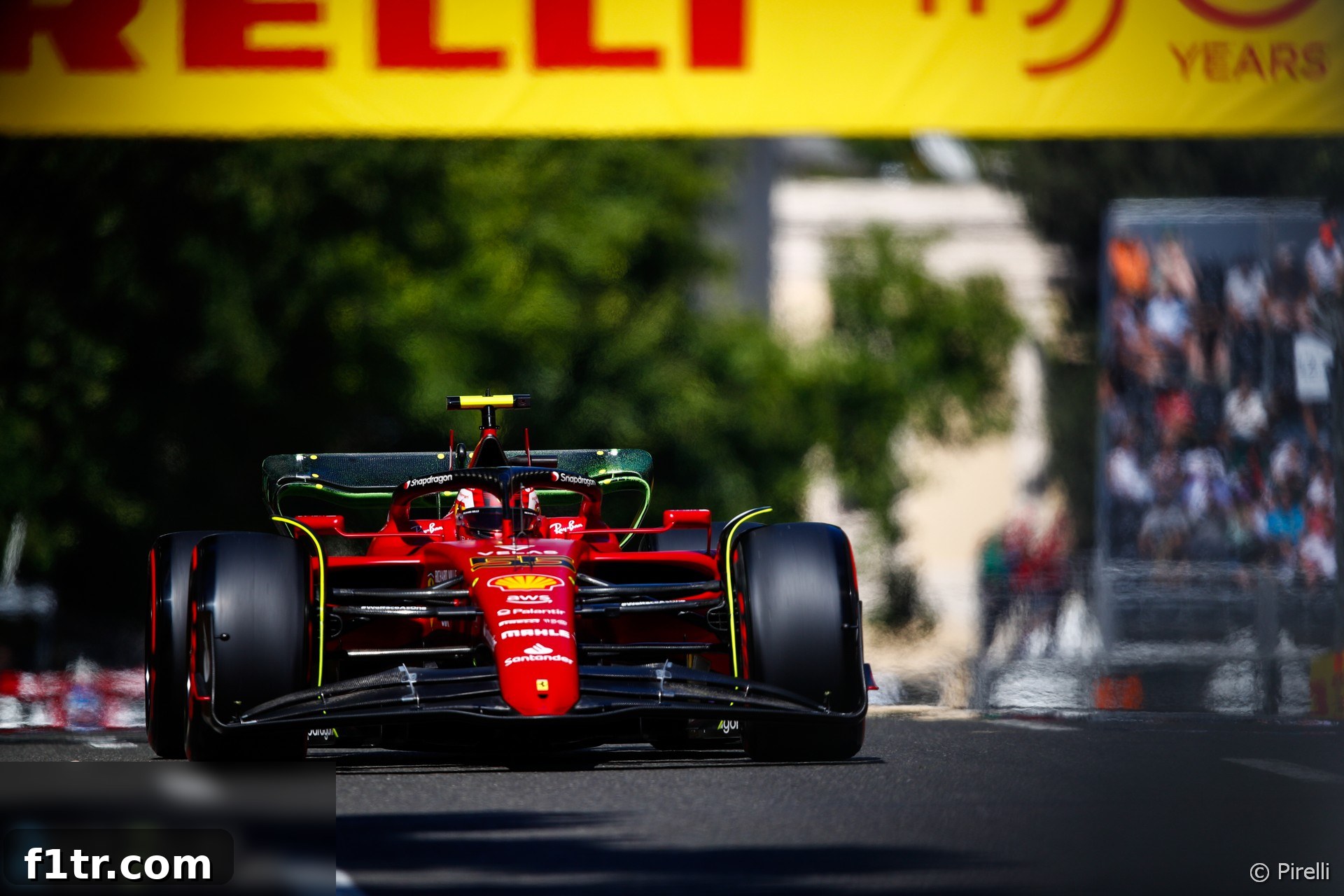
Carlos Sainz Explains Lone Wolf Strategy in Baku Qualifying: No Tow, High Stakes
In the high-stakes environment of Formula 1 qualifying, where mere milliseconds separate triumph from disappointment, every strategic choice carries immense weight. At the thrilling 2022 Azerbaijan Grand Prix in Baku, Ferrari driver Carlos Sainz Jnr found himself at the heart of such a decision. After an impressive start to Q3, initially topping the timesheets, Sainz ultimately finished fourth on the grid. He later revealed that his final, decisive lap was completed without the aerodynamic advantage of a slipstream tow – a strategic call he emphatically confirmed was his own.
The unique characteristics of the Baku City Circuit, renowned for its challenging blend of tight, technical castle sections and an astonishing 2.2-kilometer main straight, make the ‘tow’ or slipstream a particularly powerful tool in qualifying. Following closely behind another car can significantly reduce aerodynamic drag, allowing for higher top speeds and potentially shaving crucial tenths of a second off a lap time. Despite this well-established benefit, Sainz consciously opted for an alternative approach, prioritizing what he believed would be a cleaner and more consistent run, a decision that sparked considerable discussion.
The Strategic Rationale: Clean Air vs. Slipstream Advantage
Post-qualifying, Sainz offered profound insights into his thought process, underscoring the complexities faced by F1 drivers. “It was my call,” he stated with conviction, emphasizing his ownership of the decision. “I felt like the whole quali I had been quite consistent in terms of track positioning and tyre preparation.” For Sainz, maintaining this consistency throughout the session was paramount, believing it offered the best chance to extract peak performance from his Ferrari F1-75. He was fully aware of the potential trade-off: “So I knew I was giving up around a tenth and a half on the main straight because of this.”
However, the advantages of clean air and optimal tyre preparation, in Sainz’s calculation, outweighed the speed gain from a tow. “But tyre preparation and clean air in front is also important and it was my goal to go ahead and try and get clean laps in.” Running in disturbed air behind another car can disrupt a car’s finely tuned aerodynamics, impacting downforce, potentially overheating tyres, and making precise driving more challenging. Clean air, conversely, allows a driver to hit apexes accurately and deploy the car’s full aerodynamic potential without external interference. This intricate balancing act highlights the minute details F1 drivers and engineers consider under extreme pressure.
Sainz, ever the analytical competitor, acknowledged the need for post-session review. “So we will analyse it,” he remarked. “Maybe the other was a better call but the mistake was mine, not the track position.” This candid admission separates the strategic decision from the execution. While his choice not to take a tow was deliberate, a subsequent error in his driving prevented him from fully capitalizing on his chosen strategy, further emphasizing the razor-thin margins in Formula 1.
The Costly Error and Its Aftermath in Q3
Indeed, Sainz’s final effort in Q3 was ultimately compromised by a critical error, which proved costly in a session where precision is absolute. The unforgiving nature of the Baku street circuit leaves no room for even minor missteps. “Already the first lap of Q3 I had a couple of very tight moments with the wall,” he recounted, illustrating the constant dance on the edge that drivers perform around the barriers of this notoriously challenging track. Any contact, however slight, can compromise a lap, or worse, end a session prematurely.
On his second and final attempt, aiming for a cleaner, more refined lap, Sainz encountered an issue. “On the second run, trying to clean everything up, I actually did a mistake and it cost me quite a bit.” While the exact nature of the error wasn’t specified, in a qualifying session where performance is measured in thousandths of a second, a small lock-up, a hint of oversteer, or a momentary lapse in rhythm can unravel an otherwise strong lap. Despite the immediate disappointment of falling to fourth, Sainz maintained a remarkably positive and forward-looking perspective: “But I’m still in the fight and still making progress so I’m going to take the positives.” This resilience and ability to learn from setbacks are hallmarks of elite athletes in the relentless world of Formula 1.
Rebuilding Confidence and Mastering the F1-75
Sainz’s measured approach to qualifying in Baku, and indeed throughout the race weekend, was not an isolated incident but a direct consequence of a challenging start to the 2022 season. A series of crashes in preceding races had undeniably affected his confidence and his willingness to immediately push the car to its absolute limit. He openly admitted this, stating, “I’m taking a bit of margin on Fridays and FP3s to make sure I understand the car before pushing it to the limit.” This pragmatic strategy is a testament to his maturity, prioritizing foundational understanding and control over impulsive speed.
The 2022 Formula 1 season introduced radical technical regulations, bringing in ground-effect aerodynamics and an entirely new generation of cars. This paradigm shift demanded significant adaptation from every driver on the grid. Finding the absolute sweet spot and unlocking maximum performance from these complex new machines has been a steep learning curve for all, including a seasoned campaigner like Sainz. His need to build speed more gradually underscores the inherent challenge presented by the new F1-75 and the intensely competitive landscape of modern Formula 1.
“After a couple of moments in the last few races I’ve decided to take a bit this approach,” he reiterated. These “moments” refer to instances where pushing too hard, too soon, led to costly errors and damage. F1 drivers constantly walk a tightrope: supreme speed requires operating at the absolute limit, but even a fraction beyond can lead to significant consequences. Sainz is consciously recalibrating that delicate balance. “Honestly, during practice, I always felt within reach, I just knew I needed to take a bit more risks in qualifying. And as soon as I started taking them I was in the fight with Charles [Leclerc] and the two Red Bulls.”
This demonstrates his progressive comfort and pace development throughout the Baku weekend. He was clearly capable of finding the required speed when it truly mattered, competing directly with the front-runners. “It’s just that last run when I had to find a bit more, only there wasn’t.” This poignant observation speaks to the elusive “last tenth,” the ultimate frontier in F1 qualifying where perfection across every corner and braking zone is demanded, and sometimes, even the most talented drivers fall just short.
Chasing the “Last Tenth” and Eyeing Race Day
Sainz candidly admitted that he still feels he is “lacking a bit of experience with this car to be properly on the limit or exactly where to find the last tenth in quali in Q3 run two.” This self-critical assessment is vital for continuous improvement in such a demanding sport. While he possesses undeniable raw speed and a sharp strategic mind, mastering the intricate nuances of the F1-75 under the immense pressure of a Q3 shootout, especially on a demanding track like Baku, remains an ongoing process. The subtle differences in how the new cars behave with varying fuel loads, tyre conditions, and wind dynamics can be immense, and only extensive track time combined with unwavering focus can truly unlock that ultimate, elusive performance.
Despite not securing pole position, his P4 start is strategically advantageous for Ferrari. Starting alongside his teammate Charles Leclerc (P2) and immediately behind the Red Bulls (P1 and P3) positions the Scuderia strongly for the Grand Prix. Sainz remains remarkably optimistic about his prospects for Sunday. “But the important thing is that I was there, that we are making progress and that for tomorrow I think we are in the fight and we have had a chance to recover,” he concluded. Starting from the second row keeps him well within striking distance of the leaders, with ample opportunities to make up ground during the race. The Baku circuit, with its long straight and multiple heavy braking zones, provides numerous overtaking opportunities, meaning a well-executed race strategy and strong driving could easily see him challenging for a podium finish, or even vying for victory.
Carlos Sainz’s Baku qualifying performance serves as a fascinating case study in driver strategy, mental fortitude, and the relentless pursuit of perfection in Formula 1. His transparency regarding his decisions and challenges offers a valuable glimpse into the mindset of an elite athlete navigating a highly competitive and technically complex sport. As the 2022 season unfolds, his journey of adaptation and confidence-building with the F1-75 will undoubtedly remain a key narrative for Ferrari and the broader F1 community.
More from the 2022 Azerbaijan Grand Prix
- FIA should black-flag cars if their porpoising endangers drivers’ safety – Horner
- Transcript: Why Norris reluctantly complied with McLaren’s Baku team orders
- Montreal is “going to hurt” in stiff 2022 cars say drivers hoping for bouncing fix
- Leclerc was heading to a ‘comfortable win’ before retirement – Ferrari
- F1 should penalise those who ‘obviously’ slow on purpose in qualifying – Norris
Browse all 2022 Azerbaijan Grand Prix articles