Mercedes F1 Confronts Tire Blistering Challenge Ahead of Spanish Grand Prix
Mercedes-AMG Petronas Formula One Team, widely recognized for its unparalleled dominance in recent Formula 1 seasons, faced an unexpected and significant setback at the recent 70th Anniversary Grand Prix at Silverstone. The team, known for its meticulous engineering and strategic prowess, encountered severe tire blistering issues that ultimately cost them victory. Following an intense period of analysis and urgent development, the Silver Arrows drivers, Lewis Hamilton and Valtteri Bottas, acknowledge the hard work undertaken by the team but cautiously admit that a repeat of the tire problems cannot be entirely ruled out as they head into the highly anticipated Spanish Grand Prix.
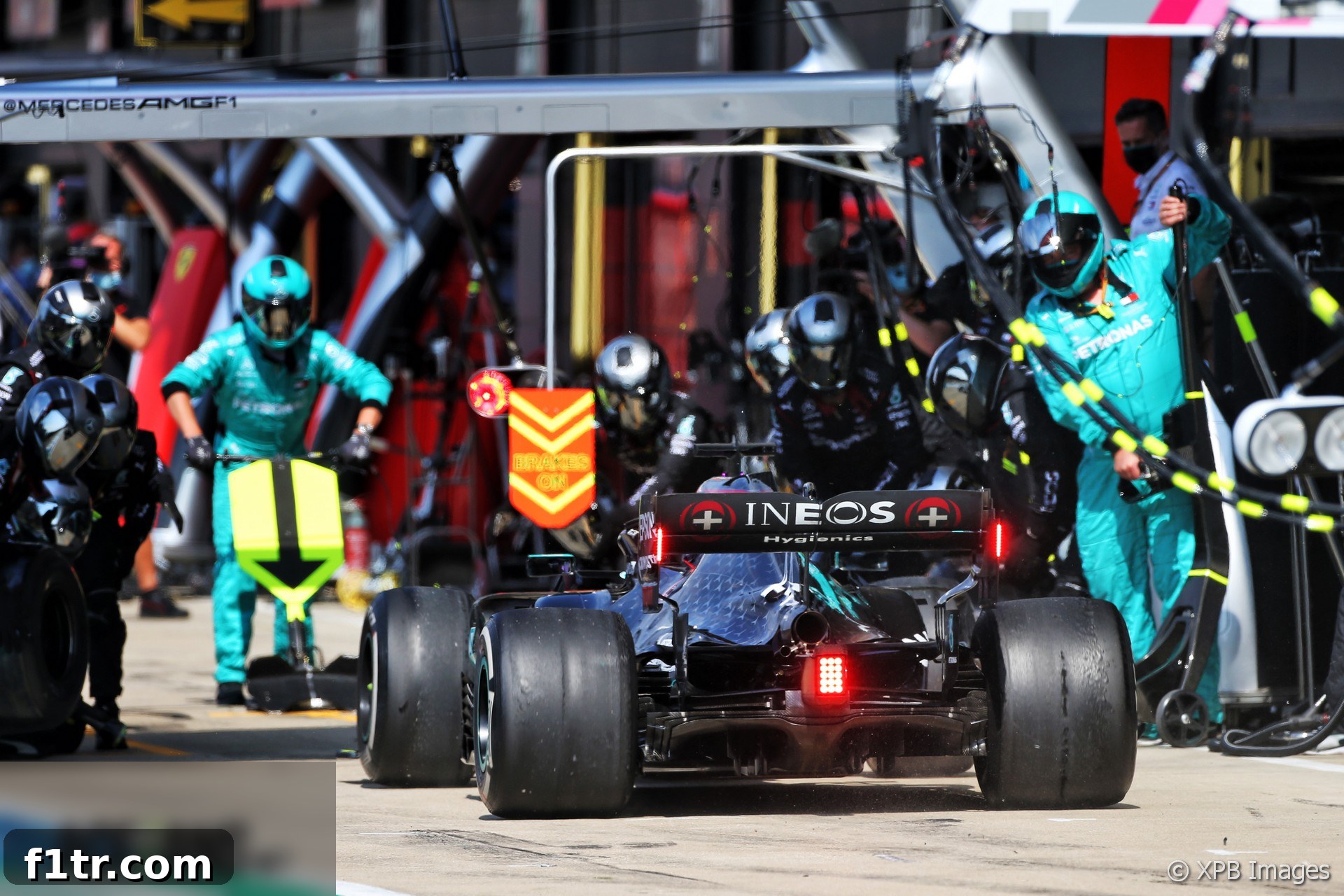
The race at Silverstone marked a rare occasion for Mercedes in the 2020 season; it was the first time they failed to secure a victory. This unprecedented event saw Red Bull Racing’s Max Verstappen capitalize brilliantly on Mercedes’ tire woes, expertly navigating his car to pass both Hamilton and Bottas to claim a well-deserved win. The visible degradation and blistering on the W11’s Pirelli tires were a stark contrast to their typically flawless performances, raising questions and concerns within the paddock.
The Blistering Setback: A Deep Dive into Silverstone’s Challenges
The 70th Anniversary Grand Prix, held on the same iconic Silverstone circuit as the preceding British Grand Prix, presented a unique challenge due to hotter track temperatures and a different Pirelli tire compound selection. While Mercedes had enjoyed a comfortable win a week prior, the conditions for the second Silverstone race proved to be a formidable adversary. As the race progressed, both W11 cars driven by Lewis Hamilton and Valtteri Bottas began to show signs of severe blistering on their tires, particularly on the outer layers of the rubber. This phenomenon, where pieces of rubber detach from the tire surface due to excessive heat build-up, significantly compromises grip, performance, and ultimately, lap times.
For a team accustomed to dictating the pace and managing races with precision, the tire blistering was a truly unpredicted scenario. Hamilton himself commented on the surprise, stating, “The blistering which struck the two W11s was definitely something that wasn’t on our radar, and we didn’t expect it.” This admission from a seasoned champion like Hamilton underscored the gravity of the problem and the immediate need for Mercedes to understand and rectify the issue. The inability to push their cars to their usual limits, combined with the strategic challenges presented by worn tires, handed Max Verstappen a golden opportunity, which he seized with impressive skill and race craft. Verstappen’s triumph was a testament to Red Bull’s strong package and Pirelli’s harder tire choice for the second Silverstone event, which inadvertently favored their car’s characteristics.
Unraveling the Mystery: Mercedes’ Tire Analysis and Understanding
In the aftermath of the Silverstone defeat, the Mercedes technical team embarked on an intensive, round-the-clock investigation. Their primary objective was to thoroughly understand the root causes of the tire blistering and to devise effective countermeasures. This critical period of analysis involved extensive data crunching, simulations, and a deep dive into the tire dynamics, car setup, and environmental factors that contributed to the problem. Lewis Hamilton expressed profound admiration for the dedication and expertise of his engineering team during this crucial phase.
“It’s incredibly impressive when you sit down with the engineers who have gone through a deeper evaluation of where we are and what caused the issue,” Hamilton remarked, highlighting the collaborative and analytical culture within Mercedes. He emphasized the invaluable learning experience, adding, “We only learn and gain from those experiences.” The comprehensive evaluation allowed the team to pinpoint specific parameters that exacerbated the blistering, whether it was related to aerodynamic load, suspension settings, tire pressure management, or even the subtle differences in driving styles. Hamilton’s evolving understanding of the situation reflected the team’s progress, as he later stated, “I think we understand it better.” However, he remained pragmatic, acknowledging that understanding doesn’t guarantee complete immunity from future problems: “It doesn’t mean it can’t happen again, but I think we have a better understanding of what leads to that. And hopefully, we’ll take the correct steps to avoid it in the future.”
A key observation from the two Silverstone races was the stark contrast in tire performance. The previous British Grand Prix saw Pirelli supply harder tire compounds, under which Mercedes experienced no such blistering issues. This crucial detail has guided their strategy for the upcoming Spanish Grand Prix at the Circuit de Catalunya, where Pirelli has again opted for harder compounds. This decision by the tire manufacturer is a direct response to the demands of the Barcelona track, known for its abrasive surface and high-speed corners that put immense lateral forces on the tires, often leading to rapid degradation and overheating.
The Crucial Test: Spanish Grand Prix at Circuit de Catalunya
The Formula 1 circus now moves to the Circuit de Catalunya in Barcelona, a venue notorious for its challenging layout that serves as a true test of a car’s overall package and tire management capabilities. The Spanish Grand Prix is historically demanding on tires, making it the perfect proving ground for Mercedes to demonstrate their improved understanding and mitigation strategies for blistering. The track’s long, sweeping corners, such as Turn 3 and Turn 9, generate significant sustained lateral loads, which can quickly overheat the tire surface and internal structure. Coupled with the anticipated high ambient temperatures typical of Spanish summers, the stage is set for a gruelling battle of endurance and strategy.
Lewis Hamilton underlined the shared challenge that awaits all teams in Barcelona. “We’re here in Barcelona, the track is going to be probably in the fifties [degrees Celsius for track temperature], and everyone is in the same boat in that sense,” he commented, acknowledging the universal struggle against the conditions. However, he also hinted at the competitive advantage that comes with superior preparation and execution: “But some people can do a better job than others perhaps.” This statement reflects Mercedes’ determination to be among those who excel, despite the inherent difficulties. The harder tire compounds selected by Pirelli for Barcelona are intended to offer greater durability and resistance to thermal degradation, mirroring the selection that performed well for Mercedes in the first Silverstone race. However, understanding how these compounds interact with the W11’s specific characteristics, especially under intense heat, will be paramount.
The Circuit de Catalunya is also a familiar testing ground for all teams, providing a wealth of historical data. Yet, the specific context of the 2020 F1 season, with its compressed calendar and rapidly evolving car performance, means that past knowledge is only a starting point. Mercedes’ engineers will have poured over data from previous Barcelona races and simulations, cross-referencing it with their recent Silverstone findings to fine-tune the W11’s setup. Achieving the delicate balance between outright pace and tire longevity will be the key determinant of success, particularly on a track where pit stop strategy and tire wear are often decisive factors in the race outcome.
Driver Input: Mastering Tire Management on Track
Beyond the engineering solutions, driver technique plays an equally critical role in managing tire performance and preventing issues like blistering. Valtteri Bottas, who secured pole position at the 70th Anniversary Grand Prix but ultimately fell to third due to tire problems, emphasized the personal learnings he and Hamilton have absorbed. “We learned a lot,” he stated, indicating the depth of the post-race debriefs and the ongoing efforts to refine their driving styles. Bottas is actively working to understand the nuances of the blistering issues and why Mercedes seemed to suffer more than competitors like Red Bull.
“I’m still trying to learn even more about the blistering issues we had and why it was worse for us than, for example, Red Bull. So I think it’s been an important weekend of learnings and hopefully we can improve that in the future and I have no doubt we can. I would say that was the main thing that we learned from that defeat,” Bottas explained. His words underscore the continuous learning curve in Formula 1, where every setback offers valuable lessons. He also highlighted the importance of driver-side adaptations, noting, “But we still need to really make it happen and improve that. Also from the driving side, whatever you can do better in terms of tire management in different conditions, different tracks, again I think we’ve learned some things there.”
Techniques such as smoother steering inputs, careful throttle application, optimizing brake bias, and managing tire temperatures through careful use of curbs and racing lines can significantly impact tire degradation. Hamilton and Bottas, both highly skilled drivers, will be leveraging their extensive experience and the data provided by their engineers to fine-tune their approaches for Barcelona. The goal is to maximize the performance window of the Pirelli tires while minimizing the stresses that lead to blistering. This collaboration between driver and engineer, translating theoretical understanding into practical execution on track, will be crucial in overcoming the challenges presented by the Spanish Grand Prix and ensuring Mercedes maintains its competitive edge.
Beyond Barcelona: Implications for the 2020 F1 Season and Championship Fight
The tire blistering saga at Silverstone and its resolution (or lack thereof) at Barcelona carries significant implications for the remainder of the 2020 F1 season. While Mercedes has largely been untouchable, the vulnerability exposed at Silverstone demonstrates that even the most dominant teams are not immune to unexpected challenges. This adds an exciting layer of uncertainty to the championship battle, particularly as Red Bull, spearheaded by Max Verstappen, has proven they are ready to pounce on any opportunity. The performance difference between Mercedes and its rivals often comes down to marginal gains, and tire management can be one of the biggest differentiators.
The lessons learned in Barcelona will undoubtedly influence Mercedes’ approach to future races, especially those held in hot climates or on tracks known for high tire degradation. The continuous pursuit of perfection in Formula 1 means that development never stops. Mercedes will strive to integrate any new insights into their car design, setup philosophy, and race strategies, ensuring that their W11 remains the benchmark against which all others are measured. The battle against tire blistering is not just about a single race; it’s about optimizing the entire package for sustained performance across a diverse calendar.
In conclusion, Mercedes approaches the Spanish Grand Prix with a newfound humility and an intensified focus on tire performance. The Silverstone defeat was a wake-up call, prompting an exhaustive effort to understand and mitigate the blistering issues. While the team and its star drivers are confident in their analytical capabilities and the steps they’ve taken, the unpredictable nature of Formula 1 and the demanding conditions of Barcelona mean that vigilance remains paramount. The Spanish Grand Prix will serve as a crucial test of Mercedes’ resilience, adaptability, and their ability to convert profound learning experiences into triumphant race results, continuing their quest for another Constructors’ and Drivers’ Championship title.