Ferrari F1 Faces Leadership Crossroads: Arrivabene’s Uncertain Future
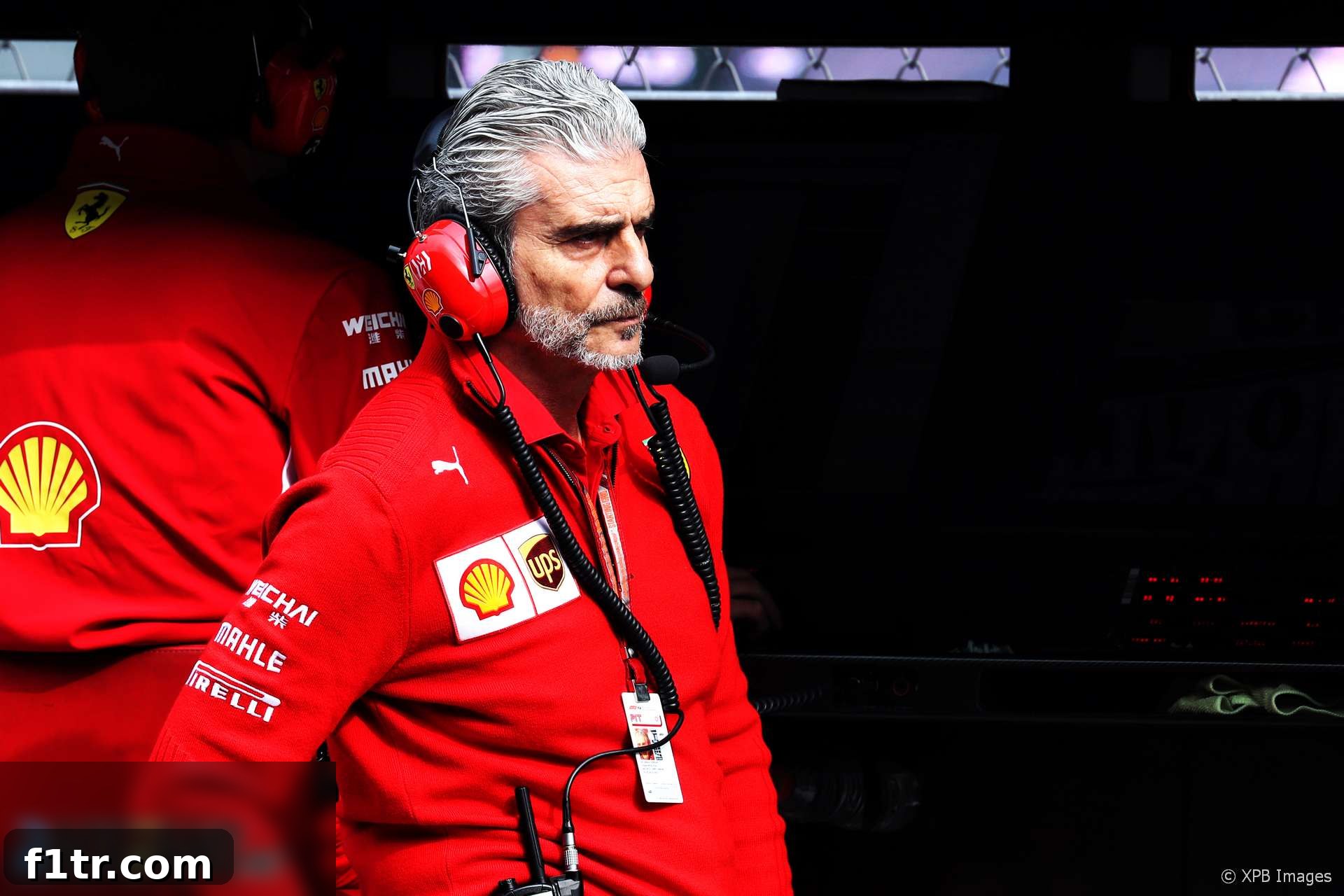
Scuderia Ferrari, Formula 1’s most iconic and storied team, appears poised for yet another significant leadership change, as the future of Team Principal Maurizio Arrivabene remains shrouded in doubt. If confirmed, this would mark the fourth change in the team’s top managerial role in just five years, highlighting the immense pressure and high stakes associated with leading the Prancing Horse in its relentless pursuit of Formula 1 supremacy.
Advert | Become a RaceFans Supporter & go ad-free
Reliable Italian sources indicate that Maurizio Arrivabene was presented with a new contract last year that would have significantly reduced his responsibilities, effectively diminishing his dual role as both managing director and team principal. However, Arrivabene notably did not sign this revised agreement, and subsequently, Ferrari has reportedly withdrawn the offer. This development signals a clear fracturing in the relationship between the seasoned team principal and the top brass at Maranello, sparking intense speculation about who will steer the team in the critical upcoming seasons.
Arrivabene has, until recently, been perceived to enjoy strong support from Louis Carey Camilleri, who stepped into the role of interim CEO last July following the passing of Sergio Marchionne. When questioned about his future with the team last year, Arrivabene succinctly directed inquiries to “managing director Camilleri,” suggesting a reliance on Camilleri’s backing. However, recent reports suggest that Camilleri’s own position within the intricate power structure of Ferrari is also under active discussion, further complicating the leadership landscape and potentially leaving Arrivabene without his key internal ally.
The Search for Stability: Potential Successors Emerge
The vacuum created by Arrivabene’s uncertain future has naturally led to intense speculation regarding his potential replacement. Leading the list of likely candidates is the team’s technical director, Mattia Binotto. Binotto has been a rising star within Ferrari, credited with spearheading the technical revolution that saw the Scuderia build highly competitive cars in 2017 and 2018. His deep understanding of the car’s development, technical prowess, and rapport with the engineering team make him a compelling choice, potentially offering a more unified technical and strategic direction for the team.
Should Binotto ascend to the role of Team Principal, it would create a vacancy in the technical director position. In this scenario, Laurent Mekies, who joined Ferrari from the FIA last year and currently reports directly to Binotto, could be poised to take on significantly greater responsibilities in the development of the team’s Formula 1 challengers. Mekies’ experience at the FIA and his recent integration into Ferrari’s technical structure position him well for such an expanded role, ensuring continuity and leveraging his expertise within the team.
Another prominent name being discussed as a possible replacement for Arrivabene is Antonello Coletta, who currently serves as Ferrari GT and Corse Clienti racing director. Coletta boasts an impressive tenure of over two decades within Ferrari’s motorsport division, demonstrating profound loyalty and a comprehensive understanding of the brand’s racing ethos beyond Formula 1. His long-standing commitment and diverse experience within the Ferrari racing family present a different profile, perhaps signalling a desire for a leadership figure with deep-rooted Maranello connections and a broader perspective on the company’s racing endeavors.
A Decade of Drought: The Pressure Cooker at Maranello
The urgency surrounding Ferrari’s leadership stems directly from a decade-long championship drought. The Scuderia has not celebrated a constructors’ or drivers’ championship success for ten years, a statistic that weighs heavily on a team accustomed to perpetual victory. In the past two Formula 1 seasons, Ferrari emerged as the closest and most formidable challenger to the dominant Mercedes team, even leading the points standings at various stages throughout both years. However, their ultimate failure to convert these strong positions into a coveted world title has intensified the scrutiny and pressure on Maurizio Arrivabene’s leadership.
Arrivabene, a former Philip Morris executive, took over the reins as Team Principal from Marco Mattiacci in November 2014. His appointment was part of a broader shake-up intended to rejuvenate the team and bring a more corporate, results-driven approach. Mattiacci himself had only been in the role for a brief period, having replaced the long-serving Stefano Domenicali seven months earlier. This rapid succession of team principals—Domenicali (2008-2014), Mattiacci (2014), Arrivabene (2014-present, but uncertain)—underscores a historical pattern at Maranello: when results don’t meet the stratospheric expectations, changes at the top are almost inevitable.
The constant search for the “right” leader reflects Ferrari’s unique position in Formula 1. It is more than just a racing team; it is a national icon and a global brand whose performance on the track reverberates through its entire corporate identity. The fervent Tifosi, the passionate fan base, demand nothing less than victory, and the boardroom expects it to translate into brand prestige and commercial success. This relentless pressure often creates a volatile environment where even near-misses are viewed as failures, and stability is a luxury rarely afforded to those at the helm.
For Arrivabene, despite overseeing a period of significant technical improvement and closing the gap to Mercedes, the inability to clinch a title proved to be his Achilles’ heel. The small operational errors, strategic missteps, and occasional driver mistakes that collectively cost Ferrari crucial points highlighted the immense challenge of running a top-tier F1 team under such intense scrutiny. The withdrawn contract offer suggests a lack of confidence in his ability to deliver the ultimate prize, prompting Ferrari to explore alternative leadership structures and personnel.
Looking Ahead: The Impact on the 2019 Season
As the 2019 Formula 1 season looms, the potential for a leadership change at Ferrari introduces an element of uncertainty that could either galvanize or destabilize the team. A new team principal, especially one promoted from within like Binotto, could bring fresh energy and a clear mandate. Conversely, a prolonged period of internal wrangling or the appointment of an outsider could disrupt the team’s preparations and morale at a crucial juncture.
The next leader will face the immediate challenge of guiding Ferrari through the rigorous development and testing phase for the upcoming season, aiming to finally overcome Mercedes and end the long wait for a championship. This role demands not only strategic vision and technical understanding but also exceptional people management skills, political acumen, and the resilience to operate under the world’s most intense sporting spotlight. The quest for stability and winning consistency remains Ferrari’s enduring challenge, and the choice of their next team principal will be pivotal in determining whether the Scuderia can finally reclaim its rightful place at the pinnacle of Formula 1.
More from the 2019 F1 season
- Crying in the Melbourne car park at 2019 grand prix was my career low – Ocon
- McLaren Racing reports reduced £71 million loss in 2019
- Kvyat: Hockenheim podium last year was “my biggest achievement” so far
- How the FIA’s new encrypted fuel flow meter targets Ferrari’s suspected ‘aliasing’ trick
- “He smashed my office door”: 23 must-see moments from ‘Drive to Survive’ season two
Browse all 2019 F1 season articles