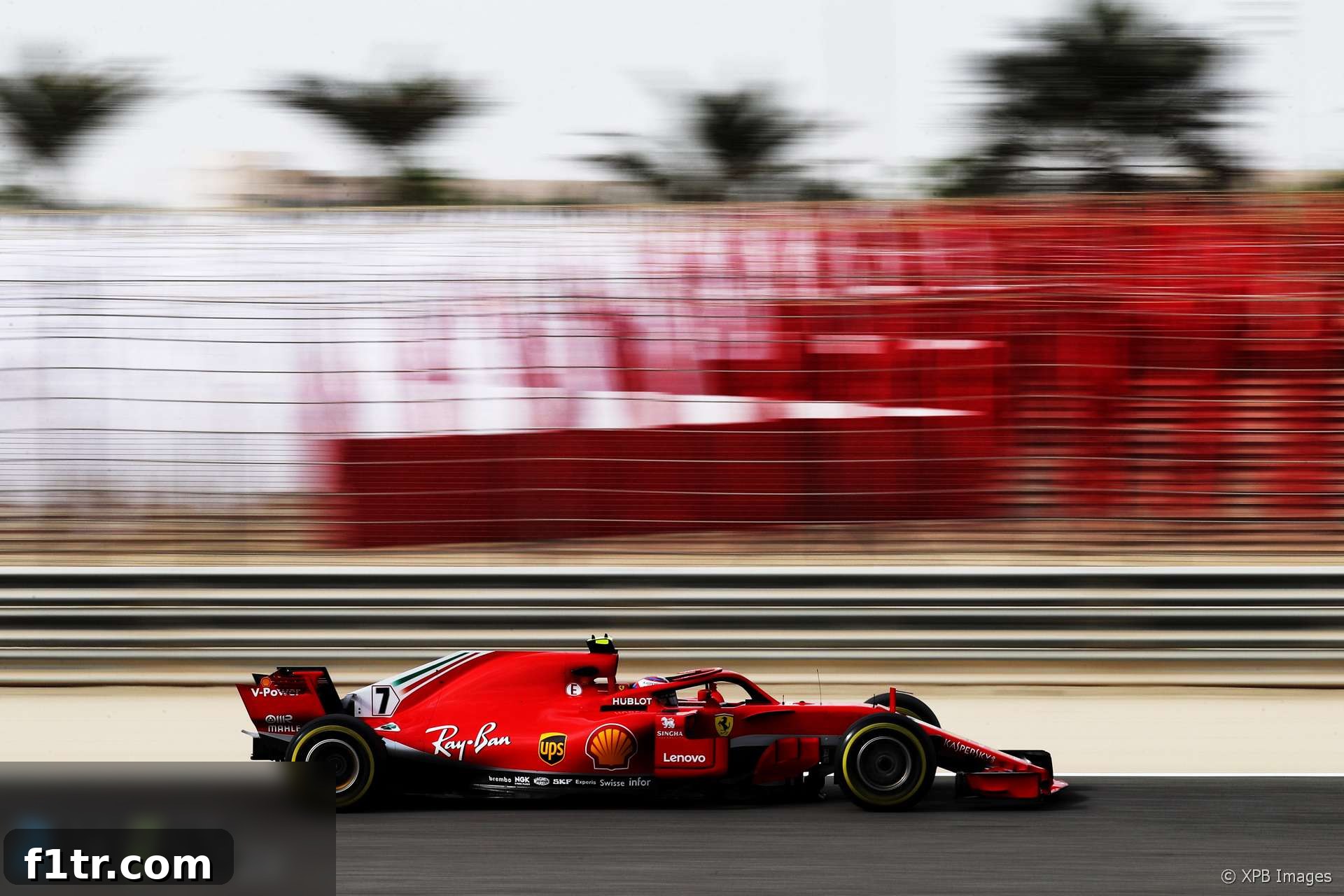
In a significant ruling regarding pit lane safety, Kimi Raikkonen’s team, Ferrari, was issued a €5,000 fine for an unsafe car release during a practice session at the Bahrain Grand Prix. The incident underscored the ever-present dangers in the high-stakes environment of Formula 1 pit stops, even when occurring outside of the intense pressure of a race. This penalty, while monetary, serves as a crucial reminder to all teams about the stringent regulations governing car safety in the pit lane, designed to protect both team personnel and rival competitors.
The incident unfolded during a routine practice session when Raikkonen’s car was released from its pit box at approximately 19:14 local time. However, it quickly became apparent that the car had not been securely prepared for re-entry to the track. The stewards promptly initiated a review of the video footage of the pit stop and subsequently heard detailed accounts from Ferrari’s team representatives. Their investigation focused on whether the team adhered to the strict safety protocols mandated by the FIA.
Following a thorough assessment, the stewards unequivocally determined that Ferrari had released Raikkonen’s car in an “unsafe condition,” constituting a clear breach of Article 28.13.b of the Sporting Regulations. This specific regulation mandates that a car must only be released from the pit box when it is safe to do so and when there is no impediment to other cars. Crucially, the stewards acknowledged that immediately after the unsafe release, the team took swift and decisive action by ordering the car to stop. Furthermore, it was noted that Raikkonen, demonstrating his extensive experience and quick reflexes, brought the car to a halt as quickly and safely as possible once he received the instruction, minimizing any potential hazard.
The FIA’s decision to impose a €5,000 fine rather than a more severe grid place penalty aligns with a consistent precedent set in Formula 1. The stewards’ statement clarified their rationale: “Consistent with previous instances where a car was stopped on track, the Stewards decide that the mandatory grid place penalty could not be applied where the team took all appropriate actions, the stewards fined the team €5,000.” This approach reflects the understanding that while an unsafe release is a serious infraction, the immediate and corrective actions taken by the team and driver to mitigate the risk are significant mitigating factors. Grid penalties are typically reserved for incidents during qualifying or race conditions where the safety breach directly impacts competitive advantage or causes a more severe disruption.
Historically, the stewards have shown a tendency to refrain from issuing grid penalties for unsafe releases that occur during practice sessions, particularly when the team acts promptly to rectify the situation. Over the past five years leading up to this incident, numerous drivers experienced unsafe releases during practice, yet none received grid penalties. Notable instances include Lewis Hamilton in 2016, Jolyon Palmer and Daniil Kvyat in 2015, Felipe Massa in 2014, and even Raikkonen himself alongside Pastor Maldonado in 2013. This pattern underscores a pragmatic approach by the FIA, recognizing that practice sessions are inherently periods of testing and refinement, where such errors, while regrettable, do not carry the same competitive implications as they would during a race. The primary focus remains on safety and ensuring teams learn from their mistakes without unduly penalizing their starting position in the main event.
The fine, though seemingly modest for a top-tier Formula 1 team like Ferrari, serves as a direct and immediate financial consequence for lapses in pit lane protocol. It acts as a deterrent, emphasizing the importance of rigorous safety checks and flawless execution during every pit stop, regardless of the session. The pressure on pit crews to perform rapid and perfect stops is immense, with milliseconds often separating success from failure. However, speed must never compromise safety, and incidents like this are stark reminders of the potential dangers involved, not just for the driver but also for the mechanics working in the fast-paced and confined pit lane environment. Ensuring all wheels are securely attached and that the car is cleared for release is a critical step that cannot be overlooked.
This incident also highlights the intricate balance between human precision and technological reliability in modern F1. While automated systems and sensors play a significant role in pit stop procedures, human judgment and meticulous cross-checking remain paramount. An unsafe release can stem from a variety of factors, from a wheel nut not being fully tightened to a sensor malfunction or even a miscommunication within the pit crew. The FIA’s consistent enforcement of Article 28.13.b ensures that teams continually review and refine their pit stop processes, investing in both advanced equipment and comprehensive training for their personnel to prevent such safety breaches. The goal is always to minimize risk and uphold the highest standards of safety across all aspects of the sport, from the track to the pit lane.
Ultimately, Ferrari’s €5,000 penalty for the unsafe release of Kimi Raikkonen’s car during the Bahrain Grand Prix practice session of the 2018 F1 season was a clear signal. It reinforced the FIA’s unwavering commitment to pit lane safety, balancing the need for punitive action with an understanding of mitigating circumstances during non-competitive sessions. This incident, while minor in its immediate impact on the race weekend, contributed to the ongoing dialogue and evolution of safety standards in Formula 1, ensuring that teams remain vigilant in their pursuit of both performance and impeccable safety.
2018 F1 season
- F1 feared “death knell” for Drive to Survive after Ferrari and Mercedes snub
- McLaren staff told us we were “totally crazy” to take Honda engines in 2018 – Tost
- ‘It doesn’t matter if we start last’: How Red Bull’s junior team aided Honda’s leap forward
- Honda’s jet division helped F1 engineers solve power unit problem
- McLaren Racing losses rise after Honda split
Browse all 2018 F1 season articles