Ferrari Demands Sharper Decisions on Safety Car Deployments After Canadian Grand Prix
The thrilling conclusion to the 2022 Canadian Grand Prix left fans on the edge of their seats, but for Scuderia Ferrari, the race also sparked critical reflection. Team Principal Mattia Binotto has publicly voiced his concerns regarding the timing of the Safety Car deployment during the race, asserting that race control needs to make “sharper decisions.” His comments highlight a growing debate within Formula 1 about the consistency and promptness of crucial race management calls, particularly when championship implications are at stake for top contenders like Ferrari.
Controversial Safety Car Call Puts Ferrari’s Strategy to the Test
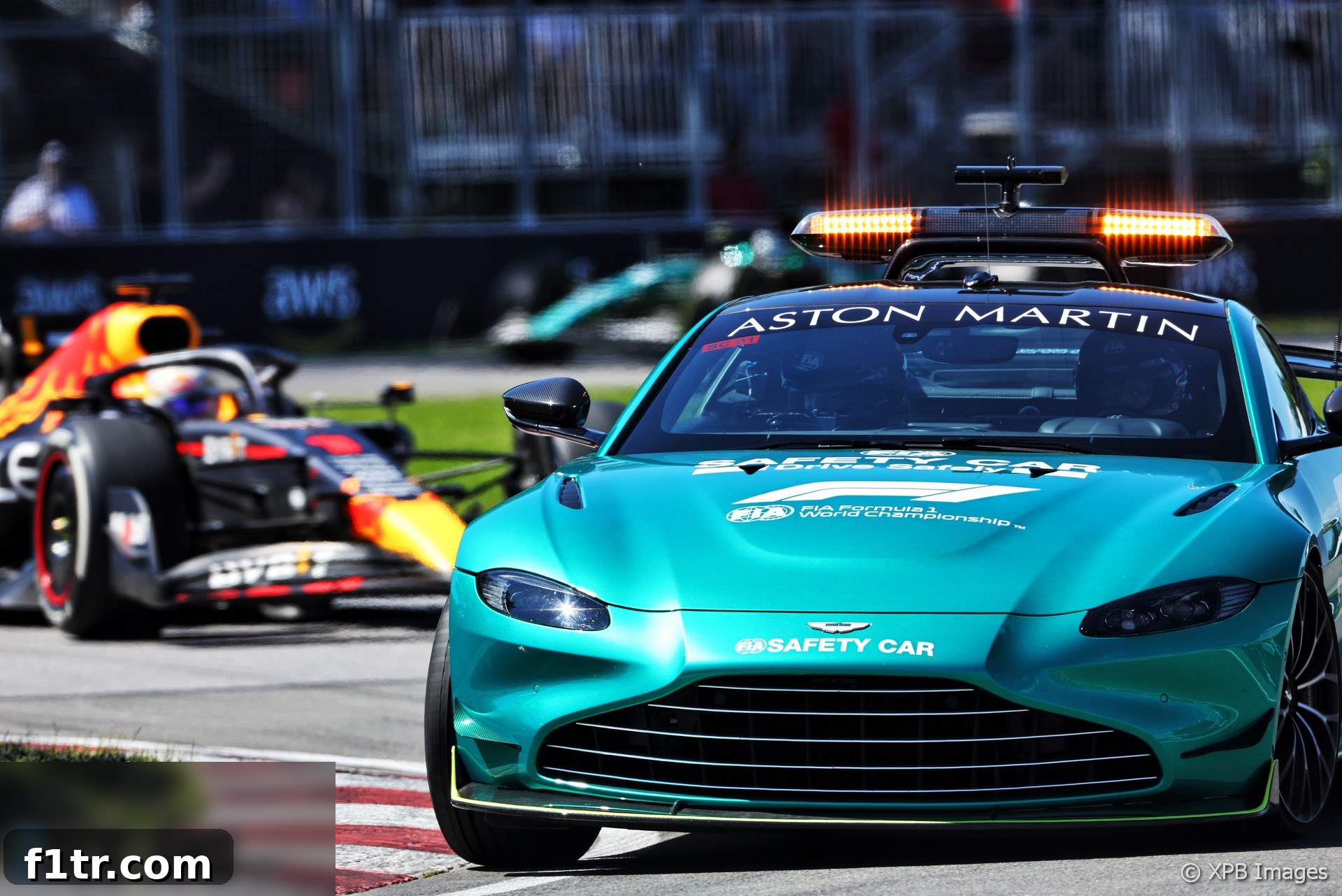
The incident in question occurred when AlphaTauri driver Yuki Tsunoda crashed at the pit lane exit, bringing out yellow flags across the Circuit Gilles Villeneuve. At this crucial juncture, Ferrari’s Carlos Sainz Jnr was leading the race, having skillfully navigated the challenging Montreal street circuit. The immediate aftermath of Tsunoda’s incident saw a period of uncertainty as race control evaluated the situation. Ferrari, poised to capitalize on any strategic advantage, was closely monitoring the potential for a Safety Car period, which typically offers a ‘free’ pit stop opportunity for drivers to change tyres without losing significant track position.
However, according to Binotto, the decision to deploy the Safety Car, under the direction of Eduardo Freitas, came unusually late. As Sainz approached the pit lane entrance at the end of the lap, the Safety Car had not yet been deployed. This delay presented a significant challenge for the Ferrari pit wall. The window for a strategic pit stop was closing rapidly, forcing the team into a high-pressure, split-second decision-making process that could define the outcome of their race.
“I think it took very long to decide for the Safety Car,” Binotto stated, his frustration evident. “At the moment Carlos was leading the race and I think that the Safety Car was released when he was just at the end of the main straight coming to the last corner.” This timing, he explained, left the team with an incredibly narrow margin to react and instruct their driver to pit. The pressure on the Maranello-based team was immense, with mere seconds separating a potentially race-winning move from a catastrophic strategic error that could cost them valuable points.
Ferrari and Sainz Display Remarkable Acuity Under Pressure
Despite the incredibly tight timeframe, both the Ferrari strategy team and Carlos Sainz Jnr demonstrated exceptional responsiveness. Binotto lauded their quick thinking, acknowledging that the team had “only one second to react” and managed to execute the pit call within that critical window. This swift action ensured Sainz could take advantage of the Safety Car period to switch to fresh tyres, putting him in a stronger position for the final sprint to the finish line against Red Bull’s Max Verstappen.
“Without that good reactions it would have been a very difficult and bad situation for Carlos,” Binotto emphasized, highlighting the potential consequences of even a momentary lapse in concentration. Such a delay could have meant Sainz missing the pit window, falling further behind his rivals, and effectively ending his chances of victory. The incident underscores the razor-thin margins that define success and failure in Formula 1, where every second and every decision carries immense weight, demanding perfection from all involved.
The Ferrari team principal reiterated his call for improved decisiveness from race control. “And I think again here we need sharper decisions. It took very long, for me, to decide,” he remarked. This criticism is not just about a single race outcome but reflects a broader desire for consistent, timely, and unambiguous calls from race direction to ensure fair sporting competition and to minimize unnecessary risks and confusion for teams operating at the pinnacle of motorsport.
The “What If”: Debating Sainz’s Chances Without the Safety Car
Following his expedited pit stop under the Safety Car, Carlos Sainz embarked on a spirited chase of Max Verstappen over the remaining laps, putting immense pressure on the reigning world champion. Despite his relentless efforts and strong pace, Sainz ultimately couldn’t find a way past the Red Bull, finishing a commendable second. The question then naturally arose: would Sainz have been in a better position to win had the Safety Car not been deployed, or if it had been deployed earlier and more cleanly?
Binotto acknowledged the difficulty in definitively answering this hypothetical scenario. “It’s difficult to judge whether he would have been in a better position to win had the Safety Car not been deployed,” he mused. The strategic landscape was complex, with Mercedes’ Lewis Hamilton also in contention behind, equipped with fresh tyres and demonstrating strong pace. Ferrari had to consider not only their battle with Verstappen but also defending their position from Hamilton, who posed a significant threat with his revitalized Mercedes.
“We know that in order to defend, he should have been very fast on-track, at least a 17.4, 17.3 single lap, because Max was very fast behind. It would have been very close, no doubt,” Binotto explained. The choice between staying out on older tyres or pitting for new ones was finely balanced, with each option carrying its own set of risks and rewards. The Safety Car, while offering a chance for new tyres, also nullified any gap Sainz might have built, bunching the field and intensifying the battle for the lead in the final stages of the race.
The Ferrari principal concluded, “We were judging ‘should we stay on track, should we pit,’ simply to protect as well from Lewis [Hamilton] that had fresh tyres as well and was very fast behind. So we were monitoring very close the situation. I think it’s very difficult to judge and to say how the race would have finished without the final Safety Car.” This statement perfectly encapsulates the intricate dance of strategy, prediction, and reaction that defines high-stakes Formula 1 racing, where a single decision can ripple through the entire outcome.
Carlos Sainz Jnr: A Driver Gaining Momentum and Challenging the Best
Beyond the strategic intricacies, the Canadian Grand Prix also served as a testament to Carlos Sainz Jnr’s undeniable progress and growing confidence behind the wheel of the F1-75. His strong pace throughout the Montreal weekend was no surprise to the Ferrari camp. Binotto highlighted Sainz’s performance in earlier practice sessions, indicating that his speed was a known quantity even before race day, reflecting positive signs for the remainder of the F1 season.
“If you look at the race sim on Friday, Carlos was very strong already. I think we were very close to the Red Bulls. So we knew that we could fight,” Binotto confirmed. This steady improvement and consistent performance are crucial for Ferrari, especially as they contend for both the Constructors’ and Drivers’ championships against a formidable Red Bull squad, where every point and every strong finish counts.
Binotto’s praise for Sainz extended to his overall development and increasing comfort with the car. “Carlos is gaining confidence with the car, he is driving faster and faster,” he added, emphasizing the positive trajectory of the Spanish driver’s season. This growing synergy between driver and machine is translating directly into results, allowing Sainz to push the F1-75 closer to its absolute limits and unlock its full potential.
Perhaps the most telling remark from Binotto about Sainz’s Canadian performance was the direct comparison to the reigning world champion. “And it’s good to see that today he was certainly as fast if not slightly faster than Max,” he observed. This statement is a significant endorsement, placing Sainz firmly among the elite drivers on the grid and suggesting that he is now a genuine contender for race victories, not just podium finishes. For Ferrari, having two drivers capable of challenging for wins is a massive asset in their championship campaign against fierce competition.
The Evolving Role of Race Control and the Demand for Consistency
Mattia Binotto’s call for “sharper decisions” from the race director echoes sentiments that have been voiced by various teams and drivers throughout recent Formula 1 seasons. The role of race control is arguably one of the most scrutinized in modern motorsport, tasked with ensuring the safety of all participants while maintaining the integrity and fairness of the sporting contest. Decisions regarding Safety Cars, Virtual Safety Cars, red flags, and penalties can profoundly influence race outcomes, often with significant championship ramifications, as seen in previous seasons.
The complexities faced by race directors are immense. They must process vast amounts of real-time data, assess rapidly evolving track conditions, and make critical judgments under immense pressure, all while adhering to a stringent set of regulations. However, the demand for consistency and clarity in these decisions remains paramount. Teams invest heavily in strategy and preparation, and unexpected or delayed calls from race control can unravel meticulously planned approaches, leading to frustration and accusations of unfairness among competitors and fans alike.
Binotto’s comments, therefore, contribute to an ongoing dialogue within Formula 1 about refining race control protocols and ensuring that decisions are not only correct but also delivered with the necessary promptness. The objective is to achieve a balance where safety is never compromised, but strategic play is not unfairly hampered by tardy or ambiguous directives. The Canadian Grand Prix incident serves as another reminder of how crucial effective race management is to the spectacle and fairness of Formula 1, ensuring the purest form of competition.
Ferrari’s Championship Aspirations: Leveraging Driver Confidence and Strategic Acumen
The 2022 season has seen Ferrari emerge as a strong contender for both the Drivers’ and Constructors’ Championships, locked in an intense battle with Red Bull Racing. Performances like Carlos Sainz’s in Canada, demonstrating consistent speed and strategic resilience, are vital for the Maranello squad’s ambitions. While the Canadian Grand Prix didn’t yield a victory for Sainz, his strong second-place finish, coupled with his rising confidence, provides significant momentum for the team moving forward into the crucial mid-season phase.
Binotto’s acknowledgment of Sainz’s progress is a testament to Ferrari’s developmental philosophy, fostering both individual driver growth and collective team strength. The ability to extract maximum performance from both cars, and to make quick, effective decisions on the pit wall, will be critical in the remaining races of the season. The insights gained from the Canadian Grand Prix, particularly regarding Safety Car deployment, will undoubtedly feed into Ferrari’s ongoing analysis and preparation for future events, aiming to perfect every aspect of their race operations.
In conclusion, while the Canadian Grand Prix delivered thrilling racing action, Mattia Binotto’s observations about the Safety Car deployment highlight areas for continuous improvement in Formula 1’s race management. Ferrari’s quick reaction under pressure, coupled with Carlos Sainz Jnr’s impressive pace and burgeoning confidence, are positive takeaways for the Scuderia. As the championship battle intensifies, every decision, from the pit wall to race control, will be under immense scrutiny, reinforcing the need for clarity, consistency, and above all, “sharper decisions” to ensure the integrity and excitement of the sport.