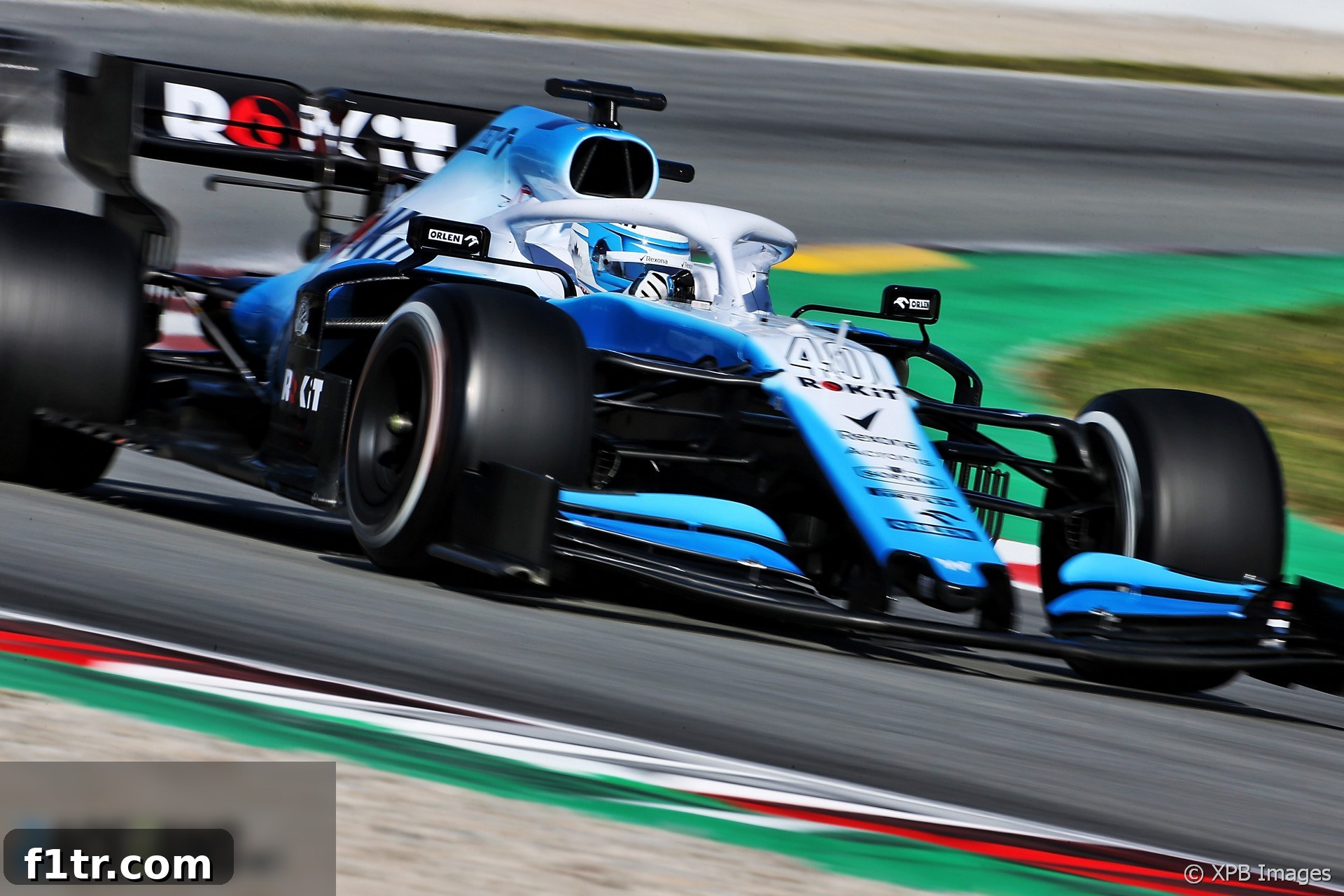
Williams Adopts New Strategy for Latifi’s 2019 Friday Practice Outings
The Williams Racing Formula 1 team has unveiled a significant shift in its approach to Friday practice sessions, announcing that reserve driver Nicholas Latifi’s six scheduled outings for the 2019 season will be split between the cars of its two primary race drivers, Robert Kubica and George Russell. This innovative strategy marks a clear departure from the team’s established practice of allocating a single race driver’s chassis for reserve duties, underscoring a refreshed commitment to data acquisition, driver development, and maximizing on-track learning.
Latifi, a prominent figure in the Formula 2 championship and a rising star in motorsport, is set to make his much-anticipated debut in an official Grand Prix weekend session during the first practice (FP1) for his home event, the Canadian Grand Prix, on Friday. For this initial run at the Circuit Gilles Villeneuve, he will take the wheel of Robert Kubica’s FW42 chassis. However, his subsequent appearances later in the year will see him alternate between Kubica’s and George Russell’s cars, with an equal distribution of three runs in each chassis. This balanced allocation suggests a methodical approach by Williams to leverage Latifi’s talent across their operational setup, gathering comprehensive feedback from both sides of the garage.
Nicholas Latifi’s Expanded Role and the Significance of Sharing Cars
Nicholas Latifi’s involvement as a reserve driver for Williams extends beyond mere track time; he is poised to play a crucial role in the team’s ongoing development efforts for the FW42. With a total of six FP1 sessions scheduled, his contributions are expected to be substantial. These sessions offer invaluable opportunities for Latifi to gain further experience in a contemporary Formula 1 car under competitive Grand Prix weekend conditions, a critical step for any aspiring F1 race driver. His prior testing experience with the FW42 in Bahrain and Barcelona has already provided him with a foundational understanding of the car, allowing him to hit the ground running in these high-pressure environments.
The decision to utilize both Robert Kubica’s and George Russell’s chassis for Latifi’s FP1 sessions is particularly noteworthy. Historically, teams often designate one car, typically that of the less experienced or more junior race driver, for reserve driver duties. Williams’ new strategy, however, points to a desire for broader data collection and a more holistic understanding of the FW42’s performance. By driving both cars, Latifi can provide comparative feedback that might highlight subtle differences or specific characteristics between the two chassis, potentially aiding engineers in fine-tuning setups or evaluating new components more effectively. This could be especially beneficial for a team like Williams, which at the time was navigating a challenging period and striving to improve its competitive standing.
Senior Race Engineer Dave Robson underscored Latifi’s integral role, stating, “Nicholas will be involved fully in our race preparations, and alongside George will conduct some important testing of new components during FP1.” This statement highlights that Latifi is not merely a passenger but an active participant in the team’s technical agenda. Friday practice sessions are critical for testing experimental parts, aerodynamic updates, and different setup configurations. By having Latifi contribute to this process in both cars, Williams can accelerate its development cycle, cross-reference data, and potentially uncover performance gains more rapidly. His perspective, combined with that of the full-time race drivers, creates a richer pool of information for the engineering team to draw upon.
Williams’ Evolving Practice Driver Strategy: A Look Back
The adoption of this dual-car approach marks a significant evolution in Williams’ strategy for incorporating practice drivers into their Grand Prix weekends. A retrospective look at their past practices reveals a more conventional, single-car allocation. Understanding this historical context provides greater insight into the current shift and its potential implications for the team.
In the preceding 2018 season, Robert Kubica, then serving as Williams’ reserve and development driver, made three Friday practice appearances. All of these outings were exclusively in the chassis driven by Sergey Sirotkin, who was the team’s rookie race driver at the time. This aligns with the common practice of allowing the more experienced race driver (in that case, Lance Stroll) to retain full control over their car for all sessions, minimizing disruption to their acclimatization and setup work. Kubica’s role was primarily focused on data gathering and development without impinging on the lead driver’s critical track time.
Prior to 2018, Williams opted not to run a dedicated practice driver in either the 2017 or 2016 seasons. This hiatus might have been influenced by various factors, including financial considerations, a focus on maximizing track time for their established race drivers, or a lack of suitable talent or sponsorship from potential reserve drivers. The absence of a third driver during these years meant that all development and component testing during FP1 fell squarely on the shoulders of the two race drivers, potentially limiting their ability to fully focus on race preparation or explore radical setup changes.
Looking further back, Susie Wolff made four appearances for Williams across the 2014 and 2015 seasons. As a pioneering female driver in Formula 1, her involvement garnered significant attention. Crucially, all of her FP1 outings were conducted in Valtteri Bottas’s chassis. Bottas, an emerging talent at the time, was still developing his race craft, and having his car used for practice duties was a strategic choice. This also allowed the team to evaluate Wolff’s performance against a known benchmark without affecting Felipe Massa, the more seasoned driver in the team.
Perhaps the most salient example of a successful practice driver program at Williams is that of Valtteri Bottas himself. Before making his full race debut, Bottas made a remarkable 15 Friday practice appearances for the team during the 2012 season. Every single one of these extensive runs was in Bruno Senna’s chassis. This intensive program provided Bottas with an unparalleled level of experience and preparation, proving instrumental in his smooth transition to a full-time race seat in 2013 and subsequently establishing himself as a highly rated Grand Prix driver. This history underscores that Williams has a strong track record of nurturing talent through FP1 opportunities, making Latifi’s expanded role particularly significant.
Why This Change Matters for Williams and Beyond
The decision by Williams to split Nicholas Latifi’s FP1 duties between both Robert Kubica’s and George Russell’s cars in 2019 is more than just a logistical adjustment; it reflects a deeper strategic imperative for a team in constant pursuit of performance improvements. For a team like Williams, which has faced significant competitive challenges in recent seasons, every piece of data and every opportunity for development is critical. The FW42 proved to be a difficult car, and extracting maximum performance required an exhaustive approach to analysis and testing.
By having Latifi drive both cars, Williams gains a dual perspective on new components and setup changes. If a new aerodynamic element is tested on Kubica’s car by Latifi, and then on Russell’s car at a subsequent session, the engineering team can cross-reference the data with greater confidence, understanding if the component behaves consistently across slightly different chassis characteristics or driver feedback styles. This approach minimizes the risk of drawing conclusions based on a single data point or an isolated incident. Furthermore, it ensures that both sets of engineers – those working on Kubica’s car and those on Russell’s – receive direct feedback from the reserve driver, fostering a more integrated and collaborative development environment.
From the perspective of driver development, this strategy also offers Latifi a more comprehensive learning experience. Driving two different cars, albeit of the same model, allows him to adapt to potentially subtle differences in their setups or characteristics that naturally arise over a season. This adaptability is a vital skill for any Formula 1 driver, preparing him for the nuances of top-tier motorsport. It also gives him direct exposure to the working methods of both race driver engineering teams, broadening his understanding of F1 operations.
Commercially, Latifi’s presence also brings significant sponsorship backing, which is invaluable for any independent team on the F1 grid. Maximizing his track time and showcasing his capabilities through a well-structured FP1 program aligns with the interests of his sponsors, demonstrating a clear return on their investment. This symbiotic relationship between sporting development and commercial viability is crucial for the long-term sustainability of teams like Williams.
The Broader Importance of F1 Friday Practice
Friday practice sessions in Formula 1 are far more than just warm-up laps; they are intensely focused periods of engineering and driver evaluation. FP1, in particular, serves as a crucial proving ground for a variety of objectives. For the main race drivers, it’s the first opportunity to reacquaint themselves with the circuit, understand the current track conditions, and begin fine-tuning the car’s setup for the weekend ahead. They work closely with their engineers to experiment with different downforce levels, suspension settings, and brake biases, all aimed at extracting optimal lap times.
However, FP1 also serves as a vital test bed for new components and technologies. Teams frequently bring updated parts – from front wings to floor sections – to Grand Prix weekends, and the initial practice session is the primary window for track testing these developments. This often involves back-to-back comparisons, where the new part is fitted, run, and then swapped for the old one to measure incremental gains or losses. The data gathered during these tests is instrumental in guiding future development directions and deciding whether an update will be incorporated into the race package.
For young drivers or reserve drivers, FP1 offers an unparalleled opportunity to gain experience in a current Formula 1 car. Unlike private testing, which is heavily restricted, FP1 sessions provide real-world, competitive track time alongside the sport’s elite. This exposure is critical for honing skills, understanding the demands of a Grand Prix weekend, and impressing team principals. It acts as a direct pathway for aspiring talents to showcase their abilities, gather invaluable data for the team, and prove their readiness for a potential future race seat. The balance between allowing race drivers sufficient track time and providing opportunities for development drivers is a constant strategic consideration for all F1 teams, making well-structured FP1 programs a key element of modern Formula 1.
Looking Ahead: Latifi’s Future and Williams’ Hopes
Nicholas Latifi’s comprehensive Friday practice program with Williams in 2019 was a foundational step in his journey towards Formula 1. By strategically splitting his appearances across both Robert Kubica’s and George Russell’s cars, Williams demonstrated a forward-thinking approach aimed at maximizing data collection and thoroughly evaluating their aspiring talent. For Latifi, these six sessions offered invaluable experience, exposing him to the intense environment of a Grand Prix weekend and the intricacies of driving a contemporary F1 car in different setups. It allowed him to build rapport with engineers across both sides of the garage and demonstrate his adaptability and feedback capabilities.
Ultimately, this structured development program paid dividends. The experience gained during these FP1 sessions, combined with his strong performance in Formula 2, undoubtedly strengthened his case for a full-time F1 race seat. For Williams, the investment in Latifi’s development and the innovative approach to his practice sessions were part of a broader strategy to rebuild and find a path back to competitiveness. Such meticulously planned reserve driver programs are crucial for teams looking to develop their talent pipeline and extract every possible advantage in the highly competitive world of Formula 1. Latifi’s journey from Friday practice driver to a future race driver for Williams underscored the effectiveness of this strategic shift.
Don’t miss anything new from RaceFans
Follow RaceFans on social media:
- Join RaceFans on Facebook
- Follow RaceFans on Twitter
- Get daily email updates from RaceFans
2019 F1 season
- Crying in the Melbourne car park at 2019 grand prix was my career low – Ocon
- McLaren Racing reports reduced £71 million loss in 2019
- Kvyat: Hockenheim podium last year was “my biggest achievement” so far
- How the FIA’s new encrypted fuel flow meter targets Ferrari’s suspected ‘aliasing’ trick
- “He smashed my office door”: 23 must-see moments from ‘Drive to Survive’ season two
Browse all 2019 F1 season articles