Valtteri Bottas Defends Role in Tuscan GP Restart Chaos: A Deep Dive into F1 Safety Car Rules and Safety
Valtteri Bottas found himself at the epicenter of a fiery debate following a dramatic multi-car pile-up during the rolling restart of the 2020 Tuscan Grand Prix. Despite the extensive damage and widespread retirements that occurred directly behind him, the Mercedes driver vehemently rejected any responsibility for the chaotic incident, firmly asserting that he had meticulously adhered to the stringent regulations governing Formula 1 Safety Car procedures.
Advert | Become a Supporter & go ad-free
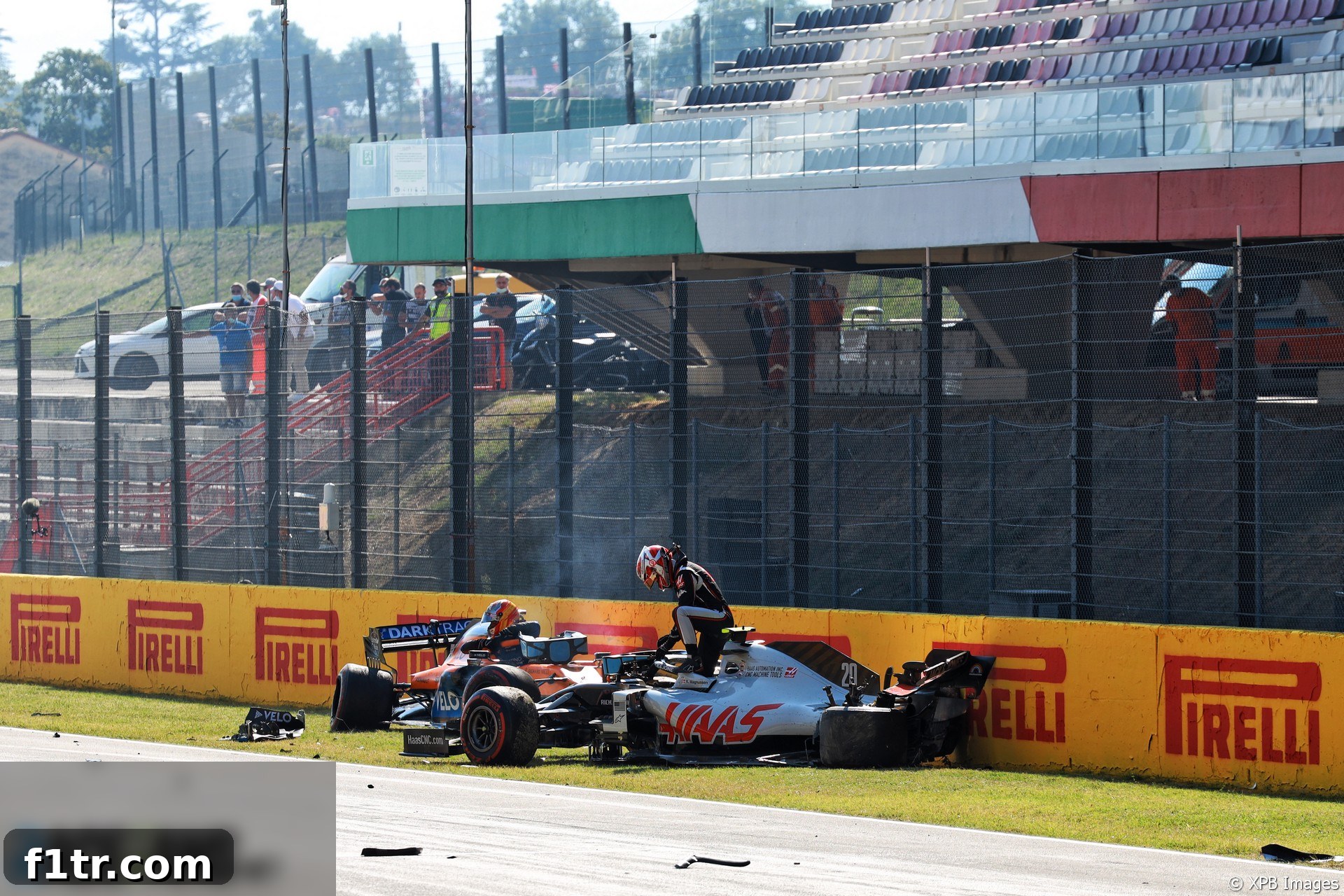
As the lead car navigating the critical restart phase at Italy’s picturesque Mugello circuit, Bottas was tasked with dictating the pace before the designated control line. However, the sequence of events immediately behind his Mercedes W11 led to a significant, high-speed collision involving several prominent drivers. Carlos Sainz Jnr (McLaren), Kevin Magnussen (Haas), Antonio Giovinazzi (Alfa Romeo), and Nicholas Latifi (Williams) were all unfortunate victims, their races prematurely ending due to the severe damage sustained in the melee. This incident not only prompted the deployment of another Safety Car but also triggered a rare red flag, underscoring the severity and widespread impact of the chaotic moment.
In the tense aftermath, Bottas remained resolute, maintaining that his execution of the restart was impeccable and that the blame for the subsequent crash lay squarely with those behind him. His unwavering comments sparked considerable discussion among fans, pundits, and fellow competitors alike, bringing the often-overlooked intricacies of F1’s Safety Car restart rules into sharp, critical focus.
The Mugello Melee: A Dramatic Restart Unfolds
The 2020 Tuscan Grand Prix, marking Ferrari’s 1000th F1 race, was already proving to be an exceptionally eventful and challenging race, even before this particular incident unfolded. Held at Mugello for the first time in Formula 1 history, the circuit’s demanding high-speed corners and undulating terrain presented a unique and rigorous test for the entire grid. Following an earlier Safety Car period, the entire field bunched up tightly behind the leading Mercedes of Valtteri Bottas, anticipating the imminent resumption of racing.
As the Safety Car peeled into the pits, Bottas took command, preparing to unleash the full power of his W11 once past the designated control line. What followed was a devastating chain reaction of events that saw cars in the mid-pack accelerating aggressively, only to then brake sharply and unexpectedly. This created a severe concertina effect, compressing the field in a dangerous manner. Magnussen, Giovinazzi, and Latifi were caught in the initial crunch, with Sainz then collecting the rear of Giovinazzi’s car, triggering further damage. The scenes were alarming, with carbon fiber debris scattered across the track and multiple careers facing instant retirement. This harrowing incident served as a stark and urgent reminder of the razor-thin margins and inherent risks involved in Formula 1 racing, particularly during these high-stakes restart scenarios where drivers push the limits of control and strategy.
Bottas’s Unwavering Stance: Strictly Adhering to the Rules
Post-race, Valtteri Bottas was swift and unequivocal in articulating his position, vehemently dismissing any culpability for the multi-car crash. His entire argument hinged on a fundamental and literal interpretation of the Formula 1 rulebook regarding Safety Car restart procedures.
“We’re allowed to race from the control line, which has been there for a while I think,” he explained with resolute conviction. “It’s just the decision this year has been that [on] the Safety Car they are putting the lights off quite late so you can only build the gap pretty late on.”
Bottas specifically highlighted a procedural shift, noting that the Safety Car’s distinctive amber lights are now extinguished later than in previous seasons. This strategic alteration, he implied, means the leading driver has a significantly reduced window to create a tactical gap and dictate a controlled restart, consequently forcing a more aggressive bunching of the pack. However, he maintained that regardless of this change in procedure, his actions were entirely within the established regulatory framework of the sport.
“Of course when you’re at the lead you try to maximise your chances. I’m not at all to blame for that. Everyone can look everything they want for it,” he asserted, underscoring his deep-seated belief that his tactics were entirely legitimate and strategically aimed at gaining an advantage, a standard and accepted practice for any race leader in such a high-pressure situation.
He continued, further clarifying his precise approach during the critical moment: “I was doing consistent speed until I went. Yes, I went late, but we start racing from the control line, not before that. So the guys behind who crashed because of that, they can look in the mirror, there’s no point whining about it.” This remarkably blunt assessment from Bottas strongly suggested that the drivers further down the grid bore the primary responsibility for misjudging the restart timing and failing to maintain appropriate spacing. Rather than faulting the leader for exercising his undeniable right to control the restart pace strategically, he implied that awareness and reactionary skill from those behind were lacking.
Deciphering F1 Safety Car Restarts: The Control Line and Beyond
To fully comprehend the nuances of Bottas’s argument and the wider implications of the Mugello incident, it’s imperative to delve into the intricacies of Formula 1’s Safety Car restart regulations. When a Safety Car is deployed due to an incident, all cars must meticulously line up behind it, maintaining prescribed distances. Once the track is officially deemed safe for racing to resume, the Safety Car peels into the pits.
At this juncture, the lead car assumes a critical strategic role, dictating the pace of the entire field until it crosses a pre-defined “control line” or “Safety Car line,” typically located on the main straight. Only after crossing this pivotal line are drivers officially permitted to overtake and race at full speed, unleashing their car’s maximum performance. The lead driver thus possesses the significant strategic advantage of controlling the restart. They can judiciously accelerate, brake, and generally modulate their speed to create a tactical advantage, often aiming to catch the cars behind off guard or create a clean gap for themselves into the first corner. The rules are clear: drivers must maintain a reasonable distance behind the car in front, be prepared for sudden acceleration or braking, and crucially, not attempt any overtaking maneuvers before crossing the designated control line.
The late extinguishing of the Safety Car lights, as Bottas explicitly mentioned, undeniably complicates this delicate process. If the lights go out in close proximity to the control line, it dramatically compresses the “preparation” phase. This forces the leader to make a rapid decision regarding their acceleration point, providing significantly less time for the following drivers to react to the leader’s eventual surge. This scenario inherently creates a more abrupt, unpredictable, and potentially volatile restart, precisely the conditions that tragically unfolded at Mugello, culminating in the multi-car pile-up.
The Drivers’ Perspective: Blame, Responsibility, and Anticipation on Track
While Valtteri Bottas unequivocally placed the onus on the drivers directly behind him, the harrowing incident at Mugello sparked a wider, more introspective conversation within the paddock about collective responsibility and the perilous art of anticipation during restarts. Drivers positioned in the midfield often find themselves in an incredibly difficult and precarious situation. They are mandated to maintain a reasonable gap to the car immediately ahead, yet simultaneously, they must anticipate the eventual, often abrupt, acceleration of the race leader, who might be several cars up the chain. This phenomenon, commonly referred to as the “accordion effect,” can lead to massive and dangerous speed differentials across the grid.
If the front cars accelerate, and then the leader suddenly slows again (a classic tactical maneuver known as ‘dummying’ or ‘gapping’), it can cause those further back to lift off the throttle or even brake sharply, only to be inadvertently collected by cars behind them that were expecting full, uninhibited acceleration. The drivers directly involved in the crash, particularly Carlos Sainz Jnr, vividly spoke of the alarming suddenness of the deceleration. Sainz described the situation as “very dangerous” and highlighted the severe visibility issues that invariably compound the problem. From his vantage point several cars back, it is virtually impossible to discern the precise actions of the race leader. They rely heavily on the cars immediately ahead reacting predictably and consistently. When that critical chain of predictable reactions breaks down, chaos, as witnessed at Mugello, inevitably ensues.
This dramatic incident underscored the delicate and often perilous balance between a lead driver’s right to strategically dictate the pace and the collective safety of the entire field. Many observers argued that while Bottas might have technically adhered to the letter of the law, the *spirit* of safe racing might have been inadvertently challenged by the abruptness and unpredictable nature of the restart. However, others staunchly defended Bottas, pointing out that ultimately, every single driver on the grid is responsible for their own positioning, maintaining awareness of their surroundings, and reacting appropriately to the unfolding dynamics of the race.
Advert | Become a RaceFans supporter andgo ad-free
FIA’s Role and the ‘Show’ Factor: The Eternal Balance Between Entertainment and Safety
Valtteri Bottas himself subtly alluded to a potential, underlying motive behind the late Safety Car light-offs, suggesting it might be an intentional strategic decision designed to enhance the racing spectacle for fans. “I think the FIA or FOM, I don’t know who decides with the Safety Cars but they’re trying to make the show better by turning the lights later so you can’t build a gap early and then go like a corner before the main straight. So maybe it’s time to think if that’s right and safe to do so.”
This pointed statement touches upon a recurring and often contentious theme within the high-octane world of Formula 1: the perpetual tension between maximizing entertainment value for a global audience and ensuring the absolute paramount safety of its elite competitors. By strategically turning off the Safety Car lights later in the restart phase, the FIA (Fédération Internationale de l’Automobile, the sport’s venerable governing body) or FOM (Formula One Management) effectively diminish the leading driver’s capacity to create a significant, controlled gap. This forces a tighter, more compressed pack into the crucial restart zone, creating conditions ripe for high-drama. The clear intention behind this strategy is to promote closer, wheel-to-wheel racing and generate more immediate overtaking opportunities once the race officially resumes.
While this strategy undoubtedly creates more dramatic and potentially more exciting restarts for spectators worldwide, it inherently and unavoidably increases the risk of serious incidents like the one witnessed at Mugello. The tighter the pack, the smaller the margin for error for every driver, and the greater the speed differential between cars at various points of sudden acceleration and deceleration. This particular incident brought to the forefront the critical question of whether the relentless pursuit of “the show” might be inadvertently compromising fundamental driver safety, prompting widespread calls for a comprehensive review of these specific restart protocols and their potential long-term implications for the sport.
Safety Implications of Late Restarts: A Delicate and Dangerous Balance
The safety implications arising from late Safety Car light deployments and the subsequent aggressive restart strategies are profound and far-reaching. Formula 1 cars are engineering marvels, capable of incredible speeds, and even seemingly minor errors in judgment or reaction at such velocities can lead to catastrophic consequences. During a typical restart, drivers are intensely jockeying for prime position, often pushing the very limits of their machinery’s performance and their own spatial awareness in an incredibly confined space.
When the Safety Car lights are extinguished late, it creates a significantly shorter window for the leading driver to effectively manage the tightly packed field and for the following drivers to react safely and appropriately. This compressed reaction time can lead to several dangerous scenarios:
- The Accordion Effect: Sudden, unexpected braking by cars ahead can cause those behind to literally pile up, as tragically seen at Mugello, resulting in multi-car collisions.
- Reduced Visibility: In a tightly packed formation, especially in adverse conditions such as rain spray or at specific track angles, drivers’ visibility of events unfolding further ahead can be severely hampered, making reaction times even slower.
- High Speed Differentials: The potentially vast difference in speed between a car anticipating full acceleration and one that suddenly has to brake violently can be enormous, leading to high-impact, high-energy collisions.
- Increased Driver Stress: The mental pressure on drivers during these critical moments is already immense. Unpredictable and volatile restart conditions only add to this mental load, significantly increasing the likelihood of human error and misjudgment.
Bottas’s concerns about whether these specific procedures are “right and safe to do so” resonate deeply with many individuals across the motorsport community who prioritize driver welfare above all else. While Formula 1 has made tremendous, pioneering strides in safety over the past decades, every incident, regardless of its scale, serves as a crucial and sobering reminder to continually evaluate, adapt, and refine regulations to prevent future occurrences and uphold the highest standards of safety in the sport.
The Wider Context of F1 Restart Dynamics: Skill, Strategy, and Risk
Restarts have always been a critical, often controversial, and undeniably thrilling component of Formula 1 racing. They offer unique, high-stakes opportunities for drivers to gain or lose precious track positions, frequently making for some of the most dramatic and unforgettable moments in a race. From Ayrton Senna’s legendary mastery of restart maneuvers to current drivers like Max Verstappen, who are renowned for their aggressive yet meticulously calculated approaches, the art of the restart is a highly prized and honed skill within the sport.
However, hand-in-hand with the relentless pursuit of closer racing and heightened excitement, there remains an ever-present, fine line between strategic brilliance and dangerously reckless maneuvers. The Tuscan Grand Prix incident, while impactful, was certainly not an isolated case in F1’s storied history, nor was it the last time a restart caused significant controversy or concern. It vividly highlights the ongoing and complex challenge for the FIA: to craft regulations that genuinely foster exciting, competitive racing without unduly exposing drivers to unnecessary or foreseeable risks. It also places an immense burden of responsibility on drivers themselves to exercise both aggressive intent and acute situational awareness, especially when the crucial actions of those several cars ahead are largely obscured by the pack.
Conclusion: A Call for Clarity and Consistent Safety
Valtteri Bottas’s firm denial of any direct responsibility for the devastating Tuscan Grand Prix restart crash brought into sharp focus the inherent complexities and potential dangers of modern Formula 1 Safety Car procedures. His unwavering insistence on meticulously adhering to the control line rule, coupled with his pointed critique of the later Safety Car light deployment, sparked a necessary and overdue debate within the sport. While Bottas may have technically acted within the literal bounds of the regulations, the incident vividly underscored the pressing need for greater clarity, enhanced consistency, and potentially, a comprehensive re-evaluation of current restart protocols to ensure both the unyielding excitement of the sport and the unwavering, paramount safety of its elite participants.
The Mugello crash stands as a potent and enduring reminder that in the high-stakes, high-speed world of Formula 1, every rule, every decision, and every single action taken on track carries immense weight, impacting not only the immediate outcome of a race but also the fundamental principles of fair competition and the absolute safety that define the very essence of the sport.
2020 Tuscan Grand Prix Ferrari 1000: Further Reading
To delve deeper into the events of the 2020 Tuscan Grand Prix and other related incidents, explore our comprehensive coverage:
- Race Report: Analyzing the Full Tuscan Grand Prix Race
- Driver Reactions and Aftermath of the Tuscan GP Restart Crash
- FIA Statement on Safety Car Restart Rules Post-Mugello Incident
- Valtteri Bottas: Full Post-Race Interview Transcript and Analysis
- Understanding Formula 1 Safety Car Regulations: An In-depth Guide
- Browse all 2020 Tuscan Grand Prix Ferrari 1000 articles