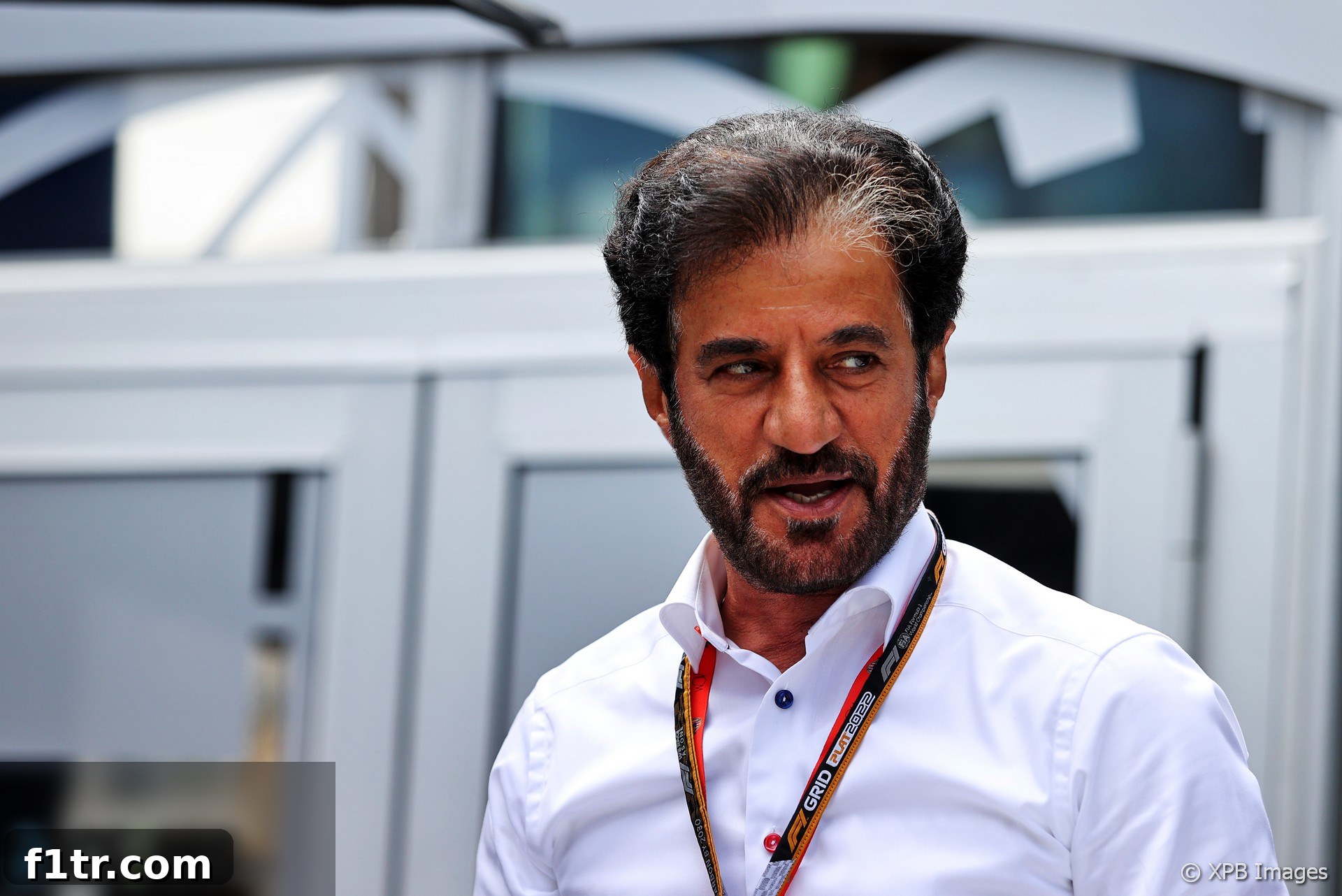
FIA President Mohammed Ben Sulayem Faces Scrutiny Over Decades-Old Sexist Remarks as Governing Body Defends His Current Stance on Equality
The Fédération Internationale de l’Automobile (FIA) has responded to the resurfacing of comments made by its current president, Mohammed Ben Sulayem, over two decades ago. These remarks, discovered on an archived version of his former official website, ignited a swift public debate concerning leadership standards and the evolving landscape of diversity and inclusion in global motorsport. The FIA asserts that the controversial statements, made long before Ben Sulayem assumed the presidency, do not reflect his contemporary beliefs or his active commitment to promoting equality within the sport.
The Revelation: Past Comments Resurface and Spark Controversy
The contentious comments initially came to light through a report published by The Times, which republished extracts from Mohammed Ben Sulayem’s personal website, mohammedbensulayem.com, as it appeared in May 2002. This archived version of the site, dating back to a time when Ben Sulayem was a highly successful rally driver and multiple Middle East rally champion, contained a section titled ‘likes & dislikes’. Within this section, Ben Sulayem articulated a view that has since drawn widespread criticism: “nor do I like women who think they are smarter than men, for they are not in truth.”
The rediscovery and subsequent public dissemination of these remarks prompted immediate discussion across motorsport communities and beyond. In an era where sports organizations, particularly those with a global reach like the FIA, are increasingly under pressure to champion progressive values and foster inclusive environments, such historical comments from a sitting president carry significant weight. The incident highlights the intricate challenges public figures face when past statements, made in different personal and societal contexts, are brought into the modern light of scrutiny. For many, the comments were a stark reminder of outdated perspectives that have historically marginalized women in various fields, including motorsport.
The FIA’s Official Response: A Stance on Evolved Beliefs
Upon being contacted regarding the comments, the FIA was quick to issue a robust defense of its president. A spokesperson for the governing body stated unequivocally that “The remarks in this archived website from 2001 do not reflect the president’s beliefs.” This official response aims to create a clear distinction between Ben Sulayem’s past personal views and his current professional ethos as the head of an international sports federation responsible for overseeing numerous disciplines, including the pinnacle of motorsport, Formula 1.
The FIA’s statement further emphasized Ben Sulayem’s present-day dedication to advancing gender equality and inclusivity. “He has a strong record on promoting women and equality in sport, which he is happy to be judged on,” the spokesperson added. This assertion points to a perceived track record of proactive measures taken during his tenure, suggesting that his actions and policies as president are the true measure of his convictions. The governing body stressed that promoting equality was not merely an afterthought but a “central part of his manifesto” during his election campaign. Moreover, the statement highlighted “actions taken this year and the many years he served as vice president for sport prove this,” underscoring a consistent commitment that predates his current role.
This defense strategy rests on the premise that individuals can evolve their perspectives over time, and that judgments should be based on current conduct and demonstrated commitment rather than views expressed two decades ago. The FIA is therefore inviting the public to assess Ben Sulayem based on his leadership and initiatives since taking office, rather than the isolated and dated comments.
Mohammed Ben Sulayem’s Presidency: A New Era for the FIA
Mohammed Ben Sulayem’s journey to the FIA presidency culminated in his election in December 2021, a week following the contentious Abu Dhabi Grand Prix that saw Max Verstappen clinch his first Formula 1 world title. He succeeded Jean Todt, marking a significant transition in leadership for the global governing body of motorsport. Since assuming office, Ben Sulayem has distinguished himself through a more hands-on and outspoken approach, particularly concerning matters within Formula 1, compared to his predecessor.
His presidency has not been without its moments of controversy. Prior to the resurfacing of these specific comments, Ben Sulayem attracted criticism in June of the previous year for remarks he made concerning F1 drivers Sebastian Vettel and Lewis Hamilton. Both champions had been vocal advocates for various social and environmental causes, leading to a debate about the extent to which drivers should use their platforms for activism. In response to that earlier criticism, Ben Sulayem firmly stressed his unwavering commitment to “diversity and inclusion” within the FIA.
In a social media post last year, he articulated his philosophy: “As a driver, I have always believed in sport as a catalyst of progress in society. That is why promoting sustainability, diversity and inclusion is a key priority of my mandate. In the same way, I value the commitment of all drivers and champions for a better future.” These public declarations illustrate an intentional effort to align his leadership with contemporary values of social responsibility and inclusivity, setting a clear tone for the direction he wishes to steer the FIA.
Actions and Initiatives: Championing Equality and Diversity Under Ben Sulayem
The FIA’s defense of Mohammed Ben Sulayem largely hinges on the tangible actions and initiatives undertaken during his presidency that demonstrably support gender equality and diversity. These actions are presented as concrete evidence that his past remarks do not reflect his current operational philosophy or the strategic direction of the FIA under his leadership.
One of the most significant appointments under Ben Sulayem’s leadership was that of Natalie Robyn as the FIA’s first-ever female CEO. This historic appointment broke barriers within an organization that has traditionally been perceived as male-dominated at its highest echelons. Robyn’s role is critical in the day-to-day operations and strategic direction of the FIA, signifying a profound commitment to diversifying leadership roles and empowering women within the sport’s governance structure.
Furthermore, Ben Sulayem fulfilled a key manifesto pledge by establishing the FIA’s first dedicated Equality, Diversity, and Inclusion (EDI) advisor role. Tanya Kutsenko was appointed to this crucial position last year, tasked with guiding the FIA’s efforts to ensure fair representation and opportunities across all aspects of motorsport. The creation of such a role underscores a systemic approach to embedding EDI principles into the core fabric of the organization, moving beyond mere statements to actionable policy and oversight.
These initiatives are presented as pillars of Ben Sulayem’s presidency, illustrating a proactive approach to fostering a more inclusive environment within motorsport. They serve as the foundation upon which the FIA asks for its president to be judged, emphasizing a clear shift from any past individual biases to a present-day institutional commitment to progress.
The Broader Impact: Reconciling Past and Present in Motorsport Leadership
The controversy surrounding Mohammed Ben Sulayem’s past comments and the FIA’s subsequent defense highlights a critical issue in modern leadership: the reconciliation of historical views with contemporary expectations. In an increasingly interconnected world, where past statements can be easily exhumed and scrutinized, leaders of global organizations face immense pressure to demonstrate consistency in their values and to align with evolving societal norms. For a body like the FIA, which governs a sport enjoyed by millions worldwide and influences cultures across continents, the perceived stance on issues such as gender equality is paramount.
The incident opens a broader dialogue about how motorsport, a historically male-dominated arena, is adapting to calls for greater diversity and inclusion. While significant strides have been made to encourage female participation in various racing categories and technical roles, leadership positions have often lagged. The appointment of individuals like Natalie Robyn and Tanya Kutsenko under Ben Sulayem’s tenure suggests a genuine effort to address this imbalance, yet the resurfacing of sexist comments risks undermining these progressive steps. It underscores the importance of not only implementing policies but also fostering a culture where such views are unequivocally rejected at all levels.
This situation also serves as a reminder to all public figures about the enduring nature of digital footprints and the ongoing need for introspection and growth. While people’s views can genuinely evolve, particularly over two decades, the journey from past prejudices to current advocacy must be clear and consistently demonstrated through both words and deeds. For the FIA, maintaining credibility and inspiring future generations of diverse talent in motorsport will depend on its unwavering commitment to these principles, ensuring that leadership reflects the inclusive values it espouses.
Looking Ahead: Ben Sulayem’s Term and the Future of FIA Leadership
Mohammed Ben Sulayem’s current term as FIA president is set to conclude in 2025. As the controversy surrounding his past comments settles, his leadership will continue to be evaluated through the lens of his actions and the progress the FIA makes under his guidance on critical issues like equality, diversity, and inclusion. The governing body’s proactive stance in promoting women to senior roles and establishing dedicated EDI advisory positions will undoubtedly be central to how his legacy is perceived.
Looking towards 2025, Ben Sulayem will have the option to stand for re-election for a second term, unless another candidate from within the organization challenges him. The upcoming years will be crucial for him to solidify his commitment to a progressive and inclusive FIA. His ability to navigate future challenges, uphold ethical standards, and continue implementing transformative changes will be key factors in determining his future in leadership. The incident serves as a poignant reminder that leaders of international sports federations are not only responsible for the integrity of their sports but also for championing the values that resonate with a global, diverse audience.