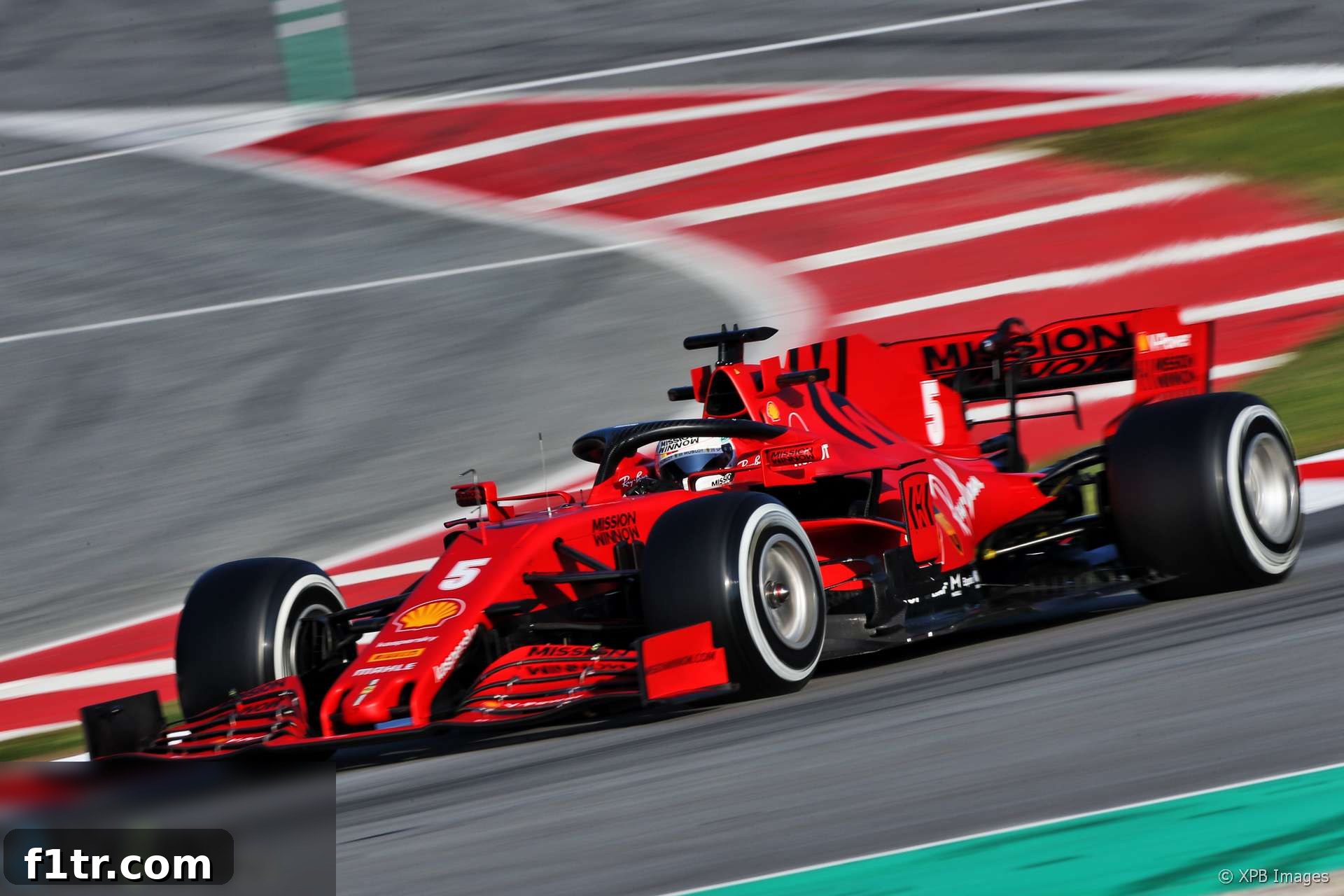
Ferrari’s Cautious Outlook: Binotto Expresses Doubts Over SF1000’s Early F1 Pace
The dawn of a new Formula 1 season is always a period of intense anticipation, particularly for a team with the storied history and passionate global fanbase of Scuderia Ferrari. However, as the initial pre-season testing sessions unfolded, a sense of muted expectation, rather than the usual buoyant optimism, began to emanate from the Ferrari camp. Team Principal Mattia Binotto, a figure often associated with a resolute belief in his team’s capabilities, has openly admitted to a less sanguine view of their current position compared to the previous year’s testing period. His recent statements paint a picture of a team that acknowledges a performance deficit against their main rivals, a sentiment that has undoubtedly sent ripples through the Formula 1 community and among the Tifosi.
Binotto’s assessment stems from a detailed, albeit preliminary, analysis of the testing lap times recorded thus far. This internal evaluation, meticulously conducted by Ferrari’s engineering department, suggests that the SF1000 – the Scuderia’s challenger for the upcoming season – is not currently matching the outright pace of the fastest cars on the grid. This candid admission from the team principal highlights a stark reality: despite months of development and design work, Ferrari appears to be playing catch-up even before the first Grand Prix lights extinguish.
“Simply looking at the delta pace and eventually what we may assess in terms of fuel load – which you never know in terms of engine modes, et cetera – looking at the picture relative to ourselves, I think we are not as fast as they are,” Binotto articulated, carefully weighing his words. This statement underscores the inherent complexities of pre-season testing. Teams meticulously guard their true performance, often running varied fuel loads, engine mappings, and testing programs, making direct comparisons challenging. Yet, even with these variables in mind, Ferrari’s internal metrics point towards a clear gap.
The Italian team boss did not shy away from direct comparison with his sentiments from the previous year. “I’m not as optimistic as last year,” he confessed, drawing a clear line between the hopeful mood of the past and the more pragmatic present. He continued, reinforcing his concerns: “The others are faster than us at the moment I believe. How much faster I think it’s really difficult to judge. We will go through all the data in the next days. But I don’t think we are as fast as them at the moment.” This cautious language, devoid of the usual F1 bravado, speaks volumes about the challenges Ferrari faces as they fine-tune the SF1000 ahead of the season opener.
Binotto emphasized that a definitive understanding of the competitive hierarchy will only emerge later in the testing schedule, and indeed, not fully until the season officially commences. The initial days of testing are often dedicated to aerodynamic correlation, systems checks, and understanding the new machinery rather than outright speed runs. However, even within this framework, the Ferrari F1 team principal acknowledged the underlying concerns. “Do we have any concerns? Certainly yes, when you are not as fast as you would like to be,” he admitted, revealing the competitive pressure that perpetually resides within a team like Ferrari. “But I think it’s really too early stage to define them and to understand.”
The initial three-day testing period, therefore, served a crucial purpose for Ferrari: data collection. “So these three days for us have been very important because at least we have collected all the data now to have a clear picture and better understanding,” Binotto explained. This comprehensive dataset will be invaluable in guiding the team’s development efforts. The ultimate goal is to ensure that any adjustments or upgrades to the SF1000 are made in the most effective direction. Understanding the car’s strengths and weaknesses early on is paramount for a successful campaign, and Ferrari is now dedicating resources to dissecting every piece of information gathered.
Advert | Become a Supporter & go ad-free
Despite the current apprehension, Binotto maintained a long-term perspective, reminding everyone of the marathon that is a Formula 1 season. “What will be even more important is to make sure that we are developing the car in the right direction. Having said that, it’s a very long season, 22 races potentially, so I think there will be time as well to recover eventually. But let’s wait for next week and let’s wait for Australia before to assess what’s the true performance of everybody.” This pragmatic viewpoint suggests that while the initial pace may not be what they desire, Ferrari holds onto the belief that they possess the engineering prowess and strategic capability to close the gap over the course of the championship.
A significant revelation from Binotto was the strategic approach Ferrari has taken to this first phase of testing. He openly admitted that the team had “not looked yet for the performance” and had “not optimised the car around the ideal optimum set-up.” This statement is critical. It implies that Ferrari has been focusing on reliability runs, understanding the fundamental characteristics of the SF1000, and ensuring all systems are functioning as intended, rather than pushing for headline-grabbing lap times. Many F1 teams employ this strategy, saving their performance runs for the final days of testing or even the qualifying sessions of the first race. This could mean that Ferrari’s true potential is yet to be unlocked, offering a glimmer of hope amidst the current concerns.
“I think that will be clearer next week,” Binotto added, indicating that the second week of testing will likely see Ferrari begin to explore the SF1000’s performance limits. This also suggests that the team is not anticipating any radical or major updates for the SF1000 between the conclusion of pre-season testing and the inaugural Grand Prix of the year. Instead, their focus will be on optimizing the existing package, finding the ideal setup, and maximizing the performance that is already inherent in the car. The fine-tuning process, rather than a significant aerodynamic overhaul, seems to be the immediate priority for the Maranello squad.
The Ferrari F1 team’s honest assessment comes against a backdrop of intense competition from rivals such as Mercedes and Red Bull Racing, both of whom typically hit the ground running in pre-season. Mercedes, in particular, has set a formidable benchmark in recent years, often showcasing strong reliability and impressive pace right from the off. For Ferrari, the challenge is not just to improve their own car, but to do so at a faster rate than their formidable competitors. The delicate balance between understanding the car, pushing for performance, and managing expectations is a complex one, and Binotto’s words reflect this intricate dance.
Ultimately, the pre-season testing phase is a prelude, a teaser before the main event. While Binotto’s realism might temper the enthusiasm of some Ferrari fans, it also signals a pragmatic approach from the team. The focus is now squarely on meticulous data analysis, strategic development, and unlocking the full potential of the SF1000. The true measure of Ferrari’s performance and their standing in the 2020 Formula 1 championship will only become apparent when the cars hit the track in anger, but Binotto’s early honesty ensures that expectations are calibrated for a challenging, yet potentially rewarding, season ahead for the legendary Italian racing outfit.
Advert | Become a RaceFans supporter andgo ad-free
2020 F1 season
- Grosjean to make F1 test return tomorrow for first time since Bahrain horror crash
- Pictures: Wrecked chassis from Grosjean’s Bahrain fireball crash to go on display
- Bottas vs Rosberg: Hamilton’s Mercedes team mates compared after 78 races each
- F1 revenues fell by $877 million in Covid-struck 2020 season
- Hamilton and Mercedes finally announce new deal for 2021 season
Browse all 2020 F1 season articles