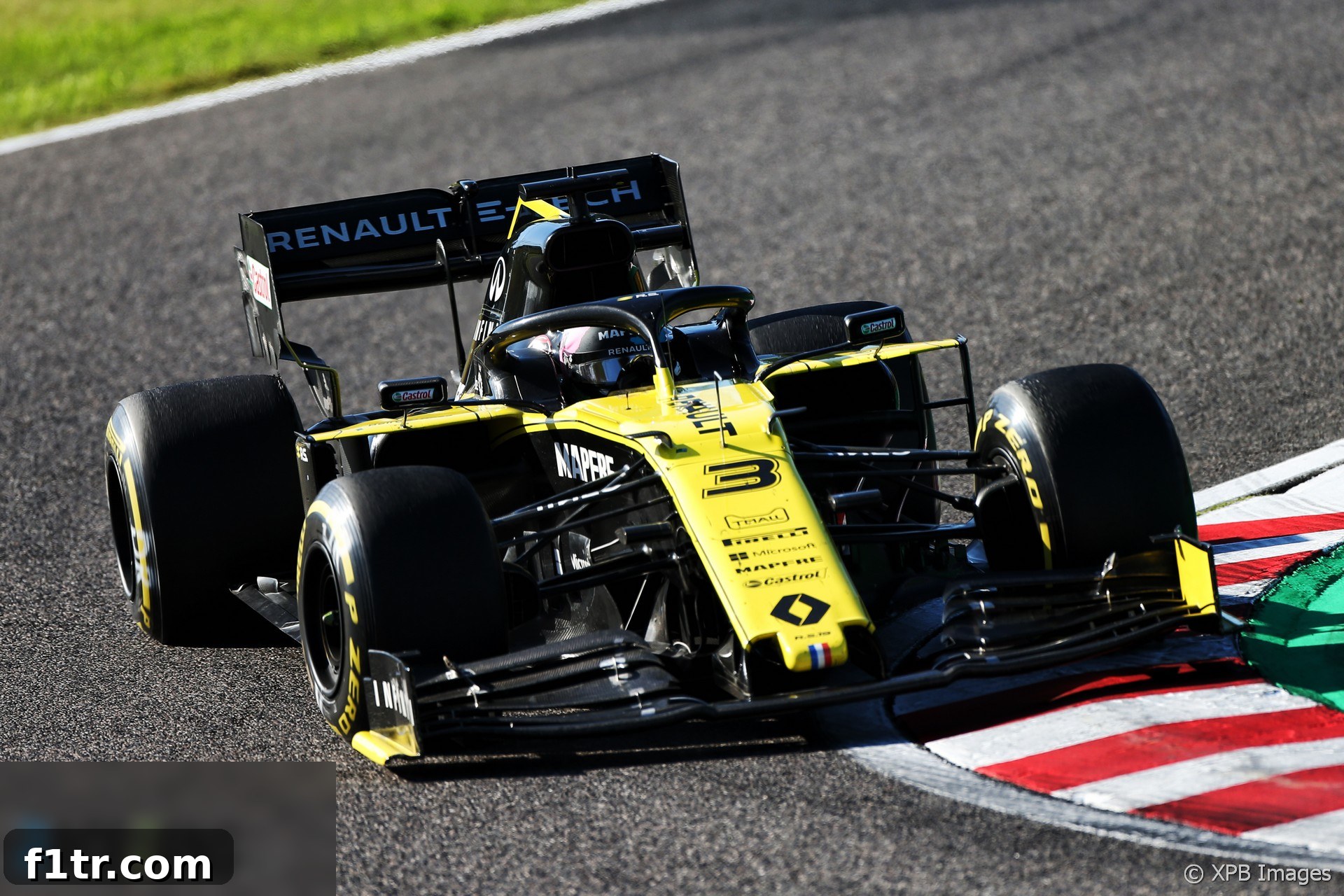
The exhilarating 2019 Formula 1 Japanese Grand Prix at Suzuka, a race initially celebrated for its on-track drama and strategic battles, took an unexpected turn long after the checkered flag fell. What seemed like a definitive result on race day was dramatically revised following a significant technical infringement that led to the disqualification of both Renault drivers, Daniel Ricciardo and Nico Hülkenberg. This post-race decision by the FIA stewards reshaped the points standings for drivers and constructors alike, injecting a new layer of intrigue into the latter stages of the championship season.
The revised outcome meant a shuffling of positions throughout the midfield, elevating several drivers into higher points-scoring spots and even bringing previously unclassified drivers into the top ten. Charles Leclerc, Pierre Gasly, and Sergio Perez were among those who saw their points tallies increase, benefiting from the Renault penalty. Furthermore, Lance Stroll and Daniil Kvyat, who had originally finished outside the points, were deservedly promoted into the coveted top ten, each securing valuable championship points for their respective teams.
The controversy stemmed from a protest lodged by the Racing Point team concerning Renault’s brake bias adjustment system. Following an extensive investigation by the FIA, it was found that Renault’s system, while not explicitly illegal, violated the sporting regulations regarding driver aids, specifically Article 27.1 of the FIA Formula 1 Sporting Regulations, which states that “The driver must drive the car alone and unaided.” This ruling sent ripples through the paddock, highlighting the constant scrutiny teams face to ensure their innovations comply with the spirit and letter of the rules.
For fans and analysts, the revised results provided a fascinating case study in how technical regulations can influence the championship narrative. The Japanese Grand Prix, already a highlight of the F1 calendar known for its high-speed corners and passionate support, became memorable not just for Valtteri Bottas’ dominant victory, but for the dramatic aftermath that underscored the meticulous detail with which Formula 1 cars are designed, built, and scrutinized. This event served as a stark reminder that every component and system on a Formula 1 car must adhere strictly to the rulebook, with any deviation potentially leading to severe consequences for a team’s championship aspirations.
The disqualification was a significant blow for the Renault F1 Team, who were battling fiercely in the midfield constructors’ championship. The loss of points not only affected their standing but also boosted the fortunes of their direct competitors, particularly Racing Point, who had initiated the protest. The domino effect of this decision cascaded through the points tables, impacting individual driver standings and the overall pecking order among the constructors. It underscored the relentless competition in Formula 1, where even a slight technical advantage, if deemed illegal, can unravel an entire race weekend’s effort.
This article delves into the details of the revised 2019 Japanese Grand Prix race result, the subsequent changes in the drivers’ championship standings, and the significant impact on the constructors’ battle, providing a comprehensive overview of a truly pivotal moment in the 2019 Formula 1 season.
Revised 2019 Japanese Grand Prix Race Result: A Post-Race Shake-Up
The initial celebrations at Suzuka were short-lived for some, as the FIA’s verdict on the Renault technical infringement caused a significant reshuffle of the finishing order. Valtteri Bottas’ masterful drive to victory for Mercedes remained unchallenged, a testament to his performance on the day. Sebastian Vettel and Lewis Hamilton also retained their podium positions, securing valuable points for Ferrari and Mercedes respectively. However, below the top three, the landscape of the race result transformed dramatically.
Alexander Albon continued his impressive run with Red Bull-Honda, holding onto fourth place, while Carlos Sainz Jnr’s superb performance for McLaren-Renault saw him remain in fifth. The real impact began from sixth place downwards. Charles Leclerc, who had initially finished seventh, moved up to a solid sixth for Ferrari. Pierre Gasly, showcasing strong form for Toro Rosso-Honda, advanced to seventh. Sergio Perez’s consistent driving for Racing Point-Mercedes earned him an improved eighth position. Most notably, Lance Stroll and Daniil Kvyat, who had crossed the finish line in eleventh and twelfth respectively, were promoted into the points, securing ninth and tenth place. This gain was particularly crucial for Racing Point, who not only gained points from Stroll but also benefited from Renault’s penalty in the constructors’ championship.
Lando Norris, Kimi Räikkönen, Romain Grosjean, Antonio Giovinazzi, and Kevin Magnussen also moved up one position each as a result of the disqualifications. The Williams drivers, George Russell and Robert Kubica, rounded out the classified finishers, their positions largely unaffected in terms of points, but still shifting numerically. Max Verstappen, unfortunately, retired from the race due to damage, maintaining his unclassified status.
The disqualification of Daniel Ricciardo and Nico Hülkenberg, despite both drivers completing the race, stripped Renault of the nine points they had initially earned. This decision emphasized the rigorous enforcement of technical regulations and the FIA’s commitment to fair competition. The revised table below reflects these critical changes, providing the definitive outcome of the 2019 Japanese Grand Prix.
| Pos | # | Driver | Car | Laps | Time/gap | Difference | Reason |
|---|---|---|---|---|---|---|---|
| 1 | 77 | Valtteri Bottas | Mercedes | 52 | 1hr 21m 46.755s | ||
| 2 | 5 | Sebastian Vettel | Ferrari | 52 | 13.343 | 13.343 | |
| 3 | 44 | Lewis Hamilton | Mercedes | 52 | 13.858 | 0.515 | |
| 4 | 23 | Alexander Albon | Red Bull-Honda | 52 | 59.537 | 45.679 | |
| 5 | 55 | Carlos Sainz Jnr | McLaren-Renault | 52 | 69.101 | 9.564 | |
| 6 | 16 | Charles Leclerc | Ferrari | 51 | 1 lap | 1 lap | |
| 7 | 10 | Pierre Gasly | Toro Rosso-Honda | 51 | 1 lap | 3.064 | |
| 8 | 11 | Sergio Perez | Racing Point-Mercedes | 51 | 1 lap | 0.370 | |
| 9 | 18 | Lance Stroll | Racing Point-Mercedes | 51 | 1 lap | 3.235 | |
| 10 | 26 | Daniil Kvyat | Toro Rosso-Honda | 51 | 1 lap | 3.715 | |
| 11 | 4 | Lando Norris | McLaren-Renault | 51 | 1 lap | 7.389 | |
| 12 | 7 | Kimi Raikkonen | Alfa Romeo-Ferrari | 51 | 1 lap | 12.987 | |
| 13 | 8 | Romain Grosjean | Haas-Ferrari | 51 | 1 lap | 7.023 | |
| 14 | 99 | Antonio Giovinazzi | Alfa Romeo-Ferrari | 51 | 1 lap | 18.558 | |
| 15 | 20 | Kevin Magnussen | Haas-Ferrari | 51 | 1 lap | 2.316 | |
| 16 | 63 | George Russell | Williams-Mercedes | 50 | 2 laps | 1 lap | |
| 17 | 88 | Robert Kubica | Williams-Mercedes | 50 | 2 laps | 87.860 | |
| Not classified | |||||||
| 33 | Max Verstappen | Red Bull-Honda | 14 | 38 laps | 36 laps | Damage | |
| 3 | Daniel Ricciardo | Renault | 51 | Disqualified | |||
| 27 | Nico Hulkenberg | Renault | 51 | Disqualified | |||
Revised 2019 Drivers’ Championship Standings: A Dynamic Shift
The disqualification of Daniel Ricciardo and Nico Hülkenberg from the Japanese Grand Prix had a ripple effect that reshaped the 2019 Formula 1 Drivers’ Championship standings. While the top positions remained largely stable, particularly Lewis Hamilton’s commanding lead, the battle for points in the midfield became even more intense and consequential. Drivers who had initially missed out on points suddenly found themselves climbing the leaderboard, adding to their season tallies and boosting their championship prospects.
Lewis Hamilton, despite finishing third at Suzuka, maintained his dominant position at the top, firmly on track for his sixth world title. Valtteri Bottas, with his victory, solidified his second place, pulling further ahead of the pack. Charles Leclerc notably benefited from the revised results, with his improved sixth-place finish adding more points to his tally, helping him consolidate third position in the championship. Sebastian Vettel and Max Verstappen continued their tight battle for fourth, their points remaining unchanged from the revised race.
Further down the order, Carlos Sainz Jnr remained in a strong sixth position, affirming McLaren’s impressive season. Pierre Gasly’s promotion to seventh place at Suzuka also saw his overall points total increase, putting him in a strong seventh in the championship. Alexander Albon, in his impressive rookie season, held onto eighth. The most significant gains were seen by Sergio Perez, Lance Stroll, and Daniil Kvyat. Perez’s increased points helped him climb to ninth, while Kvyat’s newly acquired point pushed him into a three-way tie for eleventh. Stroll, too, gained valuable points, moving him up to fifteenth overall.
Conversely, the Renault drivers suffered a significant setback. Daniel Ricciardo and Nico Hülkenberg’s points from the Japanese Grand Prix were entirely removed, impacting their overall standings. While their positions in the championship might not have changed dramatically, the loss of these points significantly diminished their individual tallies and the team’s standing against fierce midfield rivals.
This revised drivers’ points table clearly illustrates the impact of the FIA’s decision, showcasing the dynamic nature of Formula 1 where every single point can make a difference in the championship race.
| Driver | Total | |
|---|---|---|
| 1 | Lewis Hamilton | 338 |
| 2 | Valtteri Bottas | 274 |
| 3 | Charles Leclerc | 223 |
| 4 | Max Verstappen | 212 |
| 4 | Sebastian Vettel | 212 |
| 6 | Carlos Sainz Jnr | 76 |
| 7 | Pierre Gasly | 75 |
| 8 | Alexander Albon | 64 |
| 9 | Sergio Perez | 37 |
| 10 | Lando Norris | 35 |
| 11 | Daniil Kvyat | 34 |
| 11 | Daniel Ricciardo | 34 |
| 11 | Nico Hulkenberg | 34 |
| 14 | Kimi Raikkonen | 31 |
| 15 | Lance Stroll | 21 |
| 16 | Kevin Magnussen | 20 |
| 17 | Romain Grosjean | 8 |
| 18 | Antonio Giovinazzi | 4 |
| 19 | Robert Kubica | 1 |
| 20 | George Russell | 0 |
Revised 2019 Constructors’ Championship Standings: A Midfield Battle Intensifies
The most immediate and significant impact of the Renault disqualification from the Japanese Grand Prix was felt in the fiercely contested Constructors’ Championship, particularly among the midfield teams. While Mercedes, Ferrari, and Red Bull maintained their dominant positions at the top, the battle for fourth, fifth, and sixth places saw a critical shift in points and momentum.
Renault, who had initially secured nine points from Suzuka, saw their total championship points reduced from 77 to a new tally of 68. This substantial loss was a major blow to their aspirations, especially as they were battling to establish themselves as the “best of the rest” behind the top three. The disqualification not only removed their hard-earned points but also handed a psychological advantage to their rivals.
Conversely, Racing Point, the team that lodged the protest against Renault, were the direct beneficiaries. With Sergio Perez’s improved eighth place and Lance Stroll’s promotion to ninth, Racing Point accumulated an additional six points. Their total championship points consequently increased from 54 to 58. This gain not only narrowed the gap to Renault but also put them in a stronger position to challenge for higher places in the remaining races of the season.
McLaren, with Carlos Sainz Jnr’s strong fifth-place finish, solidified their fourth position in the championship. Toro Rosso, benefiting from Pierre Gasly and Daniil Kvyat’s revised points, also strengthened their position. The overall landscape of the midfield constructors’ battle became even tighter and more unpredictable following this post-race development, highlighting the critical nature of every single point in Formula 1.
This revised table showcases the direct consequences of the FIA’s technical ruling, illustrating how meticulously teams must adhere to regulations, and how a single decision can dramatically alter the trajectory of a season for competitive outfits.
| Team | Total | |
|---|---|---|
| 1 | Mercedes | 612 |
| 2 | Ferrari | 435 |
| 3 | Red Bull | 323 |
| 4 | McLaren | 111 |
| 5 | Renault | 68 |
| 6 | Toro Rosso | 62 |
| 7 | Racing Point | 58 |
| 8 | Alfa Romeo | 35 |
| 9 | Haas | 28 |
| 10 | Williams | 1 |
In conclusion, the 2019 Japanese Grand Prix will forever be remembered not just for the thrilling race action on the iconic Suzuka circuit, but for the unprecedented post-race disqualification of the entire Renault team. This event served as a powerful testament to the stringent technical regulations that govern Formula 1 and the unwavering commitment of the FIA to ensure fair play. The revised results profoundly impacted the midfield battles in both the Drivers’ and Constructors’ Championships, highlighting the fine margins that separate success from setback in the pinnacle of motorsport. While the top three teams remained largely unaffected in terms of their championship positions, the jostling for dominance among the mid-table teams intensified, adding another layer of excitement to the closing stages of the 2019 season.