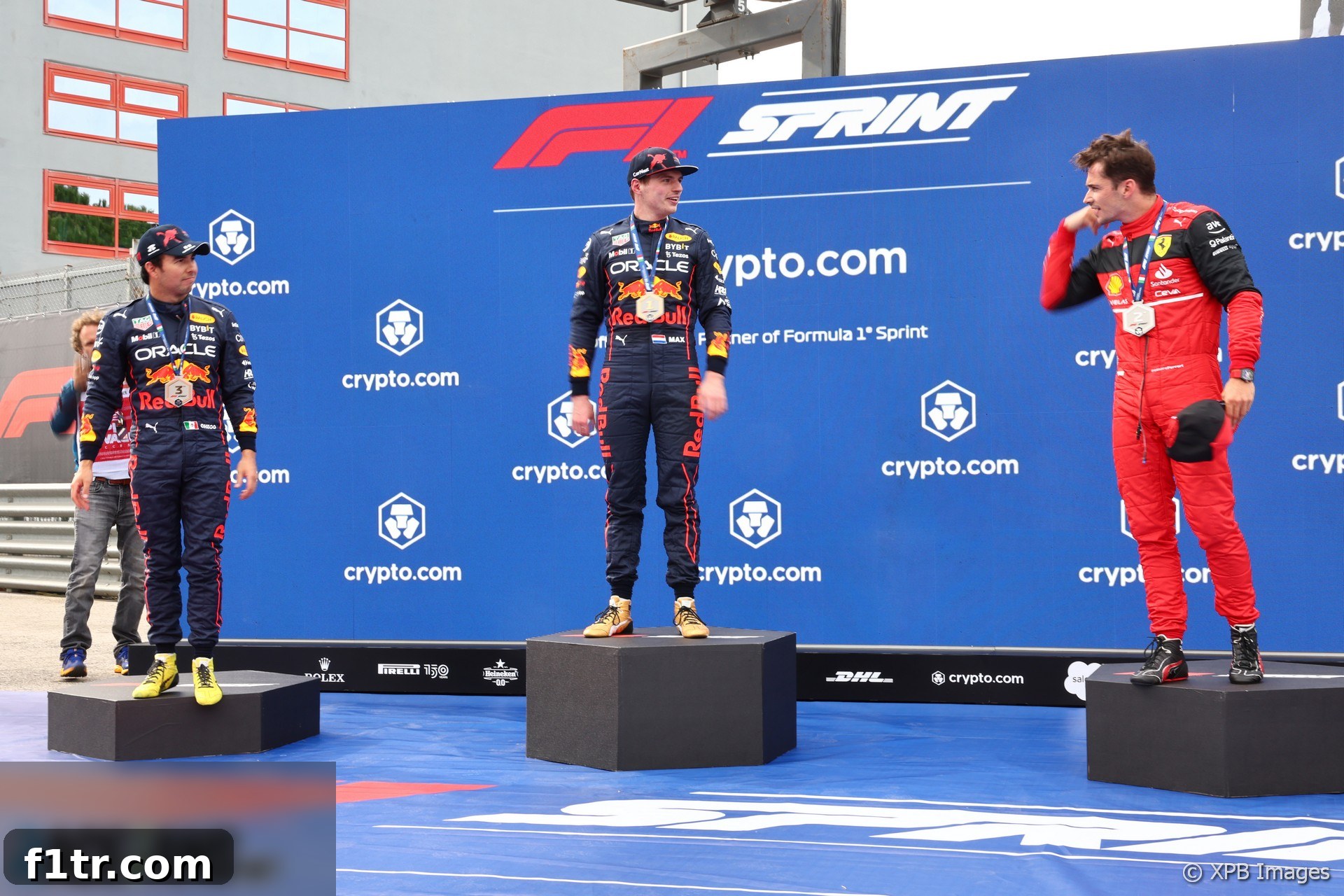
Formula 1 is poised for another strategic attempt to significantly expand its sprint race calendar, targeting six events for the upcoming 2023 season. This comes after an initial proposal to increase the sprint count for 2022 faced strong resistance and was ultimately thwarted by several teams, primarily due to concerns over escalating costs under the sport’s strict budget cap regulations.
Advert | Become a Supporter & go ad-free
F1 Drives Towards Six Sprint Races in 2023, Bolstered by Renewed Optimism
The ambition to integrate more sprint races into the Formula 1 calendar reflects a broader strategy by the sport’s management to enhance fan engagement, introduce more unpredictable on-track action, and maximize the entertainment value of Grand Prix weekends. While the initial resistance in 2022 highlighted critical financial concerns among teams, F1’s leadership, spearheaded by Motorsport Director Ross Brawn, believes a stronger case can now be made for expansion.
The Evolution of the Sprint Race Format in Formula 1
The concept of a sprint race was first introduced in Formula 1 during the 2021 season as an experimental format, designed to shake up the traditional Grand Prix weekend and offer fans more competitive action. Instead of the standard qualifying session setting the grid for Sunday’s main race, a shorter sprint event on Saturday would determine the starting order. This format also brought Friday into the competitive spotlight, as the qualifying session for the sprint race would take place on the first day of the event.
The inaugural trials in 2021 at Silverstone, Monza, and Interlagos provided valuable data and insights. While opinions were somewhat divided, there was a general consensus that the format added an extra layer of intrigue and, at times, drama. The aim was to create a more dynamic weekend structure, ensuring that every day of a Grand Prix had significant competitive meaning, moving away from Fridays often being perceived as less impactful practice sessions.
Overcoming 2022 Hurdles: Cost Cap and Team Concerns
Despite the initial positive feedback, efforts to double the number of sprint races from three to six for the 2022 season were met with considerable opposition. The primary sticking point was the financial implications for teams, particularly in the context of F1’s new budget cap regulations. Teams argued that adding more sprint events would inherently increase their operational costs, primarily due to the heightened risk of car damage, increased wear on components, and the need for more spare parts. Under a stringent cost cap, every additional expense becomes a significant burden, especially for smaller teams operating closer to the limit.
Concerns were raised that potential accidents during sprint races could lead to costly repairs, eating into development budgets and potentially penalizing teams unfairly. This financial hurdle proved insurmountable for the 2022 season, leading to the decision to maintain the original three-sprint calendar for that year, with the first of these being held at the Emilia-Romagna Grand Prix.
Ross Brawn’s Renewed Optimism for 2023 Expansion
Following the successful execution of the first sprint race of 2022, F1 Motorsport Director Ross Brawn expressed renewed confidence and a strong intention to push for an increased number of sprints in 2023. Speaking after the Emilia-Romagna sprint, Brawn highlighted the perceived shift in perspective among team principals.
“On Tuesday we want to discuss increasing it to six,” Brawn stated, indicating the urgency and determination of F1’s management. He firmly believes that team principals “can see the success” of the format and have now gained a better understanding of its value. Brawn noted, “I think we didn’t know quite where we were last year with the old cars. But I think they can see the way this is feeding into the new cars and the philosophy of the new cars.” This suggests that the format might be more aligned with the design and racing characteristics of the new generation of F1 cars, which were introduced in 2022, promoting closer racing and more overtaking opportunities.
Beyond the technical alignment, Brawn emphasized the crucial aspect of fan experience. “I’m optimistic they’ll all see the value in it and what we’ve given the fans. I think the thing you should always remember about the sprint is it gives you a great Friday as well. If we have qualifying on a Friday we have three days of action for the fans and you can’t ignore that.” This highlights F1’s commitment to delivering a comprehensive and engaging weekend package, transforming Friday from a mere practice day into a competitive and suspenseful qualifying session that sets the stage for Saturday’s sprint and Sunday’s main event.
Navigating the F1 Commission: The Voting Strategy
To swiftly implement the increase in sprint races, Ross Brawn aims to utilize a specific voting mechanism within the F1 Commission. The F1 Commission, comprising representatives from the FIA, Formula 1, and the ten teams, is responsible for major decisions regarding the sport’s regulations and future direction. Brawn hopes to secure the expansion to six sprint races using a simple majority vote, which requires 25 out of 30 votes. This is a less stringent requirement than a super-majority, which demands 28 votes, making it easier for a smaller number of teams to block proposals.
Brawn’s strategy is clear: first, establish the number of sprint races, then consider format refinements. “What I’d like to do is at least get six races settled and then after these three races we can see if there’s some format developments we want to do,” he explained. “But I’d like to just move on to six races, get that bedded in and settled, and then if there’s any format changes that we feel are worthwhile then we can consider those.”
This phased approach is tactical. “The six races needs to pass on a simple majority, any format changes in the future will have to pass on a super-majority, so eight teams have to agree [in addition to 20 FIA and FOM representatives]. So I think the important thing is to get the simple thing done first. Then there may be scope in the future for evolving it even further.” This indicates a recognition of the political realities within the F1 paddock and a desire to achieve the primary goal of more sprints before delving into potentially contentious format tweaks that might require broader consensus.
The Potential Impact of an Expanded Sprint Calendar
An increase to six sprint races would have significant implications across Formula 1. From a commercial standpoint, more competitive sessions translate to increased television viewership and advertising opportunities, potentially boosting F1’s overall revenue. For fans, it means more thrilling on-track action, especially with the current generation of cars designed for closer racing. The additional points awarded for sprint races also add another strategic layer to the championship battle, keeping the drivers’ and constructors’ standings tighter and more exciting.
However, the cost cap remains a delicate balance. While F1 management sees the long-term value, teams will still need assurances that the financial framework can accommodate the increased operational demands. Discussions around potential increases to the cost cap specifically for sprint race-related damages or operational expenses are likely to be part of the ongoing dialogue. Ferrari, for instance, has already publicly backed the increase to six sprint races, suggesting that at least some major teams are now on board with the proposal, possibly having found common ground on the financial aspects.
The selection of circuits to host these six sprint races will also be crucial. Ideal venues would be those that offer exciting racing, boast excellent infrastructure, and can handle the additional logistical complexities of a sprint format. Circuits with good overtaking opportunities and a passionate fan base would likely be prioritized to maximize the impact of the expanded calendar.
Advert | Become a RaceFans supporter andgo ad-free
Looking Ahead: The Road to 2023
The upcoming discussions within the F1 Commission are pivotal. The push for six sprint races is not just about adding more events; it’s about solidifying a new pillar of the Formula 1 weekend experience. If successful, 2023 will mark a significant evolution in how Grand Prix weekends are structured, offering a more dynamic and action-packed spectacle for fans worldwide. The balance between sporting excitement, commercial viability, and the financial sustainability of teams will be key to determining the final outcome. Formula 1 is clearly set on making its weekends more engaging, and the expanded sprint race format is a central piece of that ambitious vision.
2022 Emilia-Romagna Grand Prix: Related Insights
- Aston Martin’s first points reward “immense” effort by factory after Melbourne crashes
- Verstappen becomes 14th driver in F1 history to score more than one ‘grand slam’
- Transcript: “I need more power” – Hamilton and Russell’s contrasting fortunes at Imola
- Ferrari backs increase to six sprint races as F1 Commission meets in London
- Ocon blames pit equipment after penalty for near-miss with Hamilton in pits
Browse all 2022 Emilia-Romagna Grand Prix articles