Lewis Hamilton and Mercedes: Driving Diversity and Inclusion in Formula 1
Lewis Hamilton, a seven-time Formula 1 world champion, has consistently transcended the boundaries of motorsport, using his global platform to advocate for profound social change. Beyond his unparalleled achievements on the track, Hamilton’s dedication to fostering diversity and inclusion within the sport has become a cornerstone of his legacy. His partnership with the Mercedes-AMG Petronas Formula 1 Team in this crucial endeavor underscores a shared commitment to transforming the demographic landscape of motorsport, from the factory floor to the race pit lane. While acknowledging the tangible progress made, Hamilton candidly describes the journey ahead as a “long slog,” reflecting the deep-seated systemic challenges that require sustained effort and unwavering resolve.
Mercedes-AMG Petronas: Pledging Progress with ‘Accelerate 25’
Three years ago, the Mercedes-AMG Petronas Formula 1 Team launched its ambitious ‘Accelerate 25’ program, a strategic initiative designed to significantly enhance the representation of individuals from under-represented backgrounds within its workforce. The program sets a clear, quantifiable target: to ensure that at least 25% of all new employees hired by the end of 2025 originate from these diverse groups. This commitment goes beyond mere optics; it reflects a genuine understanding that a diverse workforce brings a richer array of perspectives, fosters innovation, and strengthens the team’s overall capabilities.
For a team at the pinnacle of technological and competitive excellence, embracing diversity is not just a moral imperative but also a strategic advantage. It addresses the historical lack of representation in highly specialized fields like engineering and advanced manufacturing, aiming to dismantle barriers that have long prevented talented individuals from accessing opportunities within elite motorsport. The ‘Accelerate 25’ program is meticulously designed to recruit talent from a broader pool, ensuring that merit and potential are the sole determinants of opportunity, irrespective of race, gender, or socioeconomic background. This comprehensive approach includes reviewing recruitment processes, partnering with educational institutions, and creating a welcoming, inclusive environment for all staff members.
A Champion’s Conviction: Diversity Over Championships
For Lewis Hamilton, his advocacy for diversity and equality now eclipses even the allure of further championship titles. In the wake of two challenging, win-less seasons following his contentious championship defeat at the close of 2021, Hamilton’s resolve has only deepened. He articulates a profound belief that his efforts to cultivate a more inclusive environment within motorsport hold greater significance than adding to his already legendary tally of victories. This perspective offers a rare glimpse into the mindset of an athlete whose influence extends far beyond sporting achievements.
Having personally navigated a sport historically dominated by a singular demographic, Hamilton understands the profound impact of seeing oneself represented and the transformative power of genuine opportunity. His journey from a working-class background, often facing systemic prejudice, fuels his mission to ensure that future generations from similar circumstances find open doors and clear pathways into the world of Formula 1. He views this as a vital investment in the sport’s future, ensuring its longevity and relevance in an increasingly diverse global landscape. This commitment is a testament to his character, demonstrating a dedication to social progress that many consider his most enduring legacy.
Gauging Progress: The Team Photo as a Barometer
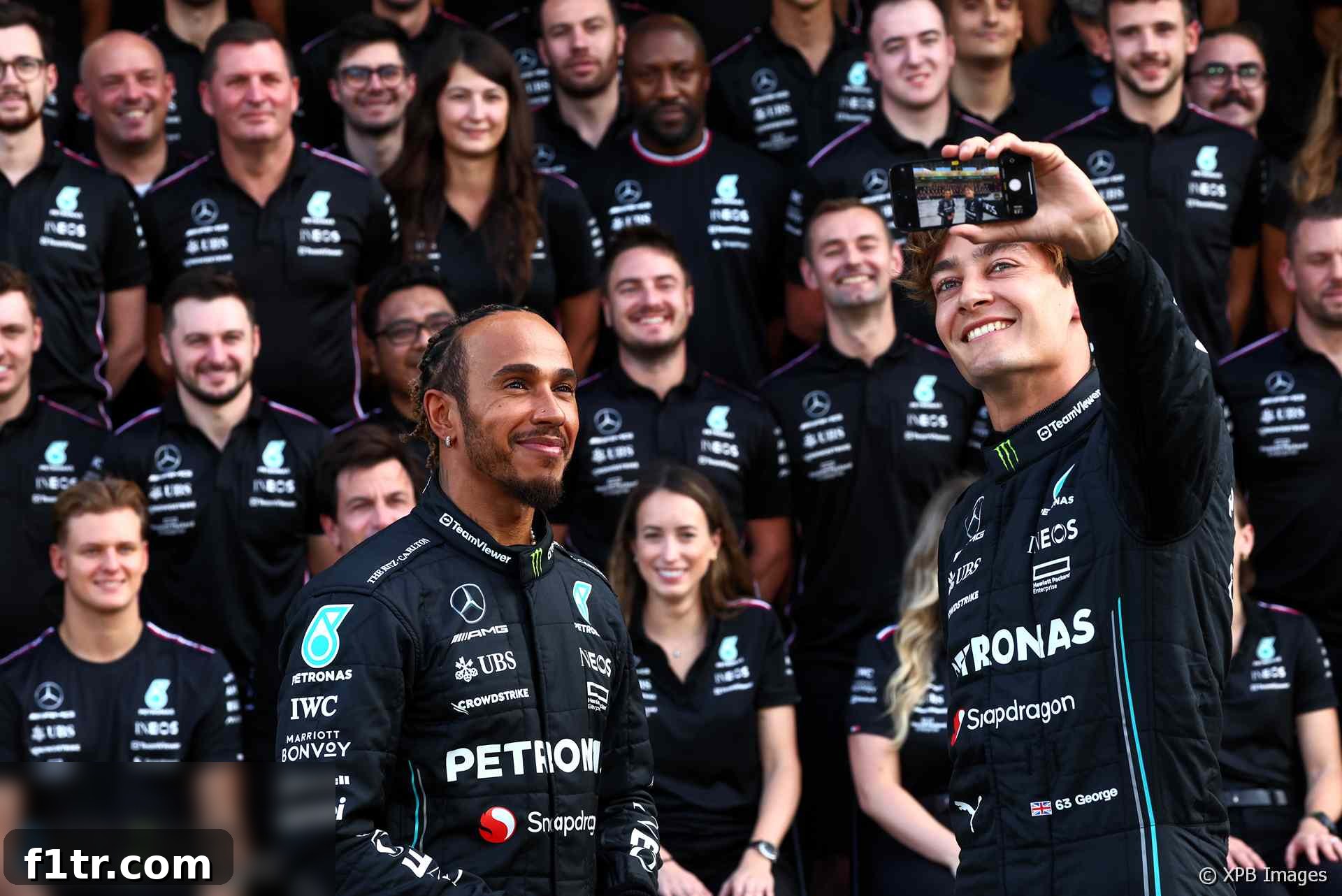
Despite the commendable initiatives and dedicated efforts, Hamilton remains acutely aware of the vast amount of work that still lies ahead. Reflecting on a recent team photograph taken ahead of the Abu Dhabi Grand Prix, he expressed a poignant realization: “I’m still looking and I’m like, damn, we still have so much work to do. There’s three people of colour, for example. But there are a lot more women.” This observation serves as a powerful, albeit informal, barometer of progress. While the increase in female representation is a positive step, indicating success in one area, the stark lack of racial diversity highlights the persistent and complex nature of the challenge.
Hamilton contrasted this recent observation with a similar photo from 2019, noting that the shift hasn’t been “anywhere near as much as it should have.” This indicates that while programs are in place and intentions are good, the deeply ingrained historical patterns and systemic issues require even more aggressive and innovative solutions to truly reshape the workforce composition. The “slog” refers not just to the effort, but to the slow pace of cultural and demographic change in a highly specialized, traditionally homogenous industry. Addressing these disparities demands a multi-faceted approach that tackles unconscious bias, improves access to education, and creates genuine opportunities for advancement within the team.
Pioneering Pathways: The Hamilton Commission and Ignite Charity
Recognizing the need for a comprehensive, data-driven approach, Lewis Hamilton set up The Hamilton Commission in 2020. This groundbreaking initiative was conceived to meticulously investigate the underlying reasons for the under-representation of specific groups within motorsport and to develop actionable strategies to address these disparities. The Commission’s work delves into educational pathways, recruitment practices, and cultural barriers, providing a blueprint for sustainable change. Its research aims to identify systemic obstacles and propose practical solutions that can be adopted across the motorsport industry, fostering a more equitable and accessible environment.
Building on these findings, Hamilton and Mercedes collaboratively launched the Ignite charity in 2021. Ignite’s core mission is to inspire and equip young people from under-represented backgrounds with the skills and opportunities necessary to pursue careers in science, technology, engineering, and mathematics (STEM), with a direct focus on motorsport. By nurturing talent at the grassroots level, Ignite aims to create a robust and diverse pipeline of future professionals who will not only contribute to Formula 1 but also to broader STEM industries. This dual approach—investigation through the Commission and practical intervention through Ignite—demonstrates a holistic commitment to systemic change, addressing both the symptoms and root causes of under-representation.
The impact of these initiatives is beginning to manifest, albeit gradually. Hamilton recounted heartfelt experiences of young individuals visiting the Mercedes team during race weekends. “When we were in Austin we had the kids come, all the young women come, when we were in the UK we had a real diverse group of kids come,” he shared. These visits are more than just tours; they are powerful moments of inspiration, opening up a world of possibilities that many of these children might never have considered accessible. “It was really cool to be able to be in the position to be able to open up the door for these kids to see what is possible and spark interest and create dreams that they perhaps never thought it was possible,” Hamilton expressed with evident pride. These first “fruits” of their labor—the spark of curiosity, the glimmer of ambition in a child’s eyes—underscore the long-term, transformative potential of their work, validating the arduous journey ahead.
The Horizon of Inclusion: A Long-Term Vision for Formula 1
The quest for genuine diversity and inclusion in Formula 1 is not a short-term project but a generational commitment. Lewis Hamilton’s unwavering dedication, coupled with Mercedes’ proactive programs like ‘Accelerate 25’ and their support for the Ignite charity, are laying crucial groundwork for a more equitable future. The ultimate goal extends beyond meeting arbitrary targets; it is about creating a truly meritocratic environment where talent, regardless of background, can flourish. This vision encompasses not only the recruitment of diverse staff but also their retention, progression, and fostering an inclusive culture where everyone feels valued and empowered to contribute their best. It involves ongoing education, challenging unconscious biases, and ensuring leadership reflects the diversity of the wider world.
Formula 1, as a global spectacle and a beacon of technological innovation, has a unique responsibility and opportunity to lead by example. The sport’s growing focus on social issues, catalyzed by figures like Hamilton, signifies a broader cultural shift. From promoting environmental sustainability to championing human rights, F1 is increasingly aware of its role as a platform for positive global impact. Embracing diversity is integral to this evolution, ensuring that the sport remains relevant, resonant, and inspiring to an ever-wider audience. The success of these initiatives will be measured not just by numbers but by the profound stories of individuals who find their place in a world that once seemed closed off, contributing their unique skills and perspectives to the pinnacle of motorsport.
As Hamilton looks to the future, there’s a mix of excitement for the potential and realism about the ongoing effort. The journey demands persistent advocacy, continuous evaluation, and a collective will from every team, every sponsor, and every individual involved in motorsport. The “long slog” he speaks of is a marathon, not a sprint, but one that promises a richer, more vibrant, and ultimately stronger Formula 1 for generations to come. The groundwork is being laid, the seeds are being sown, and with sustained commitment, the landscape of motorsport will undoubtedly reflect the diverse tapestry of the world it seeks to captivate, making it a truly global and inclusive sport for all.