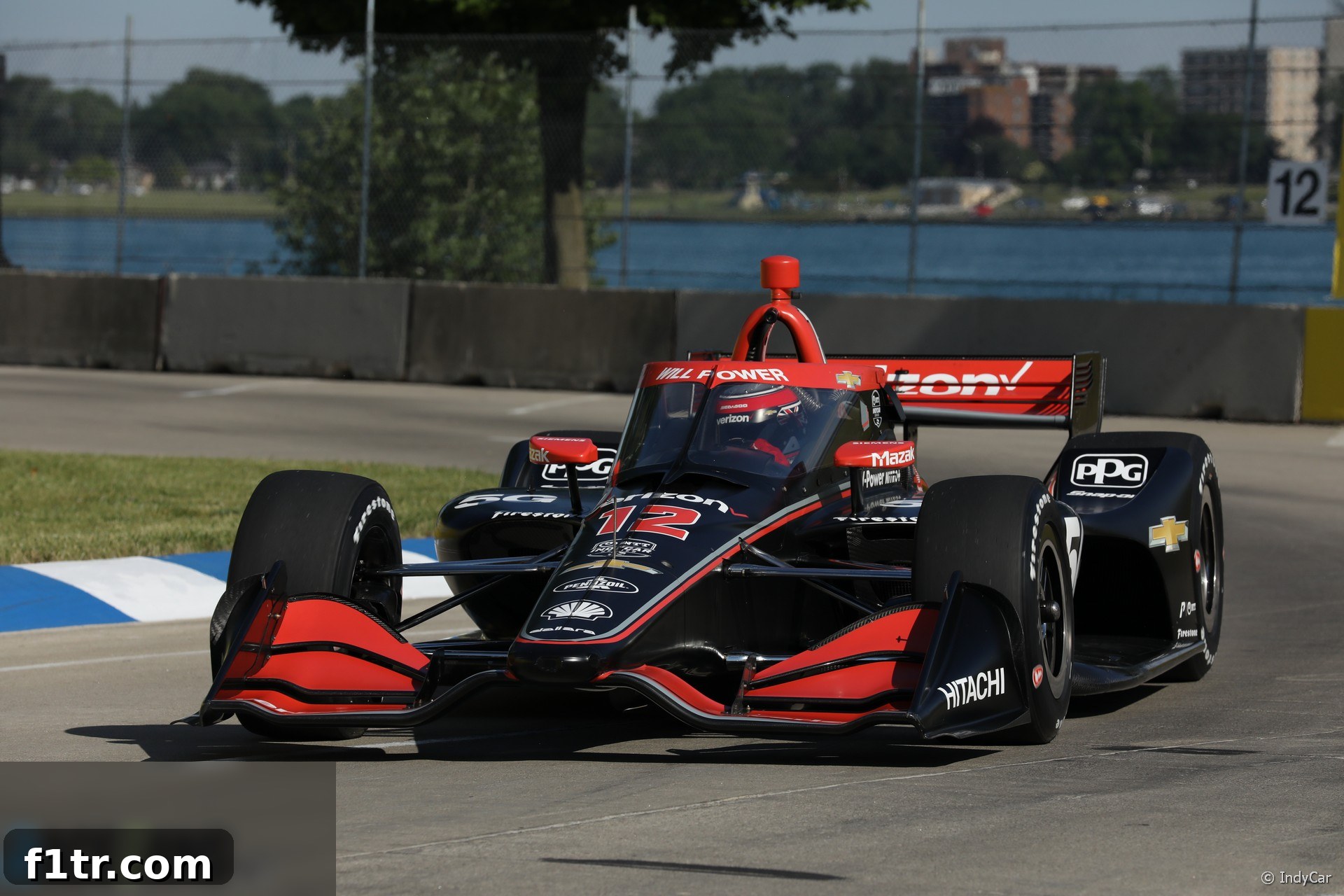
Will Power Rages Against IndyCar Race Control After Detroit Red Flag Fiasco Costs Him Victory
The roar of frustration echoed louder than any engine across the Detroit Grand Prix circuit on Saturday, as two-time IndyCar Series champion Will Power found himself in a furious confrontation with race control. What should have been a triumphant return to victory lane for Power turned into a gut-wrenching defeat, a direct consequence, he claims, of a controversial red flag decision and subsequent operational missteps by IndyCar officials. The Team Penske veteran was left seething, convinced that a crucial engine control unit (ECU) failure, triggered by overheating, unfairly robbed him of his first win of the season.
The incident unfolded during the first race of the Detroit double-header, a high-stakes event on the challenging street course. Power, known for his aggressive yet precise driving style, had dominated much of the contest, leading a significant portion of the laps and seemingly cruising towards a much-needed victory. However, the chaotic nature of street racing often brings unexpected turns, and on this day, it brought a series of events that would leave Power boiling with anger and disappointment.
The Dramatic Turn of Events at the Detroit Grand Prix
The Detroit Grand Prix, held on the Belle Isle Street Circuit, is renowned for its tight corners, unforgiving walls, and unpredictable racing. Drivers push their machines to the limit, and the narrow confines often lead to caution periods. Power had masterfully navigated these challenges, demonstrating exceptional pace and control. He was ahead of his rivals, including eventual winner Marcus Ericsson, having led an impressive 37 laps—more than any other competitor on the grid. His performance was a testament to his skill and the strength of his Team Penske machine.
The race was nearing its climax when Romain Grosjean, a seasoned competitor, experienced a significant crash at turn nine. This incident immediately triggered a second caution period, bringing out the yellow flags. However, race control, after assessing the severity of the situation and the debris on the track, quickly elevated the caution to a full red flag. This decision meant all cars would be forced to stop on the pit lane, an interruption that would prove catastrophic for Power.
Power’s Fury: The Red Flag, The ECU, and Race Control’s Oversight
The moment the red flag was deployed, Power’s car, like all others, was directed to the pit lane. It was during this enforced stoppage that the seeds of his undoing were sown. According to Power, the delay in providing adequate cooling to his car’s engine control unit was a critical failure on the part of race control. “I’m mad at IndyCar,” Power vehemently stated to pit reporter Kevin Lee after the race, his voice brimming with raw emotion. “Because I’m the first car in [the pits], and they wait for the last car to come before they get a fan on that car, and it roasts the ECU.”
The ECU, or engine control unit, is the brain of the modern racing engine. It meticulously manages various engine functions, including fuel injection, ignition timing, and boost pressure. Overheating can cause these sensitive electronic components to malfunction, or “roast” as Power dramatically put it, leading to a complete shutdown or an inability to restart the engine. In the intense environment of a race, especially during a sudden stoppage where ambient airflow is minimal, proper cooling is paramount. Power’s accusation points to a systemic flaw in how red flag procedures were managed, specifically concerning the immediate technical needs of the stationary cars.
“The guys, up there in race control, never listen to any of the drivers. They never listen, they don’t care!” Power barked, his frustration palpable. “We’ve given them so many good suggestions, and they don’t care.” This wasn’t merely a complaint about his misfortune; it was an indictment of what he perceived as an ongoing disregard for driver input regarding operational procedures and safety protocols. Drivers often provide invaluable feedback from the cockpit, insights that could prevent such costly incidents.
The Heartbreaking Restart and Its Aftermath
When the race eventually resumed with just six laps remaining, Power’s worst fears were realized. His car failed to fire up promptly. The critical ECU issue prevented his engine from restarting in a timely manner, leaving him stranded while the rest of the field prepared to take the green flag. As per regulations, a non-starting car must be moved out of the racing line. Power watched helplessly as Marcus Ericsson, who had been running behind him, proceeded to claim his first career IndyCar victory, a moment of triumph for Ericsson that simultaneously amplified Power’s despair.
Power’s Team Penske crew worked frantically to diagnose and rectify the issue. Eventually, they succeeded in restarting the car, but by then, the damage was irreversible. He had lost three crucial laps to the leaders, effectively ending any hope of a points-scoring finish, let alone a victory. He ultimately limped home in 20th place, a stark contrast to the dominant performance he had displayed throughout the race.
The Australian ace continued to vent his profound disappointment even after the checkered flag. “I worked my arse off today! To have this happen…like I’m screaming in the radio, ‘we need a fan, get a fan!'” he exclaimed, vividly recounting his desperate pleas from the cockpit. “They wait for everyone – these guys still got air coming in their car…you work our arse off in this sport, so much money goes into it, and it’s just…dumb decisions like that! If it’s not a yellow they throw, it’s some stupid idea like this, a red flag…!” His words painted a vivid picture of a driver pushed to his emotional limit, highlighting the immense physical and financial investment drivers make, only to see it undone by what he deemed avoidable official misjudgments.
A Season Plagued by Misfortune: From Indy 500 Woes to Detroit Heartbreak
Beyond the immediate sting of a lost victory, Power’s gut-wrenching defeat in Detroit represented another significant blow to his 2023 IndyCar season, which has, by his own high standards, been plagued by a series of misfortunes. Just two weeks prior, at the iconic Indianapolis Motor Speedway, Power endured an equally agonizing experience during qualifying for the prestigious Indianapolis 500. He found himself in a nail-biting last-row shootout, narrowly avoiding the immense indignity of failing to qualify for the biggest race on the IndyCar calendar—a fate unimaginable for a former winner and champion.
The “Greatest Spectacle in Racing” itself brought little solace. Power finished a lowly 30th place in the Indy 500, a result far below his expectations and capabilities. His race was compromised after he, along with several other drivers, spun out at the entrance of pit lane due to cold brakes. This incident, while perhaps less controversial than the Detroit red flag, underscored a pattern of bad luck and challenging circumstances that have defined his season thus far.
This latest misfortune in Detroit has further compounded his championship woes. After seven races, Will Power has now dropped to 12th in the IndyCar standings, a position that belies his talent and past achievements. His last top-ten finish dates back to the second race of the season in St. Petersburg, Florida. For a driver of Power’s caliber, who consistently contends for wins and championships, this string of poor results is undoubtedly frustrating and puts immense pressure on his team and himself to turn the tide.
The Broader Implications: Driver Trust and Race Management in IndyCar
Will Power’s passionate outburst also brings to the forefront a perennial tension point in motorsports: the relationship between drivers and race control. Drivers, with their intimate understanding of the cars and the track conditions, often believe their input is not adequately considered by officials, who make decisions from a detached perspective in the control tower. Power’s “they never listen” comment resonates with many athletes who feel their on-the-ground experience is sometimes undervalued.
The delicate balance between ensuring driver safety, maintaining competitive fairness, and delivering an exciting spectacle for fans often leads to controversial decisions. Red flags, in particular, are powerful tools used for safety, but their timing and management can have profound sporting consequences. In Power’s view, the safety aspect was neglected by not providing immediate cooling, thereby compromising the fairness of the competition and ultimately costing him a win. This incident will likely spark further debate within the IndyCar paddock regarding red flag protocols and the communication channels between drivers and race management.
Looking Ahead: Opportunity Knocks in Detroit Race Two
Despite the immense disappointment and lingering anger, the relentless nature of the IndyCar schedule offers little time for wallowing. Power’s next opportunity for redemption is less than 24 hours away. The second race of the Detroit Grand Prix double-header is scheduled to go green at 5:50 PM EDT. This immediate turnaround provides a unique chance for Power to channel his frustration into a dominant performance and finally break his winless streak.
The mental fortitude required to bounce back from such a devastating setback is immense, but Power is a veteran with a championship pedigree. His ability to compartmentalize and focus on the next challenge will be crucial. A strong performance in Race Two could not only salvage his Detroit weekend but also provide a much-needed psychological boost to reignite his championship campaign. The road to recovery for Will Power’s season is steep, but with his talent and resolve, a turnaround remains well within reach, provided race control doesn’t throw another curveball.
Explore More IndyCar Stories
- IndyCar driver McLaughlin cleared of injury after crashing through barrier at Barber
- Schumacher says his IndyCar feels like ‘an F2 car, just with better tyres’
- IndyCar “way faster than Formula 1” in some corners, says Grosjean
- FIA to award more F1 superlicence points to IndyCar drivers from 2026
- Schumacher to race full-time in IndyCar with RLL in 2026
Browse all IndyCar articles