Aston Martin’s Resilient Stand: A High-Stakes Battle for Fourth Against a Resurgent McLaren
The pinnacle of motorsport, Formula 1, is often a story of evolving narratives, and few are as compelling this season as the fierce contest for fourth place in the Constructors’ Championship. Aston Martin, a team that started the year with undeniable promise, finds itself in an intense dogfight, steadfastly refusing to concede defeat despite the formidable resurgence of McLaren. The stakes are incredibly high, not just for championship points and prize money, but for the very morale and strategic direction of the teams involved.
In a dramatic shift over the last three race weekends, the gap between these two storied manufacturers has shrunk by a staggering 91 points. This incredible momentum swing has left Aston Martin with a mere 11-point advantage over their Woking-based rivals, transforming what once seemed like a comfortable lead into a precarious fight for survival in the upper echelons of the standings. This battle highlights the relentless nature of F1 development and the razor-thin margins that separate success from disappointment.
Mike Krack’s Unwavering Conviction: Taking Destiny into Their Own Hands
Despite the recent trajectory, Aston Martin team principal Mike Krack exudes a pragmatic yet defiant optimism. Following the challenging Qatar Grand Prix, Krack articulated the team’s philosophy: “No, I think you always have your destiny in your own hands.” This statement underscores a core belief within the Silverstone outfit that their future is not predetermined by the current form of their rivals but by their own efforts and innovations.
Krack readily admits the current reality: “We don’t have the pace to beat McLaren at the moment, and it will be tough to change that.” This candid assessment reflects a clear understanding of the competitive landscape. However, acknowledging the difficulty does not translate into surrender. “But we need to try,” he added, emphasizing the team’s commitment to pushing the boundaries of what’s possible. This fighting spirit is crucial as they navigate the remaining races of the season, where every point will be hotly contested and every upgrade critical.
McLaren’s Meteoric Rise: A Mid-Season Masterclass in Development
The story of this battle cannot be told without highlighting McLaren’s remarkable mid-season turnaround. Following a challenging start to the year, the Woking squad unleashed a series of significant upgrade packages, most notably at the Singapore Grand Prix. These enhancements to their MCL60 chassis have unlocked a previously unseen level of performance, catapulting them from midfield contenders to regular podium finishers and even race winners in the Sprint format.
This rapid development has allowed McLaren to consistently outscore Aston Martin, a trend evident over the last eight rounds where Aston Martin has managed to out-score them only once. The effectiveness of McLaren’s engineering efforts has sent shockwaves through the paddock, setting a new benchmark for in-season car development. The challenge for Aston Martin is not just to improve their own car but to match, and ideally surpass, the development rate of one of F1’s most aggressively progressing teams.
Aston Martin’s Counter-Offensive: The Race for Crucial Upgrades
In response to McLaren’s ascendancy, Aston Martin is not standing still. The team is poised to introduce new parts for their car, hopeful that these additions will provide the necessary performance boost to regain their competitive edge. The relentless development cycle in Formula 1 means that stagnation is regression, and teams must continually innovate to stay relevant. Each new component, no matter how small, represents countless hours of research, design, and testing, all aimed at shaving fractions of a second off lap times.
The effectiveness of these upcoming upgrades will be paramount. In a championship fight where every tenth of a second counts, a well-executed upgrade package can be the difference between securing vital points and falling short. The pressure is on the engineering teams to deliver gains that are not only tangible but also significant enough to counter McLaren’s formidable pace.
Dissecting the Qatar Grand Prix: A Glimpse into the Challenge
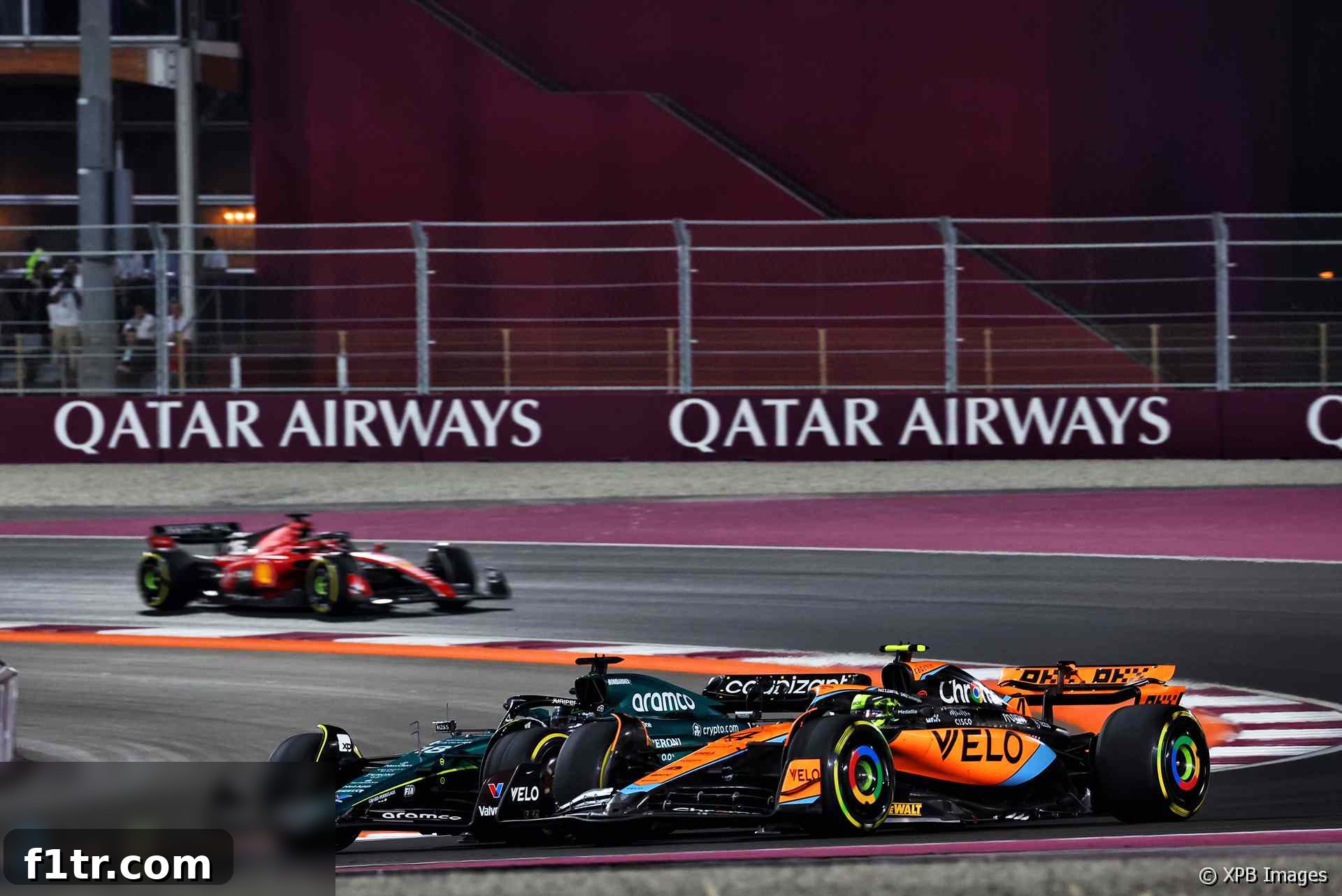
The recent Qatar Grand Prix offered a microcosm of Aston Martin’s current struggles and the formidable task ahead. Fernando Alonso, a driver renowned for extracting every ounce of performance from his machinery, finished sixth, two places lower than his starting position. While a points finish is always welcome, Krack’s summary painted a clear picture: “We were a little bit better than we were recently, but not enough to jump a position.”
The race saw Alonso locked in a battle with the Ferrari of Charles Leclerc. Aston Martin managed to keep the Ferrari behind for a period, showcasing their defensive capabilities, but once the Ferrari gained an advantage, re-passing proved impossible. This inability to reclaim positions, especially against a direct rival, underscores the current performance deficit. Furthermore, Krack highlighted a crucial aspect of their qualifying performance: “We need to also not forget that in qualifying we had a good ranking, but we had also some deleted lap times [due to track limits infringements]. So you think you are high up on the grid, but it is not 100 percent reflecting your performance.” This candid admission suggests that their raw pace might not have been as strong as initially perceived, adding another layer of complexity to their competitive assessment.
Addressing Driver Comfort: The Persistent Overheating Enigma
Beyond the pure performance metrics, Aston Martin has also been grappling with a more personal challenge: significant seat overheating problems reported by both Fernando Alonso and Lance Stroll. In the grueling world of Formula 1, driver comfort is not a luxury but a performance enhancer. Excessive heat can lead to fatigue, dehydration, and a loss of concentration, all of which directly impact a driver’s ability to perform at their peak for an entire race distance.
“Fernando reported this already a couple of times,” Krack noted, highlighting the recurring nature of the issue. The team had implemented an improvement in Singapore, which they believed had mitigated the problem. However, the extreme conditions prevalent at the Qatar Grand Prix, with searing temperatures and high humidity, evidently exacerbated the issue once again. “Then obviously we have another set of extreme conditions,” Krack explained, “So I think we’re not far from air conditioning if it continues like it.”
The technical reasons behind this discomfort are deeply rooted in the intricate packaging of a modern F1 car. Krack elaborated on the sources of heat: “You have hydraulic lines, you have ECUs around you, they are all heating up.” These vital components, indispensable for the car’s operation, generate considerable heat. Engineers constantly strive to “isolate this heat” from the cockpit and the driver. However, this comes with inherent design compromises. Introducing any form of “active cooling,” such as a dedicated ventilation system, would inevitably add weight to the car, a cardinal sin in Formula 1 where every gram is meticulously optimized. Finding the delicate balance between driver comfort and absolute performance remains a significant challenge for the team’s design and engineering departments.
The Road Ahead: A Thrilling Conclusion to the Season
As the Formula 1 season enters its final phase, the battle for fourth place in the Constructors’ Championship promises to be one of the most enthralling narratives. Aston Martin’s determination to fight for their “destiny” against a rapidly improving McLaren sets the stage for a thrilling conclusion. The remaining races will be a true test of engineering prowess, strategic acumen, and the unwavering resolve of both teams.
For Aston Martin, the goal is clear: to leverage their upcoming upgrades, optimize their performance across varied track conditions, and meticulously address issues like driver comfort to ensure both Fernando Alonso and Lance Stroll can perform unhindered. The financial incentives of securing fourth place are substantial, providing crucial resources for future development. More importantly, it represents a statement of intent, a confirmation of their progress, and a boost to the team’s long-term ambitions in Formula 1. The fight is far from over, and every lap, every qualifying session, and every race will be vital in shaping the final outcome of this captivating championship subplot.