Mercedes Pivots Strategy: W14 Development Halted, Full Focus on 2024 F1 Challenger
Mercedes-AMG Petronas Formula 1 Team Principal Toto Wolff has officially confirmed a significant strategic shift: the team will soon cease development work on their current W14 car. This pivotal decision signals a complete redirection of resources and engineering efforts towards the design and optimization of their 2024 contender, as the team grapples with the unpredictable performance of their current machine and sets its sights firmly on future championship aspirations.
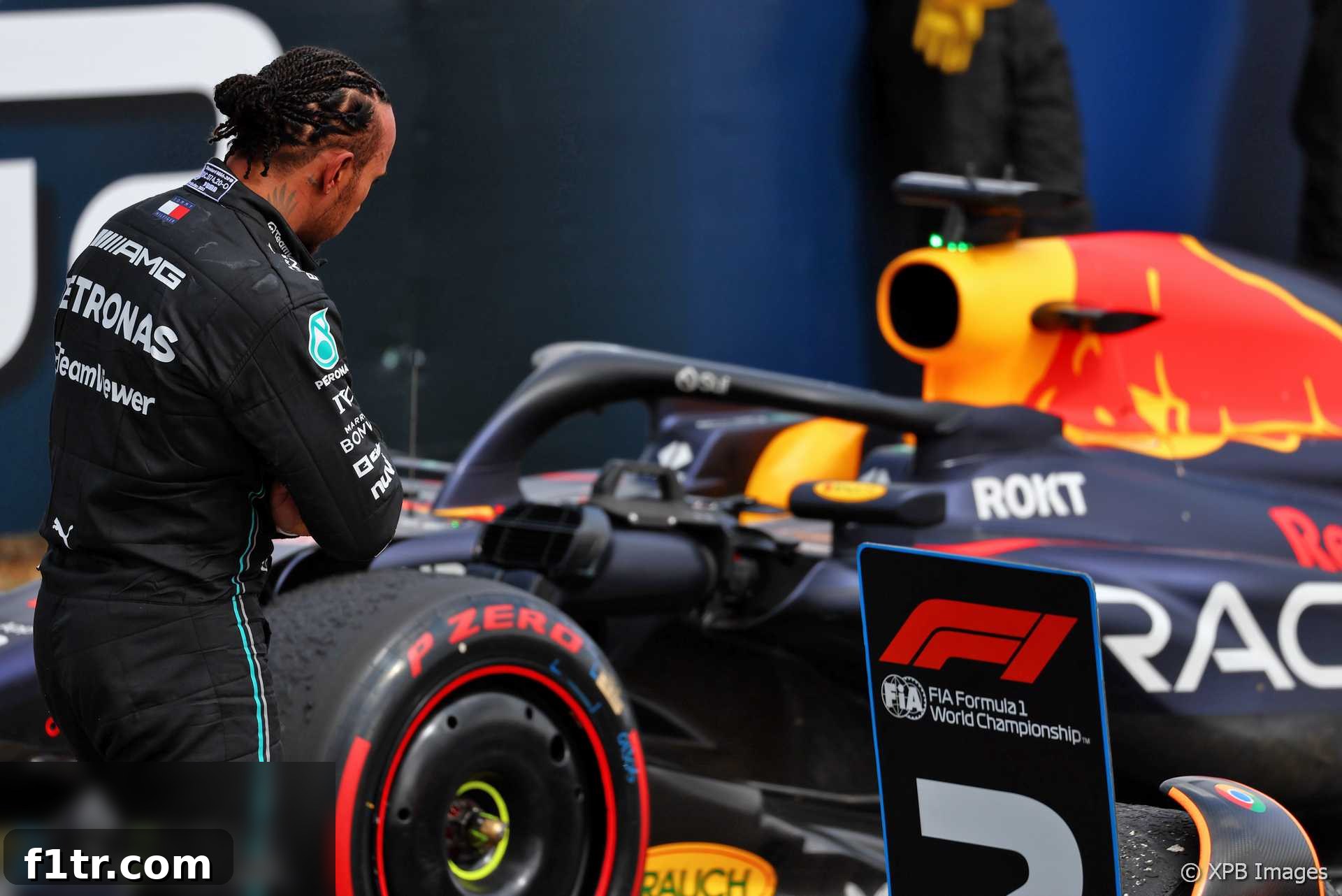
The announcement comes on the heels of a particularly disappointing performance at the British Grand Prix at Silverstone, a circuit historically synonymous with Mercedes’ dominance. The unexpected struggle at what was anticipated to be one of their strongest venues this season has underscored the fundamental challenges inherent in the W14, prompting Mercedes to re-evaluate their design philosophy and accelerate their plans for next year.
The W14’s Persistent Struggles: A “Diva 2.0” Emerges
The W14, Mercedes’ 2023 challenger, has proven to be a difficult car to master, drawing parallels to its predecessor, the 2017 W08, which the team famously nicknamed “The Diva” due to its temperamental and inconsistent performance. Toto Wolff himself echoed this sentiment, lamenting the current car as “Diva 2.0” and highlighting its even greater complexity compared to its spiritual predecessor. This unpredictability has been a source of immense frustration for both drivers, Lewis Hamilton and George Russell, as well as the entire engineering team.
At Silverstone, a track known for its high-speed corners and smooth surface, Mercedes had high hopes for a strong showing, potentially even challenging for a victory. The team arrived with optimism, expecting to deliver one of their most competitive performances of the year. However, the race concluded with Hamilton finishing third and Russell fifth, a result that, while respectable on paper, fell short of the team’s internal expectations and their historical prowess at the circuit. Wolff openly admitted, “I thought at Silverstone, based on our historic performance, was the best shot but it wasn’t.” This stark reality crystallized the need for a profound change in direction.
Despite introducing a significant aerodynamic overhaul at the Monaco Grand Prix and a new front wing at Silverstone, these upgrades did not yield the anticipated performance leap. Lewis Hamilton himself described the latest package as a “disappointment,” while Wolff confirmed the W14 “remains to be a handful” for its drivers. He elaborated on the specific performance deficits observed at Silverstone: “Overall the car was not where we’ve seen it in Silverstone the last years. That was the track that we were really dominant and strong, and the high speed was not good at all compared to our direct competitors and qualifying we were struggling also on traction on the exits.” These pinpointed issues underscore the deep-seated aerodynamic and mechanical challenges that the team has been unable to fully resolve with the current platform.
Strategic Pivot: All Eyes on the 2024 F1 Challenger
The decision to wind down W14 development “pretty soon” is a bold strategic move, indicating Mercedes’ firm commitment to returning to championship-winning form. Wolff emphasized that the immediate constructors’ championship standing – whether they finish second or third – is secondary to their overarching goal. “P2, P3, fundamentally it doesn’t impact me and the team,” Wolff stated unequivocally. “It’s about coming back and being able to win a world championship in that respect. That’s not going to happen this year so we need to set our eyes onto next year.” This long-term perspective prioritizes a genuine title challenge over short-term gains or championship standings that fall below their ultimate ambitions.
The stability of the technical regulations further supports this strategic shift. As the rules for 2024 remain largely consistent with 2023, the lessons learned from the W14’s shortcomings can be directly applied to the next year’s design. Wolff acknowledged this balance: “But having said that, the regulations are the same so you’re not learning nothing by continuing this car. So it’s a balance that we need to strike right.” The insight gained from understanding the W14’s limitations, particularly its sensitivity and unpredictability, will be invaluable in crafting a more robust and adaptable package for 2024.
Red Bull’s Dominance and the Design Convergence Trend
Adding another layer of complexity to Mercedes’ challenges is the undeniable dominance of Red Bull Racing, who recently secured their eleventh consecutive Grand Prix victory. Their sustained success, particularly under the current ground-effect regulations, has established a clear benchmark for the rest of the grid. This has led to an observable trend across Formula 1: teams are increasingly converging on aerodynamic design solutions reminiscent of Red Bull’s successful philosophy.
A prime example of this convergence was seen at Silverstone, where Mercedes’ power unit customer, McLaren, introduced a significant upgrade package. This package, featuring a sidepod layout strikingly similar to Red Bull’s, propelled McLaren to their best result of the season, with Lando Norris and Oscar Piastri finishing an impressive second and fourth, respectively – notably ahead of both Mercedes cars. This immediate performance gain served as a powerful testament to the effectiveness of the Red Bull-inspired design philosophy.
Toto Wolff himself acknowledged this trend, observing that “the strong cars all look a little bit the same when you look from the side and from top-down.” While sidepods and bodywork are visually the most obvious elements, Wolff emphasized that “most of the performance comes through the floor and diffuser.” Understanding how Red Bull has interpreted and maximized performance within these critical, yet visually obscured, areas of the regulations remains the key challenge for rival teams. The success of McLaren’s upgrade, however, has certainly intensified the internal discussions at Mercedes regarding their own future aerodynamic direction.
Mercedes’ Aerodynamic Dilemma: Reassessing the Red Bull Concept
Interestingly, Mercedes had previously evaluated Red Bull’s distinctive sidepod design concept early in the W14’s development cycle. However, at that time, their internal simulations indicated that adapting their car to such a layout would lead to a “substantial” relative loss of downforce, making it an unappealing path for the current season. Consequently, Mercedes opted for their unique “zero-pod” concept, which has since evolved but continues to diverge significantly from the Red Bull approach.
The dramatic success of McLaren’s Red Bull-inspired upgrade has undoubtedly prompted a re-evaluation within the Mercedes design office. Wolff hinted at this shift in perspective, stating, “Certainly that has played in our minds already back in the day. But maybe that’s just a little more indication where it goes.” Under the leadership of James Allison, the highly respected technical director and head of aerodynamics, Mercedes will undoubtedly reconsider the Red Bull concept, among other avenues, for their 2024 challenger. The imperative is to develop a car that is not only fast but also inherently more predictable and less sensitive to setup changes, moving away from the “Diva” moniker once and for all.
Limited W14 Upgrades: Small Steps, Big Lessons
With the focus shifting decisively to the 2024 season, Mercedes will not be introducing any more major, transformative upgrades to the W14. Toto Wolff confirmed this, stating, “Do we believe that we have upgrades in there that are going to fundamentally change the car? I don’t believe so.” While some minor developmental steps might still be implemented, these will likely serve more as learning tools for the future rather than game-changing performance enhancers for the current campaign. The team’s remaining races in 2023 will therefore be crucial for gathering data, understanding the W14’s intricate behaviors, and feeding those vital lessons directly into the development of its successor.
The Road Ahead for Mercedes F1
Mercedes’ decision to actively halt W14 development reflects a clear-sighted and pragmatic approach to reclaim their position at the pinnacle of Formula 1. The past two seasons have presented unprecedented challenges for a team that enjoyed a remarkable era of dominance. Overcoming the “Diva 2.0” and developing a car capable of consistently challenging Red Bull and Max Verstappen for race wins and championships will require ingenuity, unwavering determination, and a willingness to embrace new design philosophies.
The path back to glory will not be easy, but Mercedes possesses the talent, resources, and institutional knowledge to rise to the occasion. By setting their sights squarely on 2024, the Silver Arrows aim to shed the frustrations of the current season and emerge with a machine that is not just fast, but fundamentally robust, predictable, and engineered for sustained success. The F1 world will be watching closely as Mercedes embarks on this critical journey to redefine its future on the track.
Supporting Independent Formula 1 Journalism
Providing insightful and original Formula 1 news coverage requires dedicated effort and resources. High-quality journalism, delivered directly from the heart of the sport, relies on the support of its readership.
By contributing a small amount regularly, readers can help cover the essential costs associated with independent reporting. This includes travel expenses to races, writing and editorial efforts, content creation, website hosting, maintaining contact with key F1 personnel, and continuous platform development.
Our commitment to delivering independent coverage has been proudly supported by readers for over a decade. If you value this unique perspective and enjoy ad-free browsing, please consider becoming a supporter today. More information and sign-up options are available via the links below:
- Become a Supporter
- Supporter FAQ
Related Articles: 2023 British Grand Prix Analysis
- Norris is “growing” closer to the champion who inspired him to race
- Second supplier part failure ‘a frustrating issue we must solve’ – Alpine
- Albon ‘surprised’ to be quicker than Alonso at end of British GP
- Bottas admits Alfa Romeo ‘were expecting to be better than this’ in 2023
- McLaren now “finding performance quicker” after emulating Red Bull’s design
Browse all 2023 British Grand Prix articles