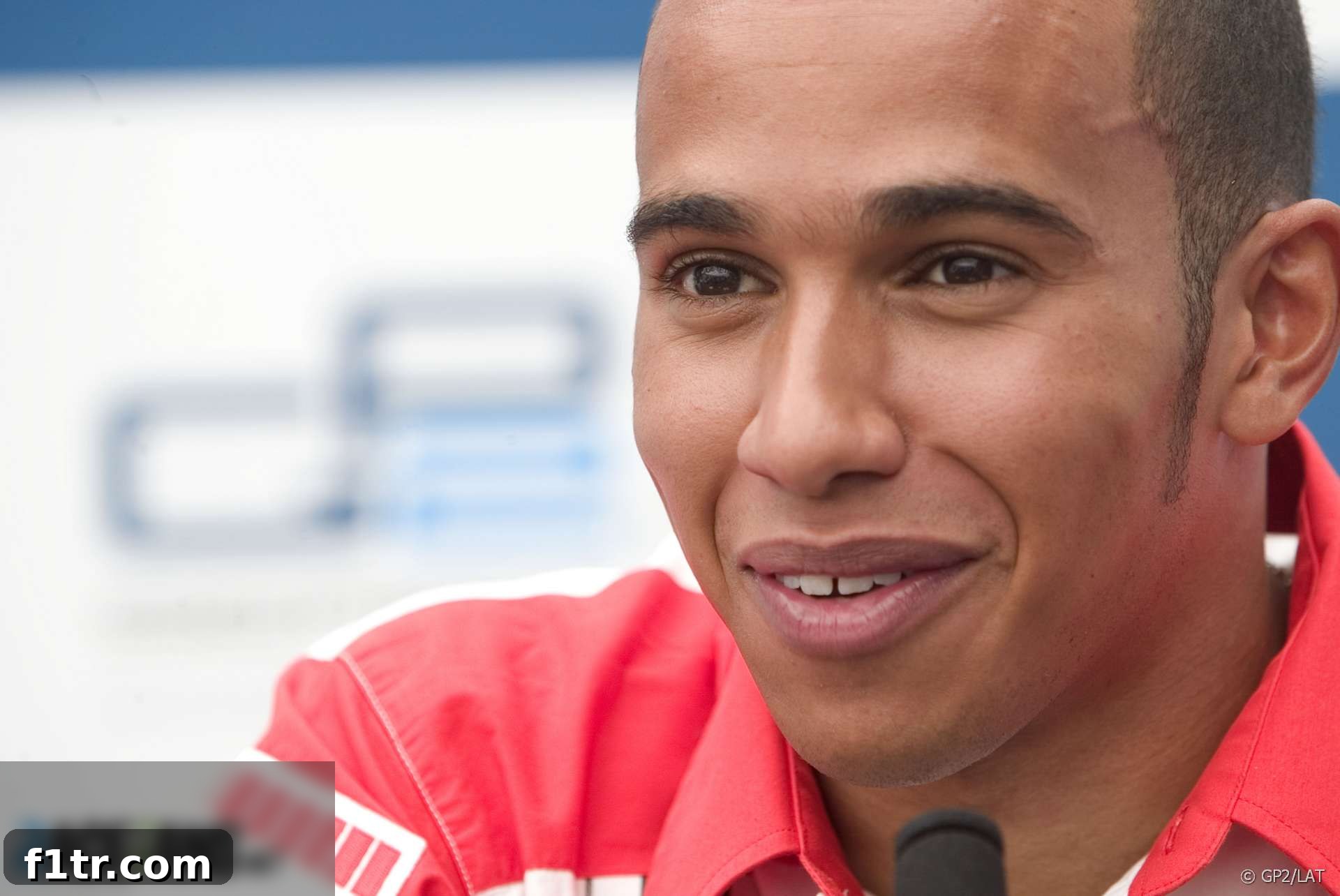
Lewis Hamilton Joins McLaren-Mercedes for 2007 F1 Season: A New Era Dawns
The world of Formula 1 buzzed with anticipation on a pivotal morning in late 2006 as McLaren-Mercedes officially confirmed its driver lineup for the forthcoming 2007 season. The announcement solidified expectations, revealing that reigning GP2 champion Lewis Hamilton would make his eagerly awaited Grand Prix debut, partnering with the formidable two-time World Champion Fernando Alonso. This pairing, a blend of youthful exuberance and seasoned expertise, promised to be one of the most exciting and closely watched duos on the grid, signaling a new chapter for the iconic Woking-based team.
Hamilton’s promotion was more than just another driver signing; it was a momentous occasion for the sport and a testament to McLaren’s long-term investment in raw talent. His journey through the junior categories, meticulously supported by McLaren since his karting days, had been nothing short of spectacular. His GP2 championship victory in 2006, achieved with remarkable consistency and a flair for aggressive yet clean racing, left no doubt about his readiness for the pinnacle of motorsport. Fans and pundits alike had eagerly followed his ascent, and the prospect of seeing him on the F1 grid was a source of genuine excitement.
A Star is Born: Hamilton’s Path to Formula 1
Lewis Hamilton’s trajectory to Formula 1 was a carefully cultivated success story, deeply rooted in the McLaren Young Driver Programme. From a tender age, his exceptional talent was evident, leading to a groundbreaking agreement with McLaren and Mercedes-Benz when he was just 13. This unprecedented support laid the foundation for a rapid and successful progression through the ranks of junior motorsport. His domination in various championships, including the Formula Renault UK Championship in 2003 and the Formula 3 Euro Series in 2005, showcased not only his blistering pace but also a maturity and race craft beyond his years.
However, it was his 2006 GP2 Series campaign that truly cemented his status as a future F1 star. Competing against a strong field, Hamilton delivered a masterclass in racing, securing five victories and consistently demonstrating his ability to perform under pressure. His aggressive overtaking maneuvers, combined with an innate understanding of race strategy, captivated audiences. The GP2 title was not just a trophy; it was a powerful statement that Hamilton possessed the speed, resilience, and mental fortitude required to compete at the highest level. His entry into F1 was therefore not a gamble but a calculated move by McLaren, confident in the prodigious talent they had meticulously nurtured.
The Rookie Challenge: High Stakes for a Young Driver
Hamilton’s debut marked a significant moment for McLaren, as he became the first rookie to be signed to race a full season for the team since Michael Andretti in 1993. The comparison immediately invoked memories of Andretti’s challenging stint, where the American IndyCar legend struggled to adapt to Formula 1 and McLaren’s demanding environment. Andretti famously didn’t complete the season, being replaced by Mika Hakkinen. This historical precedent added an extra layer of intrigue and pressure to Hamilton’s rookie year, highlighting the immense leap from junior categories to the unforgiving world of Formula 1.
However, the circumstances surrounding Hamilton’s entry were markedly different. Unlike Andretti, who came from a different racing discipline, Hamilton had been groomed within the European single-seater ladder, specifically designed as a feeder system for F1. Furthermore, his long-standing relationship with McLaren provided him with unparalleled preparation, access to facilities, and an understanding of the team’s culture. Yet, the challenge remained immense. F1 cars are notoriously complex, physically demanding, and the mental pressure from media scrutiny and the expectation of partnering a reigning champion is immense. Hamilton would need to draw upon every ounce of his talent and resilience to navigate these waters successfully.
A Glimpse into McLaren’s Strategic Vision and Team Dynamic
The 2007 season was poised to be a pivotal year for McLaren. Having not won a Constructors’ Championship since 1998 or a Drivers’ Championship since 1999 with Mika Hakkinen, the team was hungry for success. The acquisition of Fernando Alonso, fresh off back-to-back world titles with Renault, was a clear statement of intent. Pairing him with a rookie like Hamilton was a bold strategy, indicative of McLaren’s confidence in their young protégé and a vision for future dominance. The team management, led by Ron Dennis, had clearly weighed the risks and rewards, believing that Hamilton’s raw speed and eagerness to learn would complement Alonso’s experience and championship-winning pedigree.
The dynamic between a two-time world champion and an aspiring rookie was always going to be a fascinating subplot of the season. On one hand, Hamilton would benefit immensely from Alonso’s data and experience, accelerating his learning curve. On the other, the competitive nature of Formula 1 means that teammates are often the fiercest rivals. The potential for fireworks, both on and off track, was a topic of endless discussion amongst fans and media. McLaren’s ability to manage this high-stakes relationship would be crucial to their championship aspirations.
Mika Hakkinen Rumours Dispelled: Focus on Test Drivers
In the lead-up to the official announcement, the rumour mill had been abuzz with speculation, particularly regarding a potential comeback for the ‘Flying Finn’, Mika Hakkinen. The two-time World Champion, a revered figure in McLaren’s history, had been linked with a possible return to the sport, igniting the hopes of many long-time fans. Hakkinen’s legendary rivalry with Michael Schumacher and his smooth, precise driving style had cemented his place in F1 folklore, and the idea of his return was certainly an exciting one.
However, the clarity arrived with the confirmation of McLaren’s official test driver lineup. Pedro de la Rosa and Gary Paffett were confirmed in these crucial roles, effectively putting an end to any Hakkinen comeback speculation. De la Rosa, a veteran of several F1 seasons, had proven his value to McLaren with his extensive development work and technical feedback. Paffett, a highly regarded British driver from the DTM series, also brought valuable experience to the test programme. Their roles were vital for car development, track testing, and providing crucial feedback to the engineering team. This solidified McLaren’s strategic focus, moving forward with its established test team alongside its dynamic race pairing.
A Strong British Contingent in 2007 Formula 1
Lewis Hamilton’s entry into Formula 1 also significantly bolstered the British representation on the grid for the 2007 season. He became the fourth British driver confirmed to compete, joining an already strong contingent that included established names and a fellow rising star. This was a proud moment for British motorsport, showcasing the depth of talent emerging from the UK racing ladder.
- Jenson Button: Heading into his second season with Honda, Button was a proven race winner and a popular figure in the sport. He was expected to lead the Honda team’s efforts, bringing his experience and smooth driving style to bear.
- David Coulthard: The seasoned Scottish veteran continued his tenure with the Red Bull Racing team. Coulthard, a multiple Grand Prix winner, brought invaluable experience and leadership to the burgeoning Red Bull outfit, playing a key role in their development.
- Anthony Davidson: After years as a highly respected test driver for BAR and Honda, Davidson finally secured a full-time race seat with the Super Aguri team. His debut alongside Hamilton highlighted a promising era for British drivers in F1.
This strong British presence added an extra layer of national interest to the 2007 season, with fans eager to follow the fortunes of their home-grown heroes. Hamilton’s arrival, in particular, injected a fresh wave of excitement, raising hopes for future British championship contenders.
Anticipation and the Road Ahead for McLaren
The official announcement of Lewis Hamilton joining McLaren-Mercedes for the 2007 season was met with widespread enthusiasm and considerable anticipation. It marked not just a significant moment for Hamilton personally, but a bold statement from McLaren, signalling their intent to return to championship-winning ways with a new generation of talent and a proven champion. The combination of Hamilton’s raw speed and the tactical prowess of Fernando Alonso, coupled with McLaren’s storied engineering expertise, created a potent mix that promised an enthralling season.
The road ahead for Hamilton would be challenging, but his innate talent, coupled with the unwavering support from McLaren and Mercedes-Benz, positioned him uniquely for success. The F1 paddock and fans worldwide eagerly awaited the start of the 2007 season, keen to witness the dawn of what many hoped would be a truly legendary career. This partnership between a hungry young prodigy and a determined established team was set to write a memorable chapter in Formula 1 history.
Related links
- Hakkinen and Paffett: F1 and DTM Career Trajectories
- 2007 F1 Driver Market: Analysis and Predictions
- The Legacy of McLaren in Formula 1
- Lewis Hamilton: From Karting Prodigy to F1 Star