Advert | Become a Supporter & go ad-free
F1 Stewards Levy Penalties in Abu Dhabi Grand Prix
The highly competitive and often contentious world of Formula 1 racing concluded its season with the Abu Dhabi Grand Prix, a race that, while marking the end of the championship, was not without its share of drama and controversy regarding on-track conduct. Post-race investigations by the FIA stewards resulted in several key decisions, most notably impacting two prominent drivers: Fernando Alonso and Esteban Ocon. These penalties underscored the persistent challenge of enforcing track limits and ensuring fair play across the demanding circuits of the F1 calendar, igniting discussions among fans and pundits alike about the consistency and impact of such rulings.
Fernando Alonso Receives Triple Penalty for Track Limit Infringements
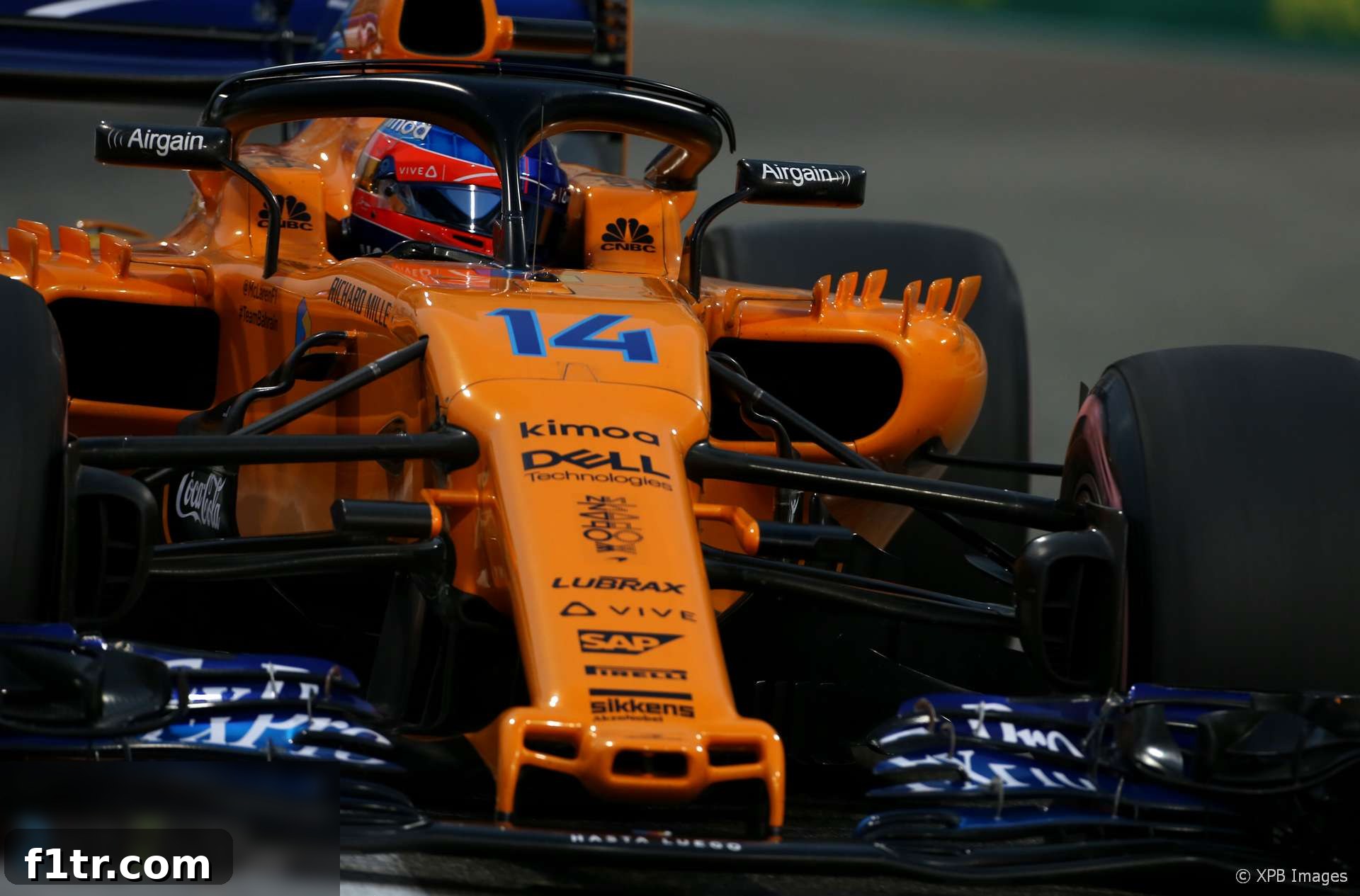
Veteran driver Fernando Alonso found himself under the microscope of the race stewards following the Abu Dhabi Grand Prix, ultimately being hit with a significant triple sanction. The McLaren driver was issued three separate five-second time penalties, accumulating to a total of 15 seconds added to his race time. Accompanying these time penalties were three penalty points added to his Super Licence, bringing his running total to six points. This series of penalties stemmed from a finding that Alonso had, on three distinct occasions, cut the track at the challenging Turns Eight and Nine complex, thereby gaining an unfair advantage.
The stewards’ verdict explicitly stated that Alonso had “left the track and gaining a lasting advantage” by deviating from the prescribed circuit boundaries. Such infringements are closely monitored, as gaining an advantage by not adhering to the track layout is a direct violation of sporting regulations designed to ensure that all drivers compete on an equal footing. In modern Formula 1, track limits have become an increasingly sensitive topic, with drivers constantly pushing the boundaries to shave off milliseconds, and stewards employing advanced technology to detect even minor transgressions.
Despite the substantial 15-second cumulative penalty, Alonso’s finishing position of 11th remained unchanged. This outcome suggests that the gaps to the drivers immediately ahead and behind him were significant enough that the added time did not alter his placement in the final standings. While his position was unaffected, the penalty points serve as a more enduring consequence. Penalty points are accumulated over a 12-month period, and if a driver reaches 12 points, they face an automatic one-race ban. With six points now on his licence, Alonso moved closer to this threshold, a reminder of the need for meticulous adherence to the rules in future races.
Alonso’s consistent struggles with the McLaren-Honda package in his final F1 season leading up to this race were well-documented. His pursuit of every possible advantage, even small ones, in a car that often lacked competitive pace, highlights the intense pressure drivers face. The incident at Turns Eight and Nine, a section of the Yas Marina Circuit known for its tight corners and potential for drivers to run wide, put a spotlight on the fine line between aggressive driving and exceeding track limits. For many, these penalties serve as a reinforcement of the FIA’s commitment to strict enforcement, even if the direct impact on the race result was minimal in this instance.
Esteban Ocon Also Penalized for Track Deviation
Fernando Alonso was not the only driver to fall afoul of the stewards for track limit violations in Abu Dhabi. Esteban Ocon, driving for Force India, also received a penalty point on his Super Licence for a similar infringement. Ocon’s incident occurred when he overtook Pierre Gasly, and subsequently left the track while remaining ahead of him. The stewards carefully examined the circumstances surrounding this maneuver, noting the critical distinction between gaining a position outright and retaining an advantage.
The official stewards’ report clarified their reasoning: “Although the driver of car 31 did not gain a position, he still gained an advantage in that he was able to retain his position in front of car two, when, if he had not gone off the track, he would not have been able to do so.” This statement underscores a crucial aspect of F1 regulations: any action that confers an unfair benefit, whether it’s directly moving up a spot or preventing another driver from doing so through illegal means, is subject to penalties. In this scenario, by running wide, Ocon effectively solidified his position against Gasly in a manner that would not have been possible had he stayed within the designated track limits, thus gaining a lasting advantage.
Adding another layer of complexity to Ocon’s situation, the stewards also highlighted that “it was noted the team was advised by the race director that car 31 could give back its position but this was not possible as further overtaking had occurred.” This aspect of the ruling illustrates the dynamic and often chaotic nature of F1 racing. While the race director often advises teams to rectify an unfair advantage by surrendering a position, the rapid succession of events and subsequent overtakes can make such a remedial action impractical or even impossible to execute safely and fairly during the heat of battle. This predicament frequently sparks debate about the best way to manage such situations in real-time without unduly influencing the race outcome.
Hulkenberg and Grosjean Collision: A Racing Incident
In contrast to the penalties issued for track limit violations, the first-lap collision involving Nico Hulkenberg of Renault and Romain Grosjean of Haas was deemed a racing incident, with both drivers being cleared of blame. The incident, which occurred in the opening moments of the Grand Prix, saw Hulkenberg’s race end prematurely, a frustrating conclusion to his season. First-lap incidents are often scrutinized intensely by the stewards due to the high density of cars and the inherent risks of aggressive jostling for position immediately after the start.
Stewards typically analyze multiple factors when evaluating collisions, including camera angles, telemetry data, and driver statements, to determine fault. In this case, their decision to clear both drivers suggests that the incident was a consequence of aggressive, but fair, racing in tight quarters, rather than attributable to dangerous driving or a clear misjudgment by one party. Such “racing incident” verdicts are common in Formula 1, acknowledging that in a sport of such high speed and close competition, contact can sometimes be an unavoidable part of the spectacle without necessarily warranting penalties for individual drivers.
The FIA Stewards and the Pursuit of Consistency
The post-race penalties and judgments from the Abu Dhabi Grand Prix serve as a microcosm of the continuous challenge faced by the FIA stewards in maintaining fairness and consistency across the Formula 1 season. Ensuring that track limits are respected is paramount to sporting integrity, as it prevents drivers from unfairly exploiting off-track excursions to gain an advantage. However, the interpretation and application of these rules can often be subjective, leading to varying outcomes depending on the specific circumstances of each incident, the track layout, and even the individual stewards assigned to a Grand Prix.
The cumulative effect of penalty points on a driver’s Super Licence is a crucial deterrent, designed to promote disciplined driving throughout the season. While a single penalty point may seem minor, a driver accumulating 12 points within a rolling 12-month period faces an automatic race ban, a severe consequence that can significantly impact their championship aspirations and team’s performance. This system ensures that repeat offenders are held accountable, aiming to foster a culture of respect for the rules.
The stewards’ decisions are often a source of debate among fans and teams, reflecting the passionate nature of the sport. While the goal is absolute consistency, the dynamic environment of a Grand Prix race, with split-second decisions and complex interactions, makes this an incredibly difficult task. The discussions generated by penalties like those in Abu Dhabi highlight the ongoing dialogue between the FIA, teams, and drivers to refine regulations and improve clarity, ensuring that the sport remains both exciting and fair.
Ultimately, the penalties issued in Abu Dhabi, particularly to Fernando Alonso and Esteban Ocon, reaffirmed the FIA’s stance on track limits and the importance of competing within the defined boundaries of the circuit. While not altering the ultimate race outcome for Alonso, the implications of these penalties, especially the accumulation of penalty points, resonate beyond a single event, shaping driver conduct and contributing to the broader narrative of integrity in Formula 1 racing.
Don’t miss anything new from RaceFans
Follow RaceFans on social media:
- Join RaceFans on Facebook
- Follow RaceFans on Twitter
- Get daily email updates from RaceFans
Advert | Become a RaceFans supporter andgo ad-free
2018 F1 Season Insights and Related Articles
The 2018 Formula 1 season was a year of intense competition, significant developments, and memorable moments. From dramatic races to pivotal team decisions, the season offered a rich tapestry of stories. Explore more about the key events and behind-the-scenes insights that shaped this remarkable year in F1 history:
- F1 feared “death knell” for Drive to Survive after Ferrari and Mercedes snub
- McLaren staff told us we were “totally crazy” to take Honda engines in 2018 – Tost
- ‘It doesn’t matter if we start last’: How Red Bull’s junior team aided Honda’s leap forward
- Honda’s jet division helped F1 engineers solve power unit problem
- McLaren Racing losses rise after Honda split
Browse all 2018 F1 season articles