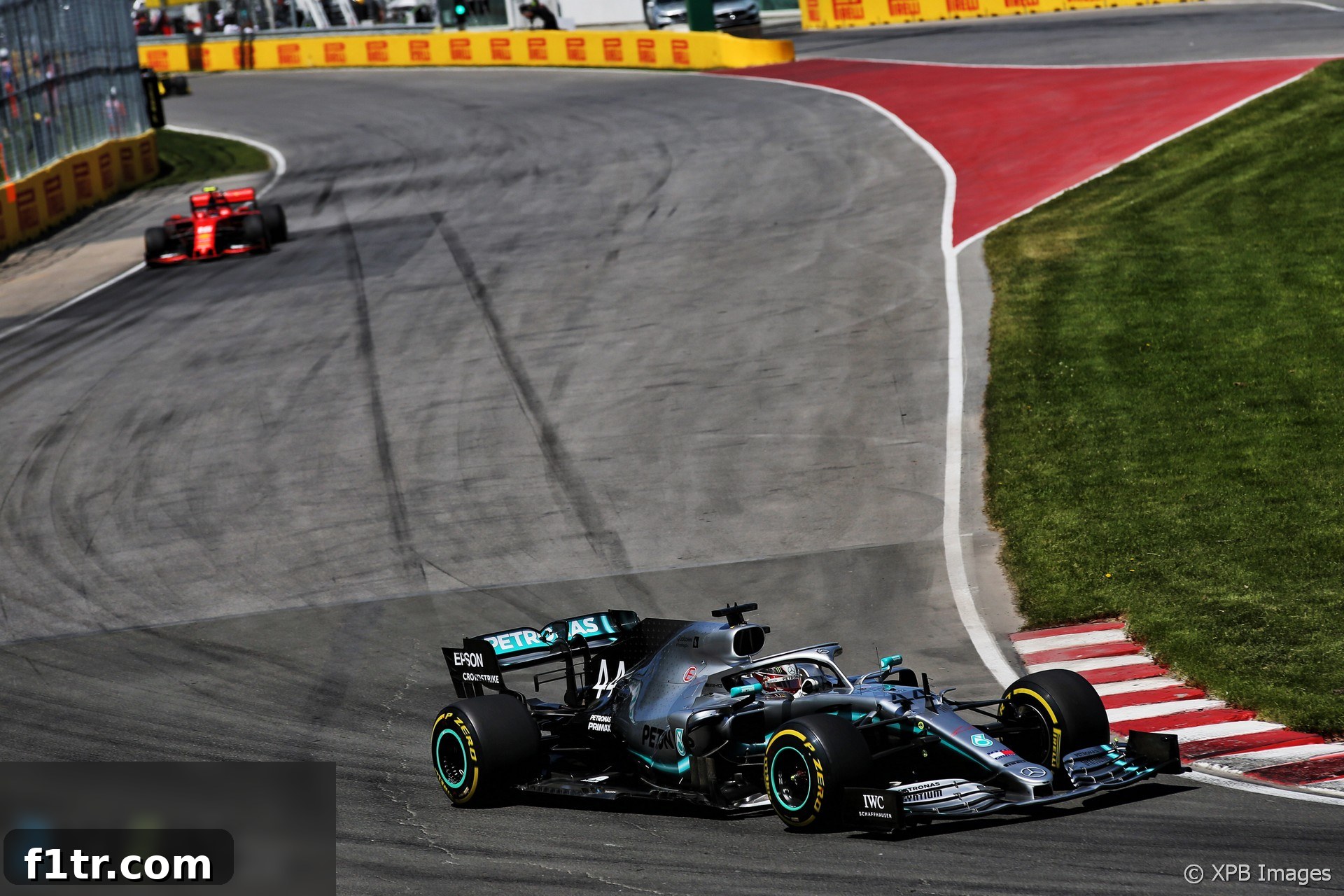
2019 Canadian Grand Prix: Hamilton’s Controversial Victory and Vettel’s Enduring Frustration
The 2019 Formula 1 Canadian Grand Prix, held at the iconic Circuit Gilles Villeneuve in Montréal, stands as one of the most memorable and hotly debated races in recent F1 history. While Lewis Hamilton ultimately claimed victory, his triumph was inextricably linked to a contentious five-second time penalty imposed on Sebastian Vettel, who had initially crossed the finish line first. This dramatic event on June 9, 2019, sparked widespread discussion among fans, drivers, and pundits, altering the outcome of a thrilling on-track battle and leaving an indelible mark on the championship narrative.
Hamilton’s seventh career win in Canada not only underscored his mastery of the challenging street circuit but also drew him level with Michael Schumacher’s record for most victories at this venue. However, the pervasive conversation after the checkered flag focused squarely on the incident involving Vettel’s re-entry onto the track, a decision by the stewards that transformed a potential Ferrari victory into a Mercedes celebration and fueled an intense debate about the interpretation of racing regulations.
The Defining Moment: Sebastian Vettel’s Penalty
The pivotal moment of the 2019 Canadian Grand Prix unfolded on Lap 48. Sebastian Vettel, leading the race comfortably from pole position and under relentless pressure from Lewis Hamilton, made a crucial error. As he navigated the demanding Turns 3 and 4 chicane, his Ferrari SF90 ran wide, forcing him onto the grass. In his efforts to regain control and rejoin the circuit, Vettel’s car briefly veered to the right. Hamilton, who was positioned on the inside, was compelled to lift off and take evasive action to avoid a collision.
Despite no contact occurring, the race stewards swiftly judged Vettel’s re-entry to be “unsafe” and subsequently issued a five-second time penalty. This ruling was devastating for Vettel and Ferrari. Although he maintained his lead to cross the finish line as the apparent winner, the five-second addition to his race time relegated him to second place, handing the victory to Hamilton. Vettel’s frustration was palpable, visibly and audibly expressed both over the team radio and during the post-race parc ferme procedures, where he famously swapped the P1 and P2 boards in front of Hamilton’s Mercedes.
Vettel vehemently disagreed with the penalty, arguing that his actions were purely reactive, an instinctive attempt to control his car after an unforced error, and that he had nowhere else to go to avoid hitting the wall. He felt unjustly stripped of a hard-earned victory, a sentiment shared by a significant portion of the motorsport community who viewed the penalty as overly punitive and detrimental to the spirit of close-quarters racing. Ferrari, in solidarity with their driver, lodged a request for a review of the decision, presenting what they believed to be “new evidence.” However, following a detailed assessment, the FIA determined there were no significant new elements to warrant a re-evaluation, leading Ferrari to ultimately withdraw their appeal. The controversy cemented the 2019 Canadian Grand Prix as a race defined by a single, highly debated steward’s decision.
Lewis Hamilton’s Strategic Masterclass
While the penalty against his rival dominated headlines, Lewis Hamilton’s performance throughout the Canadian Grand Prix was a testament to his exceptional skill and strategic acumen. Starting from second place, the Mercedes-AMG Petronas F1 Team driver mounted continuous pressure on Vettel from the outset. His consistent pace, coupled with expert tyre management, ensured he was always within striking distance, ready to capitalize on any mistake from the Ferrari ahead. The Mercedes W10 chassis proved particularly well-suited to the Circuit Gilles Villeneuve, providing Hamilton with the confidence to push the car to its limits.
Hamilton’s ability to maintain focus and execute a clean race, even amidst the high-stakes battle for the lead, showcased why he is a multi-world champion. His seventh victory in Montréal not only solidified his formidable record at this circuit but also extended his commanding lead in the Drivers’ Championship, further highlighting Mercedes’ powerful combination of an outstanding car and an incredibly talented driver. The team’s impeccable strategy and efficient pit stops played a crucial role, providing Hamilton with the perfect platform to secure yet another win.
Ferrari’s Mixed Fortunes: Leclerc’s Podium Finish
Despite the immense disappointment for Sebastian Vettel, Charles Leclerc delivered a remarkably composed and strong performance to secure a well-deserved third place. The young Monegasque driver maintained a consistent pace throughout the race, expertly managing his tyres and avoiding any significant incidents. While he wasn’t able to challenge the leading duo, his podium finish was vital for Ferrari, contributing valuable points to their Constructors’ Championship campaign and further demonstrating his burgeoning maturity and talent within the sport. This result marked Leclerc’s fourth podium of the 2019 season, underscoring his potential as a future championship contender. Ferrari’s strong qualifying performance in Canada suggested a resurgence in pace, making the outcome of the race a bittersweet pill for the Scuderia, who had shown genuine promise for victory.
Valtteri Bottas’s Determined Recovery and Fastest Lap
Lewis Hamilton’s teammate, Valtteri Bottas, faced a more challenging Grand Prix weekend. After a less-than-ideal qualifying session that saw him start from sixth on the grid, Bottas embarked on a determined recovery drive. His race was characterized by measured overtakes and diligent tyre conservation, as he steadily climbed through the field. Ultimately, Bottas managed to finish in a solid fourth position, adding important points to Mercedes’ dominant Constructors’ Championship tally.
Adding a valuable point to his score, Bottas also recorded the fastest lap of the race. This crucial bonus point, a new incentive introduced for the 2019 season, served as a testament to his raw speed and provided some consolation for missing out on a podium finish. His ability to push hard in the final stages of the race after managing his tyres effectively demonstrated his capability to extract maximum performance from the W10.
Midfield Thrills and Notable Performances
The midfield battle at the 2019 Canadian Grand Prix was fiercely contested, showcasing a range of impressive drives and strategic plays:
- Renault’s Strong Showing: Daniel Ricciardo delivered one of the standout performances of the race, skillfully holding off a faster Max Verstappen to secure an excellent sixth place. His defensive driving was a masterclass. Teammate Nico Hülkenberg also had a solid run, finishing seventh, securing a valuable double points finish for the Renault team and highlighting their growing competitiveness.
- Red Bull’s Mixed Results: Max Verstappen, starting from a challenging ninth place due to qualifying issues, demonstrated his formidable race craft by expertly carving his way through the field to claim fifth position. His charge through the pack was a highlight, showcasing his aggressive yet controlled style. However, teammate Pierre Gasly had a more understated race, finishing eighth, indicating Red Bull’s ongoing efforts to achieve consistent two-car performance.
- Points for Racing Point and Toro Rosso: Local hero Lance Stroll delighted the Canadian crowd by securing ninth place for Racing Point, a commendable result for the team. Daniil Kvyat brought home the final point-scoring position for Toro Rosso, demonstrating the reliability and performance of the Honda power unit.
- McLaren’s Unlucky Day: Carlos Sainz Jr. narrowly missed out on points, finishing 11th after a battling drive. His teammate, Lando Norris, endured an unfortunate early retirement on Lap 8 due to a wheel hub issue, cutting short what had promised to be a strong weekend for the young Briton.
- Alfa Romeo and Haas’s Struggles: Antonio Giovinazzi and Kimi Räikkönen finished 13th and 15th respectively for Alfa Romeo. Romain Grosjean was 14th for Haas, while Kevin Magnussen finished 17th after a difficult race from the pit lane, further highlighting the American team’s inconsistent form.
- Williams’ Ongoing Challenges: George Russell and Robert Kubica finished 16th and 18th respectively, underscoring the considerable challenges faced by the Williams team throughout the 2019 season as they continued their development efforts.
Retirements
In addition to Lando Norris’s early exit, Alexander Albon also retired from the race on Lap 59. The Toro Rosso driver’s promising run was cut short due to accident damage, ending his Grand Prix prematurely.
2019 Canadian Grand Prix Official Race Results
Below is the complete breakdown of the official race results from the enthralling and controversial 2019 Canadian Grand Prix, detailing each driver’s finishing position, team, and time/gap:
| Pos | # | Driver | Car | Laps | Time/gap | Difference | Reason |
|---|---|---|---|---|---|---|---|
| 1 | 44 | Lewis Hamilton | Mercedes | 70 | 1hr 29m 07.084s | ||
| 2 | 5 | Sebastian Vettel | Ferrari | 70 | 3.658 | 3.658 | |
| 3 | 16 | Charles Leclerc | Ferrari | 70 | 4.696 | 1.038 | |
| 4 | 77 | Valtteri Bottas | Mercedes | 70 | 51.043 | 46.347 | |
| 5 | 33 | Max Verstappen | Red Bull-Honda | 70 | 57.655 | 6.612 | |
| 6 | 3 | Daniel Ricciardo | Renault | 69 | 1 lap | 1 lap | |
| 7 | 27 | Nico Hulkenberg | Renault | 69 | 1 lap | 0.402 | |
| 8 | 10 | Pierre Gasly | Red Bull-Honda | 69 | 1 lap | 10.066 | |
| 9 | 18 | Lance Stroll | Racing Point-Mercedes | 69 | 1 lap | 18.486 | |
| 10 | 26 | Daniil Kvyat | Toro Rosso-Honda | 69 | 1 lap | 2.488 | |
| 11 | 55 | Carlos Sainz Jnr | McLaren-Renault | 69 | 1 lap | 2.168 | |
| 12 | 11 | Sergio Perez | Racing Point-Mercedes | 69 | 1 lap | 8.232 | |
| 13 | 99 | Antonio Giovinazzi | Alfa Romeo-Ferrari | 69 | 1 lap | 22.969 | |
| 14 | 8 | Romain Grosjean | Haas-Ferrari | 69 | 1 lap | 1.669 | |
| 15 | 7 | Kimi Raikkonen | Alfa Romeo-Ferrari | 69 | 1 lap | 0.560 | |
| 16 | 63 | George Russell | Williams-Mercedes | 68 | 2 laps | 1 lap | |
| 17 | 20 | Kevin Magnussen | Haas-Ferrari | 68 | 2 laps | 8.574 | |
| 18 | 88 | Robert Kubica | Williams-Mercedes | 67 | 3 laps | 1 lap | |
| Not classified | |||||||
| 23 | Alexander Albon | Toro Rosso-Honda | 59 | 11 laps | 8 laps | Retired | |
| 4 | Lando Norris | McLaren-Renault | 8 | 62 laps | 51 laps | Wheel | |
Fastest lap: Valtteri Bottas
Conclusion: A Race That Sparked Enduring Debate
The 2019 Canadian Grand Prix will forever be remembered as a race that delivered extraordinary drama, nail-biting excitement, and a heavy dose of controversy. While Lewis Hamilton added yet another impressive victory to his ever-growing tally, the events surrounding Sebastian Vettel’s penalty ignited a fervent debate across the global motorsport community regarding the delicate balance between the spirit of racing and the strict interpretation of regulations. It was a race that had significant implications for the championship battle at the time and continued to be a major talking point for months, highlighting the fine margins and intense scrutiny under which Formula 1 drivers operate at the pinnacle of motorsport.
Montréal once again proved itself as a venue capable of delivering truly unforgettable motorsport moments, even if the result left a bitter taste for some and fueled discussions about how such incidents should be handled in the future. The 2019 Canadian Grand Prix serves as a powerful reminder of the passion, precision, and sometimes, the contentious nature that define Formula 1.
Explore More About the 2019 Canadian Grand Prix
- Ferrari Lose Bid to Have Vettel’s Canadian GP Penalty Reviewed
- Ferrari Confirm No Appeal on Vettel Penalty
- 2019 Canadian Grand Prix Star Performers
- “I Believe in the Project”: Verstappen Responds to Marko’s Fears He Could Leave
- Top Ten Pictures From the 2019 Canadian Grand Prix
Browse All 2019 Canadian Grand Prix Articles