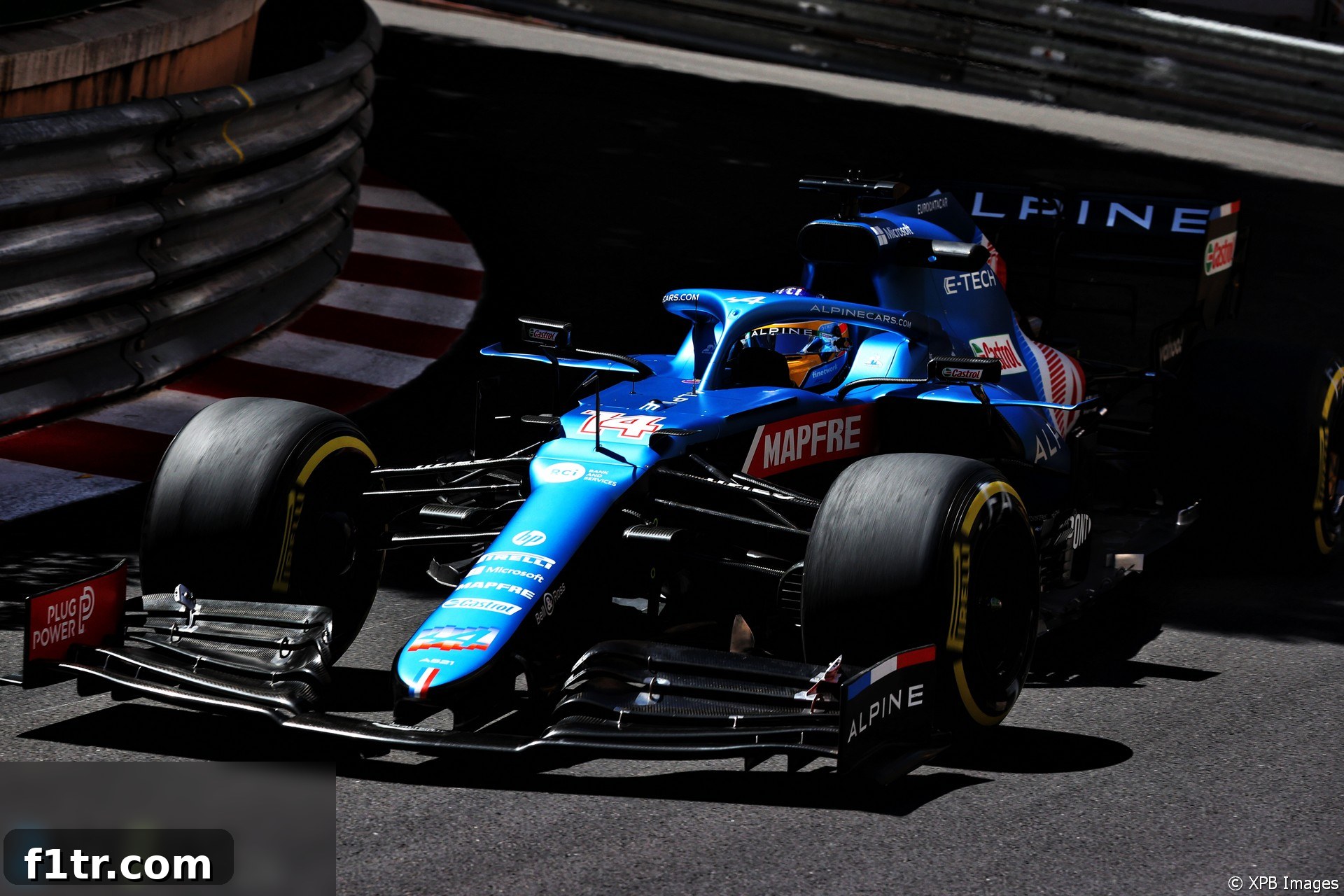
Fernando Alonso, the revered two-time Formula 1 world champion, has voiced a pragmatic and calm perspective despite Alpine’s unexpectedly challenging performance at the recent Monaco Grand Prix. While the Spanish veteran had admittedly anticipated a more competitive showing from the Enstone-based squad on the iconic street circuit, he remains unfazed by their struggles, confidently labeling the outcome a “one-off” rather than a harbinger of a performance downturn.
Advert | Become a Supporter & go ad-free
The Monaco Grand Prix is famously unforgiving, a true test of both driver skill and car setup. However, for Alpine, the weekend proved to be particularly arduous. Both Alonso and his teammate, Esteban Ocon, found themselves grappling with a distinct lack of pace that prevented them from reaching their usual competitive levels. Alonso, a master of the Monaco circuit with a history of remarkable performances, was unfortunately knocked out in Q1 – an uncharacteristic early exit for a driver of his caliber and experience. Ocon, while managing to progress slightly further, could only secure a spot in Q2, indicating a broader struggle for the team throughout the qualifying sessions.
The team’s relative performance on the narrow streets of Monte Carlo was concerning, placing them only ahead of the Williams and Haas teams. More notably, and for the first time this season, Alpine found themselves trailing Alfa Romeo, a direct rival in the fiercely contested midfield battle. This downturn in form was a stark contrast to their more promising outings in the preceding races, leading to understandable questions about the underlying issues affecting the A521 chassis in such unique conditions.
Alonso, with his characteristic analytical approach, wasted no time in diagnosing the fundamental problem that plagued Alpine over the weekend. “Grip in general was the thing we missed,” he explained, cutting straight to the core of the issue. He emphasized that the struggle wasn’t rooted in a problem with the car’s balance or any specific mechanical flaw. Instead, the team simply could not generate the necessary level of adhesion between their Pirelli tyres and the asphalt throughout all practice and qualifying sessions. In a circuit like Monaco, where every millisecond counts and the margins for error are minuscule due to the ever-present barriers, optimal grip is not merely an advantage; it is an absolute prerequisite for any driver hoping to extract maximum performance.
The veteran driver further elaborated on the intricacies of their grip issues, connecting it directly to the critical process of tyre activation. “One of the biggest factors in terms of level of grip [is] switching on the tyres. It can make that big difference,” Alonso highlighted. Tyre activation refers to the delicate art of bringing the tyres up to their optimal operating temperature window, a state where they can generate maximum mechanical grip. Modern Formula 1 tyres are incredibly sensitive to temperature, and failing to get them into the right window can lead to a dramatic reduction in performance, making the car feel skittish and unresponsive. Different cars and setups have varying abilities to manage this process, especially on tracks with specific characteristics like Monaco’s low average speeds, short lap, and unique surface.
Monaco’s peculiarities often lead to an unpredictable competitive landscape. Some teams, whose car philosophies or setups align perfectly with the demands of the principality, can suddenly find significant performance gains compared to previous races. Conversely, other teams, like Alpine in this instance, might find themselves uncharacteristically off the pace. Alonso acutely observed this phenomenon: “Some teams were much more competitive here than any other race before, some other teams, they were very uncompetitive here compared to the previous weekends, like Alpine.” This stark variability underscores the fine margins and specialized nature of performance at the Monaco Grand Prix, making it a true outlier on the F1 calendar.
The frustration in Monaco was amplified by Alpine’s relatively stronger showings in the immediate preceding rounds of the 2021 season. In Portugal, the team had demonstrated a respectable level of competitiveness, showcasing solid pace and securing valuable points for their championship tally. Barcelona, with its more conventional mix of high-speed and low-speed corners, also saw Alpine performing closer to their expected midfield position, confirming a positive trend of development. These consistent improvements had fostered a sense of growing optimism within the team, leading them to believe that Monaco, too, might offer a favorable hunting ground for points. “In Portugal we were quite competitive,” reflected Alonso. “In Barcelona as well. We thought that Monaco [would be] a good weekend. But it was not good,” he conceded with candid honesty, acknowledging the disappointment of the actual outcome.
Despite the significant setback and the uncharacteristic struggles, Fernando Alonso maintained an unwavering belief that Alpine’s Monaco woes were a distinct “one-off” rather than a signal of a broader performance decline. “I think it’s a very specific set-up for the circuit,” he explained. Monaco demands a highly specialized car configuration: maximum aerodynamic downforce, a soft suspension setup to effectively ride the infamous kerbs, and a car that is exceptionally agile through its numerous slow-speed corners. This unique environment acts as a magnifying glass, exposing specific strengths or weaknesses in a car’s design that might not be as apparent on more conventional racing tracks.
Alonso drew a comparison, albeit with an important distinction, to the Singapore Grand Prix, another iconic street circuit known for its tight confines and similar low-speed demands. While Singapore might require a comparable setup philosophy in terms of mechanical grip and downforce, Alonso highlighted the crucial difference in typical ambient temperatures. This distinction suggests that the tyre activation challenge, while present, would manifest in a different manner, reinforcing his view that Monaco’s specific combination of factors created a unique hurdle for Alpine. This ‘one-off’ perspective is crucial for team morale and strategic direction, offering reassurance that the team’s fundamental car package is not inherently flawed, but simply did not align with the extreme and specialized demands of Monaco’s unforgiving streets.
Alonso’s overarching perspective remains firmly fixed on the horizon, particularly the transformative 2022 regulatory changes that promise a significant reset for the entire Formula 1 grid. With a candid and realistic assessment of the current season, he admitted, “We will not win the championship this year, that’s a guarantee.” This pragmatic acceptance liberates the team to fully dedicate its efforts to understanding the current car’s nuances, gathering invaluable data, and, most importantly, to the intensive development of their challenger for the new era of Formula 1. Alonso, a veteran revered for his unparalleled understanding of car development and setup, plays a pivotal role in this crucial process. “We are working, we are trying to help the team as much as we can in preparation for for 2022 as well,” he affirmed, underscoring his commitment to the team’s long-term aspirations.
Every race weekend, even the most challenging ones like Monaco, provides indispensable data and learning opportunities. The difficulties encountered on the principality’s streets force the team to meticulously analyze, innovate, and ultimately improve, making them “stronger as a team.” Far from being disheartened by the setback, Alonso views the struggles experienced at Monaco as a vital learning experience. “We are understanding a lot of things from the difficulties, so I’m not worried,” he concluded with characteristic calm.
In the relentless pursuit of performance that defines Formula 1, every setback offers a crucial chance to diagnose, innovate, and evolve. By dissecting the precise reasons behind their lack of pace – whether it pertains to tyre thermal management, aerodynamic efficiency at very low speeds, or optimal suspension tuning for street circuits – Alpine can refine its methodologies and design philosophies for all future developments. This proactive and analytical approach, championed by a driver renowned for his incisive mind and relentless pursuit of performance, strongly underscores Alpine’s unwavering commitment to achieving long-term success rather than dwelling on temporary disappointments.
Therefore, despite the undeniably frustrating weekend in Monaco, the prevailing sentiment from Fernando Alonso and within the Alpine garage appears to be one of measured confidence and strategic foresight. The team keenly recognizes the unique and often extreme challenges presented by specific circuits on the calendar. They are unequivocally committed to leveraging every single experience – whether positive or negative – to meticulously strengthen their overall capabilities as a racing outfit. With a clear and resolute focus on the transformative 2022 regulations and the invaluable leadership of a veteran driver spearheading their development efforts, Alpine aims to emerge from such ‘one-off’ disappointments with an enhanced understanding, refined processes, and a clearer, more direct path towards achieving consistent competitiveness in the demanding seasons yet to come.
2021 Monaco Grand Prix
- ‘I need that point, we’ve lost a ton’: Hamilton team radio transcript analysis
- Perez sees Austrian double-header as valuable chance to master his RB16B
- No fun to be had in Monaco Grand Prix even if you’re winning, says Hamilton
- Mercedes explain Bottas’ Monaco pit stop failure
- F1 will consider adopting “intelligent” IndyCar rule in wake of Leclerc crash
Browse all 2021 Monaco Grand Prix articles