The Enduring Paradox of the Monaco Grand Prix: Tradition vs. The Overtaking Debate
The Monaco Grand Prix stands as an unparalleled jewel in the Formula 1 calendar, a race steeped in over nine decades of history, glamour, and unparalleled tradition. Its very name conjures images of speed, precision, and the unique challenge of navigating the tight, unforgiving streets of the principality. Yet, beneath the glittering facade and the echoes of legendary victories, lies a perpetual paradox: for all its venerated status, the Monaco Grand Prix is consistently the subject of intense debate, primarily centering on its perceived lack of on-track action and the perennial quest to ‘improve’ it.
This enduring tradition of complaint about the race’s often processional nature is invariably followed by a flurry of suggestions for ‘improvement’. These proposals range from the genuinely innovative to the wildly artificial and often unfeasible, each aiming to inject more spectacle into an event that, by its very design, defies conventional racing thrills. The more outlandish the idea, it often seems, the more traction it gains in the fervent post-race discussions surrounding Formula 1’s most iconic, yet controversial, event.
The Persistent Lament: “Processional” Racing and Driver Disappointment
The current era of Formula 1, with its larger, heavier, and aerodynamically complex cars, has only intensified this debate. The sheer scale of modern F1 machinery makes navigating Monaco’s historic, narrow confines an extreme test of discipline, but also a formidable barrier to overtaking. This reality frequently leads to frustration among drivers, who are often reduced to following in a high-speed train, managing tyres and pace without genuine opportunities to make a move or engage in wheel-to-wheel combat.
The sentiment was perhaps best encapsulated by a visibly despondent Carlos Sainz Jnr following a recent outing at the principality. “I’ve never jumped out of a car so disappointed almost with the whole thing because it was really, really, really bad,” he openly bemoaned during a post-race press conference. His candid admission underscored the stark reality for many competitors: “It was very slow. Like, the slowest I’ve ever gone in a Formula 1 car.” Such comments highlight the delicate balance F1 navigates between preserving historical tradition and delivering engaging, action-packed motorsport.
The quest to engineer better racing on a track inherently unsuited for modern F1 car dimensions often leads to a cycle of experimental regulations. Last year’s much-discussed brainwave, mandating two tyre changes during the race, was adopted by the FIA with hopes of shaking up the strategy and creating more overtaking opportunities. Unsurprisingly, this ‘cure-all’ proved to be anything but. The fundamental physics of Monaco’s layout, combined with the characteristics of the cars, rendered the rule largely ineffective in significantly altering the race dynamics, leaving many wondering if legislative changes alone can ever truly ‘fix’ Monaco.
A Cascade of Solutions: From Track Extensions to Joker Laps
Undeterred by past failures and the undeniable fact that F1 cars are simply too large for the track to consistently offer wheel-to-wheel battles, the industry continues to generate a fresh crop of ‘solutions’. These proposals reflect a deep-seated desire within some quarters of the sport to legislate excitement, even when the natural environment of the Monte Carlo circuit resists such efforts with its unyielding barriers and minimal runoff areas.
One recurring suggestion, perhaps the most ambitious and least realistic, involves grand, money-no-object plans to extend the track itself, potentially pushing into the harbour. While the vision of new straights or expanded corners might tantalize fans with the promise of more overtaking zones, the logistical, environmental, and financial hurdles involved in such an undertaking are monumental. Constructing significant new sections in one of the world’s most densely populated and exclusive urban areas makes this proposal firmly rooted in the realm of speculative fantasy.
More grounded, yet still highly controversial, are proposals from leading figures within the sport itself. Mercedes’ team principal, Toto Wolff, has openly advocated for the introduction of a maximum lap time during races. The rationale behind this idea is to prevent drivers from deliberately slowing down to manage tyres, save fuel, or create a strategic gap, thereby theoretically forcing them to push harder and potentially creating more varied racing and strategic dilemmas. However, critics argue such a rule would be an artificial imposition, stripping away a layer of strategic depth that is integral to Formula 1 and penalizing drivers for intelligent race management.
James Vowles, team principal at Williams, offered another intriguing, albeit unconventional, solution: rallycross-style joker laps. This concept, where drivers would periodically be required to take an alternative, slightly longer route on a lap, aims to introduce strategic variation and opportunities for position changes by forcing cars to diverge from the main racing line. Interestingly, George Russell, a driver well-versed in the challenges of Monaco, was clearly ahead of the curve, having voiced similar ideas previously. While innovative and potentially exciting, the practicality of integrating such a feature into Monaco’s existing layout and its impact on the purity of F1 racing remain significant questions, often met with skepticism from traditionalists.
The Veteran’s Wisdom and the Young Gun’s Reality Check
Amidst this barrage of proposed changes and endless discussions, some voices within the paddock advocate for a different approach: acceptance. Fernando Alonso, one of F1’s most experienced and respected drivers, expressed deep displeasure at the incessant chatter about Monaco overshadowing the build-up to other races, particularly his home Grand Prix. He voiced frustration with what he perceives as a constant focus on negativity rather than an appreciation for the unique spectacle and challenge Monaco offers.
“There is this constant talk about how bad something is instead of how good something is,” Alonso stated, reflecting on the pervasive media narrative. “This is Monaco. Maybe there are a couple of ideas that, between all involving the sport, drivers, FIA, teams, we can think about, but I don’t think that there is any need to think something.” He further suggested that the modern era’s polite drivers and the demand for constant content fuel this debate: “It’s only because there is a lot of content now to be created, and drivers, we are too nice so we answer every question. If 40 years ago you ask Senna and Prost – and they are fighting for the championship or whatever – about Monaco one week [later], they would be less polite than we are now.” Alonso’s perspective, born from decades at the pinnacle of motorsport, underscores a powerful argument for preserving the unique character of each circuit, rather than homogenizing the calendar for the sake of artificial excitement.
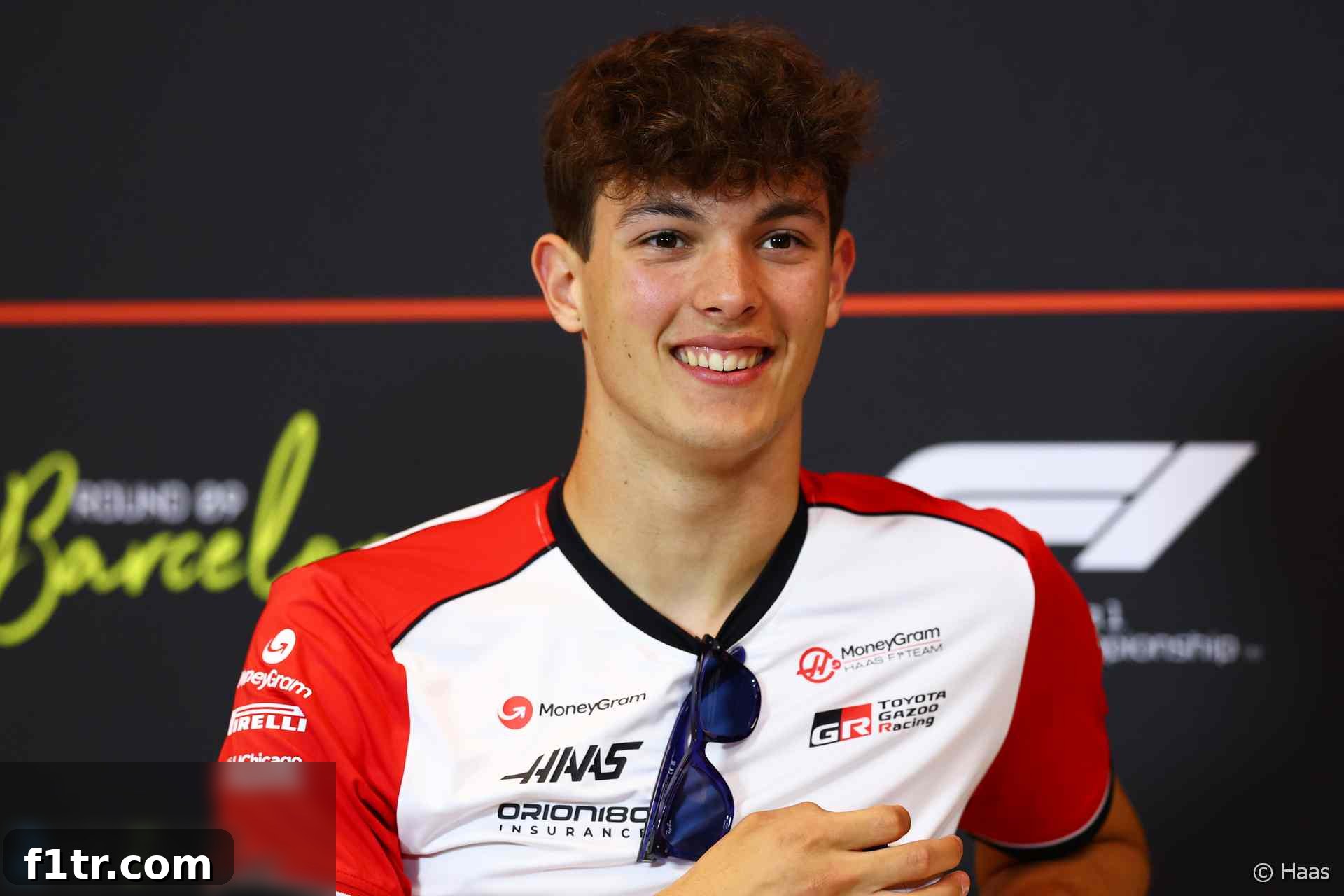
Adding a surprisingly mature and pragmatic voice to the debate was Oliver Bearman, one of the series’ youngest and most promising talents. His assessment of the interminable Monaco discussion resonated with a historical understanding that belies his relative inexperience. Bearman’s perspective provides what many believe should be the definitive word on the matter, not just for the current season, but for good, cutting directly to the core of the issue.
“Looking at the stats, it’s not like Monaco used to have a bunch of overtakes and now it doesn’t,” Bearman pointed out. “It’s never been a track where the race is particularly exciting.” This simple, data-driven observation cuts through much of the modern lament, reminding everyone that the circuit’s fundamental nature has remained consistent over decades. He continued, “People just need to accept that the thrill of Monaco is on Saturday in qualifying. It’s always going to be a boring race with a track of that size.”
Bearman’s insight extends to the core issue of car design: “Unfortunately, with the cars of this size, nothing’s going to happen. I think smaller cars would be better, but I don’t think it’s going to fix everything, because 20, 30 years ago, it was the same scenario – not many overtakes.” This acknowledges that while current car dimensions certainly exacerbate the problem, Monaco’s character as a challenging, high-precision circuit for qualifying glory is an inherent feature, not a recent flaw. “But quali is where the fun is in Monaco, and that’s even more reason to qualify well: then you don’t get stuck in the train,” he concluded, offering a clear strategy for success and enjoyment at the principality.
Monaco’s True Spectacle: The Unforgiving Art of Qualifying
The consensus from those who truly understand the circuit, both veterans and newcomers, points to Saturday’s qualifying session as the ultimate spectacle of the Monaco Grand Prix. It is here, in the raw, unadulterated pursuit of perfection against the stopwatch, that Monaco truly shines. Drivers push their multi-million-dollar machines to the absolute limit, mere millimeters from unforgiving barriers, with zero margin for error. A single mistake can end a session, or even a weekend, defining a driver’s fate before the race even begins. This high-stakes, high-wire act of precision, bravery, and immense talent is a thrill unlike any other on the F1 calendar, demanding a level of focus and courage that transcends mere speed, captivating audiences globally.
The starting grid at Monaco is often tantamount to the final race result. Securing pole position, or at least a front-row start, is paramount because of the near-impossibility of overtaking. Therefore, the Saturday session becomes a brutal, winner-takes-all battle where fractions of a second decide destiny. This fundamental truth about Monaco is what Bearman and Alonso champion: rather than trying to force a square peg into a round hole by artificially stimulating overtaking, Formula 1 should embrace what makes Monaco unique – the ultimate test of single-lap pace, strategic grid positioning, and unwavering concentration.
The Unending Debate: Will F1 Ever Truly Accept Monaco?
Despite the eloquent arguments for embracing Monaco for what it is – a unique, historic test of skill and precision rather than an overtaking fest – the suggestion that those running Formula 1 will ever truly be persuaded to accept this reality seems, sadly, to be the least realistic idea of all. The modern imperative for constant entertainment, dramatic overtakes, and unpredictable outcomes often overrides the appreciation for nuanced challenges and historical significance that Monaco inherently offers. The sport’s commercial pressures and the desire to appeal to an ever-broader, often younger, audience continually fuel the search for ‘improvements’, no matter how artificial or intrusive they may be to the race’s identity.
So, while drivers, purists, and racing historians might argue passionately for acceptance, the expectation among many remains that the governing bodies and promoters will continue to tinker. Therefore, the cycle of complaint, debate, and proposed ‘solutions’ is likely to repeat, year after year, as F1 navigates its quest for universal excitement. We may well find ourselves anticipating future Monaco Grand Prix iterations featuring reverse grids, double points, or even mandatory three-pit stops – all in the name of manufactured excitement, fundamentally altering the character of a race that has, for nearly a century, stood as a testament to motorsport’s most enduring traditions.