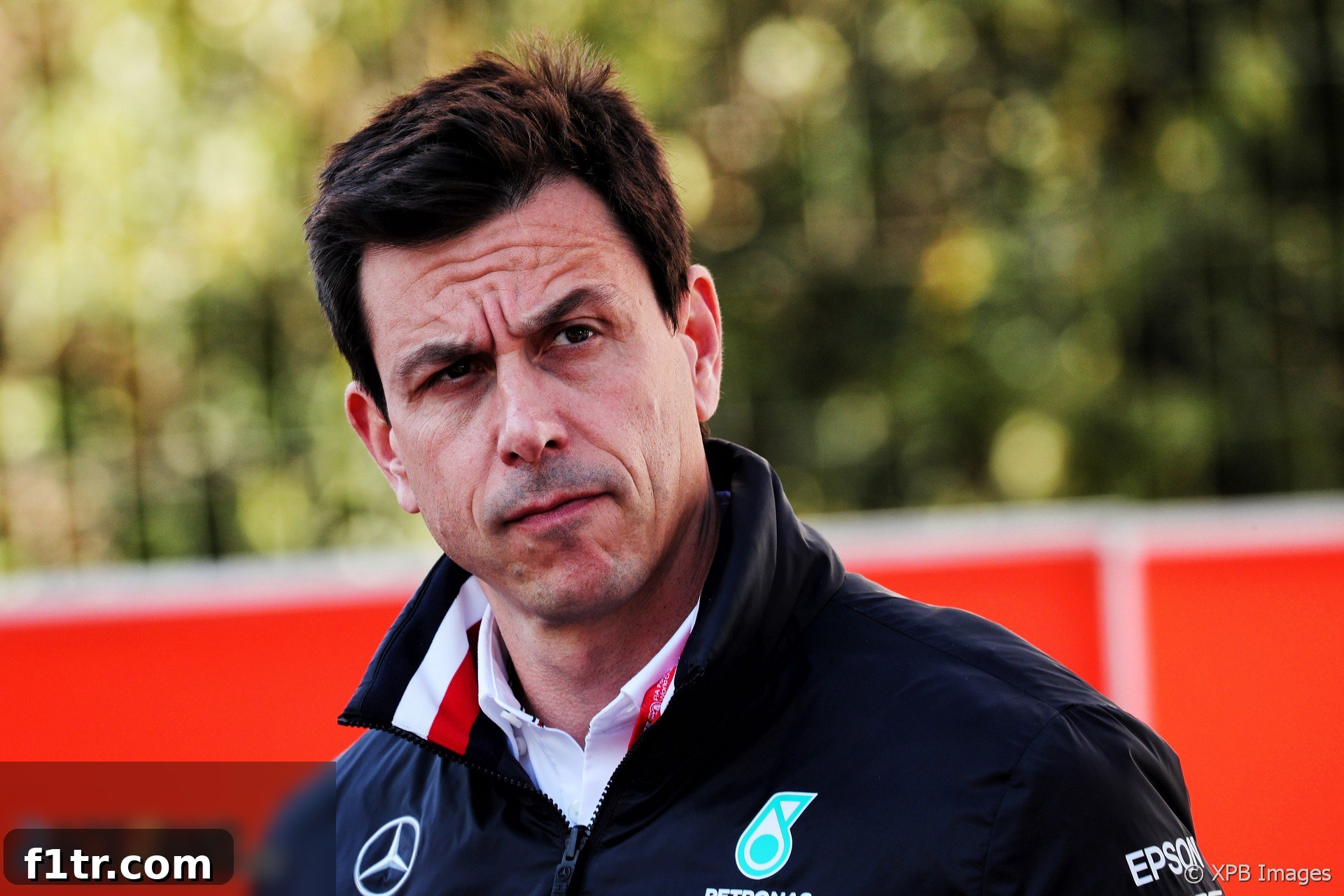
Lewis Hamilton Advocates for Neutral Leadership in Formula 1’s Top Job
Lewis Hamilton, the reigning Formula 1 world champion, has voiced nuanced opinions regarding the potential appointment of Toto Wolff, his long-time Mercedes team principal, as the next CEO of Formula 1. While acknowledging Wolff’s unparalleled management prowess and success within the sport, Hamilton expressed reservations, highlighting the critical importance of a “complete neutral” individual at the helm of F1’s global operations. This stance underscores a broader debate within motorsport about governance integrity, potential conflicts of interest, and the future direction of the pinnacle of racing.
The Succession Question: Toto Wolff and the F1 CEO Role
Speculation surrounding Toto Wolff’s future at Mercedes and a potential move to lead Formula 1 has been a significant talking point. As previously reported, Wolff’s contract with the dominant Mercedes-AMG Petronas F1 Team is set to conclude at the end of the 2020 season. This timing conveniently aligns with the period when the position of F1 CEO, currently held by Chase Carey, could become available. Such a transition would see one of the most successful figures in modern F1 leadership take on the immense responsibility of guiding the entire sport. Wolff’s tenure at Mercedes has been marked by unprecedented success, transforming the team into a consistent championship winner, a testament to his strategic vision, keen business acumen, and exceptional leadership skills. These qualities naturally position him as a strong candidate for any high-level role within motorsport, particularly one as demanding as the F1 CEO.
However, despite this strong endorsement of Wolff’s capabilities as a manager and leader, Hamilton’s perspective introduces a crucial dimension to the discussion. His concern isn’t about Wolff’s competence but rather the inherent challenges that come with a former team principal transitioning into an overarching governance role. The very success that makes Wolff an attractive candidate also creates a potential area of conflict, a subtle bias that Hamilton believes could inadvertently compromise the impartiality required for Formula 1’s top executive position.
The Imperative of Neutrality: A Call for Unbiased Leadership
Hamilton firmly believes that the sport, to thrive and maintain its integrity, requires a leader who is entirely detached from any specific team’s interests. “I don’t believe there’s a better manager than Toto within the whole of Formula 1,” Hamilton stated, acknowledging Wolff’s outstanding track record. Yet, he added a significant caveat: “However, sitting back as a fan, sitting in the room with people who have to make ultimate decisions, we, as humans, we can be biased.” This insight from a driver who has spent his entire career navigating the intricate politics of Formula 1, emphasizes the subtle yet powerful influence of past loyalties and affiliations.
The call for a “complete neutral” leader is rooted in the understanding that Formula 1 is a fiercely competitive ecosystem. Every team, every driver, and every manufacturer is driven by the singular goal of winning. A CEO with a history of deep involvement with one particular competitor, no matter how well-intentioned, could face subconscious biases that might impact decision-making processes. These decisions range from shaping future regulations and commercial agreements to managing the sport’s public image and strategic direction. The integrity of the sport, its rules, and its commercial fairness hinges on the perception and reality of absolute impartiality from its highest authority.
Drawing Parallels: Historical Precedents and Personal Biases
To illustrate his point, Hamilton drew a compelling parallel with Jean Todt, the current President of the FIA (Fédération Internationale de l’Automobile), Formula 1’s governing body. Todt famously enjoyed a highly successful tenure as Ferrari’s team principal during the Michael Schumacher era. “You’ve got [FIA President] Jean Todt who, I know Jean is level, but the fact is he’s been with the red team for so long so surely when he wakes up there’s a red T-shirt and there’s a silver T-shirt he probably goes for a red one, you know what I mean?” Hamilton elaborated. This analogy highlights how deep-seated professional affiliations can create a natural, almost involuntary lean towards familiar entities, even in individuals striving for fairness.
Hamilton candidly admitted to his own biases, using his personal preference for his racing number, 44, over any other, as a relatable example. “Just like when I get out of bed and I see 44 I see number six I will go for number 44.” This self-reflection serves to normalize the concept of bias, acknowledging it as a fundamental aspect of human nature rather than a criticism of any individual’s character. Toto Wolff’s long and incredibly successful association with Mercedes means he has been “Mercedes through and through for such a long period of time.” While Hamilton recognizes Wolff as a top-tier manager, the concern remains that his deep-rooted commitment to one team might subtly influence his perspective on issues affecting all teams equally. The best solution, in Hamilton’s view, would be “someone from outside who’s just neutral, if there can be someone such as a complete neutral, who doesn’t know about Ferrari.” This statement reinforces the idea that true impartiality might only be achieved by someone with no prior vested interests in any of the competing factions within Formula 1.
The Problem with Team-Centric Decision Making
Beyond the qualities of an individual CEO, Hamilton also articulated a strong stance on the role of teams in the sport’s overarching governance. He firmly believes that Formula 1 teams should not be directly involved in making fundamental decisions about the sport’s future. “Ultimately the FIA, they’re the governing body, they make all the decisions and the teams shouldn’t be involved in that, in my opinion,” he asserted. His reasoning is straightforward and pragmatic: “Because the teams all want to do something for themselves.”
This perspective is an open acknowledgment of the inherent self-interest that drives every competitive entity in Formula 1. Teams invest vast sums of money, employ thousands of people, and are perpetually striving for a competitive edge. It is natural, therefore, for them to advocate for rules, regulations, and commercial structures that primarily benefit their own operations and ambitions. Hamilton likened this dynamic to a scenario in football where competing clubs are tasked with shaping the sport’s future. “It would be the same in football if all the football teams sat in a room and said ‘the sport should be like this’. They would push and pull for their own benefit.” This competitive drive, while essential for on-track action, can become a significant impediment when it spills over into governance, leading to stalemates, self-serving amendments, and a lack of cohesive, long-term vision for the sport as a whole.
The Role of the Governing Body and Commercial Rights Holder
In Hamilton’s ideal vision for Formula 1’s governance, the primary responsibility for the sport’s welfare rests squarely with the FIA and Liberty Media. The FIA, as the regulatory and sporting authority, and Liberty Media, as the commercial rights holder, are the designated central bodies whose “sole job” is “to make the sport great again.” Their mandates are distinct from those of individual teams, encompassing the broader health, sustainability, and global appeal of Formula 1.
This separation of powers is crucial. The FIA is tasked with ensuring fair competition, safety, and the sporting integrity of the championships. Liberty Media, on the other hand, focuses on commercial growth, fan engagement, and expanding Formula 1’s global footprint. For these entities to effectively execute their missions, they require independence from the lobbying and self-serving interests of individual teams. A truly neutral CEO, free from the baggage of past team affiliations, would be instrumental in aligning these two powerful bodies towards a unified goal: fostering a competitive, exciting, and financially viable sport for all participants and fans. Such leadership would prioritize the collective good over the specific advantages of any one team, ensuring a level playing field and a more unpredictable, engaging spectacle for audiences worldwide.
Conclusion: A Vision for Formula 1’s Future
Lewis Hamilton’s candid remarks regarding Toto Wolff’s suitability for the Formula 1 CEO role underscore a fundamental principle for the future of motorsport governance: the paramount importance of absolute neutrality. While Toto Wolff’s extraordinary success at Mercedes undeniably makes him an exceptional candidate for any leadership position, Hamilton’s perspective highlights the delicate balance between unparalleled experience and the potential for subtle, inherent biases. The sport’s integrity, its ability to attract new audiences, and its long-term commercial viability depend on a leadership structure that is perceived, and truly is, impartial.
The call for a “complete neutral” leader, coupled with Hamilton’s insistence on limiting team involvement in core governance decisions, paints a clear picture of a desirable future for Formula 1. It is a future where the sport is guided by a central vision focused solely on its collective growth and fairness, rather than being swayed by the individual ambitions of its powerful constituents. As Formula 1 continues to evolve, facing new challenges and opportunities in a rapidly changing global landscape, the selection of its next CEO will be a pivotal decision, profoundly impacting its trajectory for years to come. Hamilton’s insights offer a valuable framework for evaluating potential leaders, prioritizing an unbiased approach that champions the spirit of competition while safeguarding the integrity of the sport for generations to come.