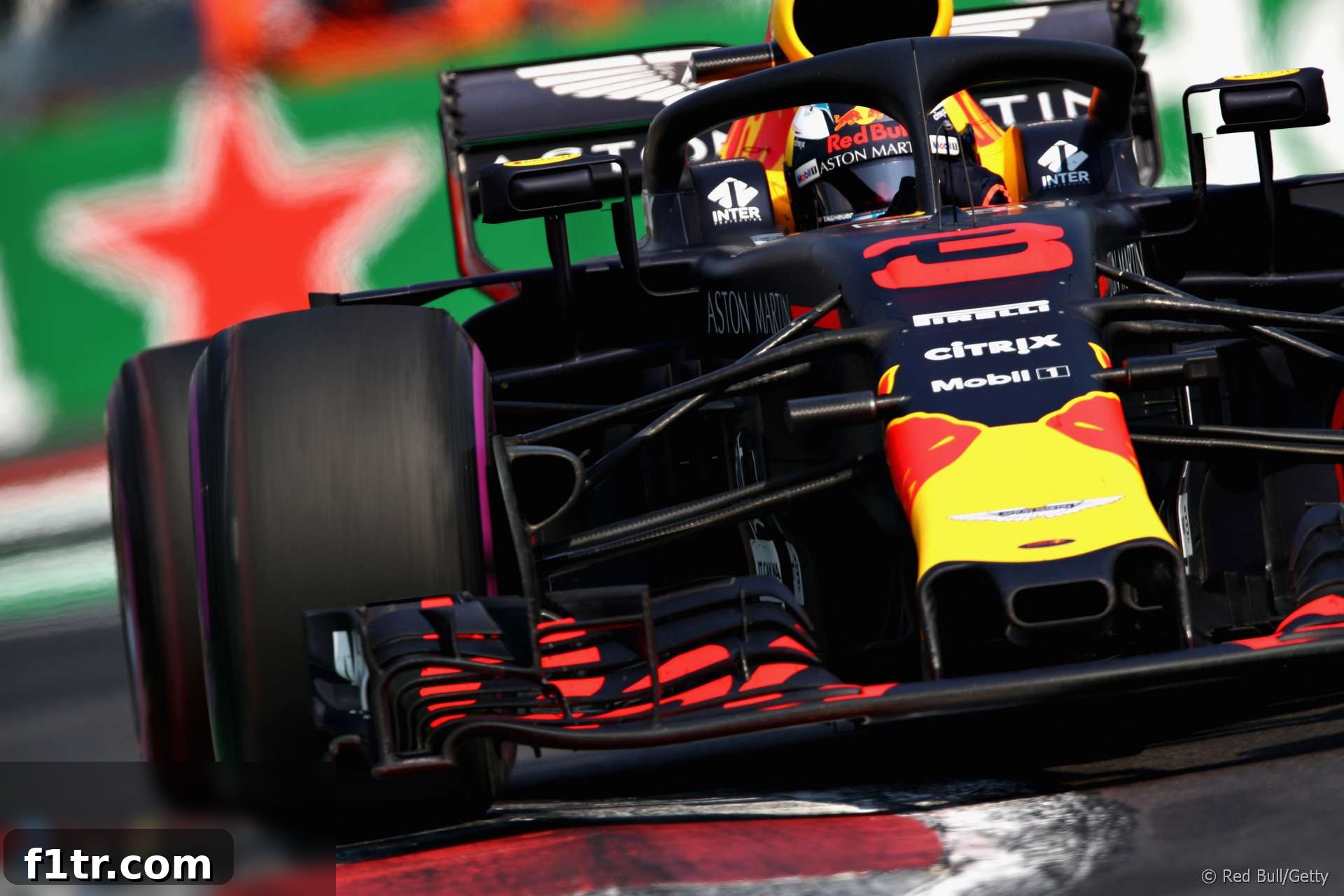
Red Bull Racing’s Paradoxical 2018 F1 Season: A Review of Wins, Woes, and the Honda Shift
The 2018 Formula 1 season presented a fascinating paradox for Red Bull Racing. Despite achieving their most successful year in terms of victories since the V6 hybrid turbo era began, securing four wins and narrowly missing a fifth in Brazil, the team embarked on a monumental strategic shift. This dramatic change involved severing ties with long-time engine supplier Renault and forging a new partnership with Honda for the upcoming season – a decision that marked their first new engine partner in over a decade.
This comprehensive review delves into the complexities of Red Bull’s 2018 campaign, exploring the triumphs and tribulations that ultimately led to a pivotal change in their engineering philosophy. From stellar race performances and the undeniable brilliance of the RB14 chassis to simmering internal tensions between star drivers Max Verstappen and Daniel Ricciardo, and the persistent reliability concerns that plagued their efforts, 2018 was a year of both considerable achievement and profound transition for the Milton Keynes-based squad. It was a season that showcased the team’s potential while simultaneously highlighting the frustrations with its power unit, setting the stage for a bold new chapter with Honda.
The Fading Partnership with Renault: Seeds of Dissatisfaction
A Decade of Growing Frustration Culminates in Change
The roots of Red Bull’s escalating dissatisfaction with Renault were sown long before 2018, stretching back through several challenging seasons in the V6 hybrid turbo era. While the partnership had yielded four consecutive Constructors’ and Drivers’ championships between 2010 and 2013, the new hybrid regulations saw Renault consistently fall behind its rivals, Mercedes and Ferrari, in both raw power output and crucial reliability. This performance gap led to increasing public criticism from Red Bull leadership, creating a strained relationship that appeared destined for an eventual split.
The writing appeared to be on the wall after McLaren severed its turbulent ties with works partner Honda the previous year, with widespread speculation that Red Bull would step in to take up the supply of the Japanese manufacturer’s power units. This speculation was further fueled by Red Bull’s junior team, Toro Rosso, who spent the 2018 season rigorously testing the Honda power units. Essentially acting as a proving ground for their senior counterpart, Toro Rosso’s findings and the overall performance trajectory of Honda ultimately validated Red Bull’s assessment, paving the way for the eventual announcement of their partnership.
Early Season Dynamics: Hopes, Hurdles, and Flashpoints
The 2018 season began with a sense of cautious optimism for Red Bull Racing. The team unveiled the RB14 in a distinctive black-and-blue interim livery, and initial testing generated positive feedback, suggesting a well-sorted package. There was a prevailing belief that the new aerodynamic regulations introduced that year would play directly into Red Bull’s strengths, given their historical prowess in chassis design and efficiency. This marked a significant improvement in morale and immediate performance outlook compared to 12 months prior, when the team struggled to immediately capitalize on similar regulatory changes.
However, the opening race in Melbourne quickly dampened expectations. Despite the team’s strong chassis, Mercedes and Ferrari demonstrated superior pace, locking out the front of the grid and engaging in their own battle for victory. Red Bull proved undeniably quicker than the midfield pack, but a costly slip-up by Max Verstappen allowed Fernando Alonso to finish ahead of him, highlighting that the team still had a significant gap to close with the leading contenders on race pace.
The third race in China offered a glimpse of Red Bull’s true potential. Starting from the back foot compared to the front-runners, the team clinched a memorable victory, thanks in part to a fortunately-timed Safety Car intervention that allowed for a strategic double pit stop. Daniel Ricciardo masterfully capitalized on the opportunity, demonstrating his exceptional race craft and overtaking prowess. In contrast, Verstappen endured a challenging race, making two significant errors in combat with Lewis Hamilton and Sebastian Vettel. This followed his qualifying crash in Bahrain, which he controversially attributed to a power unit issue – a complaint that would become a recurring theme and the beginning of a challenging, inconsistent period for the team’s younger star.
Internal Tensions and Ricciardo’s Pivotal Departure
The Azerbaijan Incident: A Defining Collision
The sense that Verstappen was struggling to maintain consistent performance and composure was heightened at the Azerbaijan Grand Prix. This race became a major flashpoint, testing the limits of team tolerance as Verstappen aggressively defended against Ricciardo, with the pair banging wheels multiple times during their wheel-to-wheel battles. While Ricciardo eventually managed to pass cleanly, the drama was far from over. The incident sent shockwaves through the paddock, raising questions about team management and driver discipline.
The tension escalated after Ricciardo pitted. Verstappen, who had repeatedly warned his pit wall about the deteriorating state of his tires, surprised the team by suddenly lowering his sector times after his teammate’s stop, helping him regain position ahead. Just two laps later, the inevitable occurred: the two Red Bull drivers collided in a disastrous incident that put both out of the race. This costly collision not only deprived the team of valuable points but also underscored the palpable friction within the garage. It was a moment that many observers believe served as a significant catalyst, leading Ricciardo to seriously consider his future away from Red Bull.
Monaco Glory, Austrian Frustration, and a Shock Announcement
Ricciardo found redemption and celebrated another triumph at the prestigious Monaco Grand Prix, where Verstappen made yet another costly error during practice, forcing him to start from the back of the grid. Ricciardo masterfully managed an ailing power unit during the race to claim a hard-fought victory, a testament to his exceptional skill and determination. However, the intra-team dynamic remained fraught. In Austria, a strange and public argument erupted between Ricciardo and the pit wall as he unsuccessfully lobbied to have Verstappen give him a slipstream during qualifying – an unusual request that further highlighted his growing frustration with team operations and perceived favoritism.
As the Formula 1 circus headed into the summer break, the paddock was stunned by a seismic announcement: Daniel Ricciardo would be leaving Red Bull to join Renault for the 2019 season. This unexpected move caught many by surprise, particularly given Red Bull’s strong chassis performance and consistent ability to fight for podiums. It represented a significant blow to the team, losing one of the sport’s most charismatic and talented drivers at the height of his career.
Red Bull Racing 2018 Season Statistics
| Best Race Result (Number) | 1 (4) |
| Best Grid Position (Number) | 1 (2) |
| Non-Classifications (Technical/Other) | 11 (9/2) |
| Laps Completed (% of total) | 2,161 (85.35%) |
| Laps Led (% of total) | 285 (22.51%) |
| Championship Position (2017) | 3 (3) |
| Championship Points (2017) | 419 (368) |
| Pit Stop Performance Ranking | 2 |
The RB14 Chassis: A Masterpiece Undermined
Despite the internal strife and engine frustrations, the 2018 season unequivocally showcased the brilliance of Red Bull’s chassis design. Team principal Christian Horner lauded the RB14 as one of the finest chassis the team had ever produced, a sentiment widely echoed by Ricciardo himself, who knew he was departing from an exceptionally well-engineered machine. Reflecting on the car, Ricciardo stated, “The aero this year’s come on really strong. But even the whole geometry, the suspension of the car, things like this. You look to the onboards of the other cars and see the drivers moving a lot and we’re quite still. I think everything, the whole compliance of the car, I think they’ve really nailed this year.” This praise underscored the fundamental strength of Red Bull’s aerodynamic and mechanical package, which consistently allowed their drivers to extract maximum performance despite facing power deficits. The Renault RS18, in comparison, did not appear to possess the same inherent stability and balance, making Ricciardo’s move all the more surprising from a pure chassis performance perspective.
Reliability Woes and Verstappen’s Remarkable Resurgence
The Achilles’ Heel: Persistent Reliability Issues
As the season progressed, Daniel Ricciardo increasingly bore the brunt of Red Bull’s poor reliability rate. A string of mechanical failures and retirements during races seemed to disproportionately affect the Australian, sparking predictable, albeit dismissed, conspiracy theories within the F1 community. However, team principal Christian Horner openly acknowledged reliability as a critical area for the team to address, irrespective of whose car was affected. “Obviously reliability isn’t something we’ve had,” he admitted. “We had 11 or 12 retirements this year. That’s our biggest Achilles heel. If we can achieve the power and the reliability – Lewis Hamilton had one DNF this year, likewise with Sebastian Vettel – that’s the rate we have to be aiming to achieve.” These glaring reliability problems, while often linked to the Renault power unit, were by no means exclusively caused by the engine, with other chassis-related issues also contributing to the team’s high retirement rate, highlighting a broader challenge.
Verstappen’s Second Half Flourish
While Ricciardo’s season declined in terms of results after his Monaco victory, Max Verstappen’s campaign underwent a remarkable transformation. After a challenging start marked by errors and perceived impatience, Verstappen found his stride in the latter half of the year, becoming a consistent fixture on the podium. His newfound maturity and blistering pace were evident, particularly at the Mexican Grand Prix. Despite Ricciardo fractionally beating him to pole position, Verstappen utterly dominated the race, romping to victory with such a commanding margin that he could afford the luxury of an extra pit stop without relinquishing his lead, showcasing a supreme level of control and speed.
Another victory seemed imminent in Brazil, but a contentious incident thwarted his efforts. While leading comfortably, Verstappen tangled with Esteban Ocon, who was a lap down and controversially attempting to unlap himself. Ocon was plainly out of line by trying to “race” a rival who was a lap ahead, a clear breach of etiquette, but the incident also begged the question of why Verstappen was wasting his time aggressively defending against a Force India that posed no real threat to his position or the race lead. This unfortunate misjudgment cost Verstappen not only the race win but also potentially third place in the Drivers’ Championship, highlighting that despite his improved form, moments of impetuosity could still surface, impacting crucial outcomes.
The Bold Move to Honda: A Strategic Gamble
Why the Engine Change Was Imperative for Title Ambitions
Even without the persistent reliability problems, it remained doubtful whether Red Bull was consistently quick enough to mount a sustained title challenge against the might of Mercedes and Ferrari in 2018. They were, at best, slightly closer to the ultimate pace than they had been in 2016, but this time they faced two dominant teams, each powered by a different, superior power unit, rather than just one. This fundamental performance deficit, particularly on power-sensitive tracks, was undoubtedly the core reason behind their drastic decision to switch to Honda. The team recognized that to truly contend for championships, they needed a power unit partner capable of delivering both competitive performance and unwavering reliability.
The move to Honda represented a strategic gamble, yet it was a calculated one. Having seen their junior team, Toro Rosso, make significant strides in performance and reliability with Honda power during 2018, Red Bull gained valuable insights and confidence in the Japanese manufacturer’s potential. This partnership offered Red Bull something Renault could no longer consistently provide: a dedicated works partnership and the promise of a power unit that could, with focused development and integration, close the gap to the front-runners. It was a clear statement of intent: Red Bull wanted to control its destiny and believed Honda was the partner best suited to help them achieve future world championships, even if it meant taking a short-term risk.
Conclusion: A Transformative Season Paving the Way Forward
Red Bull Racing’s 2018 Formula 1 season was a truly transformative year. It was a period marked by exhilarating victories, particularly Daniel Ricciardo’s triumph in Monaco and Max Verstappen’s dominant performance in Mexico, showcasing the team’s exceptional chassis and driver talent. Yet, beneath the surface of success, deep-seated issues simmered: persistent engine reliability concerns from Renault, increasing tensions between its two highly competitive drivers culminating in Ricciardo’s unexpected departure, and moments of strategic misjudgment. The acclaimed RB14 chassis proved its mettle as one of the best on the grid, but the power unit remained a significant constraint, preventing a sustained championship challenge.
Ultimately, 2018 laid bare Red Bull’s ambition and frustration, culminating in the bold and decisive move to Honda. This strategic pivot, more than any individual race result, defined the season and charted a new course for the team. As Red Bull entered 2019, they carried the invaluable lessons of 2018 – the highs of victory, the lows of unreliability, and the complexities of internal dynamics – into an exciting, yet uncertain, future with a new engine partner and renewed championship aspirations. The season served as a crucial bridge, closing one chapter and opening another with the explicit goal of returning to the pinnacle of Formula 1.
Related 2018 F1 Season Review Articles:
- Pass masters: Who made F1’s biggest recovery drives of 2018?
- The complete RaceFans 2018 F1 season review
- Hamilton and Mercedes succeed in their toughest challenge yet
- Vettel’s errors thwart Ferrari title hopes
- Analysis: How F1 teams spent $2.2 billion in 2018
Browse all 2018 F1 season review articles