The Pole Position Paradox: F1’s Ongoing Struggle with Sprint Race Semantics
From the moment Formula 1 unveiled its controversial sprint qualifying format, a significant anomaly quickly became apparent to many, not least four-time world champion Sebastian Vettel. Introduced to inject more excitement into Grand Prix weekends, the sprint format immediately clashed with one of motorsport’s most revered traditions: the definition of pole position. This fundamental disconnect between innovation and historical precedent has sparked an ongoing debate, questioning F1’s approach to its own rich legacy and the clarity of its sporting regulations.
For over seven decades, since the very first World Championship race, the coveted pole position has been awarded to the driver who achieves the fastest lap time in a dedicated qualifying session. It is a pure test of speed, precision, and the ultimate synergy between man and machine over a single, uncompromured lap. However, the advent of sprint qualifying introduced a radical departure, replacing this time-honoured tradition with a one-third-distance race to determine the starting grid for Sunday’s main event.
Vettel was unequivocal in his immediate assessment. “That’s wrong,” stated Vettel, expressing a sentiment shared by many purists and seasoned fans alike. He elaborated, “Pole is the fastest lap time achieved or the fastest lap time in qualifying. So it gets all a bit confusing.” His point resonated deeply, highlighting how F1’s new format was not just changing a procedure but fundamentally redefining a core concept of the sport. The prestige, the statistical record, and the very narrative surrounding pole position were suddenly thrown into disarray.
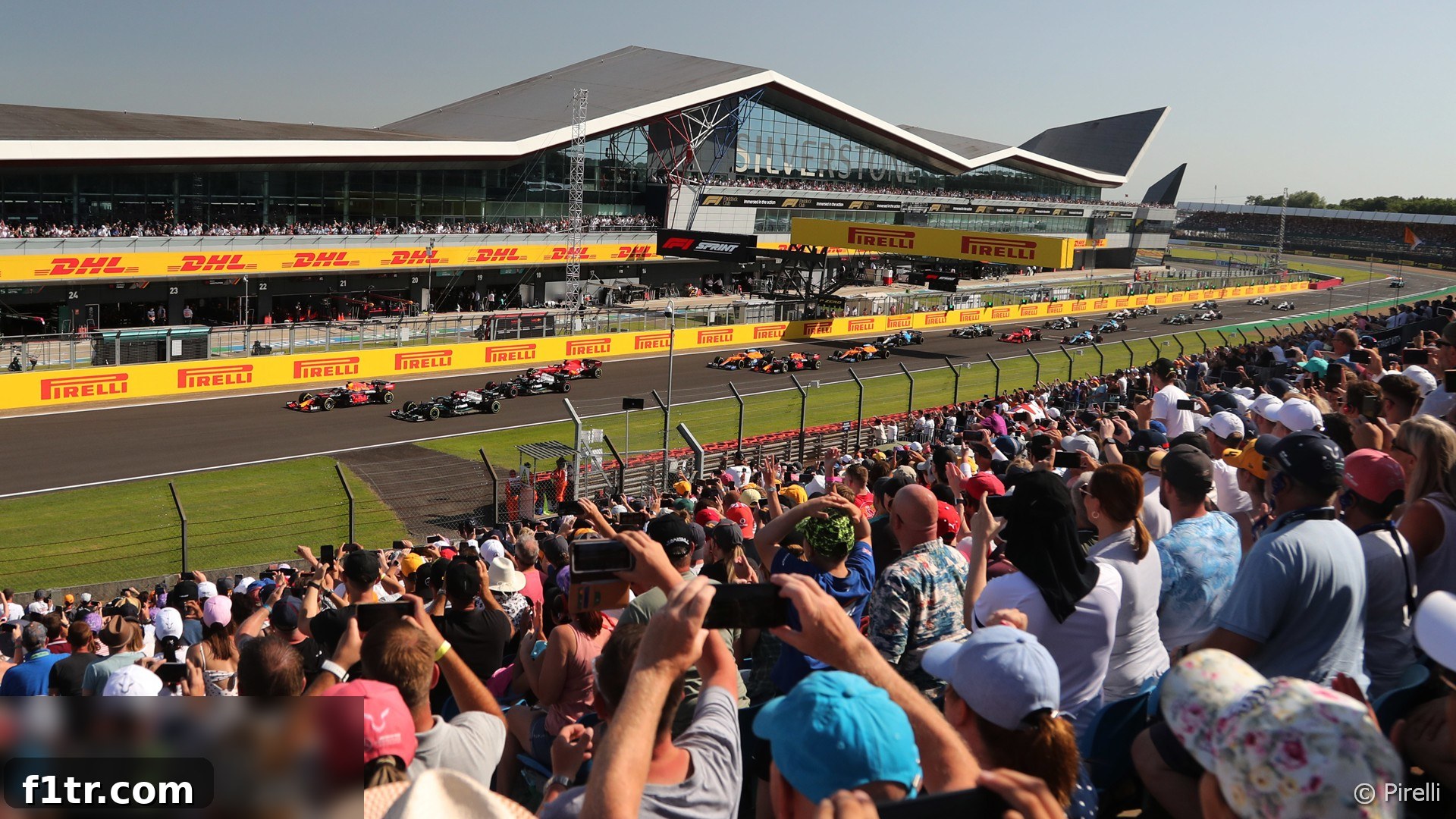
Traditionally, only grid penalties – a necessary evil to maintain sporting fairness – could alter the order established by pure pace. It should have come as no surprise to anyone within the corridors of F1 power that redefining pole position would be a tough sell to a global fanbase deeply invested in the sport’s history and conventional terminology. The implications were immediate and stark. In the inaugural sprint qualifying event at Silverstone, Lewis Hamilton secured the fastest lap in Friday qualifying, theoretically earning him the right to start first. Yet, in the Saturday sprint, he was famously overtaken off the line by Max Verstappen. With that, for the first time in F1 history, pole position for the Grand Prix had been ‘won’ not with a flying lap, but with a flying start – a race victory, rather than a qualifying achievement.
Following this contentious event, the architect of the sprint format, F1’s motorsport director Ross Brawn, was approached regarding the severed link to over a thousand Grands Prix worth of historical record. His response, while acknowledging the challenge, downplayed its fundamental nature. “Maybe that’s something we need to think about, if there’s some change in the nomenclature of what we’re doing,” Brawn replied. “Should Friday be the pole position? There’s things, like that, that we will talk about and discuss with the FIA and the teams.” While appearing open to discussion, his underlying message was clear: “But I think we can’t be held back by history. We need to respect history but we must never be held back by history.”
Brawn’s comments left little doubt that he perceived this issue primarily as one of ‘optics’ – a perception problem rather than a core structural flaw. The recent announcement regarding updated sprint race rules tragically bore out this viewpoint. It was striking that the FIA’s official statement noted only that the format changes would include “awarding pole position to the fastest driver in qualifying on Friday.” On the surface, this seemed an encouraging step towards addressing the historical anomaly. However, F1’s subsequent explanation of these new rules swiftly confirmed that the change was merely cosmetic, failing to tackle the root of the problem.
“The driver who tops Friday qualifying on a sprint weekend will be awarded pole position for statistical purposes,” it noted (emphasis added). “Sunday’s Grand Prix grid will still be determined by the results of the Saturday sprint.” This distinction is crucial and, unfortunately, deeply problematic. It fails to solve, or even truly acknowledge, the fundamental issue F1 faces with its sprint race pole position nomenclature. Across virtually every major motorsport discipline globally, ‘pole position’ unequivocally means first place on the starting grid for the primary race of the event. It is the position of honour from which a competitor begins the most significant competitive session.
At F1’s sprint events, the structure creates a unique conundrum: two distinct races are held – one on Saturday (the sprint) and the other on Sunday (the Grand Prix). Logically, therefore, there should be two pole positions, each pertaining to its respective race. This latest ruling from F1, however, only serves to muddy the waters further. Consider the first sprint event of 2022 at Imola: if Hamilton sets the quickest time in Friday qualifying, he will be credited with ‘pole position for statistical purposes’. He will also start the sprint race from the front. But if Verstappen then beats him off the line in the sprint race and crosses the finish line first, the Red Bull driver will, in practice, win pole position for the Grand Prix. Despite any social media posts F1 might generate about Hamilton being the ‘pole winner for statistical purposes’, the definitive answer to the question, ‘Who is on pole position for the Grand Prix?’ would still be ‘Max Verstappen’.
This convoluted approach risks making those in charge of Formula 1 appear either ignorant of basic racing terminology or, worse, so arrogant that they believe they possess a monopoly on the very language of motorsport. The distinction is not just academic; it has practical implications for driver records, historical accuracy, and fan engagement. Drivers aspire to earn pole position, and fans understand what that means. Diluting its definition diminishes the achievement and creates unnecessary confusion that detracts from the spectacle.
One of the most tedious aspects of sprint qualifying last year was the incessant chatter and debate surrounding who had taken the ‘real’ pole position, and what the true definition of pole position was in this new format. This recent semantic adjustment by F1 is not going to fix that. On the contrary, by creating a ‘statistical’ pole that doesn’t correspond to the actual race grid, it is almost certain to make the confusion and debate even more pronounced and frustrating for all involved.
Unfortunately, F1 seems to have convinced itself that semantics alone can provide solutions to its complex problems. This approach mirrors its earlier attempt to label the new Saturday events as ‘sprint qualifying’, seemingly hoping that people wouldn’t notice they were, in fact, races. The flaw in this idea became evident, leading to the eventual dropping of ‘qualifying’ from the name, even though these events still primarily serve the purpose of setting the grid for the Grand Prix. This linguistic sleight of hand fails to address the underlying structural issues and only serves to highlight a disconnect between official terminology and the reality on track.
A similar linguistic gymnastics was observed with the announcement of the first three-day pre-season test in Spain. F1 decreed it was merely a ‘shakedown’ and, crucially, would not be televised live. The honour of being the first true ‘test’ of the year was instead bestowed upon Bahrain, hosting the second three-day open session. Yet, from a regulatory standpoint, there is no discernible difference between these two events as far as the rule book is concerned. Both involve extensive running, data collection, and pushing the new cars to their limits. This arbitrary distinction creates unnecessary confusion and frustrates fans eager to witness the initial unveiling of the new machinery.
In light of these continuous semantic struggles, F1 has regrettably missed a crucial opportunity to genuinely fix one of the most unsatisfactory aspects of its sprint format. A clear, unambiguous definition of pole position, one that respects the sport’s unparalleled history while embracing its innovative future, remains elusive. Given this persistent oversight, perhaps the most positive news to emerge from the recent announcements is the confirmation that the planned increase from three sprint events to six will not proceed for the upcoming season. While not a solution to the underlying definitional dilemma, it will at least temper the scope for confusion and limit the frequency with which this pole position paradox plagues the sport’s narrative.
The integrity of F1’s records and the clarity of its terminology are vital for both its legacy and its future appeal. To maintain its standing as the pinnacle of motorsport, F1 must strive for consistency and transparency, ensuring that its rich history is honoured, not merely acknowledged “for statistical purposes.”
Further Reading: Formula 1 Commentary and Analysis
- The Shadow of Motorsport’s Worst Tragedy Hangs Over F1’s Latest Safety Debate
- F1 Got Lucky Three Ways. But Now It Has a Difficult and Urgent Problem to Solve
- Verstappen’s Overreaction Shows He Knows He Cost Himself the 2025 Title
- F1’s Sticking-Plaster Fix for Qatar Tyre Failures is an Embarrassment
- The FIA’s Stewards Grabbed the Chance to Correct Their Mistake – Unlike Last Time
Browse all comment articles