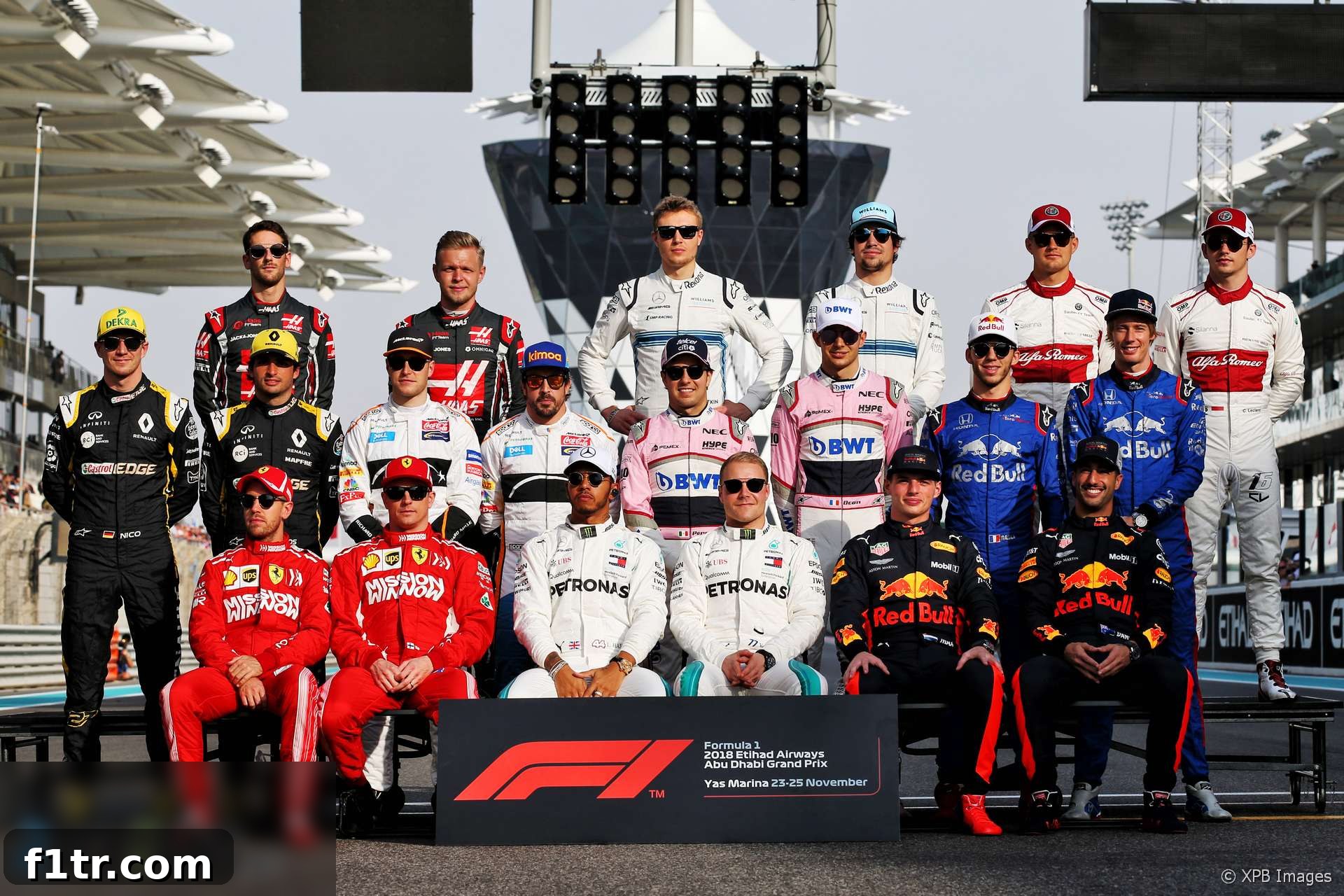
The dawn of the 2019 Formula 1 season brought with it an exciting reshuffle of driver line-ups across the grid, with all 20 coveted seats filled and ready for intense competition. This season promised a fresh dynamic, as all but two teams opted to change at least one of their drivers, introducing a blend of seasoned veterans, rising stars, and thrilling rookies. The departure of a world champion and five other familiar faces paved the way for a wealth of new talent to enter the sport, while two of F1’s least experienced drivers secured significant promotions to top-tier teams. This extensive overhaul set the stage for a compelling season, prompting widespread debate among fans and pundits alike: which teams boast the strongest pairings, and which might struggle with their choices?
Advert | Become a Supporter & go ad-free
Unpacking the 2019 Formula 1 Grid: A Deep Dive into Driver Line-ups
As the winter break concluded, the Formula 1 paddock buzzed with anticipation. The strategic decisions made by teams regarding their driver pairings would undoubtedly shape their fortunes in the upcoming campaign. From established champions seeking to extend their legacies to ambitious rookies eager to make their mark, the 2019 grid presented a fascinating tapestry of talent and potential. This article provides a comprehensive overview of each team’s driver line-up, followed by an in-depth analysis of their strengths, weaknesses, and the expectations riding on their shoulders.
The Evolving Landscape: Key Driver Moves and Departures
The 2019 season marked a significant turning point for several careers. Fernando Alonso, a two-time world champion, stepped away from Formula 1, leaving a void of experience but opening up opportunities for others. Esteban Ocon, Stoffel Vandoorne, Sergey Sirotkin, and Marcus Ericsson also moved on, making way for a wave of fresh blood. The new intake included highly anticipated talents like Charles Leclerc moving to Ferrari, Pierre Gasly to Red Bull, and an array of promising rookies such as Lando Norris, George Russell, and Alexander Albon. These changes not only affected individual careers but also fundamentally altered the competitive balance and team dynamics across the sport, ensuring that every team’s driver pairing would be scrutinised with intense interest.
Team-by-Team Breakdown: Who’s Driving for Whom in 2019?
Mercedes-AMG Petronas Motorsport: The Reigning Champions’ Duo
Mercedes – Lewis Hamilton, a five-time world champion, entered his seventh season with Mercedes, aiming to further cement his legendary status. His unparalleled talent and consistency make him the benchmark of the modern era. Alongside him, Valtteri Bottas embarked on his third consecutive year with the team. After a challenging 2018 season where he failed to win a race, Bottas faced immense pressure to perform, needing to prove his worth not just as a reliable points scorer but as a genuine challenger to Hamilton. The stability of this pairing, however, offered Mercedes a known quantity, banking on Hamilton’s brilliance and Bottas’s potential to rebound.
Scuderia Ferrari: A New Era with Youthful Ambition
Ferrari – Sebastian Vettel, a four-time world champion, prepared for another determined assault on the title, aiming to bring the coveted championship back to Maranello. For 2019, he was joined by Charles Leclerc, Ferrari’s least experienced newcomer in 28 years. Leclerc, a prodigious talent from the Ferrari Driver Academy, impressed greatly in his rookie season with Sauber. His promotion to Ferrari was a clear statement of intent from the Scuderia, signaling a shift towards nurturing young talent. This pairing presented a fascinating dynamic: the established, albeit sometimes error-prone, champion alongside the fiery, ambitious youngster with immense potential.
Aston Martin Red Bull Racing: Verstappen Leads a New Charge
Red Bull – Max Verstappen, the undisputed star of Red Bull, became the team’s clear leader following Daniel Ricciardo’s departure. Known for his aggressive driving and undeniable speed, Verstappen was poised to take on even greater responsibility. He gained a new team mate in Pierre Gasly, who, despite being older, had significantly less F1 race experience than Verstappen. Gasly’s promotion from Toro Rosso was a reward for his strong performances in 2018, but he faced the colossal task of matching Verstappen’s pace and integrating into a front-running team, all while dealing with the pressure of the Red Bull program.
Rich Energy Haas F1 Team: Stability with a Point to Prove
Haas – Uniquely, alongside Mercedes, Haas was the only team to have retained its 2018 line-up. Romain Grosjean and Kevin Magnussen teamed up again, offering valuable continuity. While the pairing provided a stable foundation, their 2018 season was marred by inconsistency, particularly from Grosjean, who often showed flashes of speed but was prone to costly errors. Magnussen, known for his robust racing style, delivered solid performances, but both drivers needed to significantly improve their consistency and maximise the team’s potential to truly challenge the midfield leaders in 2019.
Renault F1 Team: A Midfield Powerhouse Takes Shape
Renault – The French manufacturer made a bold statement by securing the services of race winner Daniel Ricciardo to partner last year’s top midfielder, Nico Hulkenberg. Ricciardo’s move from Red Bull sent shockwaves through the paddock, signalling Renault’s serious ambitions. This pairing instantly became one of the most talked-about, combining Hulkenberg’s consistent points-scoring ability and experience with Ricciardo’s proven race-winning talent and charismatic personality. It was widely regarded as Renault’s strongest driver line-up since their return to Formula 1 as a works team, carrying high expectations for a sustained challenge at the top of the midfield.
McLaren F1 Team: A Fresh Start with Emerging Talent
McLaren – It was all change at Woking for McLaren, as the team aimed to reverse years of underperformance. Carlos Sainz Jnr arrived from Renault, bringing solid experience and consistent performance, to team up with highly-rated rookie Lando Norris. This young and dynamic pairing represented a clear commitment to the future for McLaren, moving away from veteran drivers. Sainz, having proven his capabilities in the midfield, was expected to lead the charge, while Norris, a formidable talent from junior categories, faced the steep learning curve of Formula 1. Their combination promised excitement and a fresh perspective, but also carried the inherent risks of youth and inexperience.
SportPesa Racing Point F1 Team: Experience Meets Potential
Racing Point – Following the mid-season acquisition and re-branding of Force India, Sergio Perez began his sixth year with the team. Known for his race craft and ability to score points in challenging circumstances, Perez provided a crucial anchor of experience. He gained a new team mate in Lance Stroll, who moved from Williams. Stroll, whose career had been somewhat divisive, now had the opportunity to prove his mettle in a more competitive car. This line-up combined Perez’s proven track record with Stroll’s developing talent, creating a pairing that aimed for consistent points finishes and a solid presence in the midfield.
Alfa Romeo Racing (Sauber): The Return of a Fan Favorite and a New Face
Sauber – The team, now rebranded as Alfa Romeo Racing, boasted a compelling combination. 2007 world champion Kimi Raikkonen made a highly anticipated return to the team where his F1 career began, bringing immense experience, raw speed, and a legion of fans. He was partnered by promising rookie Antonio Giovinazzi, a Ferrari-backed driver making his full F1 debut. With Raikkonen’s guidance and Giovinazzi’s hunger, expectations were deservedly high at 2018’s most-improved team. This pairing offered an intriguing mix of world-class experience and fresh, Italian talent, aiming to continue the team’s upward trajectory.
Red Bull Toro Rosso Honda: A Mix of Redemption and Raw Talent
Toro Rosso – Few would have predicted 12 months prior that Toro Rosso’s line-up for 2019 would be Daniil Kvyat and Alexander Albon. Kvyat’s return to F1, having been dropped twice by the Red Bull system, was a remarkable story of redemption, offering him a chance to prove his maturity and pace. Albon, a rookie whose F1 chance came relatively late in his junior career, had impressed in F2 and was eager to seize the opportunity. This line-up was perhaps the most unpredictable, combining Kvyat’s controversial past with Albon’s unproven but exciting potential, all under the intense scrutiny of the Red Bull driver development program.
ROKiT Williams Racing: Hope for the Future Amidst Challenges
Williams – Another team with an all-new line-up, Williams faced significant challenges entering 2019. Robert Kubica made his long-awaited and emotional return to Formula 1 after an eight-year absence due to injury, a truly inspirational comeback story. He was joined by George Russell, a highly-rated rookie who arrived with both the F2 and GP3 titles under his belt. This pairing brought a blend of immense experience and raw, proven talent to a struggling team. While the drivers themselves were strong, the primary concern was whether the Williams car could provide them with a platform to demonstrate their true abilities and move off the back of the grid.
Advert | Become a RaceFans supporter andgo ad-free
Expert Analysis: Assessing the Strongest and Weakest Driver Pairings for 2019
The Front-Runners: Strongest Line-ups with Championship Pedigree
Picking the strongest line-up for the 2019 season was not as clear-cut as it had seemed in previous years. While the Mercedes pairing of Lewis Hamilton and Valtteri Bottas remained formidable, Bottas’s challenging second half of 2018 raised questions about his ability to consistently challenge Hamilton. Nonetheless, Hamilton’s sheer dominance and the team’s proven championship pedigree made them a top contender. Ferrari’s pairing of Sebastian Vettel and Charles Leclerc was undeniably exciting. Vettel’s experience combined with Leclerc’s raw, electrifying speed held immense potential for a championship fight. However, the youthfulness of Leclerc and the potential for internal team dynamics added an element of unpredictability. Another strong contender was Renault, whose acquisition of Daniel Ricciardo alongside Nico Hulkenberg created a genuinely potent and experienced duo, perhaps the strongest midfield pairing, capable of consistently scoring significant points and potentially challenging the top teams on their day.
Teams with Potential: Dark Horses and Emerging Talents
Beyond the established top teams, several line-ups promised to be dark horses or showed significant potential for growth. Sauber (now Alfa Romeo Racing) looked particularly strong with the return of Kimi Raikkonen alongside rookie Antonio Giovinazzi. Raikkonen’s vast experience and enduring speed, coupled with the team’s impressive development in 2018, suggested they could be consistent points scorers and a threat to the established midfield. McLaren’s all-new line-up of Carlos Sainz Jnr and Lando Norris, while young, brought a fresh perspective and genuine talent. Sainz had proven his mettle, and Norris was considered one of the most promising rookies in years. Their capacity to spring a surprise, especially if McLaren’s car improved, was considerable. Even Williams, despite their car struggles, had perhaps the greatest capacity to surprise purely on driver talent, with the inspirational return of Robert Kubica and the highly-rated George Russell. If the car could offer even a glimmer of performance, these drivers would maximise it.
The Biggest Questions: Weakest Line-ups and Drivers with Most to Prove
Conversely, some teams entered the 2019 season with driver line-ups facing significant questions and having the most to prove. The Haas drivers, Kevin Magnussen and Romain Grosjean, clearly under-performed in 2018, particularly Grosjean, who often lapsed into error-prone ways despite frequently demonstrating superior raw speed compared to Magnussen. Their inconsistent performances were a primary reason for Haas not capitalising on a generally strong car, making their stability for 2019 a double-edged sword: known quantities but with unaddressed issues. McLaren also began the season with two drivers who had never stood on an F1 podium, highlighting the team’s commitment to youth but also the immediate lack of proven top-tier F1 success within their pairing. However, the duo with arguably the most to prove was to be found at Toro Rosso. Daniil Kvyat’s return was a significant surprise, given his previous demotions from both Red Bull and Toro Rosso and his relatively lacklustre performance against Carlos Sainz in his last two F1 seasons. Partnering him was Alexander Albon, who, while deserving of his F1 chance, had a junior career that lacked championship silverware, leaving a question mark over his ultimate potential at the highest level. The pressure on Kvyat to deliver and Albon to adapt quickly was immense, making this pairing the most precarious on the grid. Ultimately, assessing these line-ups was a close call on both counts of perceived strength and weakness, highlighting the fascinating complexities of Formula 1 driver dynamics.
Community Verdict: What Fans Think of the 2019 Driver Line-ups
The RaceFans community engaged passionately in a poll to determine the strongest and weakest driver line-ups for the 2019 season. Their votes offer a fascinating snapshot of public opinion, revealing widespread agreement on some teams while highlighting diverse perspectives on others. Here are the results of the fan polls:
Which team has the STRONGEST driver line-up for 2019?
- Ferrari: Sebastian Vettel and Charles Leclerc (37%)
- Mercedes: Lewis Hamilton and Valtteri Bottas (29%)
- Renault: Nico Hulkenberg and Daniel Ricciardo (25%)
- Red Bull: Max Verstappen and Pierre Gasly (5%)
- Haas: Kevin Magnussen and Romain Grosjean (2%)
- Williams: Robert Kubica and George Russell (1%)
- Toro Rosso: Daniil Kvyat and Alexander Albon (0%)
- Sauber: Kimi Raikkonen and Antonio Giovinazzi (0%)
- Racing Point: Sergio Perez and Lance Stroll (0%)
- McLaren: Carlos Sainz Jnr and Lando Norris (0%)
Total Voters: 412
Which team has the WEAKEST driver line-up for 2019?
- Toro Rosso: Daniil Kvyat and Alexander Albon (63%)
- Williams: Robert Kubica and George Russell (11%)
- Racing Point: Sergio Perez and Lance Stroll (10%)
- McLaren: Carlos Sainz Jnr and Lando Norris (7%)
- Haas: Kevin Magnussen and Romain Grosjean (5%)
- Red Bull: Max Verstappen and Pierre Gasly (2%)
- Sauber: Kimi Raikkonen and Antonio Giovinazzi (1%)
- Mercedes: Lewis Hamilton and Valtteri Bottas (1%)
- Renault: Nico Hulkenberg and Daniel Ricciardo (0%)
- Ferrari: Sebastian Vettel and Charles Leclerc (0%)
Total Voters: 410
The community’s perception largely aligned with expert analysis regarding the top contenders, with Ferrari, Mercedes, and Renault dominating the “strongest” category. Ferrari’s new pairing of Vettel and Leclerc was a clear favorite, closely followed by the consistent might of Mercedes. Renault’s new super-midfield duo also earned significant recognition. Conversely, there was overwhelming consensus that Toro Rosso, with Kvyat’s redemption story and Albon’s debut, faced the toughest challenge, deemed the weakest line-up by a significant margin. Williams also featured prominently in this category, reflecting concerns about their car’s competitiveness despite the quality of their drivers. These results underscore the excitement and strategic importance of driver choices in Formula 1, fueling ongoing debates as the season unfolds.
Advert | Become a RaceFans supporter andgo ad-free
Related Formula 1 Debates and Polls
- What must Formula 1 fix with its new rules – and what should it leave unchanged?
- ADUO: Do F1 teams who fall behind deserve to get help to catch up?
- F1 is considering doubling its sprint races. Do you want more or fewer?
- Will this be a fight or a rout? 20 questions for the 2026 Formula 1 season
- Which Formula 1 team has the best-looking car – and the worst – for the 2026 season?
Browse all debates and polls