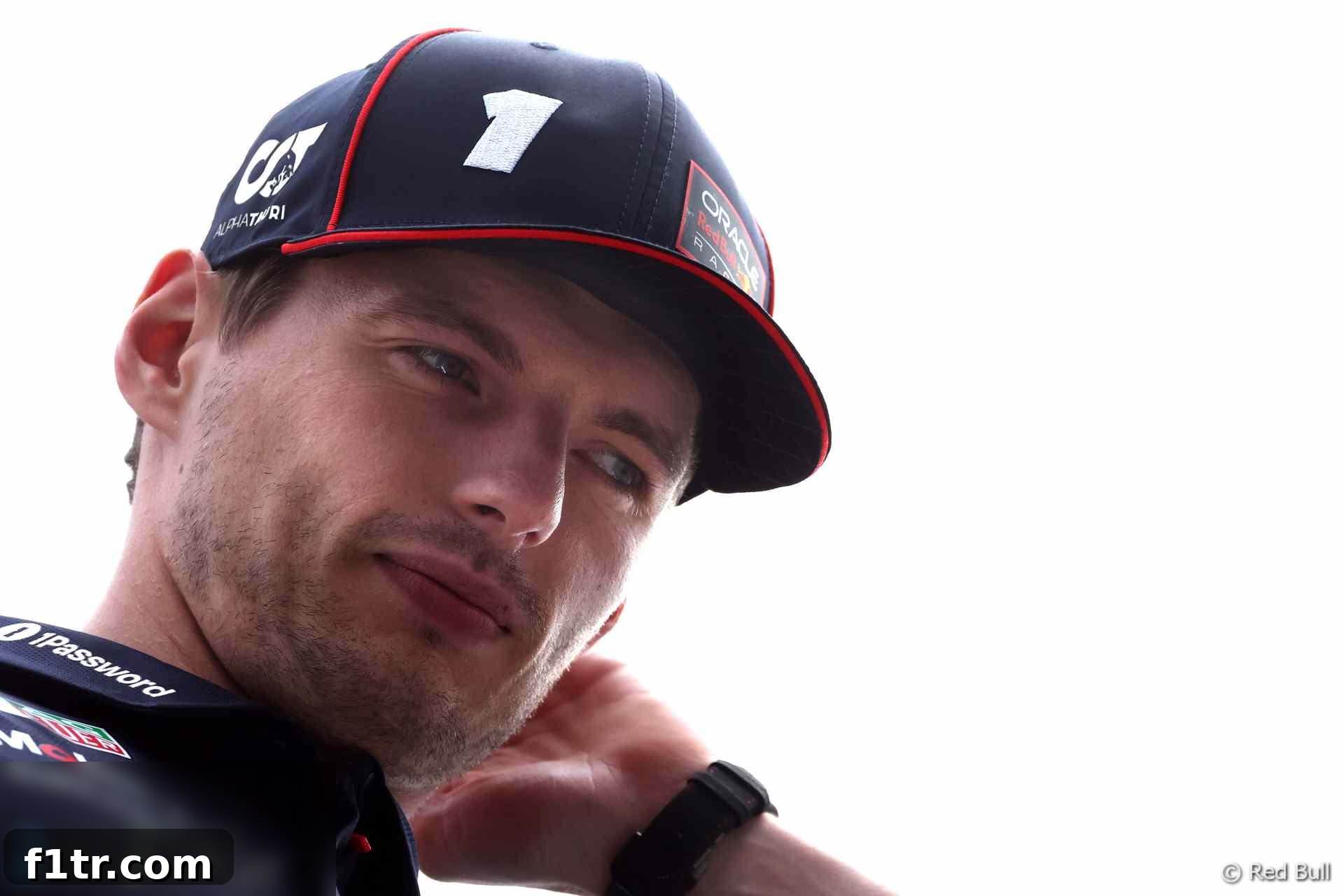
As the Formula 1 circus heads to the iconic Circuit Zandvoort for the much-anticipated Dutch Grand Prix, local hero Max Verstappen finds himself in an unusual position: expressing significant doubt about his chances. Despite the fervent support of his Orange Army, the reigning world champion anticipates a challenging weekend, fearing his Red Bull machine may not deliver its optimal performance on his home turf.
The unique layout of Zandvoort shares striking similarities with the recently visited Hungaroring, a track where Red Bull notably struggled. Both circuits are characterized by their narrow confines, making overtaking a formidable task, and feature a demanding series of constant-radius, medium-speed corners. These specific attributes, while thrilling for spectators, have historically proven to be less suited to the inherent strengths of the current Red Bull RB21 challenger.
The Hungaroring Struggles: A Precedent for Zandvoort?
Verstappen’s concerns are rooted in recent memory, particularly his performance at the Hungarian Grand Prix, which marked one of his most challenging weekends of the season to date. In Hungary, a circuit often dubbed ‘Monaco without the barriers’ due to its tight and technical nature, Verstappen qualified a disappointing eighth and subsequently slipped to ninth during the race. This uncharacteristic dip in form for the championship leader has cast a long shadow over the team’s expectations for Zandvoort.
“That was not a great weekend for us,” the reigning world champion candidly admitted following the Hungarian outing. “So I hope that we can be closer.” While hope remains a driving force, his subsequent predictions for the Dutch Grand Prix suggest a deep understanding of his car’s limitations on such tracks. “I don’t think this is going to be our best track in the remainder of the calendar,” he stated, managing expectations with a realism that reflects the competitive nature of modern Formula 1.
This candid assessment highlights a critical aspect of Red Bull’s current car development: its specific performance envelope. While the RB21 has demonstrated formidable pace on certain circuits, its adaptability across the diverse range of F1 tracks appears to be a key challenge. The medium-speed, high-downforce characteristics of Zandvoort, much like the Hungaroring, seem to expose a particular vulnerability that the team is actively working to address.
Red Bull RB21: A Tale of Two Track Types
Verstappen’s analysis of the RB21’s performance paints a clear picture. The car, which has carried him to two victories this year at Suzuka and Imola, unequivocally performs better on faster, more flowing circuits. Both Suzuka and Imola boast a prevalence of high-speed corners and straights where the RB21’s aerodynamic efficiency and raw power can be fully unleashed, giving Verstappen a distinct advantage.
“I would say naturally the more higher-speed corners in the layout, that should be a bit better for us,” he elaborated, outlining the car’s sweet spot. Conversely, he noted, “The low-speed and medium-speed is probably a little bit more difficult.” This distinction is crucial for understanding Red Bull’s strategic approach and development priorities for the remainder of the season. The technical demands of Zandvoort, with its iconic banked corners and a plethora of challenging medium-speed sections, fall squarely into the latter category, making it a genuine test for the team.
The banked corners, such as the famous Tarzanbocht, require a delicate balance between aerodynamic grip and mechanical traction, particularly challenging for a car that might struggle with transient handling in mid-speed transitions. The tight sections further emphasize the need for superior mechanical grip and quick changes of direction, areas where Red Bull might be seeking further optimization.
The Weather Wildcard: Chaos and Opportunity
Despite his pragmatic outlook, Verstappen also acknowledged a potential wildcard that could level the playing field or even swing fortunes in his favor: the unpredictable Dutch weather. “But then again, there might be some [wet] weather coming in as well,” he mused. “That always creates a bit of chaos so we just need to see what happens.”
Wet weather racing is notorious for introducing an element of unpredictability, often neutralizing inherent car performance differences and elevating driver skill to the forefront. Verstappen, known for his exceptional car control and aggressive driving style in challenging conditions, could potentially thrive in a chaotic, rain-affected race. A wet Zandvoort, with its narrow track and proximity to the North Sea, could indeed become a theatre of unpredictable drama, offering a glimmer of hope for a local triumph against the odds.
Rain would necessitate different car setups, tire strategies, and a heightened focus on avoiding mistakes. While it adds another layer of complexity, it also presents an opportunity for a driver of Verstappen’s caliber to truly shine and potentially overcome the RB21’s dry-weather limitations on this specific track layout. It’s a risk, but one that could equally become a reward.
Beyond Zandvoort: Learning and Development Amidst Regulation Changes
With only 10 rounds remaining in the current Formula 1 season before a drastically revised set of technical regulations takes effect next year, Verstappen’s focus extends beyond immediate race results. He emphasizes the importance of utilizing the remainder of this season to deepen his understanding of Red Bull’s current car, the RB21, before the new era of Formula 1 dawns. This pursuit of knowledge is not merely academic; it’s a strategic imperative for future success.
“We’ll just try to make the best of it every single race we can,” he affirmed, highlighting a relentless pursuit of improvement. “Try to see if there are opportunities and try to learn more about the car.” This continuous learning process is vital for the team. Driver feedback is an invaluable resource for engineers, providing crucial data points and subjective insights that analytical tools alone cannot replicate. Understanding the car’s nuances, its reactions to different setup changes, and its behavior in various conditions can inform the design and development philosophy for future vehicles.
While acknowledging that “of course next year will be very different with the car,” Verstappen remains “still very curious also to understand the current car a bit more and where we can find a bit of performance to make it a bit easier for ourselves.” This dedication to refining the existing package, even in the face of impending radical changes, underscores the meticulous approach required at the pinnacle of motorsport. Every bit of performance gained, every aspect of the car understood more deeply, contributes to the collective knowledge base of the team, potentially yielding benefits for the 2025 challenger.
The final races of the season thus become crucial testing grounds, not just for championship positions but for fundamental engineering and driving principles. The insights gained from pushing the current car to its limits, even on challenging tracks like Zandvoort, will feed directly into the design and development of the next generation of Red Bull F1 cars, ensuring a smooth transition and competitive readiness for the new regulatory landscape.
Anticipation Builds for a Challenging Home Grand Prix
As the Dutch Grand Prix weekend approaches, the atmosphere in Zandvoort will undoubtedly be electric, fueled by the passion of Max Verstappen’s home crowd. Despite the champion’s cautious optimism, the inherent challenges of the circuit, coupled with the Red Bull RB21’s specific performance profile, promise a fascinating spectacle. Whether it’s a battle against the clock in dry conditions or a masterclass in the rain, Verstappen’s determination to extract every ounce of performance and learn from every lap remains unwavering.
The Dutch Grand Prix is poised to be more than just another race; it’s a critical juncture for Max Verstappen and Red Bull Racing, offering a test of resilience, adaptability, and the relentless pursuit of perfection, both for the present season and the foundational knowledge required for future success.