Max Verstappen’s Defining Moment: How the 2018 Monaco Grand Prix Fueled a Champion’s Ascent
For many rising stars in Formula 1, a single race weekend can serve as a pivotal turning point, a crucible that forges resilience and refines talent. According to Red Bull Racing team principal Christian Horner, the 2018 Monaco Grand Prix was precisely such a moment for Max Verstappen, marking what he described as arguably the toughest weekend of the young Dutchman’s burgeoning career to date.
Monaco, with its unforgiving street circuit, narrow confines, and high stakes, has a reputation for either making or breaking reputations. For Verstappen, that particular weekend proved to be a harsh lesson in humility and the brutal consequences of even minor errors at the pinnacle of motorsport. It was a weekend that saw his then-teammate, Daniel Ricciardo, secure a memorable victory for Red Bull, while Verstappen himself endured a profound personal setback.
Advert | Become a Supporter & go ad-free
The Unforgettable Setback: Monaco 2018
The 2018 Monaco Grand Prix weekend began with immense promise for Red Bull Racing, who had a highly competitive car suited to the twisty, high-downforce demands of Monte Carlo. Expectations were high for both drivers, but especially for Verstappen, who was known for his aggressive driving style and exceptional car control. However, destiny had a different plan for him that year.
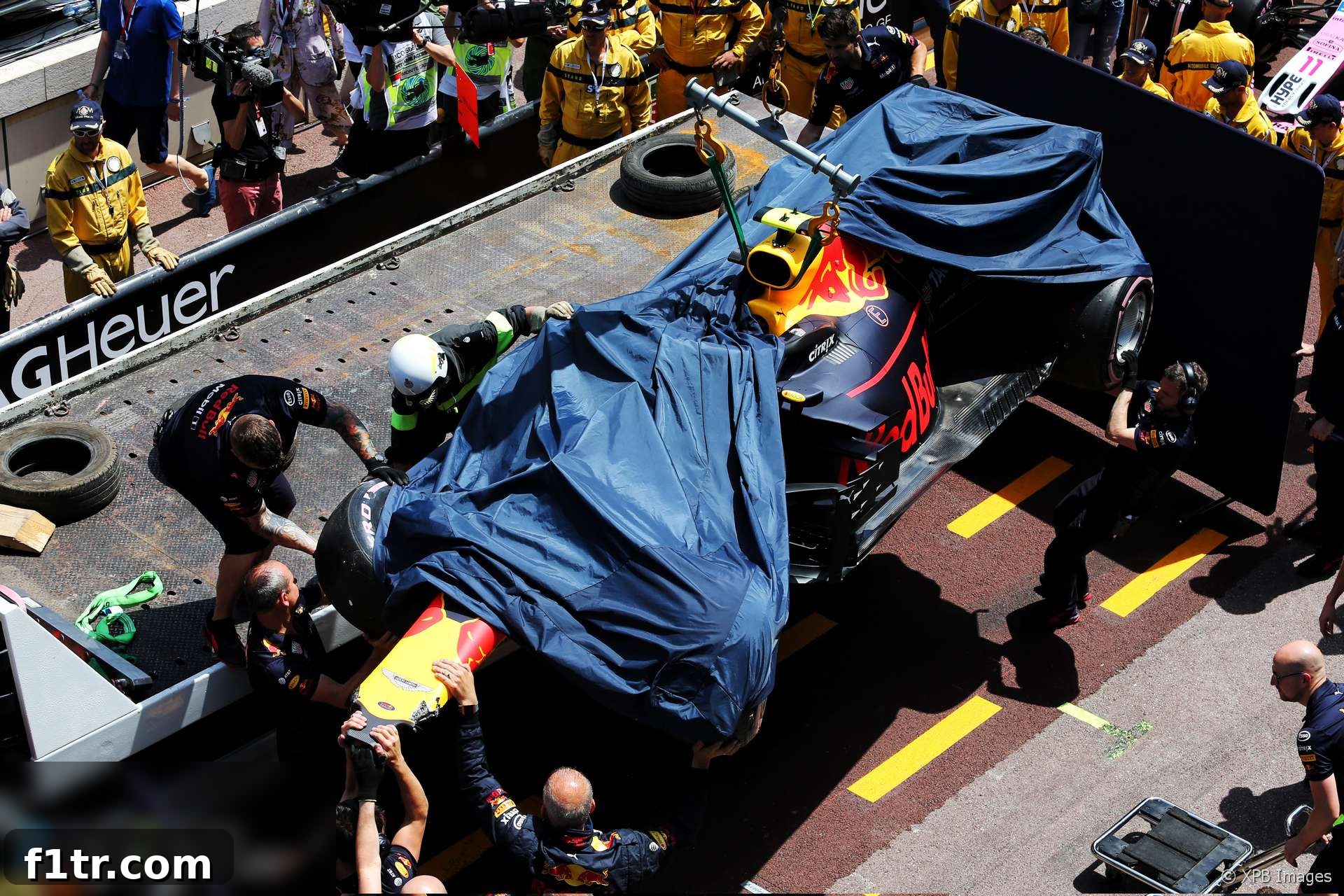
During the crucial final practice session (FP3) on Saturday morning, an overzealous moment saw Verstappen crash his RB14. The incident was significant enough to prevent him from participating in the all-important qualifying session, effectively sealing his fate for the race before it had even begun. Starting from the very back of the grid in Monaco, a circuit notorious for its difficulty in overtaking, meant that any hopes of a strong points finish, let alone a victory, were all but extinguished. While his teammate Ricciardo went on to deliver a masterful performance, battling through power unit issues to clinch a remarkable win, Verstappen was left to ponder his misfortune from the rear of the field.
Christian Horner reflected on the magnitude of that disappointment: “I think really if you wind the clock back 12 months it was probably the lowest weekend of his career, having a car capable of winning and crashing in FP3 and not being able to take part in qualifying. That was very tough for him and I think he went away from that race and he reflected hard on it.” Horner’s words highlight the profound impact this incident had on Verstappen, not just as a driver, but as an individual navigating the intense pressures of elite competition.
A Phoenix Rising: The Post-Monaco Transformation
What defines a true champion is not the absence of setbacks, but the ability to learn from them, adapt, and emerge stronger. For Max Verstappen, the bitter taste of Monaco 2018 proved to be an invaluable catalyst for growth. Horner observed a significant shift in Verstappen’s approach and performance in the races that followed. The disappointment didn’t break him; instead, it ignited a new level of focus and maturity.
“Since Montreal last year he’s really just stepped things up a gear and he’s been a phenomenal force whenever he’s been in the car,” Horner noted. The Canadian Grand Prix, held just two weeks after Monaco, seemingly marked the beginning of this transformative period. It was a race where Verstappen showcased a more controlled yet equally potent driving style, hinting at the profound introspection that had occurred. This newfound equilibrium allowed him to harness his raw speed with greater precision and consistency, translating into more robust performances and crucially, fewer unforced errors.
This period of evolution saw Verstappen consistently challenging at the sharp end of the grid, demonstrating an ability to extract the maximum from his machinery and often punching above the car’s weight. His aggressive edge remained, but it was now tempered with a deeper understanding of race management, tire preservation, and strategic patience. The impulsive decisions that occasionally characterized his earlier career began to recede, replaced by a more calculating and considered approach. This was not a change in his fundamental competitive spirit, but rather an enhancement of his already formidable skillset, forged in the fires of past disappointments.
Leading the Charge: Verstappen’s Maturing Influence
By the time of Horner’s comments (around May 2019, judging by the reference to “May 23, 2019” and “first five races”), Verstappen’s progression was evident in his championship standing. He found himself in a remarkable third position overall after the initial five races of the season, a testament to his consistent performances and ability to capitalize on opportunities. What made this achievement particularly noteworthy was that he was ahead of both Ferrari drivers, a team with significant resources and championship aspirations. This wasn’t merely about individual speed; it was about consistently delivering results against formidable opposition.
Horner’s praise went beyond just on-track performance, extending to Verstappen’s leadership within the team. “The way he started this season has been outstanding,” said Horner. “He’s overachieved in certain aspects and I think he’s got that roundedness of maturity and is very much leading the team development-wise.” This is a crucial indicator of a driver’s development from a pure talent to a comprehensive team leader. A driver who can effectively communicate feedback, guide technical direction, and motivate engineers becomes an invaluable asset, shaping the car’s evolution and the team’s overall trajectory. Verstappen’s active role in development highlights his deep understanding of the car and his commitment to pushing the team forward.
The “roundedness of maturity” that Horner described points to a holistic growth. It encompasses not just his driving, but also his temperament, his media interactions, and his ability to handle pressure both inside and outside the cockpit. Young drivers often enter F1 with immense speed but require time to develop these softer skills. Verstappen’s journey post-Monaco 2018 illustrates this accelerated development, transforming him from a prodigious talent into a well-rounded and influential figure within Red Bull Racing.
Advert | Become a RaceFans supporter andgo ad-free
The Indisputable Benefit of Experience
Comparing Max Verstappen in May 2019 to his equivalent self a year prior reveals a stark difference. “If you compare Max Verstappen May 23, 2019 to the equivalent time last year he’s evolved a tremendous amount and I think that’s again the benefit of experience as well,” Horner concluded. Experience in Formula 1 is not merely about accumulating race starts; it’s about internalizing lessons, refining instincts, and building a comprehensive mental database of scenarios and solutions. Each race, each challenge, each setback contributes to this invaluable repository.
For a driver like Verstappen, who entered F1 at an incredibly young age, this accumulation of experience is particularly impactful. The initial years are often a whirlwind of learning, pushing limits, and sometimes exceeding them. The 2018 Monaco incident, though painful at the time, provided a stark lesson that no amount of raw talent can substitute for measured judgment and strategic thinking. It forced a moment of reflection that solidified his resolve and refined his approach.
This maturation process is what separates the fleeting prodigies from the enduring champions. It’s the journey from being an incredibly fast driver to becoming a complete racing driver – one who understands not just how to extract speed, but also how to manage a race, conserve tires, work with engineers, and withstand intense psychological pressure. Verstappen’s post-Monaco evolution showcases how such challenging moments, when embraced and analyzed, can ultimately contribute more to a driver’s long-term success than an unbroken string of victories.
Conclusion: The Path to Dominance
The 2018 Monaco Grand Prix will forever be etched in the narrative of Max Verstappen’s Formula 1 career. What initially appeared as a profound low point became a powerful springboard for unprecedented growth. Christian Horner’s insights underscore the significance of this period, highlighting Verstappen’s transformation from an undeniably fast but occasionally impetuous talent to a mature, rounded, and highly influential team leader. His ability to turn a significant setback into a catalyst for self-improvement speaks volumes about his character and mental fortitude.
As Verstappen continued to evolve, his performances solidified his position not just as a race winner, but as a genuine championship contender. The lessons learned on the streets of Monaco, combined with relentless dedication and the benefit of experience, laid the groundwork for the dominant force he would become in the sport. This pivotal moment serves as a powerful reminder that sometimes, the greatest leaps forward are born from the deepest disappointments.
2019 F1 Season Insights
- Crying in the Melbourne car park at 2019 grand prix was my career low – Ocon
- McLaren Racing reports reduced £71 million loss in 2019
- Kvyat: Hockenheim podium last year was “my biggest achievement” so far
- How the FIA’s new encrypted fuel flow meter targets Ferrari’s suspected ‘aliasing’ trick
- “He smashed my office door”: 23 must-see moments from ‘Drive to Survive’ season two
Browse all 2019 F1 season articles