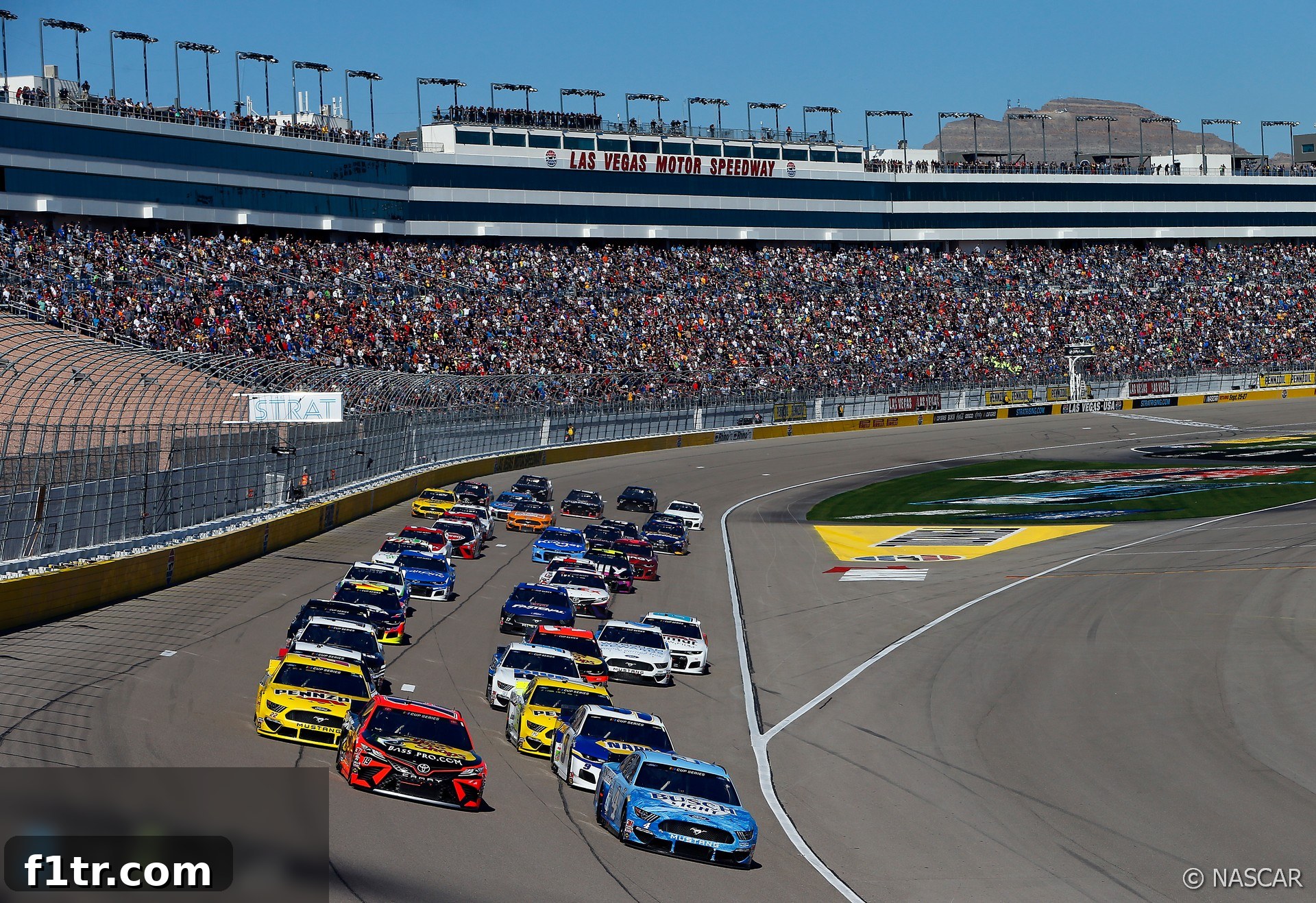
The world of motorsports, like many other global industries, has faced unprecedented challenges in recent times. As major sporting events grappled with postponements and cancellations, fans eagerly awaited signs of a return to the roar of engines. In a significant and highly anticipated development, America’s most popular motor sport series, NASCAR, confirmed its plans to resume competitive racing. This pivotal moment is scheduled for May 17th at Darlington Raceway, marking a cautious yet determined step forward for the sport. The initial return will see races held behind closed doors, prioritizing safety while offering a much-needed adrenaline fix for enthusiasts worldwide. Following the Darlington opener, NASCAR has committed to holding three additional Cup Series races by May 27th, signaling an ambitious and rapid re-establishment of its season.
This phased return by NASCAR, adhering strictly to health and safety guidelines without spectators present, reflects a broader trend across professional sports to adapt to new realities. The decision to kick off at Darlington, often referred to as “The Lady in Black” due to its challenging egg-shaped oval, adds a historic flair to the comeback. The track’s demanding nature is sure to test drivers from the very first green flag, promising intense action even in the absence of a live crowd. For teams, sponsors, and broadcast partners, this resumption provides a vital pathway to stability, reactivating an industry that supports thousands of jobs and entertains millions. The initial four-race stretch within a tight ten-day window underscores NASCAR’s determination to make up for lost time and deliver a robust schedule for its loyal fanbase, who will be tuning in from home, more engaged than ever.
Social Media Pulse: Motorsports in the Digital Age
In an era where digital engagement bridges gaps and keeps communities connected, social media has become an indispensable platform for motorsports. Drivers, teams, and fans alike have utilized platforms like Twitter and Instagram to share updates, engage in virtual competitions, and even contribute to global humanitarian efforts. These notable posts offer a snapshot of the vibrant activity within the racing community.
Big shunt for @LandoNorris after hitting @JD33Davison’s crashed car during practice for Sunday’s @IndyCar @iRacing Challenge at @IMS. “James hold brakes next time,” Norris tells him.#IndyCar #iRacing pic.twitter.com/FnbTNzfiWI
— RaceFans (@racefansdotnet) April 30, 2020
The surge in sim racing has been one of the defining stories for motorsports during the pause in live events. Young F1 star Lando Norris, known for his prowess both on track and in the virtual realm, was involved in a significant incident during practice for an IndyCar iRacing Challenge at the iconic Indianapolis Motor Speedway. The tweet from RaceFans highlights a moment of virtual chaos where Norris encountered James Davison’s crashed car, leading to a “big shunt.” This incident, widely shared and discussed, underscores the competitive nature of iRacing and how closely it mirrors the intensity of real-world racing. Drivers like Norris have become virtual racing celebrities, drawing massive viewership and new fans to the sport through their entertaining and often dramatic sim race performances, further cementing the legitimacy of esports as a vital part of the racing ecosystem.
Thanks @Jimms_fi for organising my home simulator together with @PlayseatGlobal @fanatec @ROGNordic 🔥#VB77 #simulator #esports @MercedesAMGF1
📸 @JanErikOlin pic.twitter.com/tAand2Pz9Y— Valtteri Bottas (@ValtteriBottas) April 30, 2020
The trend of top-tier drivers embracing sim racing extends to Formula 1, with Mercedes-AMG F1 driver Valtteri Bottas showcasing his impressive home simulator setup. Bottas’s tweet expresses gratitude to his partners Jimms_fi, PlayseatGlobal, Fanatec, and ROGNordic for helping him assemble a state-of-the-art simulator. This isn’t just about entertainment; for professional drivers, these advanced setups serve as crucial tools to maintain their razor-sharp reflexes, deepen their understanding of car dynamics, and practice various circuits from the comfort of their homes. The integration of high-performance racing peripherals like those from Fanatec, combined with ergonomic Playseat designs, ensures an immersive and realistic experience. Such posts not only offer a glimpse into the sophisticated world of professional sim racing but also inspire fans to get involved in virtual motorsports themselves, fostering a stronger connection between the physical and digital racing worlds.
From the team at McLaren HQ working on the @VentilatorU project…
👏👏👏👏👏👏👏👏👏👏👏👏#ThankYouThursday #ClapForKeyWorkers pic.twitter.com/QGCJfsOpMi
— McLaren (@McLarenF1) April 30, 2020
Beyond the racetrack, the motorsports community has also demonstrated remarkable social responsibility and innovation. McLaren, one of Formula 1’s most iconic teams, highlighted their contribution to the “VentilatorU” project, a vital initiative aimed at producing medical ventilators during a period of critical need. This tweet, posted on a #ThankYouThursday and featuring the #ClapForKeyWorkers hashtag, showcased the dedicated team at McLaren HQ, applying their engineering expertise to a humanitarian cause. The broader “Project Pitlane” saw several F1 teams pooling resources and knowledge to aid in the fight against the global health crisis, repurposing their advanced manufacturing capabilities for medical equipment. This selfless effort not only garnered immense public admiration but also demonstrated the incredible adaptability and social conscience inherent within the high-tech world of Formula 1, proving that their skills extend far beyond just building fast cars.
- Find more official F1 accounts to follow in the F1 Twitter Directory
Advert | Become a RaceFans supporter andgo ad-free
Key Motorsports Headlines: Navigating the Path Forward
As the motorsports world charts its course through these dynamic times, a series of crucial developments and discussions are shaping the immediate future of major racing series. Here’s a deeper look into the latest news and insights impacting Formula 1, NASCAR, and the broader racing landscape:
Advert | Become a Supporter & go ad-free
NASCAR announces revised May schedule as racing returns beginning at Darlington Raceway (NASCAR)
“NASCAR is scheduled to make its return to racing on Sunday, May 17, at Darlington Raceway with a NASCAR Cup Series race that will serve as the first of seven races over an 11-day span at two different race tracks throughout May, the sanctioning body announced Thursday.”
Further elaborating on the highly anticipated return, NASCAR officially detailed its revised May schedule, confirming that racing would recommence at Darlington Raceway on May 17th. This marks the beginning of an intensive period, featuring seven Cup Series races across two different venues within just an 11-day window. The sanctioning body’s swift and decisive action highlights its commitment to delivering a robust championship season for fans. This compressed schedule not only aims to recover lost events but also to provide continuous, high-octane entertainment, leveraging the unique challenges and excitement of back-to-back race weekends. The logistics of executing such a condensed calendar, while adhering to strict health protocols, will undoubtedly test the resilience and adaptability of every team and official involved, making this comeback truly historic.
Hungarian GP date ruled out by government (Racer)
“If the race in Hungary is to take place, it will now have to be after August 15 due to a government announcement that events with more than 500 participants cannot be held before that date. F1 will need more than 1000 people in order to host a grand prix.”
The challenges facing Formula 1’s revised calendar were brought into sharp focus with the announcement from the Hungarian government. The ruling, which prohibits events with over 500 participants until after August 15th, effectively ruled out the Hungarian Grand Prix’s original summer slot. This decision significantly impacts F1’s logistical planning, as a typical Grand Prix weekend requires well over 1,000 personnel, encompassing team staff, FIA officials, media, and support crews. The postponement of events like the Hungarian GP underscores the complex web of national regulations and health advisories that F1 must navigate. It forces the sport to explore later dates in the year or even consider alternative venues to construct a viable 2020 season, adding another layer of uncertainty to an already fluid situation.
Formula 1 has a 50-50 chance of going racing, says Agag (Reuters)
“‘We could race in Britain. We are talking with some tracks in the UK to do it and maybe even more than a race,’ he said, mentioning Brands Hatch, Silverstone and Donington Park as potential venues.”
Alejandro Agag, a prominent figure in motorsports and founder of Formula E, offered a candid assessment of Formula 1’s prospects, stating a “50-50 chance of going racing” in 2020. This stark evaluation reflects the immense hurdles faced by the pinnacle of motorsport. Agag’s comments also shed light on potential strategies, including the possibility of hosting multiple races in Britain. He specifically mentioned iconic UK tracks like Brands Hatch, Silverstone, and Donington Park as viable venues. The idea of “ghost races” – events held without spectators – at a limited number of circuits has gained traction as a practical solution. Such an approach could help F1 fulfill its broadcast obligations and crown a champion, even if the traditional globe-trotting calendar proves unfeasible. This innovative thinking highlights the industry’s determination to adapt and survive during these unprecedented times, with figures like Agag pushing for creative solutions.
F1 teams can’t be ‘selfish’ with new budget-cap, says Otmar Szafnauer (Sky)
“Szafnauer explained that a budget-cap of around $130m would ‘suit Racing Point to a tee’ and that they would be able to ‘operate there very easily’ – although accepted that many of the bigger teams might oppose.”
The long-debated Formula 1 budget cap continues to be a contentious topic, with Racing Point team principal Otmar Szafnauer weighing in on the necessity for teams to avoid “selfishness” during these critical negotiations. Szafnauer articulated that a budget cap set around $130 million would be perfectly suited for Racing Point, allowing them to “operate there very easily.” The primary goal of the budget cap is to create a more level playing field, reducing the vast spending disparities between the sport’s powerhouse teams and its smaller independent outfits. While teams like Racing Point stand to benefit significantly from a lower cap, major constructors such as Mercedes and Ferrari, accustomed to much higher budgets, have expressed concerns. The current economic climate has intensified calls for a stricter cap, as it’s viewed as essential for the long-term sustainability and competitiveness of the sport, ensuring that F1 remains financially viable for all participants and not just the elite.
We always endeavour to credit original sources. If you have a tip for a link to feature in the next RaceFans round-up please send it in via the contact form.
Advert | Become a RaceFans supporter andgo ad-free
Comment of the Day: Recalling the Glory of Long Beach
Bringing a touch of nostalgia to the forefront, today’s featured comment comes from Obster, who fondly remembers attending the Formula 1 Grand Prix at Long Beach:
I was there in 1981 – my first GP race attending-and the crowds on race day were enormous-just unbelievable. It was a real scene.
“The Toyota Grand Prix of Long Beach”. Canon cameras had towers above the track with lenses you could hook up to. Wonderful event. Sorry to see F1 go from there.
Obster
Obster’s vivid recollection of the 1981 Long Beach Grand Prix paints a picture of a vibrant and unforgettable event. Describing the crowds as “enormous-just unbelievable,” it highlights the incredible atmosphere that once permeated the streets of Long Beach when it hosted Formula 1. The “Toyota Grand Prix of Long Beach” was more than just a race; it was a cultural spectacle, as evidenced by Obster’s mention of “Canon cameras had towers above the track with lenses you could hook up to.” This detail underscores the event’s stature and the technological marvels of the era. The Long Beach circuit, a challenging street course, was a fan favorite and a true test for drivers. Its departure from the F1 calendar left a void for many North American fans, but the memories of its “real scene” and “wonderful event” continue to be cherished, serving as a reminder of F1’s rich history in the United States before it transitioned to hosting IndyCar events.
Community Corner: Happy Birthday!
A very special happy birthday goes out to Ivan today! We hope you have a fantastic day filled with joy and celebration.
If you’d like to receive a birthday shout-out in our round-up, simply let us know your special day via the contact form or by adding your details to our list here.
On This Day in F1: Remembering a Legend
- On this day in 1994 Ayrton Senna was killed in a crash during the San Marino Grand Prix
May 1st holds a somber significance in the annals of Formula 1 history, marking the tragic day in 1994 when the legendary Ayrton Senna lost his life during the San Marino Grand Prix at Imola. This devastating accident, occurring on the notoriously fast Tamburello corner, sent shockwaves through the motorsports world and beyond. Senna, a three-time Formula 1 World Champion, was revered for his extraordinary talent, unparalleled commitment, and captivating charisma. His death, alongside Roland Ratzenberger’s fatal crash the day before, prompted a profound re-evaluation of safety standards in Formula 1, leading to significant reforms that have undeniably saved countless lives in the decades since. Senna’s legacy transcends his statistics; he remains an icon of speed, passion, and an unwavering pursuit of perfection. Every year on this day, the motorsports community pauses to remember a driver whose brilliance, courage, and ultimate sacrifice forever changed the sport, cementing his place as one of the greatest and most influential figures in its history.