Expanding Formula 1’s Points System: Why a Top 12 Format is Gaining Traction
Formula 1 stands at a pivotal moment, with the debate over its long-standing points system intensifying. Team principals across the grid are increasingly vocal about the need to extend the points distribution beyond the current top 10 finishers, with a move to reward up to 12th place gaining significant support. This discussion stems from a noticeable shift in the sport’s competitive landscape, where the gaps between teams have tightened considerably, making strong performances outside the top tier often go unrewarded.
The F1 Commission, the sport’s key legislative body, recently deferred a decision on this very matter. The existing system, which allocates points to the top 10 drivers, has been in place since 2010. However, the prevailing sentiment among many stakeholders is that this structure no longer accurately reflects the fierce competition present throughout the entire grid.
The Evolving Landscape of F1: A Grid Closer Than Ever
A primary driver for the proposed points system overhaul is the undeniable reality of a much more competitive Formula 1. Long gone are the days of clear “backmarkers” who struggled to keep pace with the rest of the field. Modern F1, influenced by refined regulations, stricter budget caps, and a higher overall standard of engineering and driver talent, boasts a grid where even the smallest teams are capable of impressive feats.
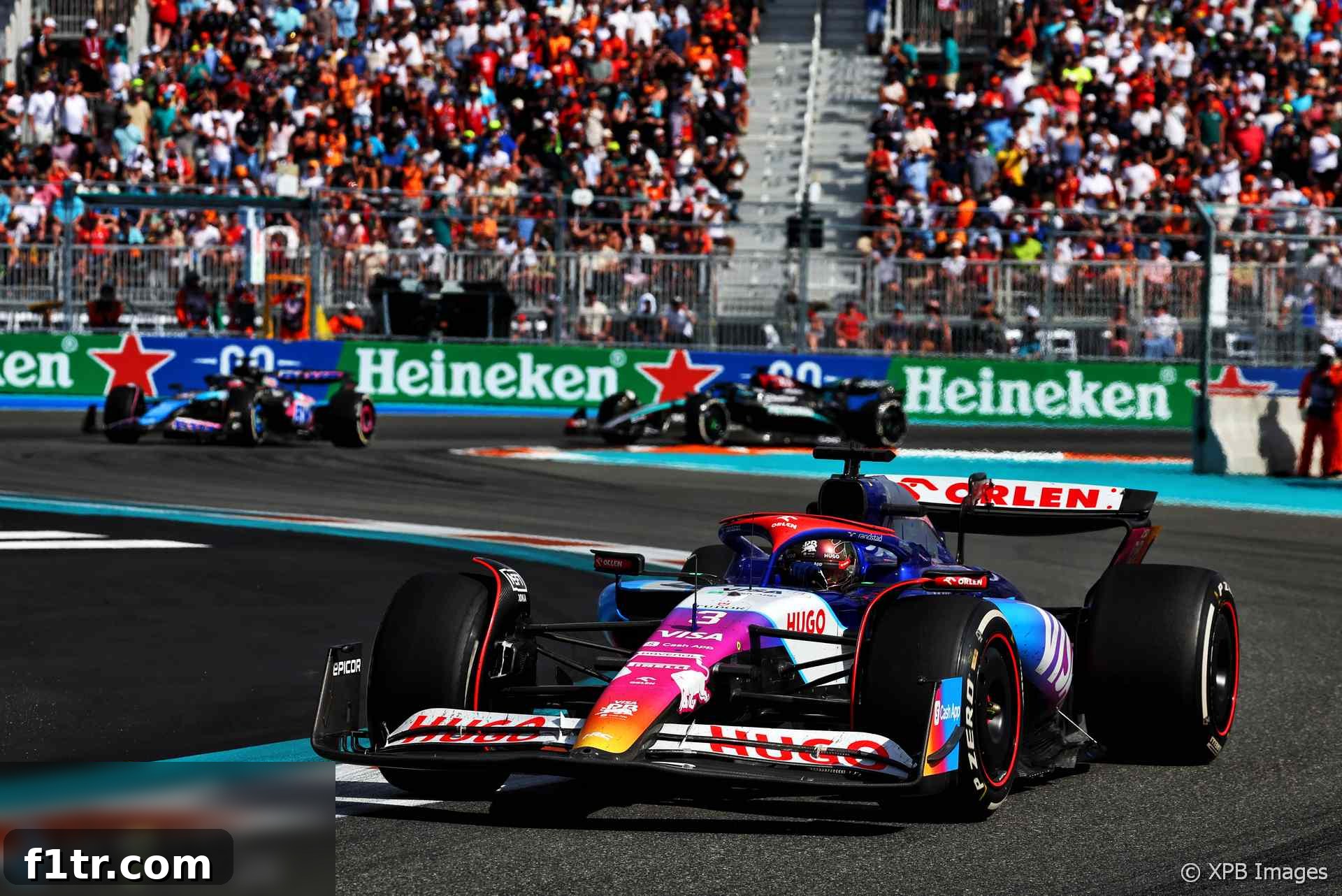
Laurent Mekies, Team Principal for RB, highlighted this transformation unequivocally. “We think it’s a good idea to increase the points distribution, mainly because there is no back markers any more,” Mekies stated. He emphasized the presence of “10 very strong teams,” underscoring how often the midfield battle sees “10 cars fighting within one tenth [of a second], two tenths.” This level of intense competition, he argues, deserves broader recognition.
Indeed, the current season serves as a compelling example. Races have consistently seen a high number of finishers – typically no fewer than 17 drivers completing each Grand Prix. Under the current system, this means at least seven drivers per race, and often more, deliver strong, error-free performances yet receive no points for their efforts. This scenario is becoming increasingly common, prompting a critical re-evaluation of how success is acknowledged in Formula 1.
Valuing Midfield Excellence: A New Definition of ‘Victory’
For teams battling outside the traditional top-five, securing 11th or 12th place can feel like a monumental achievement. Mekies articulated this sentiment powerfully, noting that for teams like RB, “Our pole position is P11, currently. Our win is P11 if nothing happens at the front, and the reliability of the guys at the front has been… extraordinary.” This illustrates a fundamental disconnect: what constitutes a ‘victory’ or a ‘strong performance’ for a midfield team isn’t necessarily reflected in the official points tally.
Extending the points system would effectively formalize this recognition. It would assign tangible value to those hard-fought positions just outside the current top 10, bringing a new layer of meaning to strategic decisions, overtakes, and defensive driving throughout the entire 50-70 laps of a race. For teams and their partners, points represent more than just championship standing; they signify success, progress, and a return on investment. Giving points to 11th and 12th place would directly acknowledge the dedication and effort required to achieve these positions, boosting morale and offering a clearer metric of performance for all participants.
Fan Engagement and Understanding: Making Every Position Count
Beyond the teams themselves, the proposed change also aims to enhance the fan experience. Mekies expressed a desire to better communicate the excitement of the midfield battles to a broader audience. “We think it’s a fantastic fight, we want to explain it to the fans. We want to explain it to our partners and we think that points will help to give value to that P11, which today for us is a victory.”
In an era where Formula 1 is actively pursuing new audiences, especially younger demographics, simplifying the understanding of success across the grid is crucial. A system where more positions yield points makes the entire race more engaging, as every single overtake, every defensive maneuver, and every strategic gamble could contribute to a tangible outcome. Spectators, particularly those new to the sport, would find it easier to follow the narrative of a race when performances further down the order are visibly rewarded.
Aston Martin team principal Mike Krack echoed this sentiment, suggesting that a modern fanbase might be more open to such changes. “We have a new fanbase also. We are not any more the purists that we were for these many years. So I think it is really time to have a look at this.” This highlights an acknowledgment that F1 must evolve with its audience, adapting traditions where necessary to maintain relevance and excitement.
Team Principals Weigh In: Diverse Voices for Change
The consensus among team principals appears strong, though with sensible calls for careful deliberation.
Laurent Mekies on Fairer Distribution
Mekies firmly believes that the current level of competitiveness necessitates a broader points distribution. While open to discussion on the exact number – “Whether you go to P12, to P14, to whatever, we can discuss” – he asserts, “I think where the level of competitiveness of the teams is so high nowadays that the fight in the midfield, the fight at the back will also deserve some points.” This highlights the underlying principle: points should be a truer reflection of competitive performance across the full spectrum of the grid.
Mike Krack on Modernizing for a New Audience
Krack’s perspective emphasizes the importance of adapting to F1’s evolving fanbase. However, he also injects a crucial note of caution against impulsivity. While recognizing the need for adjustment, he stressed that the decision shouldn’t be solely based on a single year’s competitive dynamics. “We should obviously not be too much influenced by how it is this year, because next year can be different than the year after. I think it was a good consensus in the F1 Commission to say we want to make an adjustment, but we should not rush it, because we don’t want to change it again later.” This underlines the desire for a well-considered, long-term solution.
Zak Brown on Maximizing Race Action
McLaren Racing CEO Zak Brown offered an even more expansive vision, suggesting that “there could be an argument made for all” finishers receiving points, akin to series like IndyCar. While acknowledging this would be “quite an overhaul,” he passionately advocates for the principle behind it. Brown highlighted a significant strategic implication of the current system: “Sometimes cars will pull in, save some stuff on their car, wear and tear, because they’re out of the points. This would eliminate that.”
By making every position count, drivers would be incentivized to push to the very end, leading to more on-track action and fewer early retirements purely for component preservation. “If a quicker car gets shuffled to the back, every pass counts. So I think there’s an argument you could make for the entire grid. Certainly no less than 12,” Brown concluded. This perspective emphasizes how an expanded points system could dramatically improve the spectacle of every Grand Prix, ensuring maximum effort from all competitors.
A Measured Approach: Avoiding Hasty Decisions
While the momentum for change is palpable, the F1 Commission’s decision to defer a ruling on the points system reflects a responsible approach. There’s a shared understanding that any modification to such a fundamental aspect of the sport requires thorough consideration to ensure it is robust, fair, and future-proof. Changing the points system has significant implications for driver motivation, team strategies, championship standings, and even sponsor relations.
The history of Formula 1’s points systems is one of evolution. Since its inception in 1950, F1 has had several different scoring structures, adapting to different eras and competitive landscapes. The shift from rewarding the top six to the top ten in 2010 was a notable adjustment to a larger grid and increased reliability. This latest proposed change, therefore, isn’t unprecedented but rather a continuation of F1’s adaptability. The consensus is that the next iteration must be well-thought-out to avoid repeated adjustments, allowing the sport to settle into a new, improved framework.
Potential Impacts and Broader Implications
Extending the points system would have several positive ramifications. For the Constructors’ Championship, it would allow more teams to regularly register points, adding more intrigue to the battles further down the standings. This could provide vital financial incentives and recognition for smaller teams, potentially leading to increased investment and even closer competition over time. For drivers, knowing that a P11 or P12 could earn points would boost morale, encourage sustained effort, and provide more detailed metrics of their season’s performance.
Furthermore, it aligns with F1’s broader goals of making the sport more accessible and exciting. In an era of record viewership and growing global appeal, ensuring that all aspects of the racing weekend are compelling is paramount. A revised points system would be a tangible step towards recognizing the collective effort of all ten teams and twenty drivers, reflecting the current golden age of Formula 1 where competitive spirit thrives across the entire field.
Conclusion: The Road Ahead for F1 Points
The conversation around expanding Formula 1’s points system is more than just a procedural discussion; it’s a reflection of the sport’s health and competitive intensity. With team principals united in the belief that the current top-10 format no longer fully captures the grit and talent displayed by all competitors, especially those in the fiercely contested midfield, a change seems inevitable.
The arguments put forth by Laurent Mekies, Mike Krack, and Zak Brown are compelling, highlighting benefits ranging from fairer reward distribution and enhanced team morale to increased fan engagement and more dynamic on-track action. While the F1 Commission wisely advises a cautious approach to ensure the longevity of any new system, the overwhelming sentiment leans towards an expansion. The goal is clear: to ensure that Formula 1’s scoring accurately represents the incredible spectacle unfolding on track, making every position truly count and celebrating excellence wherever it is found across the grid. The future of F1’s points system appears set for a necessary and exciting evolution, likely embracing a broader recognition of its competitive depth.
Formula 1
- GT driver killed in multi-car crash at Nurburgring Qualifiers
- Should F1 change tracks or racing guidelines to tackle dangers in 2026 rules?
- Controversies, Norris, Newey and more: Five new motorsport books reviewed
- One of F1’s greatest races happened 15 years ago today. Or did it?
- “Overtaking is overtaking”: Domenicali denies F1’s yo-yo racing is “artificial”
Browse all Formula 1 articles