Alexander Albon Reflects on “Disappointing Sixth” at Thrilling German Grand Prix
The 2019 German Grand Prix at the iconic Hockenheimring was a race defined by chaos, unpredictable weather, and dramatic twists, leaving drivers and teams alike grappling with its extraordinary challenges. Amidst this pandemonium, Toro Rosso driver Alexander Albon delivered a remarkable performance, ultimately securing a sixth-place finish. However, as the checkered flag fell, Albon expressed a peculiar blend of satisfaction and frustration, labelling his result a “slightly disappointing sixth.” His candid assessment stemmed from a critical moment during a restart, where a forced attempt to overtake then-leader Lewis Hamilton significantly impacted his race trajectory and potential for an even stronger outcome. This race, which saw numerous incidents and strategic gambles, became a pivotal learning experience for the rookie, particularly regarding wet-weather racing, a domain he had no prior Formula 1 experience in.
A Race of Highs and Lows: Navigating the Hockenheim Chaos
The Hockenheimring, steeped in motorsport history, presented a unique and formidable test during the 2019 German Grand Prix. Changing weather conditions, oscillating between heavy rain and a drying track, turned the event into a strategic lottery and a test of nerve for every competitor. From the outset, Alexander Albon demonstrated exceptional composure and adaptability, characteristics that would define his rookie season. Starting from a modest grid position, he swiftly found his rhythm in the treacherous conditions, expertly navigating the spray and grip variations. His performance during the initial wet phases was particularly commendable, as he not only kept his Toro Rosso machine on track but steadily climbed through the field, showcasing a maturity beyond his years and limited F1 experience. The team’s strategic calls were equally sharp, ensuring Albon was consistently in contention, allowing him to maintain a strong pace and challenge more established competitors. It was a testament to both driver and team that, for a significant portion of the race, Albon found himself comfortably within the top five, an enviable position for the Faenza-based squad.
The Critical Restart and the Hamilton Encounter
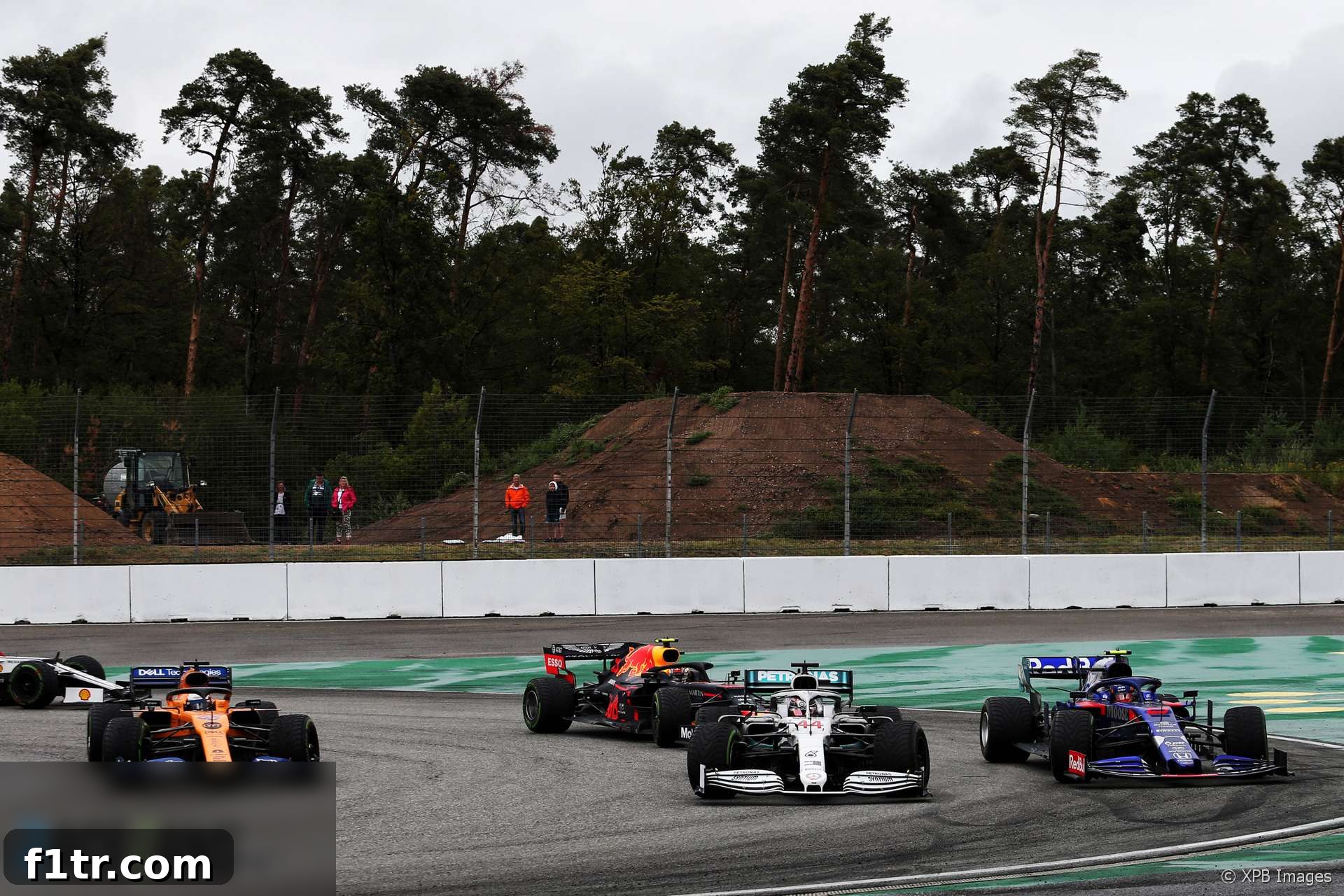
The fluidity of the German Grand Prix meant that safety car periods and subsequent restarts were inevitable, each one injecting a fresh wave of tension and opportunity. It was during one such critical restart that Alexander Albon’s race took an unforeseen turn. Having diligently worked his way into a genuinely competitive position, Albon found himself in close proximity to the reigning world champion, Lewis Hamilton, who was at that point struggling with his Mercedes in the tricky conditions. As the safety car peeled into the pits, signalling the race resumption, Albon was presented with a split-second decision that, in hindsight, he reflects upon with a touch of regret. “I got caught with Lewis, actually, the last person I expected!” Albon recounted, highlighting the surprise of being in a direct duel with the Mercedes driver. He elaborated on the peculiar circumstances that led to his attempt, stating, “I didn’t want to overtake him but I was kind of forced in a position that I had to try it.” This remark encapsulates the intense pressure drivers face in such moments, where the flow of the race and the actions of those around you can dictate your immediate course of action, even if it deviates from an ideal strategy.
The ‘forcing’ Albon referred to likely arose from a combination of factors: perhaps a momentary lapse from Hamilton, or Albon being caught in a slipstream or a specific racing line that committed him to an overtaking manoeuvre. In the wet and chaotic environment of Hockenheim, such decisions are made in fractions of a second, without the luxury of extensive deliberation. Unfortunately for Albon, the attempt to capitalize on Hamilton’s momentary vulnerability did not pay off. The ensuing battle, though brief, resulted in Albon losing valuable momentum and several positions. This incident was immediately followed by a wave of cars on slick tyres, which had strategically pitted during the safety car period, gaining a significant advantage as the track began to dry. “We lost a bit of ground and of course the guys on the slick tyres undercut us quite severely,” Albon explained, perfectly summarizing the double blow he suffered: losing positions in the skirmish and then being outmanoeuvred by rival teams’ superior tyre gambles. What was once a promising top-five contention quickly regressed, leaving a bitter taste despite the respectable finish.
The Paradox of a “Slightly Disappointing Sixth”
For a rookie driver in a midfield team like Toro Rosso, a sixth-place finish in a Formula 1 Grand Prix is, under normal circumstances, a cause for immense celebration. It represents a significant points haul and a strong testament to a driver’s capability. Yet, Alexander Albon’s feelings post-race were far from jubilant, illustrating the high standards he holds for himself and the perceived lost opportunity. “But to be honest it’s a weird feeling. It’s a slightly disappointing sixth position,” he admitted, a statement that might perplex casual observers but resonates deeply with the competitive mindset of an elite athlete. This paradox stems directly from the superior pace and position he held for a substantial portion of the race. Running consistently in the top five, and often looking genuinely capable of challenging for a podium finish had the race unfolded differently, set a benchmark that his eventual sixth place couldn’t quite meet. He genuinely believed that the car and his performance had the potential for a better result, possibly even a career-defining moment had the crucial restart played out more favourably.
Albon’s sense of ‘disappointment’ was not a criticism of his team or the car, but rather a reflection of his fierce competitive spirit. He was acutely aware of the fantastic job his team had done. “I’m really happy with myself, I’m happy with the team. I think the team did an unbelievable job. Every strategy call we did was the right one on both cars,” he praised. This acknowledgement underscores the collective effort and the shrewd decisions made by the Toro Rosso pit wall, especially given the treacherous and ever-evolving conditions. The team’s ability to consistently make the correct tyre and pit stop calls in such a high-pressure, chaotic environment was a significant factor in Albon’s strong showing. The driver’s mixed emotions highlight the fine margins in Formula 1; a single incident, a moment of misjudgment or misfortune, can drastically alter the outcome, turning a potentially stellar result into one that, while objectively good, feels like less than what was deserved.
A Baptism by Fire: Conquering Wet Weather Racing
Perhaps one of the most remarkable aspects of Alexander Albon’s performance at the German Grand Prix was his complete lack of prior experience in Formula 1 wet-weather conditions. “I’ve had zero experience in the rain, never mind changing conditions,” he revealed, adding an extra layer of difficulty and pressure to an already challenging race. For a rookie to not only survive but thrive in such a baptism by fire speaks volumes about his natural talent and ability to adapt under extreme duress. Driving an F1 car in the dry is a monumental task; doing so in the wet, with reduced visibility, hydroplaning risks, and rapidly evolving grip levels, elevates the challenge exponentially. The Hockenheim race presented a dynamic scenario where the track transitioned from fully wet to intermediate conditions, then to a drying track suitable for slick tyres, and back again, requiring instantaneous decisions and precise car control.
This lack of experience meant Albon had to rely heavily on his race engineer and the strategic expertise of the Toro Rosso pit wall. The communication between driver and team became paramount. “The team were like ‘when do you want to pit, is it time for dries?’ And I was like ‘I have no idea, you guys are going to have to help me out’,” Albon confessed, candidly admitting his dependence on their guidance. His instruction to his team, “I said ‘just tell me everything’,” perfectly illustrates his open-minded approach and willingness to absorb information rapidly. This level of trust and clear communication proved invaluable, allowing the team to feed him crucial data and make informed decisions about tyre changes, which ultimately kept him competitive. The race was an accelerated learning curve for Albon, providing him with invaluable experience that would undoubtedly serve him well in his burgeoning Formula 1 career. It transformed what could have been a disastrous outing into a demonstration of his raw potential and mental fortitude, confirming his capability to perform under the most adverse circumstances.
Toro Rosso’s Astute Strategy Amidst the Mayhem
The 2019 German Grand Prix was not merely a test of driver skill but an ultimate proving ground for team strategy, and Toro Rosso emerged with flying colours. Their ability to manage Alexander Albon and his teammate Daniil Kvyat (who famously secured a podium finish in this very race) through the fluctuating conditions was exemplary. Each pit call, each tyre choice, seemed to be perfectly timed, demonstrating a profound understanding of the developing track conditions and an instinct for opportunity. In a race where giants like Mercedes and Ferrari stumbled with critical errors, Toro Rosso’s consistent decision-making highlighted the importance of a cohesive and well-drilled unit. Their performance underscored that success in Formula 1 is a multifaceted endeavour, where the precision of engineering and the foresight of strategists are as crucial as the talent behind the wheel. Albon’s acknowledgment of the team’s “unbelievable job” and the correctness of “every strategy call” is a testament to the crucial role they played in securing his strong points finish.
Alexander Albon’s Growing Stature in Formula 1
The German Grand Prix, despite its bittersweet ending for Alexander Albon, undeniably marked a significant milestone in his rookie Formula 1 season. It showcased his resilience, his remarkable adaptability to new and challenging conditions, and his innate racing intelligence. From being a complete novice in wet F1 racing to navigating the treacherous Hockenheimring with the composure of a seasoned veteran, Albon demonstrated why he was considered one of the sport’s most promising young talents. His ability to recover from setbacks, to learn on the fly, and to extract performance under pressure spoke volumes. This performance, alongside other strong showings throughout the year, solidified his position as a valuable asset for Toro Rosso and indeed for the wider Red Bull driver program. It reinforced the belief that Albon possessed the mental strength and driving prowess to compete at the highest level of motorsport, setting the stage for his subsequent promotion to the senior Red Bull Racing team.
The Unforgettable 2019 German Grand Prix: A Modern Classic
Beyond Alexander Albon’s individual story, the 2019 German Grand Prix will forever be etched in Formula 1 history as one of the most thrilling and unpredictable races of the modern era. It was a spectacle of high drama, strategic gambles, costly errors, and underdog triumphs. From Hamilton’s spin to Verstappen’s masterful drive, and Kvyat’s emotional podium, the race had it all. It served as a vivid reminder of why Formula 1 continues to captivate millions globally – the blend of human skill, technological prowess, and the sheer unpredictability that elements like adverse weather can introduce. For drivers like Albon, it was a crucible that forged character and honed skills, proving that even when the desired result slips away, the lessons learned and the experience gained are invaluable for the journey ahead in the pinnacle of motorsport.
Related Articles: The 2019 F1 Season
- Crying in the Melbourne car park at 2019 grand prix was my career low – Ocon
- McLaren Racing reports reduced £71 million loss in 2019
- Kvyat: Hockenheim podium last year was “my biggest achievement” so far
- How the FIA’s new encrypted fuel flow meter targets Ferrari’s suspected ‘aliasing’ trick
- “He smashed my office door”: 23 must-see moments from ‘Drive to Survive’ season two
Browse all 2019 F1 season articles