Carlos Sainz Jr. Joins Ferrari: High Hopes Amidst Crucial 2021 F1 Preparations
Carlos Sainz Jr. is on the cusp of embarking on one of the most anticipated moves in recent Formula 1 history, transitioning to the iconic Scuderia Ferrari for the upcoming 2021 season. With just a handful of races remaining in his tenure with McLaren, the Spanish driver has been keenly observing the progress made by his future team. This significant career step comes at a pivotal time for Ferrari, a team that faced considerable challenges in the initial stages of the 2020 season but demonstrated a commendable turnaround in performance as the year progressed.
Sainz Encouraged by Ferrari’s Resurgence Ahead of Marquee Move
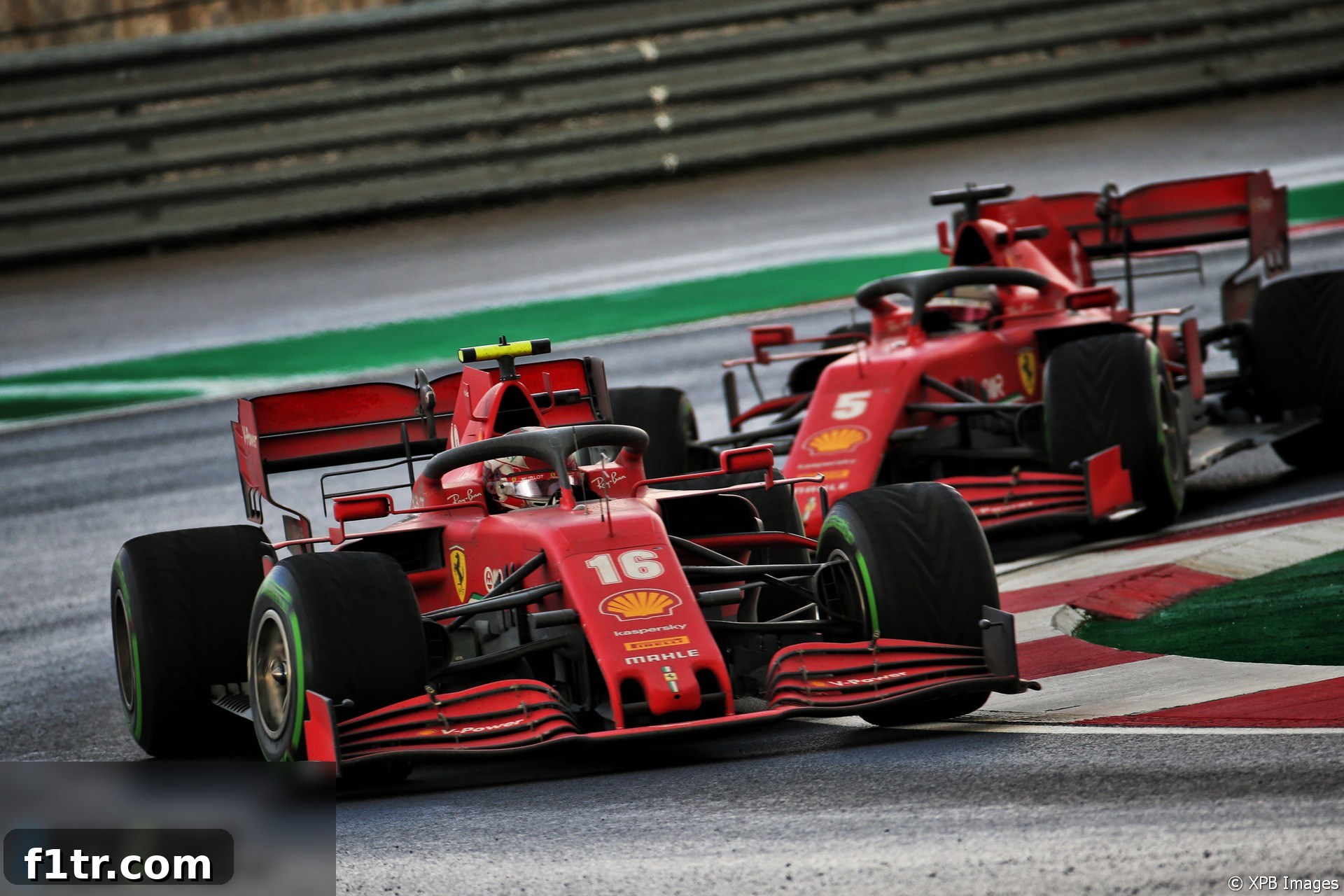
Ferrari’s journey through the 2020 Formula 1 season was a rollercoaster of emotions and performance fluctuations. After a challenging start that saw the Maranello-based squad struggling to find pace and consistency, the team committed significant resources to understand and rectify their car’s deficiencies. This dedication began to yield tangible results in the latter half of the season, culminating in their best performance to date at the Turkish Grand Prix. While the treacherous and highly unusual racing conditions in Istanbul undoubtedly played a role, Ferrari’s improved showing was a clear indicator of the successful upgrades they had implemented on their SF1000 chassis, showcasing a crucial step in their F1 car development.
Sainz, who has consistently impressed with his analytical approach and ability to integrate quickly into new environments, expressed considerable enthusiasm for Ferrari’s recent trajectory. “It’s been a good few months for them,” Sainz noted, reflecting on the marked improvement. “I think they’ve demonstrated that they’ve probably found a bit the issues that they had at the beginning of the year. They probably were the ones especially not happy about it, and they’ve shown good character turning a difficult season around.” This statement underlines not only Ferrari’s technical progress but also the resilience and determination within the team, qualities that will be essential for Sainz to tap into as he settles into his new role within the Scuderia Ferrari outfit.
The prospect of joining a team on an upward curve is undoubtedly a significant boost for Sainz. His observations from afar provide an initial, encouraging insight into Ferrari’s capabilities and their strategic direction for the 2021 F1 season and beyond. He eagerly anticipates delving into the technical specifics, understanding the “what and why” behind these performance gains. This detailed knowledge will be crucial for him to contribute effectively to the team’s development from day one, enhancing their racing strategy. However, despite the excitement surrounding his future, Sainz remains steadfastly committed to his current responsibilities with McLaren, emphasizing that there is “plenty to do here still” before his chapter with Ferrari officially begins, highlighting his strong professionalism during this F1 team switch.
The Formidable Challenge of Adapting to a New F1 Car with Limited Testing
The 2021 Formula 1 season brings with it not only a shift in driver lineups but also significant limitations on pre-season testing. Teams will be granted a mere three days of collective testing with their new cars before the championship kicks off. This stringent schedule translates to an exceptionally tight window for drivers to acclimatize to their new machinery – potentially as little as a day and a half per driver. For a seasoned competitor like Sainz, who is moving to a completely different car philosophy and team, this poses a considerable challenge in terms of F1 driver adaptation.
Modern Formula 1 cars are marvels of engineering, intricate beasts packed with complex systems, advanced aerodynamics, and highly sophisticated hybrid power units. Every team’s car, while adhering to the same regulations, possesses its unique characteristics, quirks, and operational nuances. The steering wheel alone is a command center, featuring dozens of buttons, switches, and dials that control everything from engine modes and brake bias to differential settings and energy recovery systems. Mastering these elements under immense pressure, at speeds exceeding 300 km/h, requires extensive practice and an intimate understanding of the car’s responses. This makes the limited Formula 1 testing time a significant hurdle.
Sainz articulated his concerns regarding the insufficient preparation time candidly. “I can already tell you that one day and a half in a Formula 1 car, in these complex Formula 1 cars, is not enough to prepare a Formula 1 season,” he stated. He elaborated on the multi-faceted nature of the challenge: “You don’t get to know the tricks of the car, the steering wheel, even though you do a lot of simulator. To get to know the crew, everyone, one day and a half is just very, very little and probably not enough.” Beyond just the car, learning to communicate effectively with a new team of engineers, mechanics, and strategists is paramount. Building that vital synergy and trust takes time, something that will be severely limited for the 2021 F1 season.
Historically, Formula 1 teams enjoyed much more extensive testing regimes, often logging thousands of kilometers during pre-season and in-season tests. These opportunities allowed drivers to experiment with setups, understand tire degradation, push the car to its limits, and develop a deep connection with their machinery. The current restrictions, implemented primarily for cost-saving reasons and to reduce the workload on teams, place an unprecedented emphasis on efficiency and immediate adaptation. Drivers like Sainz, making a high-profile switch to Ferrari, will face the added pressure of delivering results almost instantaneously with minimal track time for optimal F1 car development and performance.
Bridging the Gap: Potential Solutions for Driver Acclimatization
Recognizing the severity of the testing limitations, Sainz has indicated his openness to exploring unconventional avenues for preparation. One such option he mentioned is the possibility of testing a two-year-old Ferrari car. While not identical to the 2021 challenger, driving an older model would provide invaluable experience with Ferrari’s operational procedures, steering wheel ergonomics, and general car philosophy. Such a session, if permitted and arranged, could significantly ease his transition and allow him to develop familiarity with the Scuderia’s systems and personnel away from the intense pressure of official pre-season Formula 1 testing, aiding his F1 driver adaptation.
In the modern era of Formula 1, simulators have evolved into incredibly sophisticated tools, becoming an indispensable part of a driver’s preparation. Sainz, like all top-tier drivers, spends countless hours in the simulator, meticulously learning track layouts, practicing specific corners, and experimenting with various car setups. While simulators offer an unparalleled level of immersion and detail, they cannot fully replicate the physical G-forces, the tactile feedback through the steering wheel, or the raw sensation of speed that only a real F1 car can provide. Therefore, while simulator work will undoubtedly be intensified, it serves as a supplement, not a complete replacement, for actual track time.
Beyond the technical aspects, physical and mental preparation will be more crucial than ever for Sainz. His rigorous fitness regimen and mental fortitude will need to be at their peak to process the vast amount of information and adapt quickly under pressure. Understanding the nuances of the car’s handling, anticipating its behavior, and extracting maximum performance requires an acute sensory awareness that is honed through repetition and experience. Given the constraints, Sainz and his new team will need to devise highly efficient testing programs, prioritizing critical areas and maximizing every single lap on track to ensure optimal Grand Prix performance from the outset.
Despite the evident challenges, Sainz maintains a pragmatic outlook. “But it’s what it is, so we will have to adapt and we will need to find a way to make sure we are as prepared as possible within the limits of one day and a half,” he affirmed. This acceptance of the circumstances, coupled with a proactive approach to finding solutions, exemplifies the resilience required to succeed at the pinnacle of motorsport. His transition to Scuderia Ferrari for the 2021 F1 season will be a testament to his adaptability and the strategic planning of the team.
Navigating the Transition: Sainz’s Professional Focus on McLaren
Even as the anticipation for his move to Ferrari builds, Carlos Sainz Jr. has consistently demonstrated unwavering professionalism and commitment to his current team, McLaren. Throughout the concluding races of the 2020 season, his focus remained squarely on maximizing McLaren’s performance and contributing to their constructors’ championship aspirations. This dedication is a hallmark of top-tier athletes, ensuring that all efforts are channeled into the present task before fully embracing future endeavors, a key aspect of managing an F1 team switch.
The relationship between a driver and their team is deeply symbiotic, built on trust, shared goals, and mutual effort. For Sainz, finishing his tenure with McLaren on a strong note is not merely a matter of personal pride but also a crucial aspect of professional integrity. It ensures that he leaves the Woking-based outfit having given his absolute best, thereby maintaining an excellent reputation within the paddock – a reputation that undoubtedly played a role in attracting Ferrari’s interest in the first place. His current commitment involves intricate debriefs, detailed feedback sessions, and pushing the McLaren car to its limits, all of which indirectly contribute to his ongoing development as a Formula 1 driver.
Ferrari’s Path Forward: Building on Momentum with Sainz
The arrival of Carlos Sainz Jr. at Ferrari heralds a new chapter for the legendary Italian team. After a rebuilding phase and a challenging 2020 season, the Scuderia is eager to return to championship-contending form. Sainz, alongside the highly talented Charles Leclerc, forms a formidable and youthful driver lineup that possesses both speed and strategic acumen. The combination of Leclerc’s raw pace and Sainz’s consistent, thoughtful approach is expected to provide Ferrari with a strong foundation for future success in Formula 1.
Sainz’s role will extend beyond just driving the car; he will be instrumental in its ongoing development. His feedback, gathered from extensive experience across multiple F1 teams, will be vital for engineers to understand the car’s strengths and weaknesses and guide future upgrades. His ability to adapt quickly and provide clear, concise technical insights will be particularly valuable given the restricted testing environment. The dynamic between Sainz and Leclerc will also be closely watched; a healthy competitive rivalry, coupled with a collaborative spirit, could propel Ferrari forward significantly, contributing to their racing strategy and overall F1 car development.
The Broader Landscape of F1 Driver Switches and Adaptation
Carlos Sainz Jr.’s transition to Ferrari is part of a larger trend in Formula 1, where several high-profile drivers are switching teams for the 2021 season. Daniel Ricciardo moved to McLaren, Sebastian Vettel joined Aston Martin, and Fernando Alonso made a sensational return with Alpine (formerly Renault). Each of these drivers will face similar challenges in adapting to new environments, understanding different car philosophies, and building rapport with new teams, all under the shadow of limited pre-season testing for the 2021 F1 season.
The art of adapting to a new F1 environment goes beyond mere driving. It encompasses understanding a new team’s culture, working methods, and even their unique terminologies. It involves quickly building trust with a new race engineer, familiarizing oneself with a new garage setup, and integrating into a completely different operational structure. Success in Formula 1 is not just about raw speed; it’s about the seamless integration of driver, car, and team. For Sainz, his proven ability to adapt and perform under pressure will be rigorously tested as he dons the iconic red of Ferrari, carrying the hopes of millions of Tifosi into the 2021 Formula 1 season and aiming for consistent Grand Prix performance.
2020 Bahrain Grand Prix
- Grosjean reunited with helmet which saved him from huge fire in 2020 Bahrain crash
- Pictures: Wrecked chassis from Grosjean’s Bahrain fireball crash to go on display
- Grosjean reveals extent of burns to right hand
- ‘I put both my hands in the fire’: Grosjean describes his 28 seconds trapped in an inferno
- “Thank you for saving my life” Grosjean tells crash scene marshals
Browse all 2020 Bahrain Grand Prix articles