Lewis Hamilton: Championing Diversity and Challenging Racism in Formula 1
Formula 1 superstar Lewis Hamilton has consistently leveraged his influential platform to advocate for meaningful change, particularly in the fight against racism and the promotion of diversity. The six-time world champion (at the time of this interview) openly discusses his personal experiences with systemic prejudice, underscoring his deep-seated commitment to inspiring a more inclusive world, both within motorsport and globally.
The Unwavering Voice of a Champion: Lewis Hamilton’s Commitment to Anti-Racism
In a revealing interview released by Mercedes, Hamilton articulated his profound sense of responsibility to use his public profile. “It’s an incredible time in the world,” Hamilton reflected, acknowledging the myriad global challenges. “But one that has been really close to my heart has been on diversity and anti-racism.” He expressed profound satisfaction at witnessing a genuine, positive movement gaining momentum worldwide, recognizing the immense potential for good that can emerge from this global awakening.
Hamilton firmly believes that remaining silent is not an option. “I’ve got a platform and I think it would be irresponsible for me not to utilise that,” he asserted. His objective extends beyond mere advocacy; he aims to “help educate people, to educate myself and really push for accountability within all the brands that I work with and within the industry that I work with.” This commitment highlights his holistic approach, seeking to instigate change at every level of his professional and personal sphere.
A Bold Statement: Mercedes’ Black Livery and the Drive for Change
Become a Supporter & go ad-free
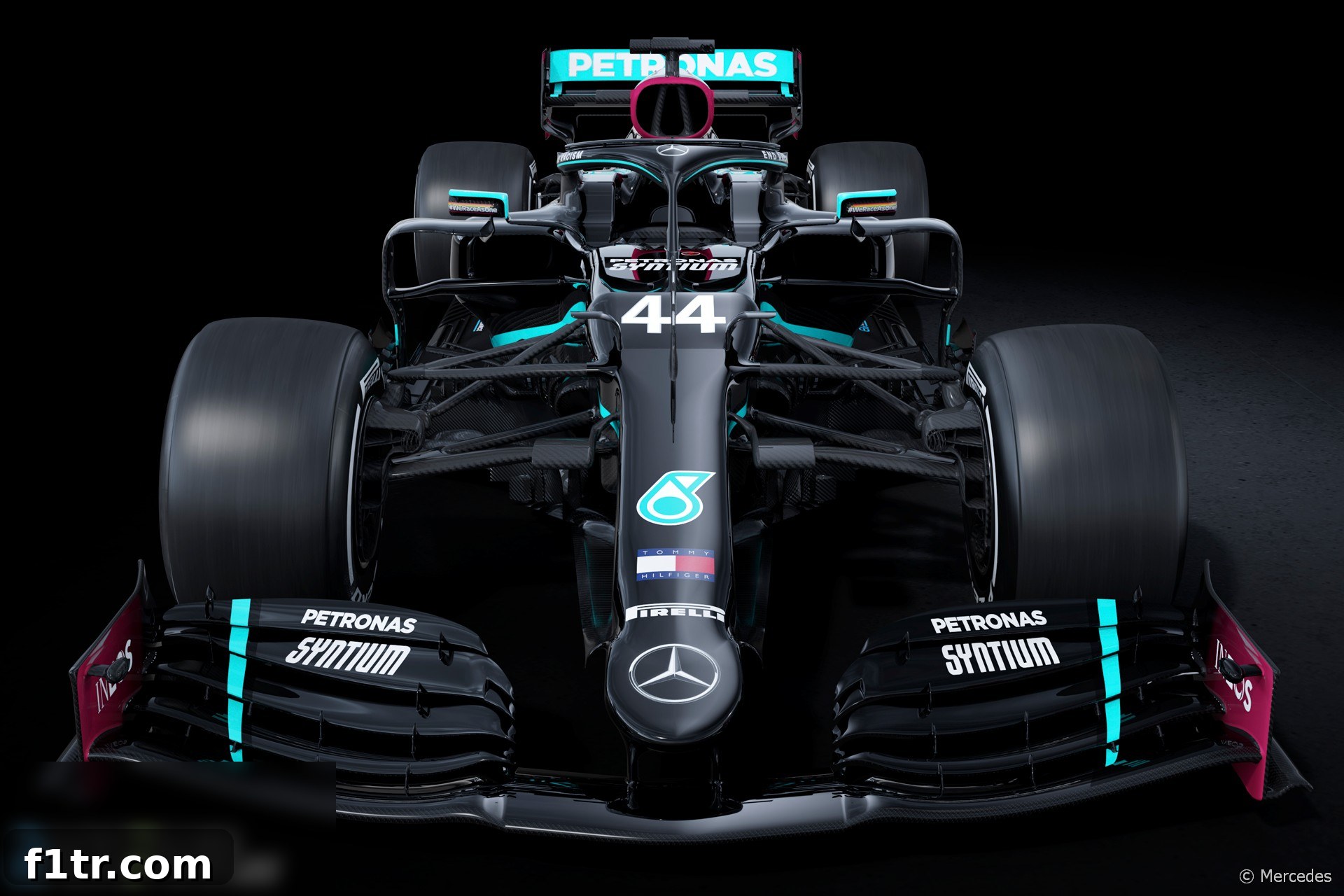
Hamilton’s advocacy quickly translated into tangible action within his own team. A pivotal phone call last month between Hamilton and Mercedes team principal Toto Wolff catalyzed a remarkable transformation. For the upcoming season, Mercedes unveiled a striking new black livery, prominently featuring the powerful slogan ‘End Racism’. This visual declaration was more than just symbolic; it was coupled with a firm commitment from the team to implement practical measures aimed at enhancing diversity within its own organization.
“I’ve been in a lot of discussions with Toto and everyone at the team and the board members at Daimler and people within the marketing office,” Hamilton explained, detailing the collaborative effort to shape their strategy. “Just to talk about our plan and how we need to educate ourselves and how we need to be a part of this movement.” He emphasized the critical need for introspection and proactive engagement: “We need to be a part of wanting to change, analysing ourselves and seeing what we can do better within our team, both at Daimler, but also back at the Formula 1 team.”
The unveiling of the new livery during the first race was anticipated to be a momentous occasion. “What you’re going to see at the first race I think is going to be a very, very powerful moment for us in showing that we are not opposed to change as a team,” Hamilton stated. He commended Mercedes and Daimler for their eagerness to promote diversity internally and to inspire other entities within the sport to follow suit. This collective effort underscores a shared vision for a more equitable future in motorsport.
A Lifetime of Experience: Hamilton’s Personal Battle Against Racism
Hamilton’s impassioned stance on anti-racism is deeply rooted in his personal journey. The tragic killing of George Floyd in May ignited a global wave of anti-racism protests, which Hamilton actively joined, consistently using his social media platforms to shine a light on systemic racism and call for action from within the F1 community. “This is not an issue that’s that has only just come about,” he stressed, highlighting the historical context of the struggle.
“For me personally, I have experienced this my entire life, in my whole racing career,” Hamilton revealed, sharing the profound impact of these experiences. “And when this all kicked off it really struck a nerve and a chord and brought a lot of emotion up from my personal experiences.” His words paint a vivid picture of a man whose convictions are forged in the crucible of lifelong encounters with prejudice.
Reflecting on his early years, Hamilton recounted feeling like an outsider. “Through my whole life, really, I’ve generally through schooling and through racing, I’ve always felt that it always felt like an outsider,” he confessed. This sense of alienation, he believes, is a common thread that many can relate to, “because lots of people experience not feeling like they fit into society.” His candid admission provides a window into the psychological burden of being different in environments that often lack diversity.
His experiences with racism began in childhood, persisting throughout his formative years. “I experienced a lot of racism growing up both at school, but also just in my local area where I grew up,” he recalled. The racism, however, intensified within the competitive racing circuits. “On the race scene, particularly being that my dad and I were the only people of colour there,” he noted, detailing the stark reality of his early career. He raced in the UK until he was 13, then ventured abroad, expecting a different environment. Instead, the prejudice followed him: “When I got to Italy, where I did a lot of racing, when I got to Belgium, which was one of my first international races, European races, I experienced the same thing when I was in France, all those countries.”
These experiences were profoundly distressing for a young boy. “That was definitely a very, very difficult thing, because it affects you emotionally,” Hamilton explained. “You don’t understand when you’re young why things are thrown at you, why things have been shouted at you.” He described himself as a “fighter,” having faced bullying at school, which instilled in him a resilient spirit. When the recent wave of activism erupted, it resonated deeply. “So when this whole thing kicked off I was like, OK, I’ve got to come out and help support people because I know what it’s like to struggle, I know what it’s like to be in that position and I want to be a part of the change, I want to be a part of the solution.”
Beyond the Track: Addressing Formula 1’s Diversity Gap
Hamilton’s pioneering presence as the first black driver in Formula 1 initially filled him with hope that his mere existence would naturally encourage greater diversity within the sport. However, his expectations were met with disappointment over the years. “Standing alone, generally, was the feeling for a long, long time within this sport,” he shared. “And I’d been obviously working with Mercedes since I was 13 and I’ve also been in Formula 1 now for 14 years and I’ve not seen hardly any change.”
This stagnation deeply troubled him. “That upsets me because there was a point that I thought that maybe by me being here and helping breaking down barriers, hopefully it’s going to help change the industry for the better,” he lamented. “But it’s not done enough and I want to do more.” His desire for more profound, systemic change became a driving force, pushing him to engage actively with his team and the wider Formula 1 community.
While acknowledging his love for the Mercedes team, Hamilton openly admitted, “there is also just not a lot of diversity within the team,” an issue he frequently discussed with Toto Wolff. These candid conversations have been instrumental in fostering a deeper understanding and commitment to action. “I’d be like ‘hey, we’ve got to do more together’,” he recounted. “And over time our relationship has grown and our understanding of what we can do better has grown and Toto has been so supportive in really making sure we come forward and be the leaders and really try.”
As reigning world champions, Mercedes bears a unique responsibility to lead by example. “Because we are the world champions, we are the best team, we need to shine our light as bright as possible to encourage other teams to want to do the same, the rest of the people in the industry to do the same,” Hamilton asserted. His gratitude for the positive response from all willing to move forward highlights a growing momentum for change within the sport.
Hamilton also pointed to the prohibitive cost of competing in Formula 1 as a significant barrier to diversity. “It is a pretty expensive sport, I think that’s definitely an underlying factor,” he conceded. However, he believes other systemic factors are equally responsible for the lack of representation. “The truth is that the opportunity is not the same,” he stated, elaborating that this disparity extends beyond drivers to vital roles like engineers. “There’s so many great jobs and opportunities within our sport. But the opportunity is not the same for minorities to get through.”
To systematically address these issues, Hamilton recently launched his groundbreaking commission. “That’s why I put together this commission to try to see, to understand why that is the case, why there are there not these intelligent minorities that are not coming through, why are not finishing university?” he explained. The core philosophy of the commission is simple yet profound: “You can’t change what you don’t know.” By undertaking rigorous research, the commission aims to uncover the root causes of underrepresentation and propose actionable solutions.
Challenging the Silence: A Call to Action for the F1 Community
Hamilton’s social media messages, challenging “those of you who are staying silent… in the midst of injustice,” sparked considerable discussion. He clarified that his call to action was not narrowly aimed at his fellow drivers but encompassed the entire industry. “Ultimately people perceive that I was targeting drivers. I really wasn’t. It was targeted at the whole industry,” he clarified, emphasizing the collective responsibility.
He expressed long-standing frustration over the inaction he observed. “It’s been something I’ve been aware of for a long, long time and not really seen anyone doing anything about it,” he explained. In an era where everyone possesses a platform, even a modest one, silence is no longer acceptable. “In today’s world where we all have a platform to be able to utilise our voice, we all have these followings, our voices are a very powerful. And if you are not a part of trying to encourage people to get out there and understand what this situation is and why we’re in this situation then for me that’s frustrating.”
Hamilton’s message is clear and urgent: “People being silent is something that I’ve experienced for such a long time and now is not the time to be silent. This is a time to help spread the message. This is the time to pull together. We need as many voices as we can to help promote, push for change.” He underscores a fundamental truth: “Because we are all the same race. Whilst the perception is that we divided by colour and by religion and all these different things, we’re the same race. But it’s not reflected in our society and how people are treated.” This powerful assertion calls for a re-evaluation of societal norms and behaviors.
His demand for accountability is unequivocal. “So that was really a calling to people within the industry for accountability for all the brands. They need to do more. The sport needs to do more. The FIA need to do more. We all need to do more,” he declared, leaving no room for complacency. Hamilton’s vision is one of unified action, where every entity within Formula 1 plays an active role in dismantling prejudice.
Building a Better Future: Hamilton’s Vision for Equality
Looking ahead, Hamilton articulated a deeply personal and generational dream. “I want to be a part of a system, a part of a solution and changing for the future,” he added. He acknowledges that sweeping changes for his generation and his parents’ generation might be limited. “Unfortunately for us, our generation, for our parents generation it’s unlikely it’s going to be a huge change,” he admitted with a touch of realism. However, his primary motivation lies in the future of succeeding generations: “But it’s for our children and our children’s children.”
This intergenerational perspective fuels his commitment. “That’s what we’ve got to be a part of shifting so that they can live in a better time where there is equality,” he passionately stated. He firmly believes that achieving equality will have profound positive repercussions across society. “And I think that’s just going to create a much better environment, a better place to live.”
Hamilton’s ultimate aspiration is simple yet revolutionary. “So that’s my dream. I mean, imagine a young kid of the same colour as me going to a school and not having to experience the injustices that I’ve experienced and many other people experienced. I think that’s that’s the dream,” he concluded. His journey from an outsider facing racial discrimination to a global icon advocating for justice embodies a powerful message of hope, resilience, and an unyielding commitment to forging a truly equal and diverse future for all.
Related F1 Season Articles
- Race Highlights: Key Moments from the 2020 F1 Season
- Driver Performances: Analyzing the 2020 Championship Battle
- Team Strategies: Behind-the-Scenes Decisions from 2020
- Technical Innovations: The Cars of the 2020 Formula 1 Season
- Impact of COVID-19 on the 2020 F1 Calendar and Operations
Browse all 2020 F1 season articles