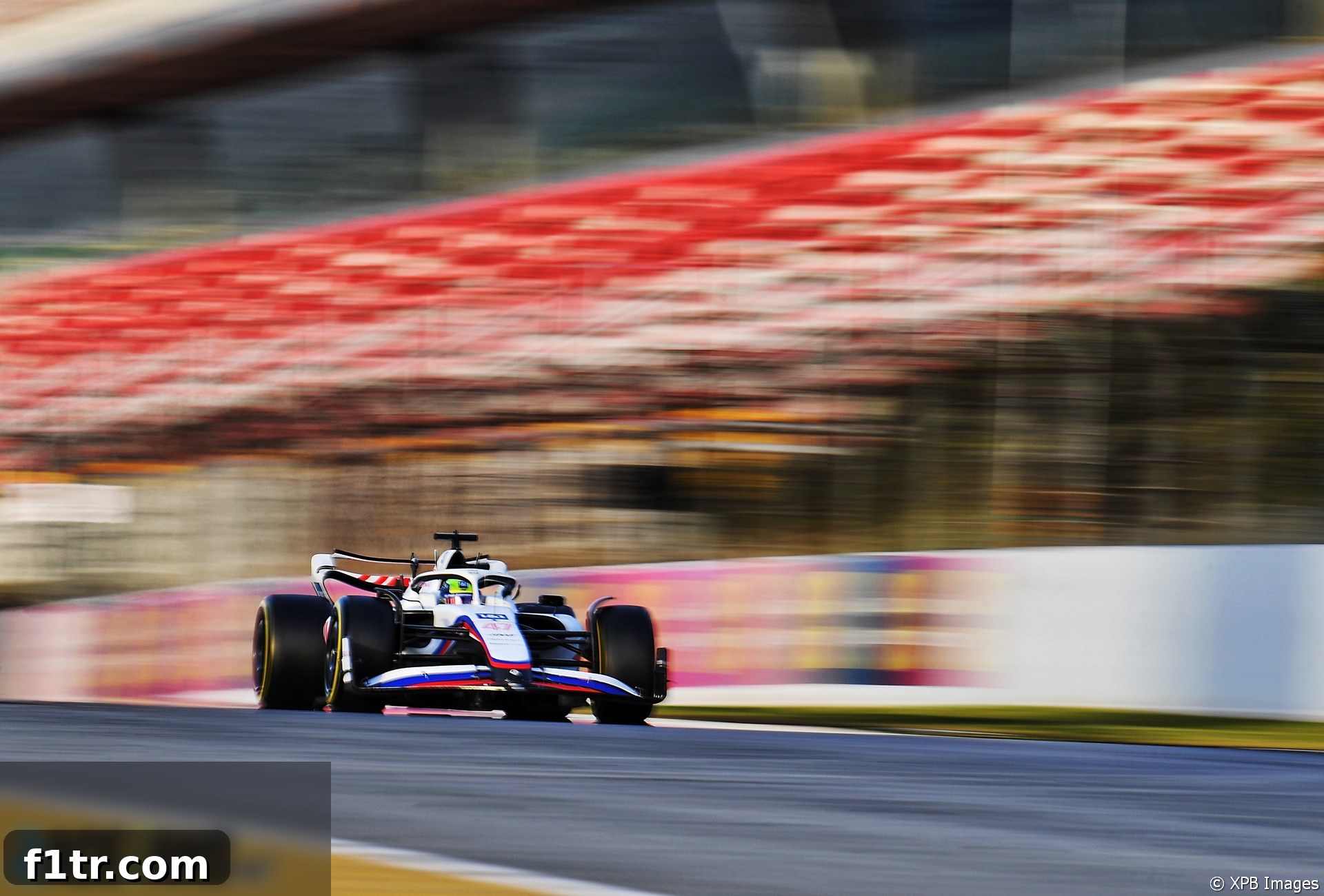
In the high-stakes world of Formula 1, where marginal gains dictate success, even the slightest technical glitch during pre-season testing can send ripples of concern through a team. For Mick Schumacher, behind the wheel of the new Haas VF-22 during the opening day of the 2022 pre-season testing in Barcelona, an early encounter with unexpected floor damage brought to light a potential engineering challenge that he believes will confront every team on the grid this season. As F1 ushered in a new era dominated by ground effect aerodynamics, the vulnerability of the crucial underbody components quickly became apparent, setting the stage for an intense development race among competitors.
The highly anticipated 2022 season marked a significant overhaul in technical regulations, with a primary focus on ground effect to enhance racing and overtaking. This paradigm shift meant that the car’s floor would become its most critical aerodynamic surface, responsible for generating a substantial portion of the downforce by manipulating airflow beneath the car. Consequently, any damage to this intricately designed component could severely compromise performance, stability, and driver confidence. Schumacher’s experience served as an early, tangible reminder of this new reality, highlighting the delicate balance between aggressive design and real-world durability that engineers would need to master.
During the afternoon session of the first day of testing, Schumacher’s time on track was significantly curtailed. After a promising start, the young German driver encountered an issue with the VF-22’s floor, which limited his run to a mere 23 laps over the four-hour period. This setback was undoubtedly frustrating for the Haas team, which, like all others, was eager to accumulate vital data and track mileage with their new machinery. Pre-season testing is not just about raw speed; it’s about understanding the car’s behavior, validating simulations, and identifying potential weaknesses. Losing valuable track time due to mechanical issues, especially those stemming from a fundamental aerodynamic component like the floor, is far from ideal.
Reflecting on the interrupted session, Schumacher maintained a pragmatic and level-headed perspective. While acknowledging the disappointment of not achieving their target lap count, he quickly framed the incident not as a unique problem for Haas, but as an inherent challenge of the new ground effect regulations. “I think it’s nothing to be concerned about,” he stated, though admitting his smile wasn’t as broad as it could have been. “We only did 23 laps, from what I saw, from my side. So obviously we would have wanted to have probably a three-digit number there. But those things happen and now it’s just about trying to get the laps that we lost today in tomorrow.” His comments underscored the understanding that such teething problems are often part and parcel of introducing revolutionary car designs, especially under the immense pressures of F1 development.
The core of Schumacher’s insight, however, lay in his belief that this floor damage issue was not an isolated incident for Haas but a universal concern across the paddock. The new ground effect cars are designed to run extremely low to the ground to maximize aerodynamic efficiency, creating a vacuum effect that pulls the car closer to the track surface. This design, while brilliant for generating immense grip and cornering speeds, also exposes the floor to extreme forces and potential impacts from kerbs, bumps, or debris. Such conditions can lead to structural integrity challenges, requiring teams to find robust yet aerodynamically efficient solutions. “Obviously the floor is taking quite a beating,” Schumacher observed. “I think every team has issues with that. So it’s just a matter of trying to [be] one of the quickest teams [to fix it] so that we are able to be at the front.”
This competitive element transforms a technical challenge into a critical performance differentiator. The team that can most effectively mitigate floor damage, or design a floor that is both resilient and aerodynamically potent, stands to gain a significant advantage. This includes understanding the precise limits of the floor’s structural integrity, optimizing ride height, and perhaps even modifying track-specific setups to protect the crucial underbody. Schumacher’s foresight proved accurate, as the 2022 season saw many teams grappling with issues related to the floor, including the notorious ‘porpoising’ phenomenon, where the car would bounce violently at high speeds due to unstable ground effect. While Schumacher’s incident was specific damage, it hinted at the broader sensitivities of the new aerodynamic philosophy.
The implications of such a widespread issue extend beyond mere repair. Each instance of floor damage not only costs valuable track time but also necessitates costly repairs and potentially design modifications, adding pressure to already tight budgets and development schedules. For a team like Haas, operating with comparatively fewer resources than the F1 giants, maximizing track efficiency during testing is paramount. Every lap provides crucial data for engineers to fine-tune the car’s setup, understand tire degradation, and gather feedback from the drivers. Disruptions like floor damage can delay this learning process, potentially putting them a step behind their rivals in the early stages of the season.
As teams continued their intense pre-season preparations, the quest to optimize the floor became a central theme of their engineering efforts. This involved innovative material science, structural analysis, and aerodynamic refinements to ensure the floor could withstand the rigors of racing while still delivering peak performance. The teams that cracked this code first were indeed poised to lead the charge. Schumacher’s comments underlined that the initial days of testing were not just about outright pace, but about problem identification and rapid iteration – a fundamental aspect of F1 development.
Looking ahead, Mick Schumacher was scheduled to continue his track duties in the VF-22 during Thursday’s morning session, before handing the car over to his then-teammate, Nikita Mazepin, for the afternoon. This continuation of testing would be vital for Haas to recover lost mileage and gather more comprehensive data on their new challenger. The collective challenge presented by ground effect floor integrity would undoubtedly remain a key focus for all teams as they pushed the boundaries of engineering in pursuit of competitive advantage throughout the 2022 Formula 1 season. Schumacher’s early observation served as a harbinger for one of the defining technical narratives of the new regulatory era.
2022 F1 season
- Mercedes told me “you’re wrong” about 2022 car’s problems – Hamilton
- FIA confirms all 10 F1 teams complied with 2022 cost cap
- Steiner “not ashamed” of panning “slow” Schumacher in Drive to Survive
- Albon believes year out of F1 improved him as a driver
- Hamilton sees diversity gains in F1 years on from his ‘traumatising’ experience of racism
Browse all 2022 F1 season articles