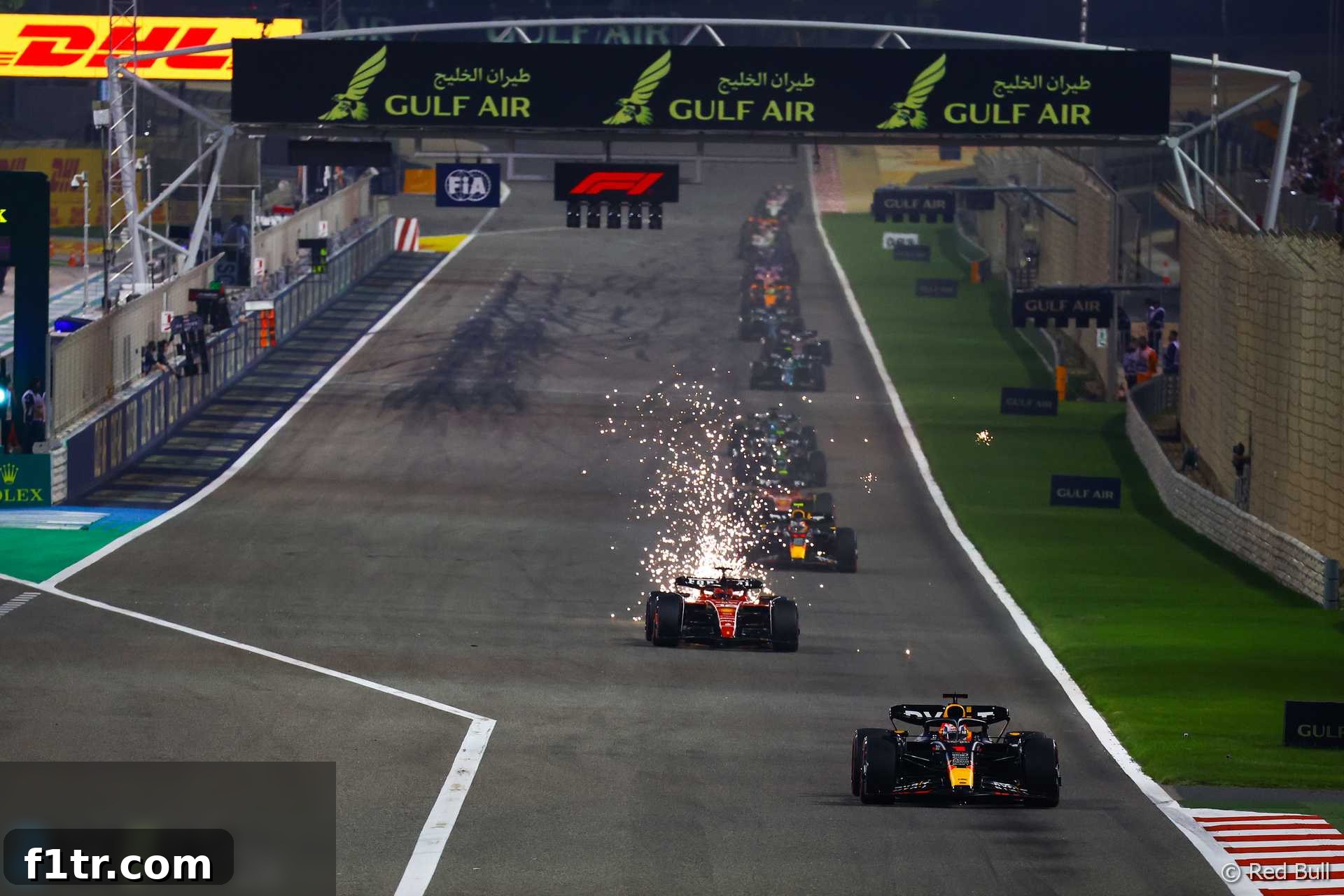
Formula 1 finds itself at a pivotal crossroads, navigating a period of unprecedented dominance by Red Bull Racing. With the Austrian outfit sweeping victories and securing championship leads with seemingly effortless ease, whispers and debates about implementing a ‘Balance of Performance’ (BoP) system have inevitably emerged within the motorsport community. However, Mercedes team principal Toto Wolff has unequivocally stated his strong opposition, cautioning that such a system would fundamentally “ruin” the sport, drawing a clear line in the sand between F1’s core philosophy and that of championships like the World Endurance Championship (WEC).
Red Bull’s commanding performance since the beginning of the season has seen them remain undefeated, positioning them firmly on track to replicate, and potentially even surpass, their formidable championship double from the previous year. This level of sustained success, while a testament to their engineering prowess and driver talent, has naturally sparked discussions among fans and pundits about competitive parity. Yet, for Wolff, the solution does not lie in an artificial levelling of the playing field through a BoP system, which is designed to deliberately rein in the performance of leading teams.
“I think if we start to put in a Balance of Performance, we’ll ruin this sport,” Wolff declared emphatically from Monaco. His stance is rooted in a deep-seated belief in Formula 1’s intrinsic nature: “This is a meritocracy. The best driver and best car, operating within the same financial parameters and regulations, wins the championship. If you break the rules in either aspect, then you should be heavily penalised. But certainly not for doing a good job.”

Understanding Formula 1’s Meritocratic Core
At its heart, Formula 1 has always prided itself on being the pinnacle of motorsport engineering and driver skill. The concept of ‘meritocracy’ in F1 implies that success is earned through superior design, development, execution, and driving. Teams invest vast resources and intellectual capital into pushing the boundaries of technology, aerodynamics, powertrain efficiency, and strategic execution. This relentless pursuit of excellence is what differentiates F1 from many other racing series.
Historically, F1 has weathered periods of single-team dominance before. Whether it was McLaren in the late 80s, Ferrari in the Schumacher era, or Mercedes during the turbo-hybrid years, the sport has traditionally allowed teams to reap the rewards of their innovation and hard work. The expectation is that rival teams will catch up through their own efforts – identifying weaknesses, developing better solutions, and out-executing the dominant force. This natural competitive cycle, albeit sometimes lengthy, is a fundamental part of F1’s appeal and narrative. Wolff encapsulates this by reiterating: “Formula 1 is a meritocracy and they’ve just done a good job. The car is fast in all conditions, the driver is at the top of his game.” Max Verstappen, in particular, has showcased an exceptional synergy with the Red Bull RB19, further amplifying the team’s advantage.
The introduction of a budget cap in Formula 1 was a deliberate step to address the financial arms race and foster closer competition over time, not to penalize performance directly. It aims to create a more level playing field for spending, allowing teams to compete more effectively with similar resources, but still rewarding those who make the most efficient and innovative use of those resources. This differs vastly from BoP, which overtly manipulates vehicle performance parameters like weight, engine power, or aerodynamic efficiency.
The Balance of Performance System: A Different Philosophy
In contrast to Formula 1’s approach, the World Endurance Championship (WEC) employs a sophisticated Balance of Performance system. WEC introduced BoP regulations for its top-tier Hypercar class in 2021, succeeding the LMP1 regulations. This system is crucial for WEC because it allows cars with fundamentally different engineering philosophies and powertrain concepts – for instance, hybrid versus non-hybrid cars, or vehicles from various manufacturers with distinct design parameters – to compete fairly within the same category. Without BoP, these disparate designs would simply not be comparable on track.
The WEC Committee meticulously imposes different performance limits on the competing cars. These limits are not arbitrary; they are based on extensive data gathered from each entry during practice, qualifying, and race sessions. Parameters like minimum mass, maximum power output, energy consumption per stint, and aerodynamic coefficients can be adjusted. The goal, as stated in WEC’s regulations, is to “allow cars of different engineering designs to compete in the same category,” thereby encouraging a broader range of manufacturers and technologies to participate.
WEC BoP in Practice: The Le Mans 2023 Example
A recent and prominent example of BoP in action was the 2023 Le Mans 24 Hours race. Just ten days before the iconic endurance event, significant changes were made to the BoP. Toyota, which had dominated the opening three WEC rounds, saw its minimum mass increased to 1,080 kilograms – a 16kg increase over its closest rival, Ferrari. While this added weight was a disadvantage, Toyota was concurrently permitted to consume more energy over the course of a stint (908 megajoules) compared to Ferrari’s 901 megajoules. Other teams also received adjusted parameters, some allowed to run lighter cars and utilize more energy, all in an effort to tighten the field for the world’s most prestigious endurance race.
The outcome was a truly thrilling contest. Ferrari, making a triumphant return to the top class at Le Mans, clinched victory after an intense, race-long battle with Toyota. The Japanese manufacturer dropped back in the final hours following an incident involving driver Ryo Hirakawa, but the cars ultimately crossed the finish line separated by a mere 81 seconds after 24 hours of racing. This close finish is often cited as evidence of BoP successfully achieving its objective: creating compelling, unpredictable racing between diverse machinery.
However, the very nature of BoP often leads to controversy and speculation. Accusations of “sandbagging” – where teams intentionally underperform to secure a more favourable BoP adjustment – are not uncommon. To mitigate such issues and maintain the integrity of the system, WEC regulations explicitly state: “Manufacturers, Competitors, drivers and any persons or entities associated with their entries must not seek to influence the establishment of the BoP or comment on the results, in particular through public statements, the media and social networks.” This rule underscores the sensitivity and potential for politicization inherent in performance balancing systems.
Why F1 and BoP Are Fundamentally Incompatible
Toto Wolff’s staunch opposition stems from a recognition that Formula 1’s identity is inextricably linked to technological superiority and unbridled competition within a defined set of technical rules. Introducing BoP would fundamentally alter this identity in several critical ways:
- Dilution of Achievement: If a team’s performance is artificially capped or reduced, the magnitude of their achievement is diminished. The sense of earning victory purely through design brilliance and operational excellence would be lost.
- Disincentive for Innovation: Why would teams invest billions into cutting-edge research and development if their gains are simply erased by a regulatory body? BoP could stifle the innovation that has historically driven Formula 1 forward and filtered down to road car technology.
- Loss of Purity: F1 prides itself on being a pure test of speed, reliability, and human skill. BoP introduces an external, subjective element that can be perceived as manipulating results rather than allowing them to unfold naturally.
- “Manufactured” Results: Fans often appreciate the organic storylines of F1 – the rise and fall of teams, the long development cycles, and the dramatic comebacks. BoP could lead to accusations of “manufactured” or “engineered” racing, where the outcome is less about pure performance and more about regulatory tweaks.
- Transparency Issues: The methodology behind BoP adjustments is often opaque, leading to suspicion and discontent among competitors and fans alike, regardless of how meticulously it’s applied.
Formula 1 has existing mechanisms to manage competitive equilibrium and prevent perpetual dominance, without resorting to performance balancing. The budget cap, as mentioned, aims to level the financial playing field. Additionally, F1 employs an Aerodynamic Testing Restrictions (ATR) system, often referred to as a “sliding scale,” which awards less wind tunnel and CFD time to more successful teams based on their championship standing. This provides a genuine, performance-based handicap that still encourages continuous development and rewards the teams that climb the ladder.
Major rule changes, such as those introduced in 2022, are also a traditional method for reshuffling the pecking order in F1. These changes are designed to create new challenges for engineers, forcing a complete redesign cycle and often leading to new dominant forces emerging, but always through meritocratic means.
The Future of F1: Meritocracy Preserved
While the desire for closer racing is understandable and shared by all stakeholders in Formula 1, Toto Wolff’s arguments highlight a fundamental distinction between F1 and other racing championships. F1 is not designed to be a competition where disparate car concepts are forced into parity through constant adjustments. Instead, it is a crucible for engineering excellence and a stage for the world’s most talented drivers to battle it out in machines that represent the absolute pinnacle of automotive technology.
The current Red Bull dominance, while perhaps testing the patience of some fans, is a phase in F1’s cyclical history. To introduce a Balance of Performance system would not merely be a regulatory tweak; it would be a radical departure from the sport’s foundational principles. For many, including influential figures like Toto Wolff, preserving F1’s meritocratic identity, even through periods of single-team superiority, is paramount to maintaining its integrity, prestige, and unique position in the global sporting landscape.
Related Motorsport Insights
Explore more discussions on the intersection of competition, regulations, and innovation in top-tier motorsport:
- The Impact of Formula 1’s Cost Cap on Competition and Development
- Understanding Aerodynamic Testing Restrictions in F1: A Deeper Dive
- The Hypercar Era in WEC: How BoP Facilitates Diverse Manufacturer Entry
- Periods of Dominance in Motorsport: A Historical Perspective
- Balancing Innovation and Competition: The Future of F1 Regulations
Browse all Motorsport Analysis articles