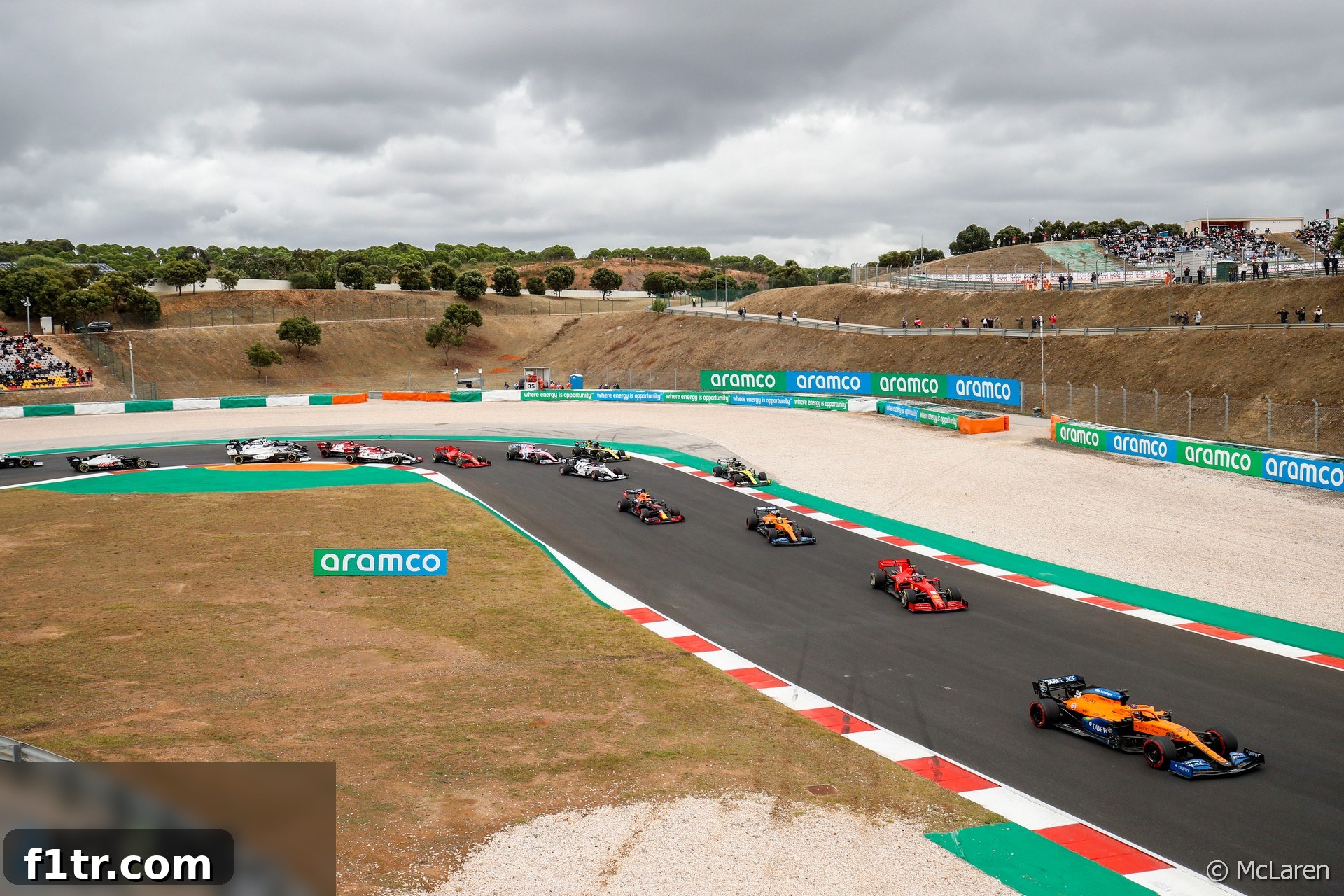
The 2020 Portuguese Grand Prix at Portimão delivered a captivating spectacle of Formula 1 racing, marked by unpredictable weather and dramatic shifts in fortune. Amidst the chaos and challenging conditions, McLaren’s Carlos Sainz Jr. emerged as a standout performer, albeit briefly, showcasing a blend of inherited rally driving prowess and astute tire strategy. His blistering start saw him rocket from seventh on the grid to lead the race, a moment that thrilled fans and certainly garnered pride from his World Rally Championship-winning father, Carlos Sainz Sr.
The Algarve International Circuit, making its debut on the F1 calendar, presented an additional layer of complexity. Its undulating layout, coupled with a freshly laid surface, meant grip levels were inherently low. When rain began to fall just before the race start, intensifying as the lights went out, the conditions became genuinely treacherous. Drivers faced a slippery track, reduced visibility due to spray, and the immense challenge of generating temperature in their tires. This was a scenario where raw talent, quick thinking, and a daring strategy could pay immense dividends, or equally, lead to a rapid downfall.
Sainz Jr., often lauded for his adaptability and race craft, wasted no time in capitalizing on this volatile environment. Starting from seventh position, he made a crucial strategic gamble by opting for the soft compound Pirelli tires, a choice that contrasted with many of his rivals who were on the more durable, but harder to warm up, medium compounds. His decision proved inspired in the early stages. Recognizing the critical importance of tire temperature in the cold, wet conditions, Sainz put significant effort into warming his tires during the formation lap. This meticulous preparation gave him a distinct advantage over those ahead, particularly drivers struggling to bring their medium tires into their optimal operating window.
The opening lap was a masterclass in opportunistic driving. As others slid and scrabbled for grip, Sainz surged forward, his soft tires biting into the damp asphalt. He navigated the chaos with precision and aggression, making swift progress up the order. By the end of the first lap, he had sensationally climbed from seventh to second, astonishing both his team and commentators alike. But he wasn’t done yet. Displaying an audacious hunger for the lead, Sainz then set his sights on Valtteri Bottas, who had taken the lead from Lewis Hamilton. Executing a superb overtake, Sainz snatched the lead of the Portuguese Grand Prix, an achievement that sent ripples of excitement through the paddock.
Reflecting on his incredible start, Sainz couldn’t help but draw parallels with his father’s legendary career. “It was exciting,” he remarked. “I’m really happy with those opening laps. I think my dad would especially have been happy with the rally skills. I saw the rain coming down a bit. I decided to really put a lot of emphasis into warming up the tyres on the formation lap. I think that gave me a bit of an edge on my competitors. I think my dad would be proud of those as he always says you need to shine in those conditions.” Indeed, the ability to excel when grip is at a premium is a hallmark of rally driving, a trait that clearly runs in the Sainz family.
For four glorious laps, Carlos Sainz Jr. led a Formula 1 Grand Prix, a testament to his bold strategy and exceptional car control. However, the very advantage that propelled him to the front soon began to unravel. The soft compound tires, while offering superior initial grip and rapid warm-up, are designed for shorter stints due to their higher degradation rate. As the track gradually dried and the race progressed, the soft tires on Sainz’s McLaren began to suffer from severe “graining.” This phenomenon, where small pieces of rubber tear off the tire surface and re-adhere to the tread, significantly reduces grip and causes a dramatic loss of performance. It’s a common challenge in F1, especially in fluctuating conditions.
With his tires rapidly degrading, Sainz’s pace plummeted, and he began to fall down the order as swiftly as he had climbed it. Drivers on medium tires, who had initially struggled, now found their rhythm as their tires came alive, allowing them to pull away from the McLaren driver. “We started graining massively and we started going backwards,” Sainz explained, highlighting the frustration of seeing his hard-earned lead dissipate. “So from there on, it was the tale of the last few races: Struggling with the front tires quite a lot with a graining. It’s a shame, but it is what it is.” This battle with tire degradation had been a recurring theme for McLaren and Sainz in the 2020 season, making the initial success even more bittersweet.
Despite the disappointment of losing the lead, Sainz managed to salvage a respectable sixth-place finish, securing crucial points for McLaren. A late pass on Sergio Perez demonstrated his enduring fighting spirit, ensuring he extracted the maximum possible from a challenging situation. For the team, these points were vital in their tight Constructors’ Championship battle against Renault, helping to slightly extend their slim margin. However, Sainz’s personal ambition meant that a sixth-place finish felt like a missed opportunity given his early pace. “I guess for the championship it’s not a bad result, but we wanted more,” he admitted. “As a team, after leading the race, you at least expect to hold on to fourth. But we didn’t have the pace because of the graining today.”
The Portuguese Grand Prix served as a microcosm of the intense competition and strategic gambles inherent in Formula 1. Carlos Sainz Jr.’s performance underscored his innate talent and the valuable lessons passed down from his legendary father. While the soft tire strategy ultimately became his undoing, it initially showcased his ability to read challenging conditions and make bold, decisive moves. It was a race of exhilarating highs and frustrating lows, but one that undoubtedly added another memorable chapter to Sainz’s burgeoning F1 career, highlighting his potential as a future front-runner.
The challenges faced by Sainz and McLaren at Portimão provided valuable data and insights for future race strategies, particularly concerning tire management in variable conditions. It reinforced the notion that while early gains are exhilarating, sustained performance over a full race distance often requires a more conservative approach or a car better suited to mitigate tire degradation. Ultimately, the 2020 Portuguese Grand Prix will be remembered for its thrilling unpredictability and for the moment Carlos Sainz Jr., for a brief period, stood at the very pinnacle of motorsport, channeling the spirit of a rally champion on the most unforgiving of stages.
Browse all 2020 Portuguese Grand Prix articles