Lewis Hamilton Reflects on Canadian Grand Prix: Aston Martin’s Edge and Mercedes’ Low-Speed Corner Challenge
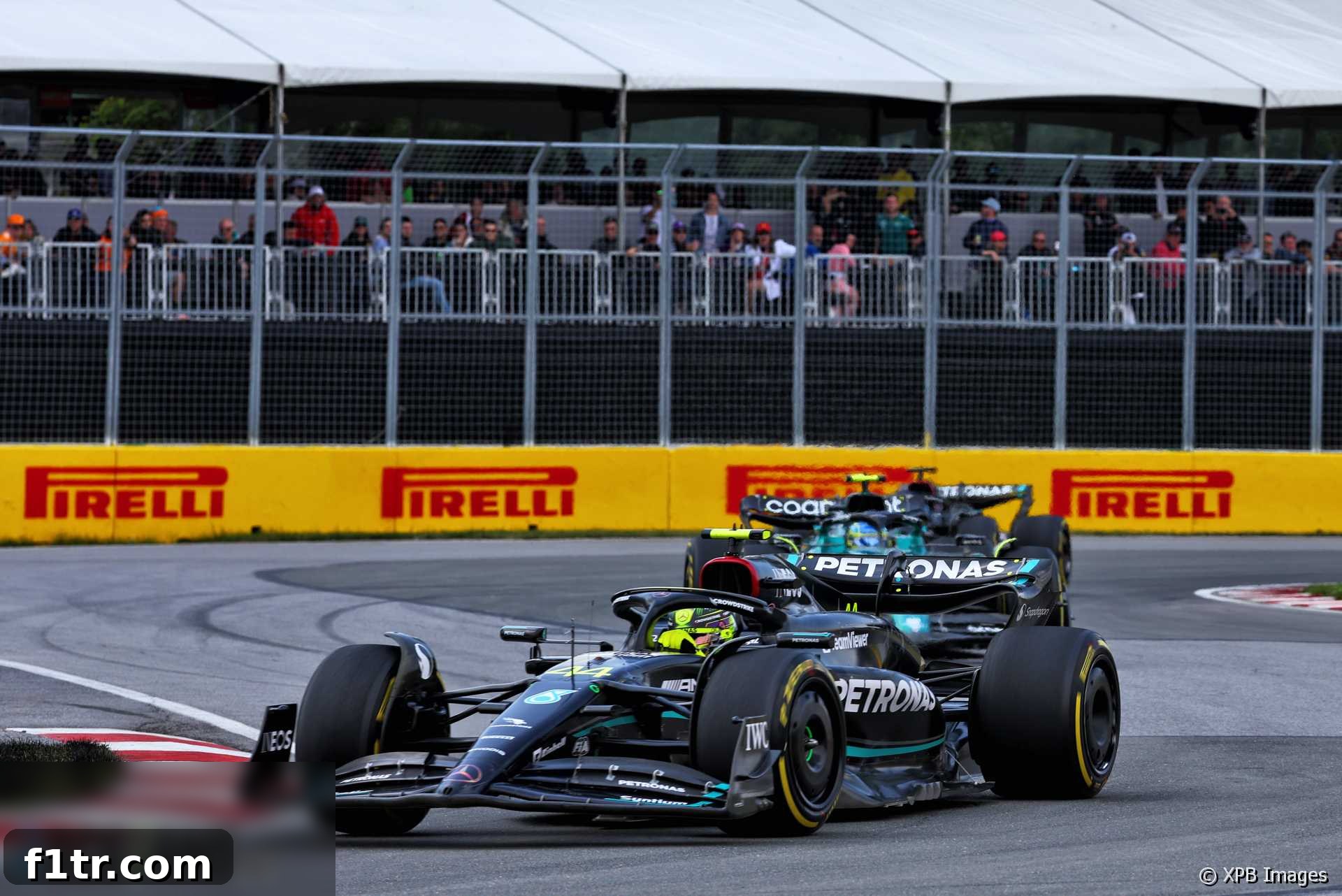
Lewis Hamilton, the seven-time Formula 1 world champion, has candidly admitted that Aston Martin, powered by a recent wave of upgrades, seemingly pulled ahead of Mercedes during the Canadian Grand Prix weekend. His remarks came after a strenuous battle at the Circuit Gilles Villeneuve, where he secured a commendable third place but ultimately lost out to long-time rival Fernando Alonso for the runner-up spot.
Following a highly encouraging second-place finish at the preceding Spanish Grand Prix, where Mercedes showcased significant progress with their updated W14, expectations were naturally elevated for Montreal. However, the unique characteristics of the Canadian track presented a fresh set of challenges for the Silver Arrows. Hamilton completed the race just under five seconds behind Alonso, highlighting the tight margins at the sharp end of the grid, with Max Verstappen of Red Bull comfortably securing another victory. The Grand Prix witnessed an initial triumph for Hamilton, who managed to overtake the Aston Martin at the start, only for Alonso to reclaim second place following a pivotal Safety Car restart, a moment that decisively swung the momentum in Aston Martin’s favour.
A Step Forward, Yet Challenges Remain for Mercedes
Despite the outcome, Hamilton maintained a positive perspective on Mercedes’ overall performance in Canada. “It’s honestly been a great weekend for us,” Hamilton declared, expressing optimism about the team’s persistent development trajectory. He underscored the incremental, yet vital, progress being made, stating, “I think we’re slowly chipping away.” This phrase perfectly encapsulates Mercedes’ methodical approach to narrowing the performance gap to their rivals, focusing on continuous refinements and upgrades to the W14 chassis.
Hamilton was also quick to acknowledge the impressive strides made by Aston Martin, particularly attributing their enhanced competitiveness to recent car upgrades. “I think the Astons took a little bit of a step ahead this weekend when they added the upgrades, but we’re working on bringing some more moving forwards,” he explained. This observation highlights the intense and fast-paced development race inherent in modern Formula 1, where strategic upgrade packages can significantly alter the competitive landscape. The battle for the “best of the rest” position behind the dominant Red Bulls has become a fascinating subplot, with teams like Mercedes and Aston Martin pushing each other relentlessly.
For Hamilton, sharing the podium with fellow multi-world champions Max Verstappen and Fernando Alonso was a moment of pride and competitive drive. “Quite an honour to be up there with two world champions. I was really excited to be third and just trying to be in that mix,” he commented, reflecting his enduring desire to compete at the very highest level. Nevertheless, he candidly admitted the team’s current limitations, stating, “But unfortunately we didn’t have the pace today,” indicating specific areas where Mercedes still needs to unlock further performance to consistently challenge for race victories.
The Achilles’ Heel: Low-Speed Corner Performance
A significant revelation regarding Mercedes’ performance came from a post-race exchange between Hamilton and Max Verstappen in the green room before the podium ceremony. Hamilton was overheard telling the Red Bull driver that Mercedes “suck in the low speed corners.” This direct and blunt assessment points to a critical area of weakness in the W14’s aerodynamic or mechanical setup that profoundly impacts its overall competitiveness. “That’s where you just destroy me – out of the low speed,” he further elaborated to Verstappen, underscoring the substantial performance deficit in these specific parts of the track.
Hamilton elaborated on this recurring struggle, confirming that Mercedes had anticipated these difficulties at the Circuit Gilles Villeneuve. “We knew that this weekend wouldn’t be our strongest circuit as we struggle in the lower speed corners particularly,” he explained. The Canadian track, renowned for its challenging chicanes and hairpins that demand exceptional traction and agility out of slow-speed turns, inevitably exposed the W14’s vulnerabilities. This issue was particularly evident in crucial sections such as Turn 2 and various other low-speed exits across the lap, where Hamilton consistently felt he was losing valuable time to both Alonso and Verstappen.
The impact of this low-speed corner deficiency on overall lap time is profound. In the intricate world of Formula 1, even marginal performance gaps in specific cornering phases can accumulate into significant time losses over an entire race distance. For Mercedes, the struggle for optimal traction and stability in these critical slow sections directly translates into compromised exit speeds, subsequently affecting acceleration onto the following straights. This compounding effect makes it exceedingly difficult to defend positions, as seen in his battle with Alonso, or to mount effective overtaking maneuvers, placing the team at a strategic disadvantage.
Charting the Course Ahead: Downforce and Efficiency Gains
In response to these identified challenges, Hamilton clearly articulated the strategic objectives for Mercedes’ development moving forward. “We’ve got a lot of work to do, just add rear downforce to the car and a little bit more efficiency,” he asserted. The necessity for increased rear downforce is paramount for enhancing stability and grip, particularly crucial in slower corners where mechanical and aerodynamic grip dictates performance. Simultaneously, improving efficiency means achieving higher levels of downforce without incurring excessive drag, which would inevitably penalize straight-line speed and overall lap time.
The development cycle in Formula 1 is a relentless and continuous process of meticulous analysis, innovative design, rigorous testing, and precise implementation. Mercedes’ mantra of “chipping away” is a testament to this methodical and determined approach. They are not in pursuit of a single, revolutionary solution but rather a series of targeted upgrades and iterative refinements that collectively elevate the car’s performance envelope. Hamilton’s unwavering belief in the team’s potential remains strong: “And I do believe we will get there at some stage.” This conviction highlights the team’s long-term vision and their deep-seated determination to reclaim their position at the forefront of the sport.
When comparing Mercedes’ current pace to that of Red Bull, Hamilton observed a subtle yet encouraging trend. While Max Verstappen’s car undeniably possessed superior speed – as Hamilton noted, “Max was a little bit gone” – he perceived that the performance gap had narrowed somewhat in Canada. “But I think our pace is a little bit closer today, so we’re going in the right direction,” he affirmed. This sentiment suggests that Mercedes’ ongoing development work and recent upgrade packages are indeed yielding positive results, even if the ultimate objective of consistently challenging Red Bull for race victories remains a substantial and complex undertaking.
The Dynamic Landscape of the 2023 F1 Season
The 2023 Formula 1 season has been largely defined by the formidable dominance of Red Bull Racing, yet it has also been characterized by an intensely competitive and thrilling battle for the remaining podium positions. Mercedes, Aston Martin, and at times Ferrari and McLaren, have been locked in a fierce contest, with the pecking order frequently shifting from one Grand Prix to the next, heavily influenced by specific track characteristics and the effectiveness of each team’s upgrade cycles. Hamilton’s observations regarding Aston Martin’s step forward with their upgrades perfectly exemplify this highly dynamic and evolving competitive environment.
The consistent brilliance of Fernando Alonso and the remarkable ascent of the Aston Martin team have added a compelling dimension to the season. The Silverstone-based outfit has achieved extraordinary progress, transforming from a mid-field competitor into a consistent podium contender. Their ability to deliver impactful upgrades, combined with Alonso’s unparalleled experience, race craft, and strategic acumen, has made them a formidable force, directly challenging Mercedes for supremacy in the chase behind Red Bull.
For Mercedes, the Canadian Grand Prix served as a crucial data point, offering invaluable insights. It reaffirmed their strengths in certain performance parameters while clearly highlighting the persistent weaknesses that demand immediate attention and resolution. The journey to reclaim their championship-winning form is an arduous undertaking, one that necessitates meticulous attention to detail, relentless innovation, and unwavering commitment. However, with a driver of Lewis Hamilton’s exceptional calibre leading their charge and a highly dedicated and skilled team behind him, Mercedes remains resolutely optimistic about their prospects for the remainder of the season and their long-term trajectory in the sport.
The immediate focus for the upcoming races will undoubtedly be on further refining the W14, with particular emphasis on enhancing its performance in those challenging low-speed corner scenarios. Engineers at Brackley will be diligently analyzing the comprehensive telemetry data from Montreal, working tirelessly to unlock additional performance and achieve a more balanced setup for the car. The enduring ambition to not merely compete, but to triumph, remains deeply embedded within Mercedes’ Formula 1 philosophy, and every Grand Prix presents another critical opportunity to move closer to that ultimate, coveted goal.
2023 Canadian Grand Prix Related Articles
- Norris ‘even more’ sure Canada penalty was wrong after review request fails
- McLaren seeking more than just downforce gains from major upgrade
- Winning more races won’t necessarily lead to F1 seat – Palou
- Red Bull’s testing restriction will “massively affect” 2024 car development
- Schumacher’s set-up input gives Mercedes a “super advantage” – Wolff
Browse all 2023 Canadian Grand Prix articles