The Return of Mission Winnow: Ferrari Reignites Controversy at the Japanese Grand Prix
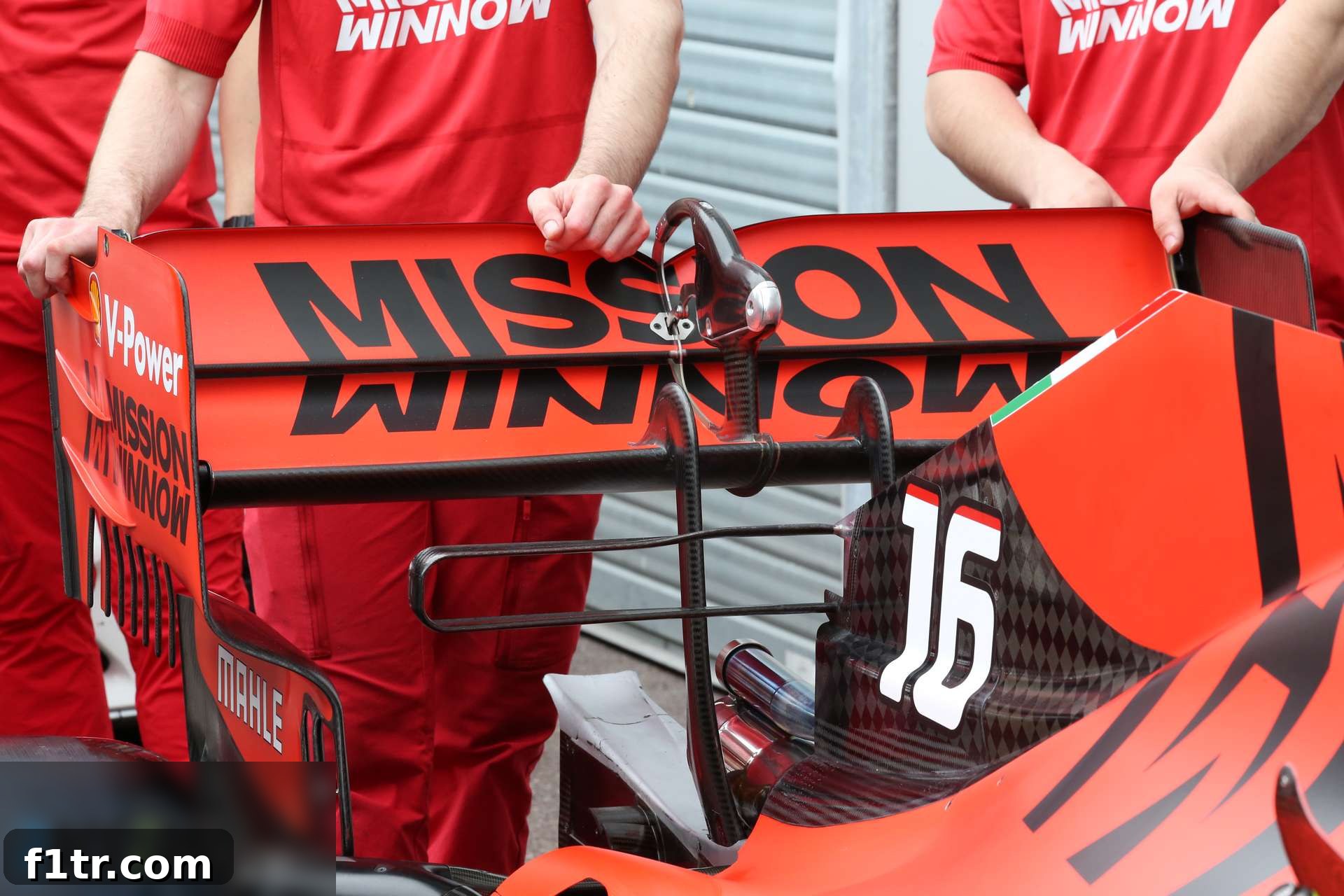
Scuderia Ferrari is once again making headlines with the reintroduction of its contentious “Mission Winnow” branding, set to appear on its cars for the Japanese Grand Prix. This marks the first time in five months that the divisive title, backed by long-standing Ferrari sponsor Philip Morris International (PMI), will grace the iconic red machines, reigniting a debate that has simmered throughout the 2019 Formula 1 season.
The official FIA entry list for this weekend’s highly anticipated race confirms the team’s designation as “Scuderia Ferrari Mission Winnow.” This specific title was last used for the prestigious Monaco Grand Prix in May, which also coincided with the last appearance of the Mission Winnow branding on the SF-90 chassis. Its return at Suzuka brings with it a fresh wave of scrutiny and discussion about the delicate balance between sports sponsorship and regulatory compliance in the modern era of Formula 1.
Understanding Mission Winnow and Philip Morris International’s Vision
At its core, Mission Winnow is presented by Philip Morris International as an initiative designed to champion innovation, science, and progress, primarily focusing on a future free of smoke. PMI, a global tobacco giant, insists that Mission Winnow is an informational campaign not intended to promote any specific tobacco product, nor is it aimed at encouraging smoking. Instead, the company claims it seeks to transform its business and communicate its commitment to delivering smoke-free alternatives, inviting open dialogue about the future.
However, critics worldwide view the initiative with considerable skepticism. Many interpret Mission Winnow as a sophisticated and subtle attempt to circumvent increasingly stringent legislation designed to ban tobacco advertising and promotion in sports. The brand’s abstract nature, coupled with its prominent placement on Ferrari cars – a team historically synonymous with PMI’s Marlboro brand for decades – has consistently drawn accusations of being a ‘stealth’ tobacco advertisement, subtly linking a tobacco company to a high-profile global sport.
A Rocky Road: The History of Mission Winnow’s F1 Presence
Mission Winnow first burst onto the Formula 1 scene ahead of the Japanese Grand Prix 12 months ago, in October 2018. Its debut was significant, marking a new chapter in PMI’s partnership with Ferrari following years of ‘barcode’ liveries and other subtle forms of brand presence after direct tobacco advertising was prohibited. The branding remained prominently displayed on the car for the remainder of the 2018 season, and the 2019 Ferrari chassis was even launched with the Mission Winnow logos proudly emblazoned across its bodywork, signaling a full commitment to the new identity.
However, this commitment quickly faced its first major hurdle. Prior to the opening race of the 2019 season in Melbourne, Australia, the logos were controversially removed from the Ferrari cars. This decision came after Australian government health departments initiated investigations into whether Mission Winnow was indeed being used as an indirect means to promote tobacco products, violating strict national advertising laws. The move underscored the legal and public relations challenges associated with the brand.
Following the Australian incident, Mission Winnow made a comeback at the Bahrain Grand Prix and continued to feature on the SF-90s up until the Monaco Grand Prix in May. However, since then, the branding has been notably absent from Ferrari’s livery for a significant portion of the season. To put this into perspective, the Scuderia Ferrari cars have competed without Mission Winnow branding in 11 of the 16 races held so far this season, highlighting the episodic and often unpredictable nature of its appearances, largely influenced by the regulatory landscapes of different host nations.
The Broader Context: Tobacco Sponsorship in Modern Formula 1
Ferrari is not alone in navigating the complex waters of tobacco-related sponsorship in contemporary Formula 1. Their rivals, McLaren, have also entered into a significant partnership with another major tobacco producer, British American Tobacco (BAT). BAT’s counterpart brand, ‘A Better Tomorrow,’ shares similar characteristics with Mission Winnow, positioning itself as an initiative focused on innovation and a smoke-free future, rather than promoting traditional tobacco products.
Like Mission Winnow, ‘A Better Tomorrow’ has also made only occasional appearances on McLaren’s MCL34 cars since the deal was announced at the beginning of the year. This pattern across multiple teams highlights the pervasive challenge for tobacco companies seeking to maintain a presence in global sports, and for sports organizations grappling with the ethical and legal implications of such partnerships in an increasingly health-conscious world.
The history of Formula 1 is deeply intertwined with tobacco money. For decades, brands like Marlboro, West, Mild Seven, and Lucky Strike were synonymous with the pinnacle of motorsport, providing crucial funding for teams and events. However, a global crackdown on tobacco advertising, spurred by public health concerns, led to a gradual but decisive ban across most jurisdictions. This forced tobacco companies to adapt, leading to the emergence of ‘lifestyle’ or ‘innovation’ brands that ostensibly promote corporate values rather than specific products. These brands often operate in a grey area, constantly pushing the boundaries of what constitutes advertising and what is considered legitimate corporate communication.
Implications and Future Outlook for Ferrari and F1 Sponsorship
The fluctuating presence of Mission Winnow reflects the ongoing tension between commercial interests and public health regulations. For Ferrari, the partnership with Philip Morris International represents a substantial financial contribution, vital for maintaining competitiveness in a sport where budgets are colossal. Yet, this financial benefit comes with the risk of reputational damage and the constant threat of legal challenges from health authorities. Each reintroduction of the branding, like the one for the Japanese Grand Prix, reopens the debate and puts Ferrari and PMI under renewed scrutiny.
The FIA, as the sport’s governing body, has a delicate role to play. While it strives to ensure fair competition and uphold the integrity of the sport, it also has to navigate the commercial realities that underpin Formula 1. The ambiguity surrounding brands like Mission Winnow places the onus on national governments and their respective advertising standards agencies to interpret and enforce local laws, leading to the fragmented presence seen throughout the season.
Looking ahead, the longevity and precise nature of such sponsorships will likely continue to be subjects of intense debate and legal examination. The public’s perception, combined with evolving global health policies, will undoubtedly shape the future of how major corporations, particularly those with controversial product histories, can engage with high-profile sports like Formula 1. Ferrari’s decision to bring Mission Winnow back to Suzuka is not just a branding choice; it is a statement in a much larger, ongoing conversation about ethics, sponsorship, and the ever-changing landscape of global advertising regulations.
Video: Why Ferrari Removed Mission Winnow from Its Car
Support independent Formula 1 journalism: become a RaceFans supporter and enjoy an ad-free experience.
More on the 2019 F1 Season
- Crying in the Melbourne car park at 2019 grand prix was my career low – Ocon
- McLaren Racing reports reduced £71 million loss in 2019
- Kvyat: Hockenheim podium last year was “my biggest achievement” so far
- How the FIA’s new encrypted fuel flow meter targets Ferrari’s suspected ‘aliasing’ trick
- “He smashed my office door”: 23 must-see moments from ‘Drive to Survive’ season two
Browse all 2019 F1 season articles