The exhilarating world of Formula 1 consistently delivers high-octane drama, unpredictable races, and passionate debates. The Mexico City Grand Prix, a highlight of the season, proved to be no exception, serving up a cocktail of thrilling overtakes, strategic battles, and crucial championship implications. From a frustrating start for Carlos Sainz to a historic home podium for Sergio Perez, and subsequent clarifications from Lewis Hamilton, the race weekend generated significant talking points. This comprehensive recap delves into the key moments, driver reactions, and wider narratives that emerged from the vibrant Autódromo Hermanos Rodríguez.
Mexico City Grand Prix: Key Moments and Driver Insights
Carlos Sainz Frustrated by Tumultuous Turn One Incident
Advert | Become a Supporter & Go Ad-Free
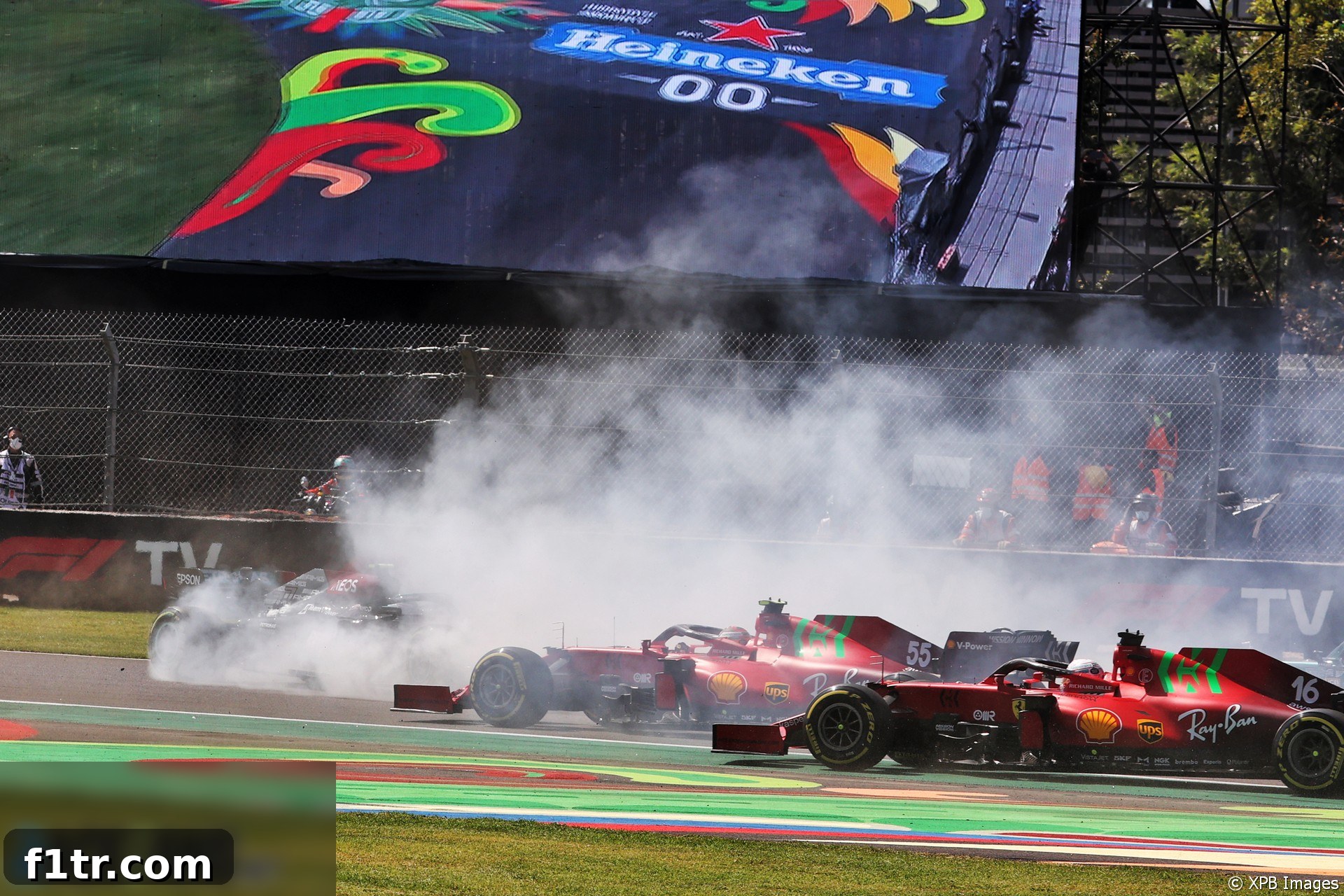
The opening lap of any Formula 1 race is often a critical, chaotic crucible, and the Mexico City Grand Prix’s Turn 1 proved particularly challenging for many, including Ferrari’s Carlos Sainz. Positioned strategically ahead of his teammate Charles Leclerc at the initial braking zone, Sainz found his early race momentum severely compromised by a multi-car incident unfolding directly ahead. As Daniel Ricciardo and Valtteri Bottas made contact, triggering a chain reaction of evasive maneuvers, Sainz was left with limited options, forcing him to take a line that ultimately cost him valuable track positions and disrupted his race strategy.
Sainz recounted the unfolding chaos from his cockpit, explaining his predicament with a detailed breakdown of the critical moments: “From my side, going into Turn 1, I’m right behind Daniel [Ricciardo] and Pierre [Gasly]. Daniel crashes into Bottas, and I’m on the inside of Turn 1, which means I have no possibility to cut Turn 2 like Charles, Gasly, and Perez managed to do. So, I was committed to having to complete the entire Turn 2 section of the track.” The situation was further exacerbated by Ricciardo’s damaged car, which, without its front wing, failed to navigate Turn 2 cleanly, forcing Sainz into yet another defensive action. “Then actually Daniel, without his front wing, doesn’t even turn into Turn 2, so I needed to cut Turn 3 to avoid him.” This sequence of events meant Sainz had to take an extended, slower route through the corners, costing him crucial seconds and positions.
This series of unfortunate events not only saw Sainz fall behind his teammate, Charles Leclerc, but also allowed Antonio Giovinazzi to gain a position. The Spaniard expressed palpable frustration over the incident, feeling unfairly caught in the crossfire of other drivers’ mistakes. “In hindsight, honestly, I’m a bit frustrated with the situation because I feel like I’ve been a victim of a whole mess that I had nothing to do with, and it made me lose a couple of positions that I shouldn’t have lost,” Sainz admitted. Such opening lap incidents are a double-edged sword in F1; sometimes drivers benefit from the chaos, while others, like Sainz, find themselves at a severe disadvantage through no fault of their own. Despite the setback, Sainz highlighted his team’s strong recovery and his car’s inherent pace throughout the remainder of the race. “But like always, Turn 1, you sometimes are lucky, sometimes are unlucky. I lost positions that, to be honest, I shouldn’t have lost and that put me on the back foot for the race. However, we managed to recover with good pace, and I’ll try to take that on the positive side.” His determination to salvage points underscored a resilient performance, demonstrating Ferrari’s improving form and his growing confidence within the team.
Sergio Perez Celebrates “Extremely Special” Home Podium
For Sergio Perez, the Mexico City Grand Prix delivered an emotional and historic moment as he became the first Mexican driver to secure a podium finish at his home race. Taking a hard-fought third place on Sunday, the atmosphere was electric, with the passionate Mexican crowd erupting in cheers for their local hero. This landmark achievement marked a career highlight for Perez, solidifying his place in Mexican motorsport history and igniting patriotic fervor among the thousands of fans who had flocked to the Autódromo Hermanos Rodríguez.
While the roar of the crowd was overwhelming, Perez, a fierce competitor at heart, confessed his initial desire for an even greater result. His ambition extended to securing a victory for his home fans and achieving a one-two finish for the Red Bull team, which would have further bolstered their championship challenge. “Obviously, I wanted more. I wanted to win the race, and obviously, to finish one-two for the team would have been amazing,” he stated, reflecting on the team’s dominant performance throughout the weekend. This sentiment is common among elite athletes who constantly push for perfection and are rarely satisfied with anything less than the top step of the podium. “But at the end of the day, we are such competitive persons that if we finish third, we really, really don’t enjoy it.”
However, the unique significance of the occasion quickly overshadowed any personal disappointment. The sheer joy and pride radiating from the thousands of fans in the grandstands, chanting “Checo, Checo,” and the special moment shared on the podium transformed his perspective. This was more than just a race result; it was a cultural celebration. “But today is one of those days that I must enjoy because of the crowd and seeing so many people so happy, and especially on the podium, everyone who has been with me since day one was on the podium, so that was extremely special for me.” This emotional connection with his supporters and his enduring team members, who had supported him throughout his journey to Formula 1, made the third-place finish feel like a profound victory in itself. His performance not only brought joy to millions but also underscored Red Bull’s strategic prowess and strengthened their championship campaign, creating a powerful narrative of national pride and sporting achievement.
Lewis Hamilton Clarifies Post-Race Comments on Perez and Bottas
Following the Mexico City Grand Prix, Mercedes driver Lewis Hamilton took to social media to provide crucial clarity on remarks he had made concerning both Sergio Perez and his teammate Valtteri Bottas. His initial comments, made in the immediate aftermath of a challenging race where Mercedes struggled against a dominant Red Bull, sparked considerable discussion and, in some instances, misinterpretation within the F1 community, prompting Hamilton to address the nuances of his statements directly and pre-empt further speculation.
While describing the formidable performance advantage held by Red Bull in Mexico, Hamilton had initially remarked: “It just shows how fast their car is when Sergio’s that close behind me and able to follow that closely.” This observation, intended to highlight Red Bull’s superior pace and downforce, particularly on a circuit known for its aerodynamic challenges, was unfortunately perceived by some as a subtle critique of Perez’s driving or a backhanded compliment. Recognizing this potential misinterpretation and keen to avoid any negative implications, Hamilton swiftly moved to set the record straight on Monday, stating his intention to “make sure people don’t read what I was saying wrong yesterday.”
Hamilton elaborated on his immense respect for Perez, particularly acknowledging his impressive adaptation and consistent progress within the Red Bull team, especially in his first season. “I have a lot of respect for [Checo] and think he’s doing a great job in his new team. He’s improved so much this season, and I know how hard it is to progress with a new team; it takes time.” He then clarified the technical context of his earlier comment, explaining the unique aerodynamic challenges of the Mexican circuit: “My comment was simply that following another car in Mexico is the hardest thing due to the low drag we all have. That’s why there is very little overtaking. However, he was able to follow so closely, which highlights just how much more downforce they were able to carry. Big up Checo for keeping it clean.” This explanation underscored that Perez’s ability to maintain proximity was a testament to Red Bull’s superior car design and efficiency at high altitude, rather than any perceived weakness in Hamilton’s defense. The high altitude of Mexico City reduces air density, affecting both engine power and aerodynamic downforce, making close-quarters racing and overtakes exceptionally difficult.
In a subsequent social media post, Hamilton also addressed his earlier criticism of Valtteri Bottas’s driving at the start of the race. He had previously commented that his teammate “left the door open for Max” Verstappen, referring to the crucial Turn 1 maneuver that allowed Verstappen to seize the lead and ultimately win the race. Recognizing the collective nature of success and failure in a team sport, especially one as demanding as Formula 1, Hamilton offered a more empathetic and unified perspective. “We all have bad days,” Hamilton wrote, acknowledging the immense pressure drivers face. “We live and we learn. Yesterday I said that [Valtteri Bottas] left the door open, and naturally, people will jump to criticize.” He then emphasized the shared responsibility and unbreakable spirit within Mercedes: “We are a team, and we win and we lose as a team. There is not one single person responsible for winning or losing; we do it together, good or bad. You may be able to beat us, but you can’t break us!” These comprehensive clarifications served to temper media speculation, reinforce team solidarity ahead of a crucial championship run, and provide a more nuanced understanding of the complex dynamics at play in elite motorsport.
Advert | Become a RaceFans Supporter andGo Ad-Free
Formula 1 Social Media Buzz: Nurturing Future Talent
Beyond the immediate post-race interviews and press conferences, social media platforms provide a real-time pulse of the F1 world, offering notable posts from drivers, teams, and official outlets that reveal insights into the sport’s ongoing developments, including the crucial area of talent identification and nurturing.
Britain’s @OllieBearman, who won the Italian and German F4 titles this year, and Brazil’s Rafael Camara, who collected several karting trophies, have been signed to Ferrari’s Driver Academy. Ferrari will also closely monitor the progress of Finnish karter Tuukka Taponen in 2022. pic.twitter.com/VtAHlsPx2E
— RaceFans (@racefansdotnet) November 8, 2021
This announcement from Ferrari’s Driver Academy (FDA) highlights the crucial pipeline of talent development in Formula 1. Securing young, promising drivers like Britain’s Ollie Bearman and Brazil’s Rafael Camara for their prestigious academy demonstrates Ferrari’s long-term commitment to nurturing future champions. Bearman’s impressive achievement of winning both the Italian and German F4 titles in the same year underscores his exceptional potential and rapid progression through the junior categories, marking him as a talent to watch. Camara’s collection of several karting trophies similarly positions him as a strong contender for future single-seater categories, indicating a solid foundation in competitive racing from a young age.
Furthermore, the decision by Ferrari to closely monitor the progress of Finnish karter Tuukka Taponen in 2022 emphasizes the global scouting efforts undertaken by top F1 teams. These comprehensive talent identification programs are vital for ensuring a constant influx of fresh talent into the sport’s highest echelons. Driver academies like the FDA are indispensable; they not only provide young drivers with the necessary financial backing but also offer critical resources, technical guidance, and a clear developmental pathway. This structured support helps navigate the incredibly competitive ladder from junior categories, such as karting and Formula 4, all the way to the pinnacle of motorsport, Formula 1, shaping the next generation of F1 stars.
- Find more official F1 accounts to follow in the F1 Twitter Directory for real-time updates and exclusive insights into the world of Formula 1.
Essential Motorsport Links and Industry News
Beyond the immediate racing action and driver narratives, the broader motorsport ecosystem often generates significant news, from industry regulations to sponsorship ethics and global health protocols. These links offer a glimpse into the diverse facets that influence the sport.
Firms Under Fire for Using UK Influencers to Push Nicotine Products (The Guardian)
This report by The Guardian sheds light on the ethical complexities surrounding sports marketing and influencer culture, specifically within the context of nicotine product promotion. The article’s mention of racing driver Archie Hamilton, a content creator with a substantial following, participating in an esports-themed YouTube series associated with the British racing team McLaren, raises significant questions about the intersection of sports figures, brand endorsements, and public health. This practice, termed “nicotinfluencers,” highlights a broader debate about responsible advertising, particularly when appealing to younger audiences who follow motorsport and esports personalities. It underscores the intense scrutiny faced by companies like British American Tobacco and the influencers they engage, prompting crucial discussions on corporate brand responsibility and the integrity of athlete endorsements within the sporting world.
Statement on Covid-19 Testing (FIA)
The FIA and Formula 1 continue to prioritize the health and safety of all personnel, a commitment rigorously demonstrated through ongoing COVID-19 testing protocols. The official statement confirms that during the 2021 FIA Formula 1 Mexico City Grand Prix, held between Monday 1st and Sunday 7th November, a remarkable 7,100 tests for Covid-19 were conducted on drivers, teams, and associated personnel within the secure F1 bubble. Out of this extensive testing, nine individuals tested positive. This transparent reporting reinforces the robust measures and stringent protocols in place to mitigate the spread of the virus within the F1 paddock, ensuring the continuity and integrity of the championship while safeguarding the well-being of its participants. It highlights the immense logistical challenge and ongoing vigilance required to manage a global sporting event effectively and responsibly during a pandemic, allowing the sport to continue operating safely.
We always endeavour to credit original sources. If you have a tip for a link relating to single-seater motorsport to feature in the next RaceFans round-up, please send it in via the contact form. Your contributions help us keep the F1 community informed and engaged with the latest and most relevant news.
Advert | Become a RaceFans Supporter andGo Ad-Free
Analyzing Racing Incidents: The Ricciardo-Bottas Collision
The highly anticipated Mexico City Grand Prix provided its fair share of on-track drama, particularly during the opening lap where tight confines and high stakes often lead to incidents. One notable collision involved Daniel Ricciardo’s McLaren and Valtteri Bottas’s Mercedes, an event that sparked considerable debate among fans and pundits alike regarding fault and racing etiquette. The ‘Comment of the Day’ from @Petebaldwin offers a compelling perspective, arguing that the collision was not a desperate lunge by Ricciardo, but rather a confluence of factors and optimistic judgments from both drivers.
At the point he committed to the corner and brakes, Hamilton was still on the inside and Bottas was in the middle. He wouldn’t have expected Bottas to take that space on the apex of the corner. Bottas was entitled to do it, but it was too late for Ricciardo to back out as he’d already braked late – any more pressure and he’d have locked up and taken more cars out.
Ricciardo was a bit optimistic going into the corner, and Bottas was a bit optimistic that he could take the line he did. Unfortunately, both gambled on that part of the track being clear, and it wasn’t.
@Petebaldwin
This insightful analysis perfectly encapsulates the inherent complexities and razor-thin margins of Turn 1 racing in Formula 1. Ricciardo, known for his aggressive yet usually precise braking and overtakes, found himself in a tricky, rapidly evolving situation. As @Petebaldwin points out, his commitment to the corner and braking point would have been made based on an evolving picture of the track, accounting for other cars’ positions. The unexpected move by Bottas to claim the apex space, while technically within his rights as a racing driver, created an unavoidable clash for Ricciardo, who was already at his braking limit. Had he applied more brake pressure in an attempt to back out, a lock-up would have likely caused an even more significant multi-car incident, a scenario no driver wants to trigger, especially in the opening seconds of a Grand Prix.
The comment highlights a common dynamic in F1 starts: the perilous fine line between calculated risk and over-optimism. Both drivers were pushing the boundaries, attempting to gain or hold position in the critical opening moments where grid positions can be dramatically altered. Ricciardo’s ambition to make a move, combined with Bottas’s determination to defend his line, led to a spatial conflict that neither could fully resolve in time before contact was made. This incident serves as a classic example of how split-second decisions and fluid track conditions can lead to collisions, even when intentions are not malicious. It’s a testament to the high stakes and razor-thin margins that define the sport, where even experienced drivers can misjudge the evolving tapestry of a racing line under intense pressure, leading to consequences that affect their own race and those of their competitors.
Happy Birthday to Motorsport Personalities
Celebrating the individuals who contribute to the vibrant world of motorsport, from current drivers and legendary figures to dedicated engineers and passionate fans, is always a pleasure. A very happy birthday to George, Adrian Hancox, and Cristofer Lima! May their day be filled with joy and fast cars, whether on or off the track, and may they continue to be part of the exhilarating motorsport community.
On This Day in Motorsport History
Delving into the annals of motorsport history often reveals fascinating tales of triumph, heartbreak, and pivotal championship moments that shaped the legacies of drivers and teams alike. Today marks an important anniversary in the competitive world of IndyCar racing, recalling a dramatic conclusion to a fiercely contested season.
- **35 years ago today**, on November 8th, a dramatic climax unfolded in the CART IndyCar championship at Tamiami Park in Miami. Racing legend Bobby Rahal clinched the coveted title in the final round of the season, a victory that came after a pivotal and unfortunate turn of events for his primary rival. The formidable Michael Andretti, who was poised for the championship, suffered an agonizing retirement due to a driveshaft failure, effectively handing the championship to Rahal. This incident perfectly encapsulated the unpredictable nature of motorsport, where mechanical reliability can be as decisive as raw driver skill and pace, often turning the tide of a championship in an instant. The race itself was won by Al Unser Jnr, adding another iconic name to the day’s memorable events and highlighting the depth of talent in IndyCar at that time. This particular championship decider is remembered as one of the most intense and emotional finales in IndyCar history, showcasing the raw drama inherent in high-stakes, season-long competition.