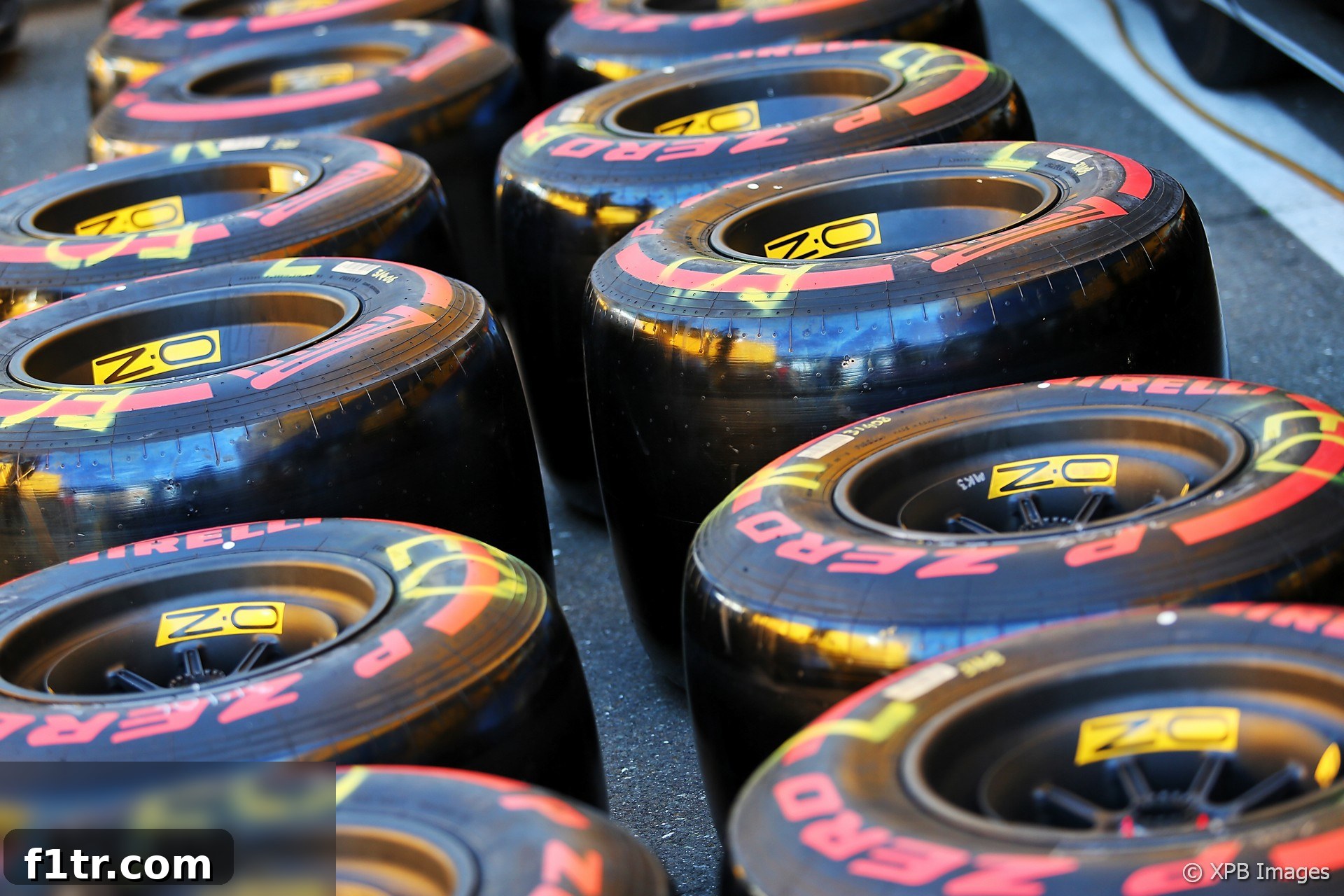
Pirelli Unveils Comprehensive 2021 F1 Tyre Selections for All 23 Rounds
In a significant announcement that offers unprecedented clarity for teams and fans alike, Pirelli has confirmed the specific tyre compounds it will supply for every one of the 23 scheduled rounds on the 2021 Formula 1 calendar. This proactive disclosure marks a notable departure from the manufacturer’s traditional practice of revealing tyre nominations in stages throughout the season, providing a full strategic roadmap well in advance of the championship kick-off.
The early revelation is particularly timely, as it includes the much-anticipated nomination for the third round of the championship in Portugal. While the venue for this race had not been officially confirmed by Formula 1 at the time of the announcement, the FIA had previously indicated its strong intention for the race to return to the calendar, contingent on commercial terms being agreed upon. All signs pointed to the Autodromo do Algarve, a circuit that made a memorable F1 debut in October last year, as the most probable host, a prediction that has now been reinforced by Pirelli’s confirmed tyre choice for the event.
The Critical Role of Tyres in Formula 1 Performance
Tyres are far more than just rubber connecting the car to the track; they are a fundamental component of Formula 1 performance, strategy, and spectacle. Pirelli, as the sole tyre supplier, plays a pivotal role in shaping the racing landscape. The selection of tyre compounds directly influences a myriad of factors, including lap times, degradation rates, pit stop strategies, and ultimately, the excitement and unpredictability of each Grand Prix. Understanding the characteristics of each compound – from the ultra-durable to the supremely grippy – is key to appreciating the strategic depth of modern F1.
The Italian tyre giant employs a clear five-tier system, ranging from C1 to C5, to classify its dry-weather compounds. The C1 compound represents the hardest and most durable option, designed for tracks that exert extreme forces and demand maximum resistance to wear and thermal degradation. Conversely, the C5 compound is the softest and most aggressive, offering the highest level of grip for ultimate qualifying performance or specific race conditions, albeit with a significantly shorter lifespan. The intermediate compounds (C2, C3, C4) provide varying balances of durability and grip, allowing Pirelli to tailor selections to the unique demands of each circuit on the F1 calendar.
Strategic Foresight: Why an Early Announcement?
Pirelli’s decision to announce its entire 2021 tyre roster upfront signifies a pragmatic and strategic response to the ongoing global climate, particularly the challenges posed by the Covid-19 pandemic. Mario Isola, Pirelli’s Head of F1 and Car Racing, underscored the benefits of this comprehensive disclosure: “Announcing all the selections for the year right now will help the teams and the drivers with their planning, also allowing for maximum flexibility just in case the calendar has to change due to Covid-19 restrictions, as we saw last year.”
This early transparency is invaluable for Formula 1 teams. It enables them to conduct more precise simulations, optimize car designs, and refine race strategies well in advance, rather than reacting to piecemeal announcements. For engineers and strategists, knowing the exact compounds for each Grand Prix provides a clearer picture for aerodynamic development, suspension setups, and even long-term resource allocation. In a sport where marginal gains are paramount, this level of predictability from the tyre supplier can offer a significant competitive edge and help mitigate logistical hurdles, especially if last-minute calendar alterations become necessary, mirroring the unprecedented adaptability required during the condensed 2020 season.
The Hardest Challenges: C1, C2, and C3 Selections
For some of the most demanding circuits on the Formula 1 calendar, Pirelli has opted for the hardest tyres in its range – the C1, C2, and C3 compounds. This selection is a testament to the high-energy loads, abrasive surfaces, and formidable cornering forces these tracks impose on the tyres. The Autodromo do Algarve in Portugal, despite its relatively recent inclusion, falls into this category, indicating Pirelli’s expectation of a challenging race for tyre management.
Joining Portugal with the C1-C3 combination are other legendary circuits known for their tyre-punishing characteristics: the iconic Zandvoort in the Netherlands, returning to the F1 calendar with its unique banking and fast sweeps; Silverstone, the home of the British Grand Prix, where several drivers famously experienced tyre failures last year due to extreme loads, necessitating a conservative compound choice this season; the technical Circuit de Catalunya, a familiar testing ground that puts lateral forces to the test; and the revered Suzuka in Japan, celebrated for its high-speed flowing corners and relentless demands on tyre integrity. These selections underscore a strategy focused on durability and managing extreme conditions.
Embracing Maximum Grip: C3, C4, and C5 Selections
At the opposite end of the spectrum, six races will feature the softest possible tyre combination: the C3, C4, and C5 compounds. This aggressive choice is typically reserved for circuits where maximum mechanical grip is prioritized, often at the expense of longevity. These tracks tend to be street circuits or those with smoother asphalt, lower average speeds, or where strategic variations are encouraged through higher degradation rates, leading to more pit stops and overtakes.
The glamorous Monaco Grand Prix, a classic street circuit where outright grip is essential for navigating its tight confines, leads this group. It is joined by the thrilling Baku City Circuit in Azerbaijan, known for its long straights and tricky slow corners, which will see a softer selection this year. The Canadian Grand Prix at Circuit Gilles Villeneuve, a semi-street circuit infamous for its “Wall of Champions,” also receives the softest compounds. Completing this category are the Sochi Autodrom in Russia, the high-downforce Singapore street circuit, and the season-ending Yas Marina in Abu Dhabi, all designed to encourage multi-stop races and dynamic strategic battles.
The Versatile Mid-Range: C2, C3, and C4 Selections
The majority of the 2021 Formula 1 season, encompassing 12 races, will utilize the balanced C2, C3, and C4 tyre compounds. This mid-range selection offers a versatile compromise between durability and performance, making it suitable for a wide variety of track types and conditions. It represents Pirelli’s standard approach for circuits that do not fall into the extreme categories of either high degradation or low grip requirements.
This ubiquitous choice will be seen at venues such as the Bahrain International Circuit, the Imola circuit for the Emilia-Romagna Grand Prix, and the new Saudi Arabian Grand Prix on a street circuit in Jeddah, details of which are still emerging. The C2-C4 combination allows for varied strategies and robust performance, typically leading to two-stop races, ensuring a balance between driver push and tyre management across a diverse range of F1 tracks.
Key Changes and Implications for the 2021 Season
While Pirelli has largely maintained its previous year’s selections for most tracks, two circuits will see a subtle but potentially impactful change: the selections for Baku and Interlagos have both been made one stage softer than in previous years. For the Baku City Circuit, this move from the C2-C4 range to C3-C5 suggests an intention to inject more strategic variety into the street circuit’s unique profile, possibly encouraging more pit stops or allowing for more aggressive driving stints. Similarly, the Interlagos circuit in Brazil, moving from C1-C3 to C2-C4, implies Pirelli anticipates either slightly milder conditions or aims to promote a more dynamic race with higher degradation, often leading to more thrilling finishes.
The tentative nature of the Portuguese Grand Prix remains a talking point, but Pirelli’s nomination of the harder C1-C3 compounds for Autodromo do Algarve, if confirmed, highlights the demanding characteristics of the undulating circuit which debuted with high praise for its challenges last year. Furthermore, the inclusion of the Saudi Arabian Grand Prix with a C2-C4 selection marks the cautious approach for new venues, where specific track data is still being gathered, allowing for a balanced tyre choice for its debut.
The Farewell to 13-inch Rubber
The 2021 F1 season carries an additional layer of significance for tyre technology: it is set to be the final year in which Formula 1 cars will utilize 13-inch diameter wheels and tyres. From 2022 onwards, the sport will transition to a new era featuring 18-inch wheels, a significant technical overhaul aimed at making F1 more relevant to road car technology and altering the visual aesthetics and handling characteristics of the cars. This means that the 2021 season will be the last opportunity for teams and drivers to master the unique nuances of the long-standing 13-inch Pirelli compounds, adding a nostalgic element to this year’s championship battles.
2021 F1 Tyre Selections: The Full List
| Race | Venue | Tyres (Hard, Medium, Soft) |
|---|---|---|
| Bahrain Grand Prix | Bahrain International Circuit | C2, C3, C4 |
| Made in Italy and Emilia-Romagna Grand Prix | Imola | C2, C3, C4 |
| Portuguese Grand Prix | Autodromo do Algarve* | C1, C2, C3 |
| Spanish Grand Prix | Circuit de Catalunya | C1, C2, C3 |
| Monaco Grand Prix | Monaco | C3, C4, C5 |
| Azerbaijan Grand Prix | Baku City Circuit | C3, C4, C5 |
| Canadian Grand Prix | Circuit Gilles Villeneuve | C3, C4, C5 |
| French Grand Prix | Paul Ricard | C2, C3, C4 |
| Austrian Grand Prix | Red Bull Ring | C2, C3, C4 |
| British Grand Prix | Silverstone | C1, C2, C3 |
| Hungarian Grand Prix | Hungaroring | C2, C3, C4 |
| Belgian Grand Prix | Spa-Francorchamps | C2, C3, C4 |
| Dutch Grand Prix | Zandvoort | C1, C2, C3 |
| Italian Grand Prix | Monza | C2, C3, C4 |
| Russian Grand Prix | Sochi Autodrom | C3, C4, C5 |
| Singapore Grand Prix | Singapore | C3, C4, C5 |
| Japanese Grand Prix | Suzuka | C1, C2, C3 |
| United States Grand Prix | Circuit of the Americas | C2, C3, C4 |
| Mexico City Grand Prix | Autodromo Hermanos Rodriguez | C2, C3, C4 |
| Sao Paulo Grand Prix | Interlagos | C2, C3, C4 |
| Australian Grand Prix | Albert Park | C2, C3, C4 |
| Saudi Arabian Grand Prix | Jeddah Street Circuit | C2, C3, C4 |
| Abu Dhabi Grand Prix | Yas Marina | C3, C4, C5 |
*To be confirmed.
More on the 2021 F1 Season
- Masi ‘basically gifted the championship’ to Verstappen says 2021 FIA steward Sullivan
- Las Vegas race backers looking to extend F1 deal beyond 2025
- Why Mercedes put ‘a reminder of joy and pain’ on display in their factory lobby
- Verdict on error in GT race suggests Mercedes would have lost 2021 Abu Dhabi GP appeal
- Title ‘stolen’ from Mercedes made us ‘underdogs people cheer for’ – Wolff
Browse all 2021 F1 season articles