Red Bull’s Spanish Grand Prix Strategy: Unpacking the Perez-Verstappen Team Order Controversy
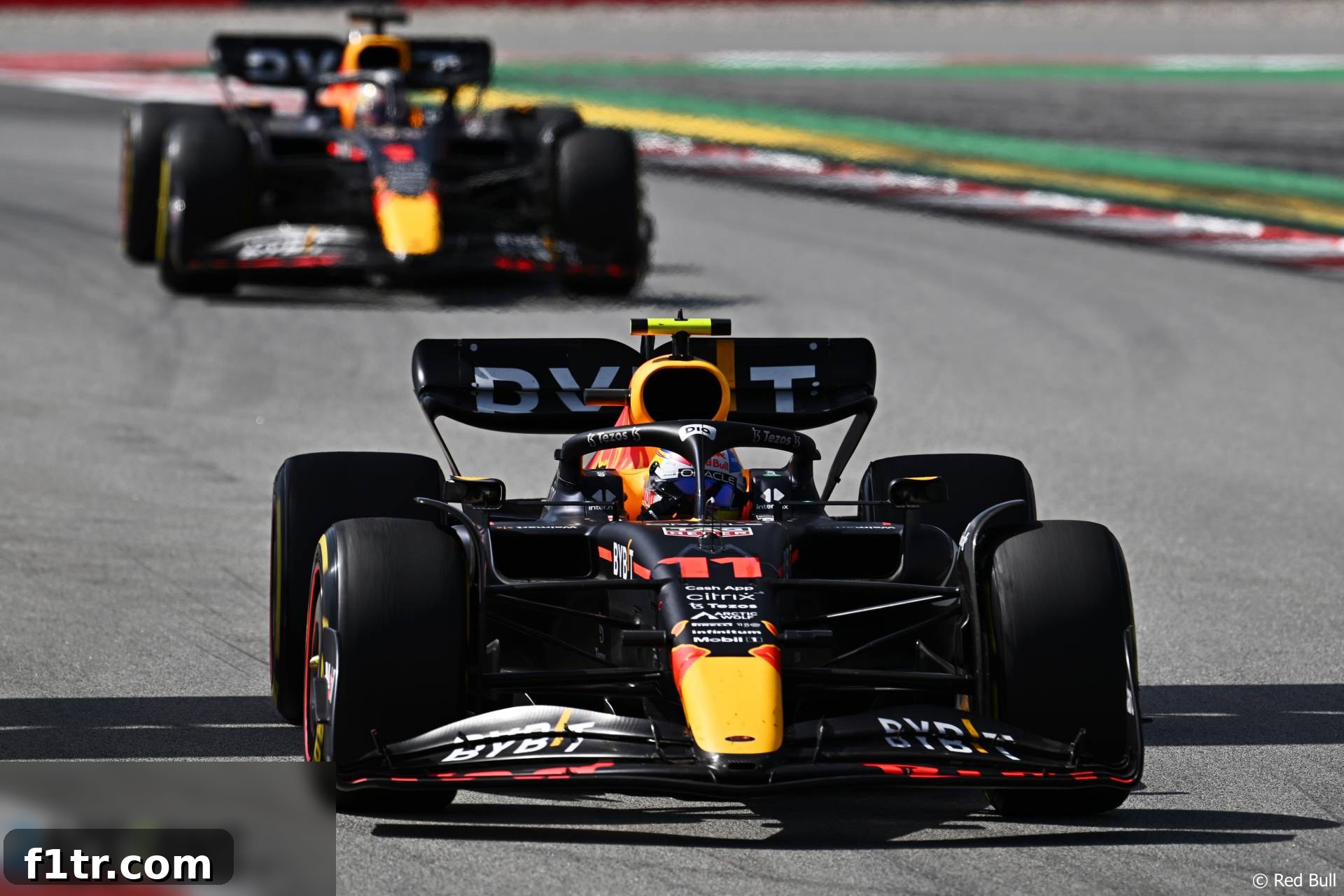
The world of Formula 1 is a high-stakes arena where raw speed, meticulous engineering, and strategic brilliance converge. Yet, sometimes, the most decisive moments aren’t about blistering lap times or daring overtakes, but rather a simple radio message: “Let him through.” This was precisely the scenario that unfolded at the 2022 Spanish Grand Prix, igniting a fervent debate among fans and pundits alike. Sergio Perez, driving for Red Bull Racing, found himself in the unenviable position of twice being asked to yield track position to his teammate, Max Verstappen. While the team secured a dominant one-two finish, the events of the race day sparked questions about driver hierarchy, team ethics, and the delicate balance between individual ambition and collective success.
Perez, often affectionately known as “Checo,” revealed after the race that he was initially promised his position back after the first instance of letting Verstappen pass. This revelation added a layer of complexity to an already tense situation, highlighting the intricate communication and trust dynamics within a top-tier racing team. The Spanish Grand Prix victory for Max Verstappen marked a pivotal moment in the championship battle, but for Perez, it was a day tinged with the frustration of what might have been.
The Controversial Race Day: Two Team Orders, One Outcome
The Circuit de Barcelona-Catalunya, a familiar testing ground for F1 teams, often delivers races where strategy plays a paramount role, especially in hot conditions. The 2022 edition was no exception, characterized by tyre degradation challenges and the ever-present threat of a rival’s superior pace. Early in the race, the championship leader, Max Verstappen, endured a costly spin, rejoining the track behind his teammate, Sergio Perez, and Mercedes’ George Russell. This incident set the stage for the first of the contentious team orders.
Perez, finding himself in clean air behind Russell, made several attempts to overtake the Mercedes driver. However, with Verstappen closing in and facing his own intermittent DRS issues, Red Bull’s race engineer, Hugh Bird, relayed a critical message to Perez: “Okay Checo let Max have a shot. Let him through before four.” Perez, understandably eager to press his own advantage, requested “one more lap,” but the instruction was firm: “Let’s give him a shot now. We’ll pay it back later.”
This initial instruction, ostensibly to allow Verstappen to attack Russell with his superior pace, inadvertently set different strategic paths for the two Red Bull drivers. Verstappen, hindered by his unreliable DRS, was eventually moved onto a more aggressive three-stop strategy. Perez, who later successfully cleared Russell, continued on a two-stop strategy, putting him back in contention for the lead as the race progressed. This divergence in strategy, born from the early race incidents and Verstappen’s technical difficulties, became the central pivot around which the rest of the race unfolded.
The narrative climaxed in the latter stages of the Grand Prix. With Verstappen on fresher, faster tyres after his third pit stop, he rapidly reeled in Perez, who had inherited the lead. Once again, the radio crackled with an instruction that would determine the race winner. Perez was told to concede the lead to Verstappen. Max Verstappen swept past his teammate and went on to claim a crucial victory, propelling him to the top of the drivers’ championship standings.
Perez’s Perspective: Frustration Masked by Team Spirit
In the immediate aftermath of the race, Sergio Perez’s emotions were a complex blend of team loyalty and personal disappointment. While acknowledging the excellent team result, his comments hinted at a deeper frustration. “When I was back on it, I felt like I could have gone through [Russell] and probably give a better shot at my strategy to make it work,” Perez reflected. He believed that if he hadn’t initially been asked to move aside, his two-stop strategy might have yielded a different outcome.
Perez openly stated that he felt his two-stop approach could have won the race for him, had circumstances allowed. “The three-stop strategy gave a better race time of the various strategies,” he conceded, “So I think if I went in that direction, I would have won the race. And it worked out for Max.” This observation suggests a strategic mismatch rather than a pure pace deficit, at least in Perez’s eyes. He emphasized his initial understanding that the first position swap was temporary: “I only felt that in the first stint, when I gave the position to Max, that I was told that I was going to get it back.” This broken promise, whether intentional or a casualty of evolving race dynamics, clearly weighed on him.
Despite these feelings, Perez maintained a diplomatic front, stressing the positive team atmosphere and the importance of the one-two finish. He highlighted the momentum within Red Bull as “tremendous, like no other team.” However, his desire to “discuss things internally” underscored that while he was pleased with the overall outcome for Red Bull, there were personal matters he wished to clarify. This internal dialogue is crucial for maintaining trust and morale within a team where championship aspirations are shared but individual glory is also sought.
Red Bull’s Justification: A Pragmatic Call for Maximum Points
Red Bull Team Principal Christian Horner was quick to offer a comprehensive explanation for the team’s decisive actions. His justification centered on maximizing points for the team and the championship, particularly given Ferrari’s woes during the race where Charles Leclerc retired from the lead. Horner emphasized that the situation in the latter stages was not a fair fight between the two Red Bull drivers.
“[Verstappen] very quickly closed on Checo and at that stage there was a tyre delta of close to two seconds a lap,” Horner explained. He further cited challenging conditions, including “[high] water temperatures, oil temperatures, DRS that was intermittently working.” These factors combined, in Horner’s view, made it illogical to allow the drivers to battle it out. The risk of collision, excessive wear on components, or simply losing valuable time in a championship-critical race was too great.
Horner articulated the team’s primary objective: “to get the maximum points today was hugely important on a day that unfortunately Ferrari had an issue.” This perspective highlights the brutal pragmatism often required in Formula 1. While individual driver aspirations are important, the constructors’ and drivers’ championships are ultimate team goals. Horner expressed confidence that Perez would understand the rationale once presented with the full strategic overview. “The problem for any driver if they don’t have the clear overview of the strategy or a race plot in front of them it’s always going to be emotive to give up the lead,” he noted, adding that Perez “played very much the team game.”
He concluded by reiterating the strategic imperative: “I think he understood clearly it wasn’t a like-for-like fight because the pace delta between the strategies was so great. From a team point of view I think for me it just didn’t make any sense which was why we didn’t let the drivers get into a fight today.” This clear statement reinforces Red Bull’s commitment to prioritizing the team’s collective success, especially when a championship is on the line.
The Bigger Picture: Team Orders, Strategy, and Championship Dynamics
The Spanish Grand Prix team orders are not an isolated incident in Formula 1 history. Such decisions are a recurring feature, often sparking controversy but also demonstrating the strategic depth of the sport. They force a delicate balance between a driver’s instinct to win and a team’s overarching objectives. For Red Bull, with Max Verstappen now leading the championship, ensuring he maximizes points is a clear priority, particularly in a fierce battle against Ferrari.
This episode inevitably brings into focus the internal dynamics at Red Bull Racing. While Perez is a highly capable driver and a race winner in his own right, the team’s primary focus appears to be on securing Verstappen’s second consecutive world title. This hierarchy, whether explicitly stated or implicitly understood, shapes strategic decisions and can lead to moments like those seen in Barcelona. For Perez, maintaining his strong form and delivering consistent results will be crucial not only for the Constructors’ Championship but also for his own long-term standing and future within the team.
Strategically, Red Bull’s call proved correct in hindsight, securing a dominant one-two finish and putting Verstappen back atop the championship standings. The fluctuating conditions, the early spin by Verstappen, and his DRS issues all contributed to a complex race where adaptability was key. The decision to split strategies and then converge them with team orders was a bold move that ultimately paid off, underlining the sophisticated decision-making processes that take place during an F1 race.
Conclusion: A Controversial Victory, A Strengthened Position
The 2022 Spanish Grand Prix will be remembered not just for Max Verstappen’s victory but for the strategic calls that led to it. Sergio Perez’s willingness to play the team game, despite his personal aspirations, was commendable, even if it left him with lingering questions. Red Bull Racing, through the firm hand of Christian Horner, demonstrated its unwavering commitment to securing maximum points and advancing its championship goals, even if it meant making unpopular decisions.
As the Formula 1 season progresses, the relationship between Perez and Verstappen, and the team’s handling of future strategic dilemmas, will be closely watched. While the one-two finish in Spain significantly boosted Red Bull’s championship hopes, the internal discussions promised by Perez will be vital for ensuring long-term harmony and clear understanding within a team aiming for ultimate glory. The incident serves as a stark reminder that in the high-octane world of F1, success often comes at the intersection of individual brilliance, technical prowess, and sometimes, difficult team decisions.
Don’t miss anything new from RaceFans
Follow RaceFans on social media to stay updated with the latest F1 news and analysis:
- Join RaceFans on Facebook
- Follow RaceFans on Twitter
- Get daily email updates from RaceFans
2022 Spanish Grand Prix Coverage
- Q&A: Kubica ‘shocked’ by ‘completely different’ Alfa Romeo in Spain
- How heat and traffic trouble left F1 fans fuming after the Spanish Grand Prix
- Mercedes not yet certain their porpoising problem has “disappeared”
- Sticking to budget cap “pretty much impossible” due to rising costs – McLaren
- Ricciardo hoping to find an explanation for Spanish GP pace deficit to Norris
Browse all 2022 Spanish Grand Prix articles